 Sudden Valley
 Why Silver Beach Decks Wear Differently Than Decks Inland
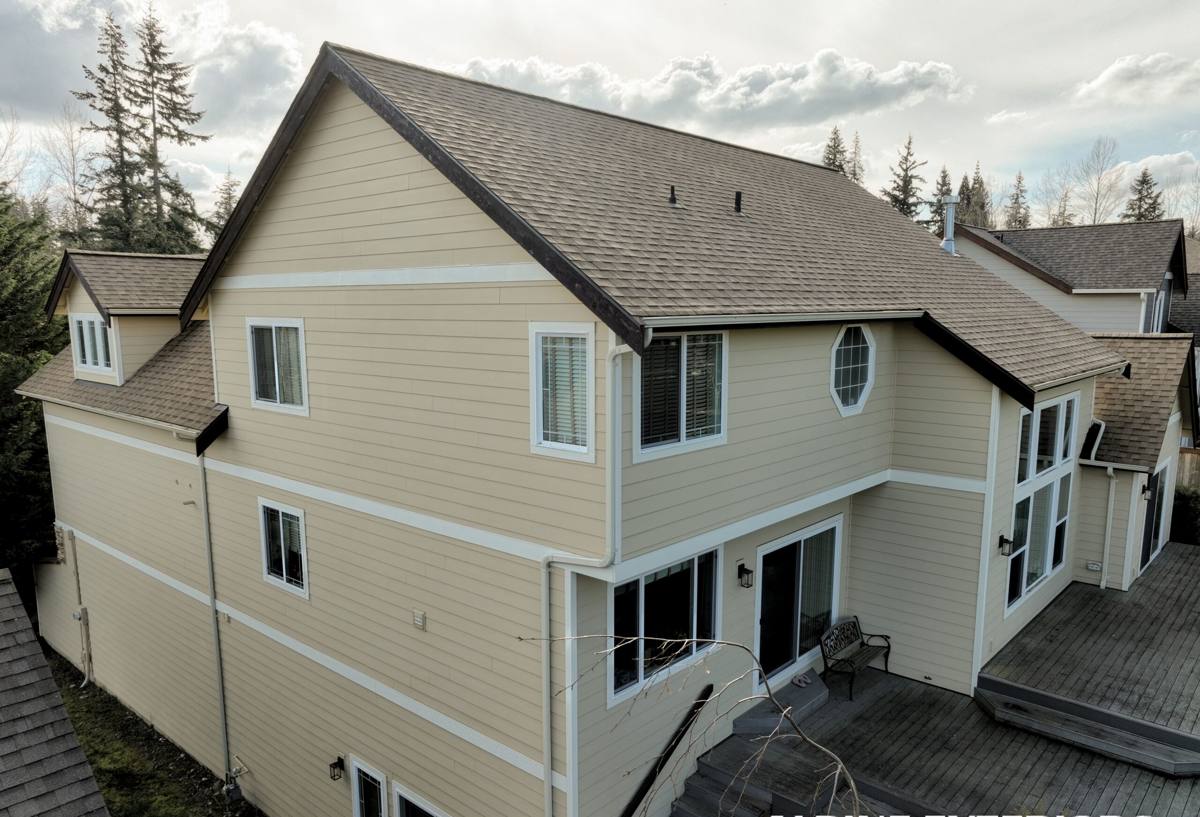
A deck on a lake-adjacent lot in Silver Beach lives a harder life than a deck in a dry, open subdivision. Between the humidity that sits low over the water, the shade thrown by tall evergreens, and the steady moisture that blows in off Whatcom County's coastal weather systems, a deck here spends a large part of the year damp instead of drying out between rains. Add driving rain that gets pushed sideways under railings and fascia, and a long moss season that can run from fall through spring, and you have conditions that punish the wrong material and the wrong build just as much as they punish neglect.
Composite decking earns its keep in exactly this kind of environment, but only when it's specified and installed with these conditions in mind. A composite deck ordered off a catalog page and framed the same way you'd frame it in a dry climate will still grow moss, still trap water where it shouldn't, and still disappoint the homeowner within a few seasons. The material solves some problems on its own; the rest comes down to the build.
What Composite Decking Actually Is
Composite decking is a blend of wood fiber and plastic, formed into boards that don't splinter, don't need staining, and resist rot in a way solid wood simply can't. Two broad categories matter for a home in this area:
- Capped composite — a wood-plastic core wrapped in a plastic shell (cap) on all sides. The cap is what actually blocks moisture absorption and resists staining, fading, and mold growth on the board surface.
- Uncapped composite — the same wood-plastic core with no protective shell. It's less expensive up front but absorbs more moisture at the surface and is more prone to visible mold and mildew in a shaded, damp setting like a lake lot.
For Silver Beach specifically, our standard is fully capped composite on all exposed faces. In a climate with this much sustained moisture and shade, the cap isn't a luxury upgrade — it's the difference between a deck that stays clean with an occasional rinse and one that needs scrubbing every few months.
Composite Isn't Maintenance-Free — It's Lower-Maintenance
Composite decking is often marketed as "maintenance-free." It isn't. It doesn't need sealing, staining, or sanding, but any deck surface exposed to moss spores, pollen, and standing moisture will accumulate a film over time. The honest promise of composite is that this film wipes off with soap and water instead of requiring the sanding, stripping, and re-sealing that wood demands. That distinction matters when we're setting expectations with homeowners here.
Where Deck Failures Actually Start: The Framing, Not the Boards
Most homeowners judge a deck by the boards on top. Most deck problems actually start underneath. In a wet climate, the substructure has to manage water the boards let through, and it has to do it without trapping that water against wood framing.
- Ledger flashing: Where the deck attaches to the house is the single most common point of hidden water damage on any deck in this region. Proper flashing, correctly lapped with the house's water-resistive barrier, keeps rain from tracking behind the siding.
- Joist protection: Composite boards shed most surface water, but rain still gets between boards and lands on the joists below. Untreated or unprotected joists sitting under a damp composite deck for years are a slow rot problem waiting to surface. We treat or cap exposed joist tops so the framing isn't absorbing water it can't dry out.
- Airflow underneath: A low deck built tight to grade with poor ventilation underneath stays damp longer after every rain. Framing height and skirting design should leave the underside able to breathe.
None of this is visible once the deck is finished, which is exactly why it's worth asking about before the build starts, not after boards start showing problems.
Moss, Algae, and Drainage on a Lake-Adjacent Lot
Shade and humidity are the two ingredients moss needs, and a lot near Lake Whatcom often has both in abundance. Moss and algae don't just grow on roofs — they'll take hold on any decking surface that stays damp and shaded long enough, composite included. A capped board resists staining from this growth far better than uncapped composite or bare wood, but growth can still form on the surface if water has nowhere to go.
This is where deck slope and drainage design matter as much as the board itself. A deck should be framed with a slight pitch away from the house so water runs off rather than pooling between boards. Board spacing and groove design also affect how quickly water clears the surface after rain. We factor tree cover and afternoon shade patterns into the layout wherever we can, because a deck that gets even a little more sun exposure through the day will stay noticeably drier than one boxed in by full shade.
Choosing Boards and Colors That Actually Hold Up Here
Color and finish aren't just aesthetic choices in this climate — they affect how a deck ages.
| Consideration | Why It Matters Locally |
|---|---|
| Darker board colors | Hide early moss and pollen staining longer, but run hotter in direct summer sun |
| Lighter, streaked colors | Show less heat buildup; some grain patterns disguise the fine surface film that forms in shaded, damp spots |
| Grooved-edge boards | Allow hidden fastener systems for a clean look, but the grooves can hold moisture and debris if not cleared periodically |
| Square/solid-edge boards | Shed surface debris more easily; fastened face-down, visible screws |
| Board texture (wood-grain embossed vs. smooth) | Heavier texture hides wear but can hold onto fine grit and moss spores longer between cleanings |
There's no single "correct" answer here — it's a trade-off between appearance, heat, and how much rinsing the surface will realistically get. We walk through this with each homeowner based on how the deck is oriented and how much shade it sits under.
Our Installation Process
- On-site assessment — we look at sun exposure, existing drainage patterns, ledger condition, and any moisture damage on the current structure before quoting anything.
- Framing and structural repair — any compromised joists, posts, or ledger connections are addressed first. This is non-negotiable; new boards over bad framing just hides the problem.
- Moisture management build-out — ledger flashing, joist tape or joist caps, and proper pitch are built in before a single composite board goes down.
- Board installation — hidden fastener or face-fastened, per the homeowner's choice, with manufacturer-specified gapping for expansion and drainage.
- Rail and fascia finishing — trim and railing details that don't create hidden water traps at the edges.
- Final walkthrough — we go over basic care and what to watch for through the first wet season.
What Drives the Cost of a Composite Deck
| Factor | Impact on Project |
|---|---|
| Board tier (capped vs. uncapped) | Capped composite costs more per square foot but resists staining and moisture absorption significantly better in shaded, damp settings |
| Substructure condition | Existing rot, undersized framing, or missing flashing adds repair cost before new decking can go down |
| Deck height and access | Elevated decks and difficult site access (common on sloped lake lots) add labor time |
| Railing and fastener system | Hidden fasteners, cable rail, or composite rail systems cost more than basic wood or aluminum rail |
| Square footage and layout complexity | Multiple levels, angles, or wrap-around sections increase both material waste and labor |
We give homeowners a real number after seeing the site, not a phone-quote guess — framing condition alone can swing a project significantly, and we'd rather tell you that up front than after work has started.
Keeping a Silver Beach Composite Deck Looking Right
Composite decking cuts maintenance dramatically compared to wood, but a deck in this specific environment still needs a little seasonal attention:
- Rinse or sweep debris (leaves, needles, pollen) off the surface regularly, especially in fall when it accumulates fastest
- Wash the deck with mild soap and water a couple of times a year to clear the surface film before it becomes visible moss or algae growth
- Keep gutters and downspouts near the deck clear so water isn't dumping directly onto or under it
- Trim back overhanging branches where possible to reduce shade and speed up drying time after rain
- Check railing posts and stair connections annually for movement — framing issues show up here before they show up on the deck surface
- Clear grooved-edge boards of trapped debris periodically if that style was chosen
None of this requires sanding, staining, or sealing — that's the actual advantage composite offers here. It just isn't zero-effort.
Why It Matters That We Already Work in Silver Beach
A contractor who mostly builds decks in dry, open parts of the county will frame and finish a deck the same way regardless of where it sits. A crew that regularly works Silver Beach and the Sudden Valley area knows which lots hold shade longest, which slopes create drainage headaches, and which framing shortcuts show up as rot two or three years later instead of right away. That local pattern recognition is worth more than any spec sheet — it's the difference between a deck that's built to survive this particular climate and one that just happens to be made of composite material.
If you're planning a new deck or replacing one that's showing its age, we're happy to walk the site with you and give you a straightforward, no-pressure estimate — no invented urgency, just an honest look at what your home and lot actually need. Use the form below to get started.