 Sudden Valley
 Siding for Deming and the Sudden Valley Area
Deming sits in the stretch of Whatcom County where the lowlands start climbing toward the Mount Baker foothills, not far from Sudden Valley and the Lake Whatcom corridor. It's a mix of open pasture, dense timber, and homes tucked back under fir and cedar canopy along the Nooksack River drainage. That setting is beautiful, and it's also demanding on a house. Between salt-tinged marine air moving in off the Sound, driving rain that comes sideways more often than straight down, and a moss season that can run most of the year in the shade, the exterior of a Deming or Sudden Valley home works harder than most people realize.
We install siding, roofing, windows, and decks across this part of Whatcom County, and Deming is a neighborhood we know well — the tree cover, the drainage patterns, the way a north-facing wall stays damp for days after everyone else's yard has dried out. That local knowledge changes how we spec and install a job here, not just what we sell.
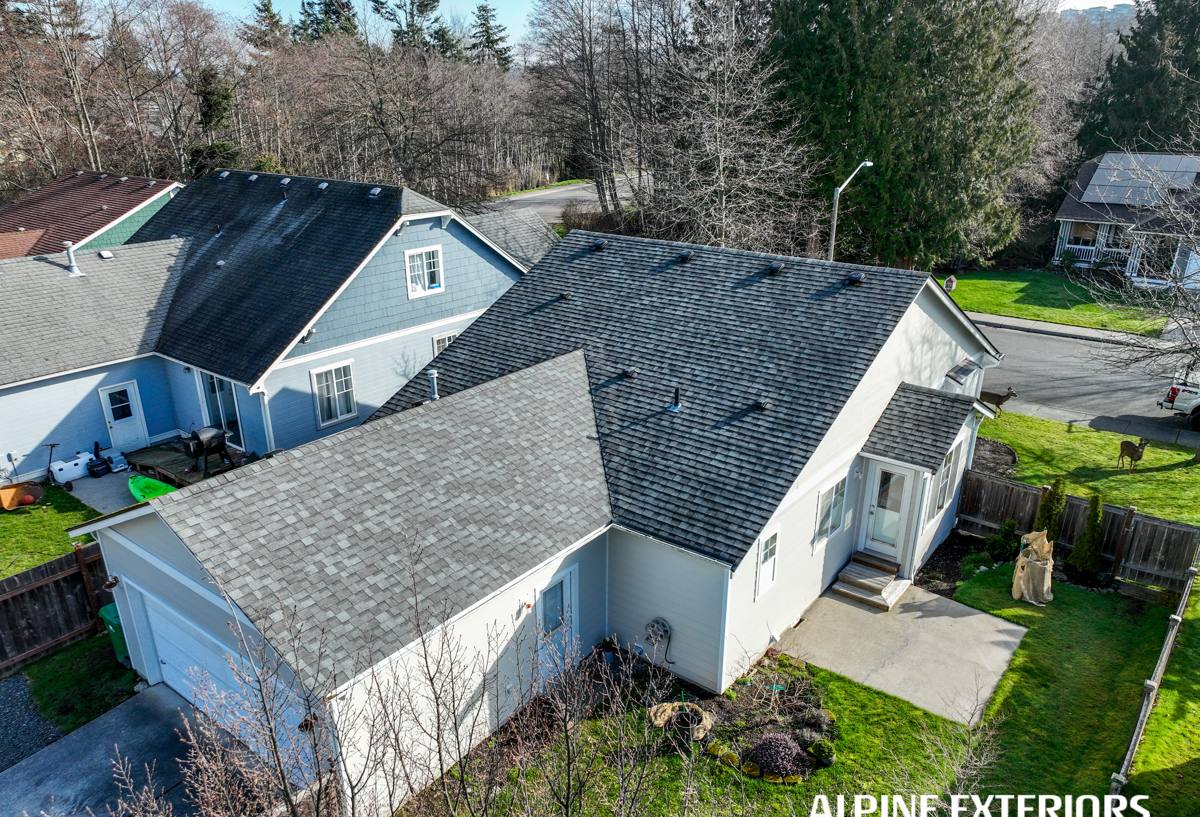
What the Climate Actually Does to a House Out Here
Moisture That Doesn't Leave
Western Washington doesn't just get rain — it gets rain that lingers. In a tree-shaded property near Deming, a wall can stay damp long after a storm has passed because the canopy blocks sun and wind that would otherwise dry it out. That constant low-grade moisture is what feeds moss, mildew, and eventually rot if the siding underneath isn't built to shed water and dry out between soakings.
Moss Isn't Cosmetic
Moss on a roof or a shaded wall isn't just an appearance issue. It holds water against the surface, and on the wrong material — untreated wood, some engineered wood products, or a roof with failing granules — that trapped moisture works its way into seams, fastener holes, and butt joints. In a moss-heavy area like this, the material and the detailing matter as much as the color you pick.
Wind-Driven Rain and Exposure
Storms coming off the Strait push rain sideways, which means the usual assumptions about "protected" wall areas don't always hold. Gable ends, upper stories, and walls facing open pasture take a beating that a fully wooded, low-elevation lot might not. Every Deming property is a little different depending on how much tree cover and elevation it has, which is exactly why we walk the site before recommending anything.
Why We Install Only James Hardie Fiber Cement
We made a deliberate decision years ago to install one siding system: James Hardie fiber cement. We don't offer vinyl, LP SmartSide, Cemplank, Allura, primed spruce, or cedar as alternatives — not because those products don't have a place in the market, but because in this climate, on the homes we get called out to repair or replace, fiber cement is what consistently holds up.
Non-Combustible and Built for the PNW
James Hardie siding is non-combustible fiber cement, which matters in a region where wildfire smoke and ember exposure have become a bigger part of the conversation each summer. It's also engineered in climate-specific product lines — the HZ5 formulation used in this part of Washington is designed around freeze-thaw cycling and sustained moisture exposure, which is precisely what a Deming winter delivers.
ColorPlus Factory Finish
Most of what we install carries Hardie's ColorPlus finish — a factory-applied, baked-on coating that resists fading and chipping far better than field-applied paint. In a moss-prone, shaded environment, that finish also holds up better against the mildew staining that dulls painted wood and some composite products over a few seasons.
Warranty That Follows the House
Hardie backs its products with a transferable limited warranty, which protects the investment for whoever owns the house next — a real factor if you ever sell. That warranty is only meaningful when the product is installed to spec, which is the other half of why we're selective about who swings a nail gun on our jobs.
Why We Don't Install the Alternatives
We get asked about vinyl, LP SmartSide, and cedar often enough that it's worth explaining plainly, without knocking any of them unfairly.
Vinyl Siding
Vinyl is affordable and low-maintenance in mild, dry climates. In a wet, wind-exposed area like Whatcom County, it can warp under temperature swings, and its seams and channels give moisture more opportunities to get behind the cladding. It's also a petroleum-based product with a shorter realistic service life than fiber cement, and it doesn't hold paint if a homeowner ever wants to change the color down the road.
LP SmartSide and Other Engineered Wood
Engineered wood siding has improved a lot over the years, and it performs reasonably well when it's detailed and maintained correctly. But it's still wood-based at its core, which means the cut edges, seams, and any breach in the factory coating are vulnerable to moisture intake — a real risk in a moss-season climate where walls stay damp for extended stretches. We'd rather not gamble on maintenance discipline holding up for twenty years.
Cedar and Primed Spruce
Real wood siding has genuine appeal, and there are homes in this area that wear it well. But it demands a maintenance schedule — recoating, caulking, spot repairs — that most homeowners underestimate until the first signs of checking or rot show up, usually on the shaded, moss-affected sides of the house first. We'd rather install something that doesn't put that burden back on the homeowner every few years.
Comparing the Options
| Material | Moisture Behavior in Wet, Shaded Climates | Maintenance | Typical Lifespan |
|---|---|---|---|
| James Hardie Fiber Cement | Non-combustible, engineered for sustained moisture and freeze-thaw exposure | Low — occasional wash, no recoating on ColorPlus finish | 30+ years with proper install |
| Vinyl | Seams and channels can trap moisture; can warp with temperature swings | Low, but limited repair options | 15-25 years |
| Engineered Wood (LP SmartSide) | Vulnerable at cut edges and seams if coating is breached | Moderate — caulking and coating checks needed | 20-30 years with diligent upkeep |
| Cedar / Primed Spruce | Absorbs moisture readily; prone to rot in shaded, moss-prone areas | High — regular refinishing required | Varies widely with maintenance |
Roofing, Windows, and Decks — The Rest of the Exterior
Siding rarely fails in isolation. A roof shedding granules, windows with failing seals, or a deck holding standing water all feed moisture into the same wall systems siding is trying to protect. We handle all four trades — siding, roofing, windows, and decks — because on a property like the ones around Deming, they need to work as one system, not four separate contractors making four separate assumptions about how water moves around the house.
Roofing
A roof that's shedding granules or holding moss mats is sending water somewhere it shouldn't go, often straight down behind fascia and into the top course of siding. We look at roof condition on every siding estimate for that reason.
Windows
Old or poorly flashed windows are one of the most common hidden water entry points we find when we open up a wall during a siding tear-off. Replacing siding without addressing a failing window nearby just moves the problem, it doesn't solve it.
Decks
Decks attached to the house create a ledger connection that, if not flashed correctly, is a direct path for water into the wall assembly. In a rainy, moss-heavy climate, deck maintenance and siding maintenance are more connected than most homeowners assume.
What a Local Crew Means for This Job
Deming and Sudden Valley aren't generic "Whatcom County" — they have their own microclimate quirks driven by elevation, tree cover, and proximity to the river and the lake. A crew that works this area regularly knows which walls need extra flashing attention, which lots hold moisture longest into spring, and how the wind actually moves rain into a wall on an exposed pasture-facing elevation versus a sheltered, tree-lined one. That knowledge shows up in small decisions during installation — flashing details, fastener spacing, joint placement — that don't show up on a sales brochure but absolutely show up in how the house performs ten winters from now.
What to Expect From the Process
- An on-site walkthrough where we assess existing siding condition, moisture damage, moss patterns, and trim/flashing details specific to your lot
- A written estimate that spells out product line, color, and scope — no vague allowances
- Coordination of any roofing, window, or deck work that's tied into the same water-management system
- Proper house-wrap and flashing detail work before a single piece of siding goes up — this is where most long-term failures actually originate
- Installation to James Hardie's published specifications, including fastener pattern, clearances, and joint treatment
- A final walkthrough so you understand what was done and what (if any) upkeep is expected
Cost Factors Worth Understanding
Every property is different, and we don't post blanket pricing because square footage alone doesn't tell the real story. Factors that move the number on a Deming or Sudden Valley home include:
- How much of the existing siding and sheathing needs to come off versus staying in place
- Whether moisture damage is found once the old siding is removed
- Home elevation count and trim complexity (gables, dormers, multiple rooflines)
- Access — tree cover, slope, and driveway conditions common in the foothills
- Whether roofing, window, or deck work is bundled into the same project
We walk every property in person before giving a number, because a phone-quote estimate on a wooded, sloped Deming lot is usually wrong in one direction or the other.
Living With Hardie Siding Long-Term
One of the reasons homeowners in this area choose fiber cement is how little it asks of them afterward. A periodic rinse to knock off pollen, moss spores, or road dust is typically all that's needed — there's no recoating schedule, no caulk-and-touch-up routine every few springs. In a climate that punishes anything requiring regular maintenance, that's a meaningful difference over the life of the siding, not just a talking point at the time of sale.
If you're weighing a siding, roofing, window, or deck project on a home in Deming or Sudden Valley, we're glad to walk the property, look at what's actually going on with moisture and moss, and give you a straightforward, no-pressure estimate — free, with no obligation to move forward.