 Sudden Valley
 Bellingham's Exterior Climate: Why Siding Choice Matters Here
Bellingham sits where Puget Sound weather meets the edge of the Cascade foothills, and that combination is hard on a home's exterior. Homes closer to Bellingham Bay deal with salt-laden air moving in off the water, which accelerates corrosion on fasteners, trim, and any siding material that isn't built to shed moisture well. Move a few miles inland and the salt exposure drops off, but the rain doesn't — Whatcom County gets long stretches of steady, driving rain for much of the fall, winter, and spring, and wind-driven rain finds every gap in a poorly flashed wall.
Then there's moss. Bellingham's tree cover, humidity, and mild temperatures create a moss season that can run eight months or longer in shaded, north-facing, or tree-canopied lots. Moss and algae don't just look bad — they hold moisture against the siding surface, which is exactly the condition that causes rot, paint failure, and coating breakdown over time.
None of this means siding in Bellingham is doomed to fail. It means the material and the installation both have to be matched to the actual conditions, not to a national-average assumption about "Pacific Northwest weather." We look at each home's exposure — how close to the water, how much shade, which direction it faces — before we recommend anything.
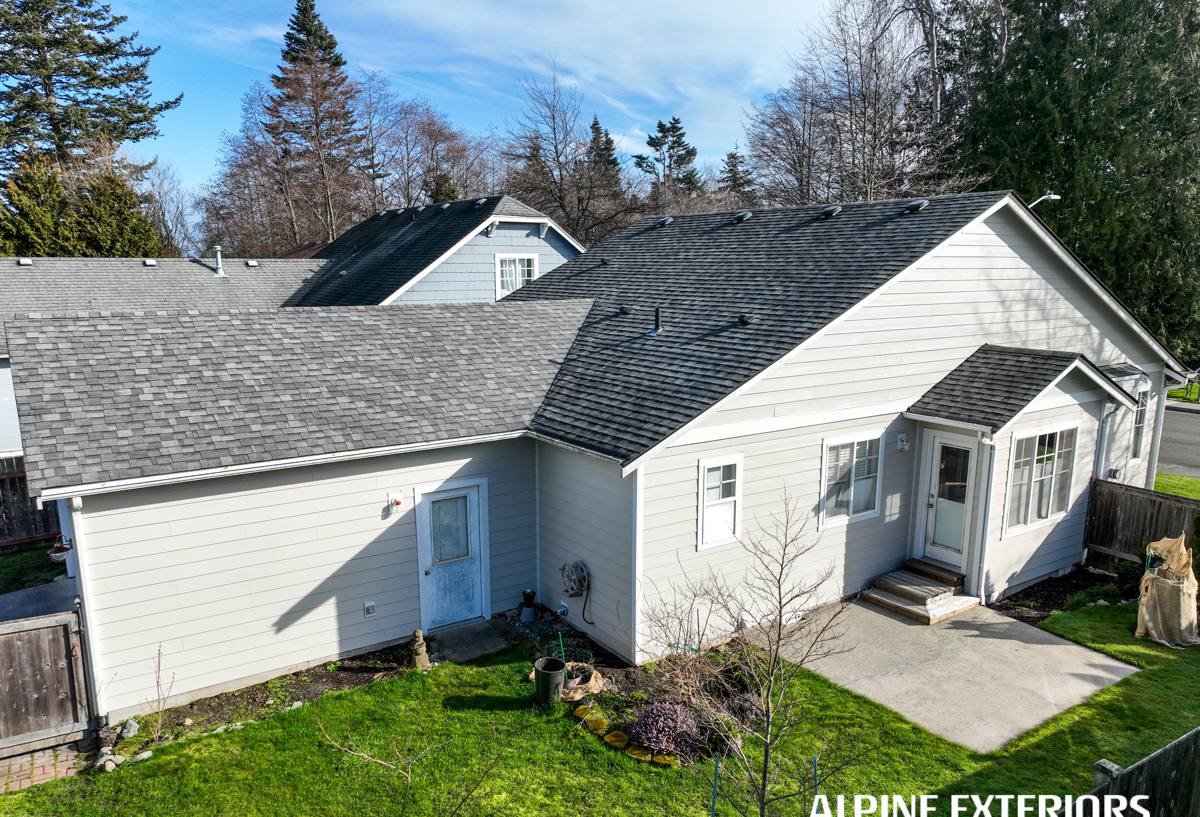
What We See on Bellingham Homes
Moisture-Driven Damage
The most common failure we find isn't dramatic — it's slow. Caulking dries out and cracks, a J-channel or piece of trim was installed with a gap instead of a proper lap, and water gets behind the siding a little at a time. On wood-based products, that moisture leads to swelling, soft spots, and eventually rot. On vinyl, it usually shows up as warping or buckling where the material has expanded and contracted one too many times.
Moss and Algae Staining
Green and black streaking on north-facing walls and under eaves is extremely common here. On some siding materials, that staining is mostly cosmetic and washes off. On others, particularly untreated wood or lower-grade composites, sustained moss contact softens the surface and shortens the material's useful life.
UV and Coating Fatigue
Bellingham doesn't get brutal summer heat, but UV exposure over years still chalks and fades paint finishes, especially on south and west elevations. Repainting siding every five to seven years is a real, recurring cost that a lot of homeowners don't factor in when they first choose a product.
Why We Install James Hardie Fiber Cement — and Nothing Else
Sudden Valley Siding installs James Hardie fiber cement exclusively. We don't install vinyl, LP SmartSide, Cemplank, Allura, primed spruce, or cedar, and that's a deliberate standard, not a lack of options.
Vinyl is inexpensive and low-maintenance in mild climates, but in wind-driven rain it relies entirely on a correctly lapped, well-ventilated installation to keep water out — there's no material mass to buffer a mistake. It also softens and can distort in direct summer sun on darker colors, and it's a petroleum-based product with real limits on fire resistance.
Wood products — cedar, primed spruce — look great when new and age beautifully when maintained relentlessly. In a climate with Bellingham's moss season and rain totals, "maintained relentlessly" means repainting, caulking, and moisture-checking on a tight cycle most homeowners don't have time for. Skip a cycle and rot sets in fast.
LP SmartSide, Cemplank, and Allura are all reasonable engineered products, and we don't claim they're unsafe or defective. We simply standardized on James Hardie because, in our experience across wet coastal climates, its fiber cement formulation and factory-applied finish system hold up with less maintenance and fewer callbacks than the alternatives. Running one product line also means our crews install it the same correct way on every job, every time — no guessing on a different manufacturer's spec sheet.
Fiber cement is non-combustible, which matters for insurance and for peace of mind. It doesn't expand and contract with temperature the way vinyl does, so seams and caulk lines stay tighter longer. And Hardie's ColorPlus factory finish is baked on under controlled conditions, which holds color and resists the fading and chalking that field-applied paint shows first.
James Hardie Product Lines for This Climate
James Hardie makes climate-specific formulations, called HZ10 and HZ5, engineered for different moisture and freeze-thaw conditions across the country. Western Washington, including Bellingham and the Whatcom County lowlands, falls into the HZ10 zone, which is formulated for wetter, milder climates like ours rather than the harsher freeze-thaw cycles found elsewhere in the country.
- HardiePlank lap siding — the most common choice for traditional Bellingham home styles, available in several exposure widths and textures
- HardieShingle — for homes wanting a shingle or shake look without the maintenance burden of real cedar shakes
- HardiePanel — vertical panel siding, often used for accent gables or modern-style builds
- HardieTrim — matching trim boards so the whole exterior system is fiber cement, not mixed materials with mismatched lifespans
ColorPlus finishes come in a range of factory colors with a matching touch-up system, backed by a separate finish warranty from the substrate warranty — so both the board and the color are covered, not just one or the other.
Installation Details That Matter More Than the Product
Fiber cement siding is only as good as the installation behind it. Most siding failures we're called to inspect — regardless of brand — trace back to installation shortcuts, not a bad product. In a climate that pushes rain sideways during winter storms, a few details are non-negotiable:
- Correct weather-resistant barrier installed behind the siding, lapped properly with flashing at every window, door, and penetration
- Proper fastener placement and spacing per manufacturer spec, not field guesswork
- Adequate clearance between siding and grade, decks, and roof lines so water doesn't wick up from below
- Caulking only where Hardie's install guide actually calls for it — over-caulking traps moisture just as badly as under-caulking
- Ventilation gaps maintained so any incidental moisture behind the siding can dry out
A crew that's installed hundreds of these boards in wet coastal conditions catches the details that a generalist crew, or one used to a dry-climate install, might miss.
Beyond Siding: Roofing, Windows, and Decks
Siding doesn't work in isolation — it's one piece of the building envelope. We also handle roofing, window replacement, and deck work, because a siding job done right often surfaces issues in the roofline flashing, window trim, or deck ledger connection that need to be addressed at the same time. Coordinating those trades under one crew means fewer gaps where water can find a way in, and one point of contact instead of three separate contractors pointing fingers at each other.
What Siding Replacement Costs Depend On
| Factor | Why It Matters |
|---|---|
| Home size and stories | More square footage and taller walls mean more material and labor, plus staging/lift needs |
| Current siding removal | Tear-off of old wood, aluminum, or vinyl adds labor versus a bare-wall install |
| Underlying sheathing condition | Rot or water damage found during tear-off requires repair before new siding goes on |
| Trim and detail complexity | Dormers, multiple gables, and custom trim take more time than a simple rectangular elevation |
| Siding profile and finish | Shingle-style and custom colors typically cost more than standard lap profiles in stock colors |
| Site access | Steep lots, tree-heavy yards, or tight setbacks (common around Bellingham and Lake Whatcom) can affect staging and timeline |
We give firm, itemized quotes after an in-person inspection — not a phone estimate — because these factors vary too much house to house to guess accurately.
Signs It's Time to Call for an Inspection
- Visible warping, buckling, or gaps between siding boards or panels
- Soft spots when you press on the siding, especially near the bottom courses or around windows
- Paint that's peeling or bubbling rather than just fading
- Persistent moss or algae growth that comes back quickly after cleaning
- Rising energy bills that might point to a compromised weather barrier or insufficient insulation behind old siding
- Visible daylight or drafts around window and door trim
Catching these early is almost always cheaper than waiting until there's structural rot to repair underneath.
Why a Local Crew Matters in Whatcom County
A crew that works Bellingham and the surrounding Whatcom County communities year-round knows how differently a lakefront home near Lake Whatcom performs compared to one a few blocks from the bay, and how a heavily shaded lot needs different moss and moisture management than an open, sun-exposed one. That local knowledge shapes real decisions — where extra flashing attention goes, which elevations need the most protection, and how to sequence a job around our wet-season weather windows.
If your Bellingham home's siding is showing its age, or you're planning ahead rather than waiting for a problem, we're happy to take a look. Reach out for a free, no-pressure estimate using the form below.