 Sudden Valley
 Exterior Work in Barkley, From a Crew Based in Sudden Valley
Barkley sits close enough to Sudden Valley that we treat it as part of our regular service area, not an afterthought tacked onto a service list. It's a different setting than the wooded, lake-shaded lots we work on inside Sudden Valley itself — Barkley homes tend to sit more open to the sky and closer to the marine air moving in off Bellingham Bay, which changes what actually wears out a house here. Salt-tinged air, rain that arrives sideways more often than straight down, and a moss season that can run most of the year all show up on Barkley homes in specific, predictable ways, and an exterior system that isn't chosen and installed with that combination in mind tends to show it within a few winters.
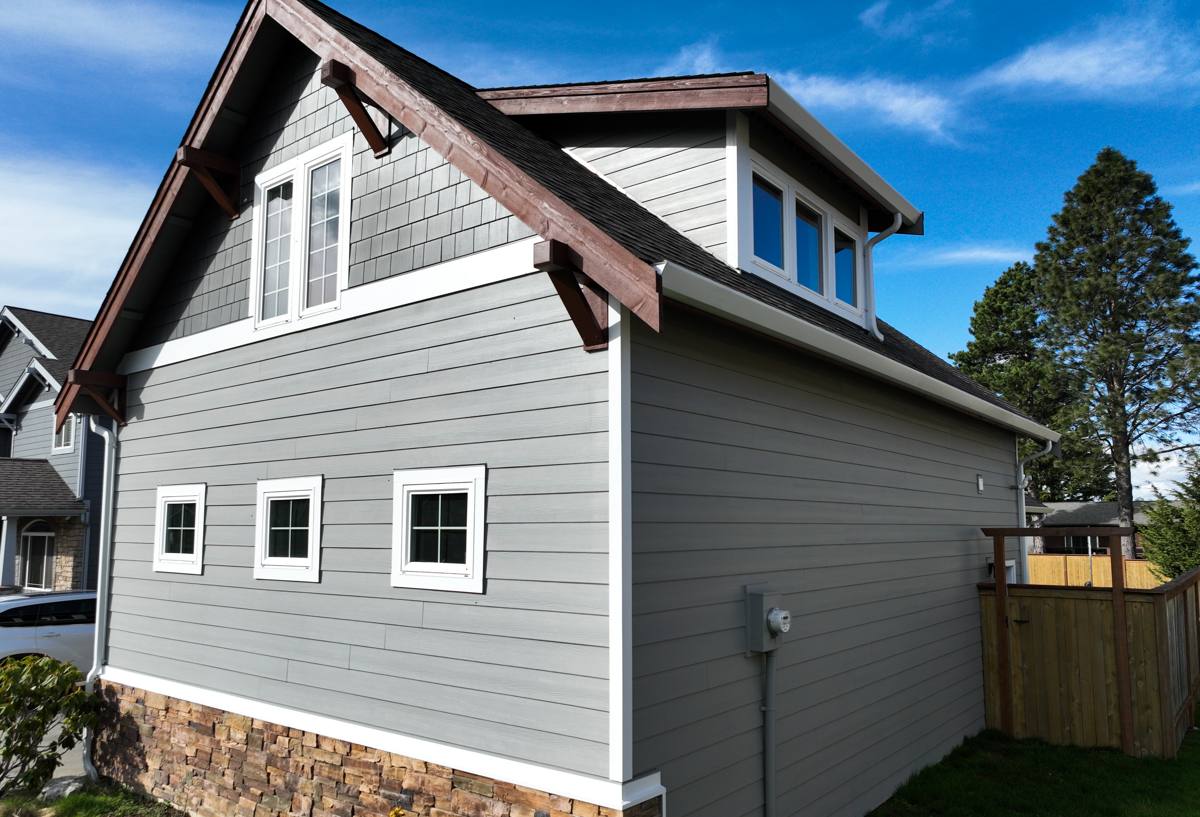
We handle siding, roofing, windows, and decks, and we install siding using James Hardie fiber cement exclusively — no other brand, no exceptions. That's a professional standard built around what we've seen actually hold up in Whatcom County's marine climate, not a supplier relationship or a sales pitch. This page walks through why, and what exterior work for a Barkley home looks like when it's done right.
What Barkley's Climate Does to a House
Salt Air Off the Bay
Barkley's proximity to Bellingham Bay means homes here catch more salt-laden marine air than properties further inland or tucked back under heavier tree cover. That salt content accelerates corrosion on fasteners, flashing, and any lower-grade trim hardware exposed to the weather. It's a slow, cumulative process — by the time rust streaks appear below a nail head or a piece of trim hardware starts to loosen, the corrosion has usually been building for years, quietly, out of sight.
Driving Rain
Storms in this part of the Pacific Northwest generally arrive with wind behind them, which pushes rain sideways into wall assemblies, window flashing, and every seam where two building components meet. A siding system built for a climate where rain mostly falls straight down can still fail here, because the difference isn't the material's face — it's whether the water barrier and flashing details behind it were built to handle rain hitting the wall at an angle instead of a rooftop hitting it head-on.
A Long Moss Season
Cool temperatures, consistent humidity, and Whatcom County's tree cover give moss and algae a growing window that runs close to year-round on shaded, north-facing walls and rooflines. Moss isn't just a cosmetic issue — it holds moisture against a surface far longer than open air would, and on a material that isn't built to shed that dampness, the constant wet eventually leads to soft spots and rot underneath the green tint on top.
Why We Only Install James Hardie Fiber Cement
Facing that combination of salt exposure, wind-driven rain, and prolonged moss and moisture, we made a deliberate call: install one siding system to a consistently high standard rather than spread a crew across several brands and end up with uneven results on any one of them. James Hardie's fiber cement resists the swelling, cupping, and edge-softening that wood-based siding products can develop after repeated wetting, it's non-combustible, and its ColorPlus finish is baked on at the factory under controlled conditions instead of painted in the field — which matters in a climate where paint has a narrow window to properly cure before the next rain moves through.
- Non-combustible core: Fiber cement doesn't feed a fire the way wood-based products can, which matters for both safety and, often, insurance considerations.
- Factory-applied ColorPlus finish: Cured under controlled conditions rather than brushed on-site, it resists fading, chalking, and moisture intrusion far longer than field-applied paint.
- Climate-engineered HZ formulation: Hardie's HZ5 line is built for regions with sustained moisture exposure and freeze-thaw cycling, which is a close match for what Barkley homes actually face.
- Dimensional stability: It doesn't swell or warp the way engineered wood can after repeated wetting cycles that never fully dry out in a marine climate.
- A strong transferable warranty: Hardie backs its products with a substantial warranty, provided installation follows their published specifications.
We won't install LP SmartSide, vinyl siding, Cemplank, Allura, primed spruce, or cedar. Each has a legitimate place in the market and plenty of homeowners elsewhere are satisfied with them. But for a Barkley property sitting in salt air and driving rain, we've made a professional judgment call that we'd rather stand fully behind one system than offer a cheaper option that quietly shifts long-term maintenance risk back onto the homeowner.
Comparing Exterior Materials for a Barkley Property
| Material | Behavior in Salt Air & Driving Rain | Moss & Moisture Resistance | Typical Upkeep |
|---|---|---|---|
| James Hardie fiber cement | Dimensionally stable; corrosion-resistant fastener systems used with it | Doesn't absorb moisture into the core; factory finish resists staining | Low; occasional rinse and caulk check |
| Vinyl siding | Can become brittle over time; seams give wind-driven rain an entry point | Moisture can collect behind panels in poorly ventilated assemblies | Low upfront, but seam integrity needs monitoring |
| LP SmartSide / engineered wood | Wood-strand core is moisture-sensitive at cut edges and fastener points | Requires diligent edge sealing to resist moss-related moisture | Moderate to high, especially at joints |
| Cedar / primed wood | Absorbs and releases moisture readily; salt air accelerates weathering | Needs regular refinishing to resist moss and rot | High; ongoing paint and moisture maintenance |
Roofing for a Barkley Home
Roofing in this area deals with the same three pressures as siding, but roofs take the brunt of it since they're the most exposed surface on the house. Correct underlayment, properly lapped flashing at every penetration and roof-to-wall transition, and ventilation that lets the roof deck dry out between storms are the baseline we build to. On a home sitting closer to the bay, we also pay particular attention to fastener and flashing material selection, since standard-grade metal corrodes faster here than it would further inland.
- Moss buildup in valleys or on shaded slopes that keeps returning shortly after cleaning
- Granule loss showing up in gutters or downspouts
- Rust streaking at flashing, vents, or fastener heads
- Soft spots or sagging near penetrations and eaves
- Water staining on interior ceilings near exterior walls after a heavy or wind-driven rain
Windows That Hold Up to Wind-Driven Rain
Window performance in Barkley comes down to flashing and installation as much as the window unit itself. A well-built window with poor flashing integration will still leak once wind pushes rain sideways into the wall assembly, which is a routine event here rather than an occasional storm. We pay close attention to how new window flashing ties into the surrounding wall and siding, since that transition is one of the most common places moisture finds its way into a wall system in a climate where rain rarely falls straight down.
Decks Built for Salt Air and a Long Wet Season
Decks near Barkley deal with a specific combination: salt-laden air that accelerates fastener and connector corrosion, moisture that lingers longer than it would in a drier climate, and a moss season that can make deck surfaces slick and hold dampness against the boards for extended stretches. That combination speeds up rot in lower-grade decking and corrosion in hardware that isn't rated for sustained coastal-influenced exposure. We use fasteners and structural connectors suited to this kind of environment, and we walk homeowners through the real maintenance differences between wood and composite decking rather than defaulting to a one-size-fits-all recommendation.
What Affects Exterior Project Cost in Barkley
| Factor | Why It Matters |
|---|---|
| Home size and wall complexity | More corners, dormers, and cutouts mean more material waste and labor time |
| Sheathing or roof deck condition | Damage found during tear-off adds scope that can't be priced accurately until the old material is off |
| Exposure to wind and salt air | Elevations that take the brunt of weather often need extra flashing or fastener detailing |
| Access and site conditions | Steep lots or tight setbacks can add time and equipment cost |
| Existing moss or moisture damage | Long-neglected moss growth can mean hidden rot that adds to the repair scope |
We walk through these factors during an on-site estimate rather than quoting a flat number sight-unseen, since two similarly sized homes in Barkley can end up with meaningfully different scopes depending on exposure and condition.
Why a Local Crew Based Near Sudden Valley Matters
A contractor working this specific stretch of Whatcom County regularly — not occasionally — tends to catch details a generic install misses: which walls take the worst of the wind-driven rain, how much clearance a given wall needs at grade, and which fastener grade actually holds up against salt air over the long run instead of just on paper. Being based near Sudden Valley also means we're not far away if a warranty question or a minor issue comes up years down the line. We're not a name from an out-of-area lead-generation service that disappears once the final payment clears.
A Simple Checklist Before Hiring for Exterior Work in Barkley
- Ask what siding material they install and why, and whether they'll put a written warranty behind it
- Confirm current Washington state contractor licensing and active liability insurance
- Ask how they detail flashing and drainage for wind-driven rain exposure specifically
- Ask whether they handle roofing, windows, and decks, or only siding — since these systems fail together more often than homeowners expect
- Get a clear, written scope of work before signing anything
If your Barkley home's exterior is showing wear from salt air, wind-driven rain, or a stubborn moss problem, we're glad to take a look and put together a straightforward, no-pressure estimate. Use the form below to request one.