 Sudden Valley
 Ferndale's Exterior Climate: What Salt Air, Rain, and Moss Do to a House
Ferndale sits close enough to the water and to the open farmland of the Nooksack lowlands that homes here take on a mix of exposures most inland Whatcom County towns don't deal with. Depending on where a house sits, it can face salt-tinged air moving off Puget Sound and the Strait of Georgia, long stretches of driving rain pushed in off the water by winter storms, and the deep shade and moisture that come with mature tree cover on a lot. None of these are dramatic, headline-grabbing problems. They're slow ones. That's what makes them dangerous to siding, trim, and roofing that isn't built for the job.
Salt air accelerates corrosion on fasteners and metal flashing, and it tends to keep painted and wood-based surfaces damp longer than they'd stay in a drier inland climate. Driving rain — rain that comes in sideways during a windstorm instead of falling straight down — finds every gap in a siding system that wasn't installed with real attention to lap lines, caulking, and flashing details. And moss season, which in this part of Whatcom County can run from fall through spring, means anything shaded or north-facing stays wet and green far longer than it should. Moss and algae hold moisture against a wall surface, and moisture held against the wrong material for months at a time is how rot gets started.
None of this means a house in Ferndale is doomed to expensive repairs. It means the exterior materials and installation details matter more here than they would in a milder, drier region — and that's the lens we look through on every job.
Why a Local Crew Matters
We're based out of Sudden Valley and work throughout Whatcom County, including Ferndale on a regular basis. That's not just a convenience point for scheduling — though it does mean shorter drive times, easier warranty callbacks, and a crew that isn't stretched thin across a multi-county service area they only visit occasionally.
It also means we've seen how the same product performs differently across this county's microclimates. A siding detail that holds up fine on a sheltered inland lot can fail faster on a more exposed property closer to the water. A crew that only shows up in the area once or twice a year doesn't build that kind of pattern recognition. A local crew does, and it shapes decisions on flashing, joint placement, and finish selection before the first piece of siding ever goes up.
Local also means accountability. If something needs a second look after a storm, we're not a company that has to schedule a trip from three counties away — we're already working in the area.
What We Handle: Siding, Roofing, Windows, and Decks
Most exterior problems don't respect the boundary between trades. A siding failure at a window flashing is really a window and siding problem. A rotted rim joist under a deck ledger is a deck and moisture-management problem. Because we handle siding, roofing, windows, and decks as one crew, we look at the whole envelope of the house rather than treating each surface as a separate, disconnected project.
Siding
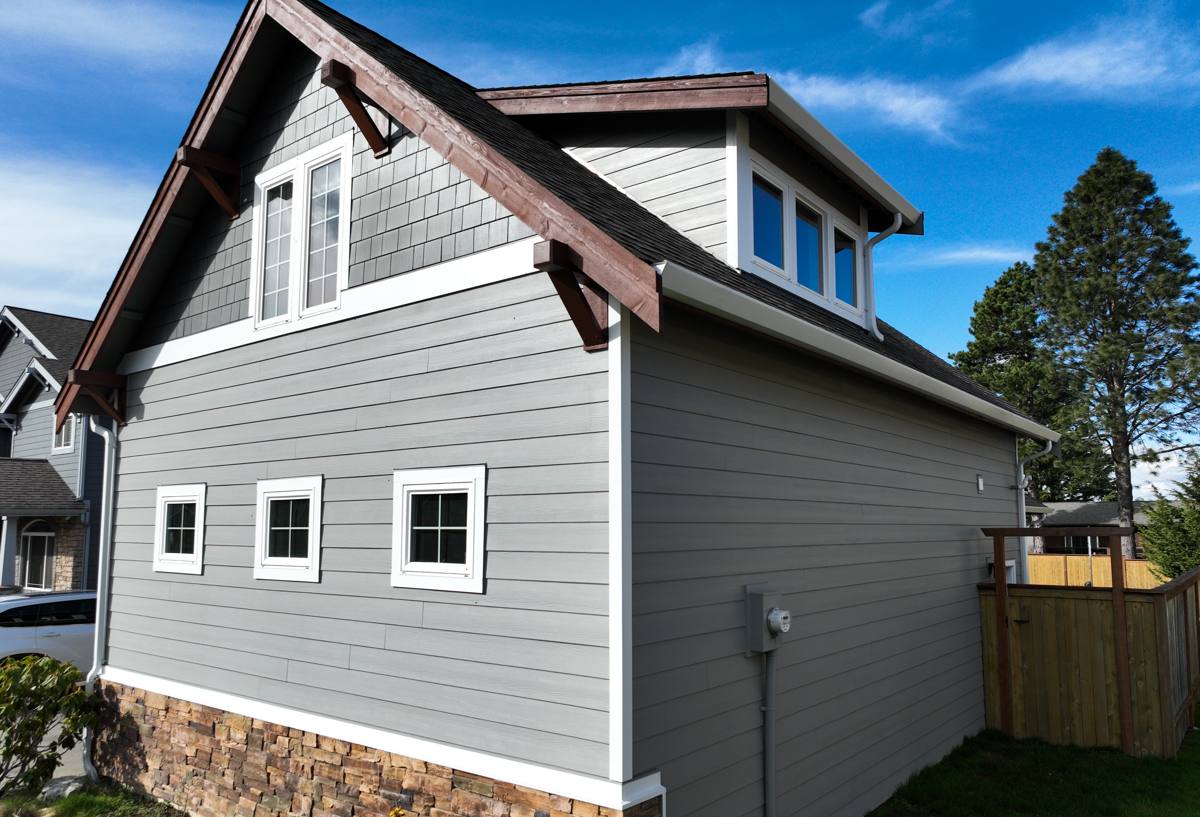
This is our core focus, and in Ferndale's mixed exposure — salt air in some pockets, heavy tree shade and moss in others — the siding material and the installation detailing both carry real weight.
Roofing
Roof condition and siding condition are connected. A roof that's shedding water incorrectly at the eaves or valleys will overload the siding and trim below it, no matter how good that siding is.
Windows
Window flashing and integration with the siding plane is one of the most common failure points on any house, old or new. We address windows as part of the siding plan, not as a separate afterthought.
Decks
Decks attached to the house share structural and moisture connections with the siding and framing behind them. Ledger board flashing in particular is an area where driving rain and long wet seasons cause slow, hidden damage if it's not detailed correctly.
Why We Install Only James Hardie Fiber Cement
We made a decision as a company to install James Hardie fiber cement siding exclusively. We don't install vinyl, LP SmartSide, Cemplank, Allura, primed spruce, or cedar. That's a deliberate standard, not a lack of options, and it's worth explaining honestly rather than just asserting.
Each of the alternatives has real strengths — vinyl is inexpensive and low-maintenance in mild climates, engineered wood products install quickly and take paint well, cedar has a genuine natural look many homeowners love. But each also carries trade-offs that matter more in a climate with sustained moisture exposure and salt air than they would somewhere drier: wood-based products can be more sensitive to sustained moisture at cut edges and joints if not maintained closely; cedar requires an ongoing maintenance commitment to stay ahead of moss, mildew, and weathering; vinyl can become brittle over time and doesn't offer the same fire performance.
James Hardie fiber cement is non-combustible, which matters given Washington's wildfire seasons even on the wetter west side of the state. It's engineered specifically for climate zones like ours through Hardie's HZ10 product line, built for the cold, wet Pacific Northwest. The factory-applied ColorPlus finish is baked on under controlled conditions rather than field-painted, which gives more consistent, longer-lasting color performance against sun and moisture exposure than a site-applied finish typically achieves. And it carries a strong transferable warranty when installed to Hardie's specifications — installation quality is what makes or breaks that warranty, which is why our crew is trained specifically on Hardie's installation requirements rather than treating it as generic siding work.
How the Common Siding Materials Compare
| Material | Moisture Behavior | Maintenance | Fire Rating |
|---|---|---|---|
| James Hardie Fiber Cement | Engineered for wet climates; doesn't rot | Low — factory finish, periodic wash | Non-combustible |
| Vinyl | Doesn't absorb water, but can trap it behind panels | Low, but can crack/fade over time | Combustible |
| Engineered Wood (LP SmartSide, etc.) | Sensitive at cut edges and joints if unsealed | Moderate — needs sealed edges maintained | Combustible |
| Cedar | Absorbs moisture; needs to dry out between rain events | High — refinishing, moss/mildew control | Combustible |
Signs Your Siding Needs Attention
In a climate like Ferndale's, siding problems often start quietly. A yearly walk-around can catch issues while they're still cosmetic instead of structural.
- Soft or spongy spots when pressed, especially near the bottom of walls or under windows
- Persistent moss or algae growth that doesn't wash off easily, particularly on shaded or north-facing walls
- Paint that's peeling, bubbling, or failing faster than expected
- Visible gaps, warping, or buckling in siding panels or boards
- Staining or discoloration streaking down from seams, window edges, or trim joints
- A musty smell near exterior walls inside the house
- Rust streaking from fasteners, more common where salt air exposure is higher
How the Replacement Process Works
A siding replacement isn't just pulling off old material and nailing up new panels. On every job we walk through the same general sequence:
- Assessment — we look at the existing siding, sheathing, and any signs of moisture damage before quoting anything
- Removal — old siding comes off and the sheathing underneath gets inspected, since hidden rot is common on older homes
- Weather barrier and flashing — this is the step that determines how the house handles driving rain for the next several decades; it doesn't get rushed
- Installation — Hardie panels or lap siding installed to manufacturer spec, including proper fastener spacing, clearances, and caulking
- Trim and detail work — window, door, and corner details finished to shed water correctly
- Final walkthrough — checking the completed work against the original assessment
What Affects the Cost of a Siding Project
Every house is different, and we don't quote broad projects without seeing the property, but a few factors consistently move the price up or down.
| Factor | Why It Matters |
|---|---|
| Condition of existing sheathing | Hidden rot found during removal adds repair work before new siding can go up |
| Home size and complexity | More corners, gables, and trim details mean more labor and cutting |
| Siding profile chosen | Lap siding, panel siding, and shingle-style Hardie products vary in material and install time |
| Access and site conditions | Tree cover, slope, and staging space affect how efficiently a crew can work |
| Scope beyond siding | Combining siding with roofing, window, or deck work can create efficiencies but changes total project size |
Living With Moss Season: Practical Maintenance
Even the best siding material benefits from a little seasonal attention in a climate like this. Keeping gutters clear so water isn't overflowing onto walls, trimming back vegetation that keeps a wall surface shaded and damp, and doing a gentle rinse of moss or algae buildup once or twice a year go a long way toward protecting the investment. James Hardie siding doesn't rot the way wood-based products can, but keeping moisture and organic growth from sitting against any exterior surface for months at a time is good practice regardless of material.
Get a Local, No-Pressure Estimate
If you're noticing any of the warning signs above, thinking ahead about a roof, window, or deck project, or just want an honest read on your home's exterior condition, we're glad to come take a look. As a Sudden Valley-based crew working throughout Whatcom County, we can usually get out to Ferndale without a long scheduling wait. Fill out the form below for a free estimate — no pressure, no obligation.