 Sudden Valley
 Exterior Work in the Acme Area
Acme sits in the shadow of the North Cascade foothills, close enough to Sudden Valley and the rest of Whatcom County that homes here deal with the same weather patterns we see across our whole service area — just with their own local wrinkles. Homes tucked against tree lines or set back from the road get more shade and more moss pressure. Homes with more open exposure take the brunt of wind-driven rain off the valley. Either way, the exterior of a house in this part of Washington works harder than exteriors in drier climates, and it shows up first in the siding, the roof edges, and the trim around windows and doors.
We've built our whole business around exterior systems that are meant to hold up to this specific kind of weather, not weather in general. That's why we're selective about what we install, and it's why a local crew that actually drives these roads and sees these homes matters more here than it would somewhere with a milder, drier climate.
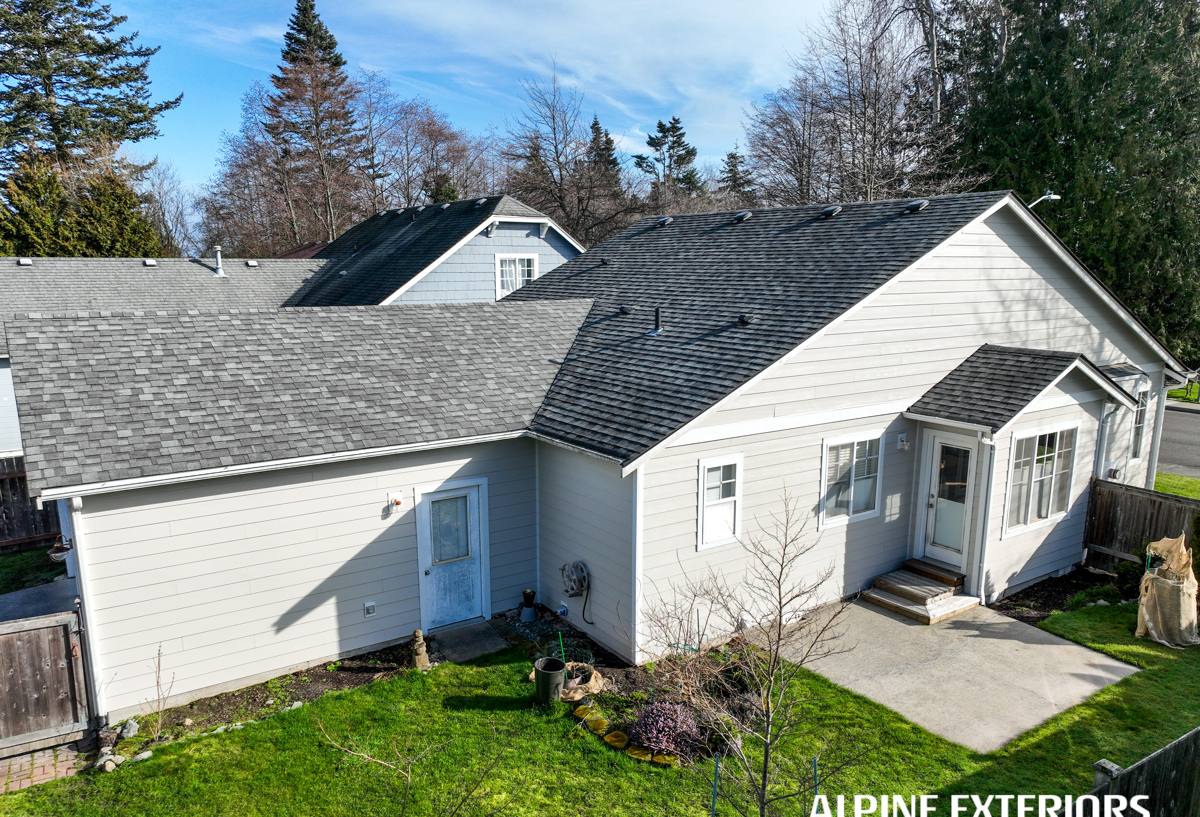
What This Climate Actually Does to a House
Moss Season Is Longer Than People Think
In Whatcom County, moss isn't a summer nuisance — it's closer to a year-round tenant. Cool temperatures, filtered sun, and consistent moisture give moss and algae the exact conditions they need to establish on roofs, north-facing siding, and shaded trim. Once moss gets a foothold, it holds moisture directly against the building material underneath it. On a roof, that means shortened shingle life and granule loss. On siding, it means paint and finish that break down faster than they should, and in the worst cases, moisture that works its way into seams and fasteners.
Salt Air and Marine Exposure
Because Whatcom County sits along the water, homes throughout the region — including inland communities like Acme — get periodic exposure to salt-laden air carried in on weather systems off the Sound. Salt air accelerates corrosion on metal fasteners, flashing, and hardware, and it can degrade lower-quality paint and coatings faster than a purely inland climate would. It's not as aggressive here as it is right on the waterfront, but it's a real factor when we're choosing materials and fasteners for a job.
Driving Rain and Wind-Driven Moisture
Pacific storm systems don't just drop rain straight down — they push it sideways into wall assemblies, window frames, and door thresholds. That driving rain is what separates a siding and window system that performs well here from one that just looks fine on a dry day. Any gap in flashing, any short-cut in window sealing, any seam that wasn't lapped correctly will eventually let water in, and once water gets behind an exterior wall in this climate, it doesn't dry out quickly.
How Siding Materials Actually Compare Here
Homeowners in Acme often ask us to explain why we settled on one product instead of offering the usual menu of options. The honest answer is that we used to install more than one material, and field experience in this exact climate is what narrowed our lineup down.
| Material | How It Handles Moss & Damp Shade | How It Handles Driving Rain | Long-Term Maintenance |
|---|---|---|---|
| Vinyl siding | Can trap moisture behind panels; doesn't breathe | Seams and J-channels are vulnerable if installed loosely | Low upkeep but fades, warps, and cracks with age and temperature swings |
| LP SmartSide (engineered wood) | Wood-based core is vulnerable if moisture reaches cut edges or seams | Performs well when perfectly sealed; punishing if not | Requires disciplined repainting and caulking on a strict schedule |
| Cedar / primed spruce | Natural material, attractive, but moss and mildew take hold readily in shade | Needs consistent finish maintenance to resist swelling and rot | Highest ongoing maintenance of the group; refinishing is a recurring cost |
| James Hardie fiber cement | Non-combustible, cement-based composition resists moisture absorption and moss-driven decay | Engineered lap profiles and factory-sealed edges resist wind-driven rain when installed to spec | ColorPlus factory finish holds color for years with minimal upkeep |
None of these products are "bad" in a vacuum — vinyl, engineered wood, and natural wood siding all have legitimate use cases in the right climate and budget. But for this specific mix of shade, moisture, and salt air, we stopped installing them because we were the ones getting called back out to homes for moss buildup, seam failures, and repainting jobs a few years after the fact. That's not a good use of a homeowner's money, and it's not work we want to stand behind long-term.
Why We Only Install James Hardie
James Hardie fiber cement is a cement-based composite, not wood and not vinyl. That composition is the whole reason it performs differently in a climate like this one.
- Non-combustible: Fiber cement won't ignite, which matters for insurance considerations as well as safety.
- Climate-engineered HZ product lines: Hardie's HZ5 formulation is built specifically for colder, wetter climate zones like ours, with moisture and freeze-thaw resistance tuned for the Pacific Northwest rather than a one-size-fits-all national product.
- ColorPlus factory finish: The color is baked on at the factory under controlled conditions, rather than field-applied paint that depends on weather and application quality on the day of the job. That finish holds up better against UV, moisture, and the kind of grime that shaded, damp siding tends to collect.
- Strong transferable warranty: Hardie backs the product with a warranty that can transfer to a new owner if the home sells, which matters for resale value in a market where buyers are increasingly asking what the siding is made of.
None of that matters, though, if the installation is sloppy. Fiber cement is less forgiving of shortcuts than some other materials — it needs correct fastener spacing, proper clearances from grade and roof lines, and careful flashing and caulking at every penetration. That's a big part of why we treat installation quality, not just the product itself, as the actual warranty.
Roofing: Fighting Moss at the Source
Siding gets a lot of attention, but the roof is usually where moss problems start, and shaded lots around Acme are exactly the kind of setting where moss takes hold fastest. A roof that's carrying a moss mat is holding moisture against the shingles far longer than it should, which shortens the life of the roofing material and increases the odds of a slow leak that doesn't show up inside the house until it's already done damage.
What We Look At
When we're on a roof in this area, we're checking for moss and algae growth, granule loss, flashing condition around chimneys and vents, and attic ventilation. Ventilation matters more than most homeowners expect — a roof deck that can't breathe stays damp longer after every rain event, which speeds up moss growth and shortens shingle life regardless of how good the shingles themselves are.
Algae-Resistant Options
Modern shingle lines include algae-resistant granules designed to slow moss and algae growth, which is a meaningful upgrade for a shaded, damp lot. It's not a permanent fix — nothing is, in this climate — but it buys real time between cleanings and extends the practical life of the roof.
Windows: Where Driving Rain Finds the Weak Point
Old or poorly sealed windows are one of the most common places we find active water intrusion on homes in this region, because wind-driven rain gets pushed directly into the frame and sill. Beyond the moisture risk, older single-pane or poorly sealed windows also lose a lot of heat, which matters through a long, damp Whatcom County winter.
When we replace windows, correct flashing and integration with the surrounding siding matters as much as the window unit itself. A high-quality window installed with poor flashing will still leak; a modest window installed correctly, with proper integration into the wall assembly, will often outperform it. This is part of why we treat siding and window work as connected rather than separate trades — the flashing details have to work together.
Decks: Built for Damp Shade
Decks in the Acme area face their own version of the same problem — shaded, damp conditions that are hard on wood, plus the practical issue of standing moisture on horizontal surfaces (which is a very different exposure than vertical siding). Untreated or poorly maintained wood decks in this climate develop soft spots, mildew staining, and slippery moss growth on the surface, especially on the north side of a house or under tree cover.
We talk homeowners through the real trade-offs between traditional wood decking, which needs regular refinishing and inspection, and composite decking, which costs more upfront but requires far less ongoing maintenance and handles constant damp shade better over time. There's no universally right answer — it depends on budget, how much upkeep a homeowner wants to take on, and how much sun versus shade the deck actually gets.
What Our Process Looks Like on an Acme Job
Every property in this area is a little different depending on how exposed it is, how much tree cover surrounds it, and what condition the existing exterior is in. Our process starts with an honest look at what's actually going on before we talk about products.
- Walk-through and assessment: We look at existing siding, roofing, trim, and window condition, and identify moisture, moss, or ventilation issues before recommending anything.
- Straightforward scope and estimate: We explain what needs to happen and why, in plain terms, with an honest range rather than a number designed to get a signature.
- Prep and moisture check: Before new siding or roofing goes on, we address any moisture or rot issues in the substrate — covering over a problem never fixes it.
- Installation to manufacturer spec: Correct fastener patterns, clearances, and flashing details, not shortcuts that only show up as problems years later.
- Final walk-through: We go over the finished work with the homeowner and explain what maintenance, if any, is actually needed going forward.
A Simple Maintenance Checklist for This Climate
Even with the right materials, a bit of seasonal attention goes a long way in this climate. Here's what we tell homeowners in the Acme area to keep an eye on:
- Rinse siding and trim periodically to keep moss and algae from getting a foothold, especially on shaded, north-facing walls.
- Keep gutters clear so water isn't overflowing directly down the siding face during heavy rain.
- Trim back tree limbs and brush that keep siding or roofing in constant shade and damp conditions.
- Check caulking around windows, doors, and trim penetrations once a year — this is the most common place small gaps turn into real leaks.
- Have the roof checked for moss buildup before it becomes a visible mat, since early removal is far less damaging than letting it establish.
- Walk the deck each spring and look for soft spots, staining, or slippery surface growth before it becomes a safety issue.
What Drives Project Cost
Every home is different, but a few factors consistently move the cost of exterior work up or down in this area:
| Factor | Why It Matters |
|---|---|
| Existing substrate condition | Hidden moisture or rot found during tear-off adds repair work before new material goes on |
| Home size and complexity | More corners, dormers, and trim details mean more labor and material cuts |
| Access and site conditions | Steep lots, tree cover, or tight access can slow staging and scaffolding |
| Product line and finish | Hardie's various plank profiles and ColorPlus finish options carry different material costs |
| Scope bundling | Combining siding, roofing, window, or deck work in one project can reduce overall mobilization costs |
We don't quote a job over the phone without seeing it — too much of the real cost in this climate depends on what condition the existing exterior is actually in underneath the surface.
Why a Local Crew Matters
Anyone can sell siding. Installing it correctly for Whatcom County's specific combination of salt air, shade-driven moss, and driving rain is a different matter. A crew that works this region regularly knows which details actually matter here — flashing laps sized for real wind-driven rain events, fastener choices that hold up to salt exposure, and ventilation details that keep moss from taking over a shaded roof. That local knowledge is the difference between an exterior that looks good on installation day and one that's still performing well a decade later.
If you're weighing options for siding, roofing, windows, or a deck on a home in the Acme area, we're happy to take a look and walk you through what we're seeing, with no pressure and no obligation. Use the form below to request a free estimate.