 Sudden Valley
 Storm Damage Roof Repair for South Hill Homes
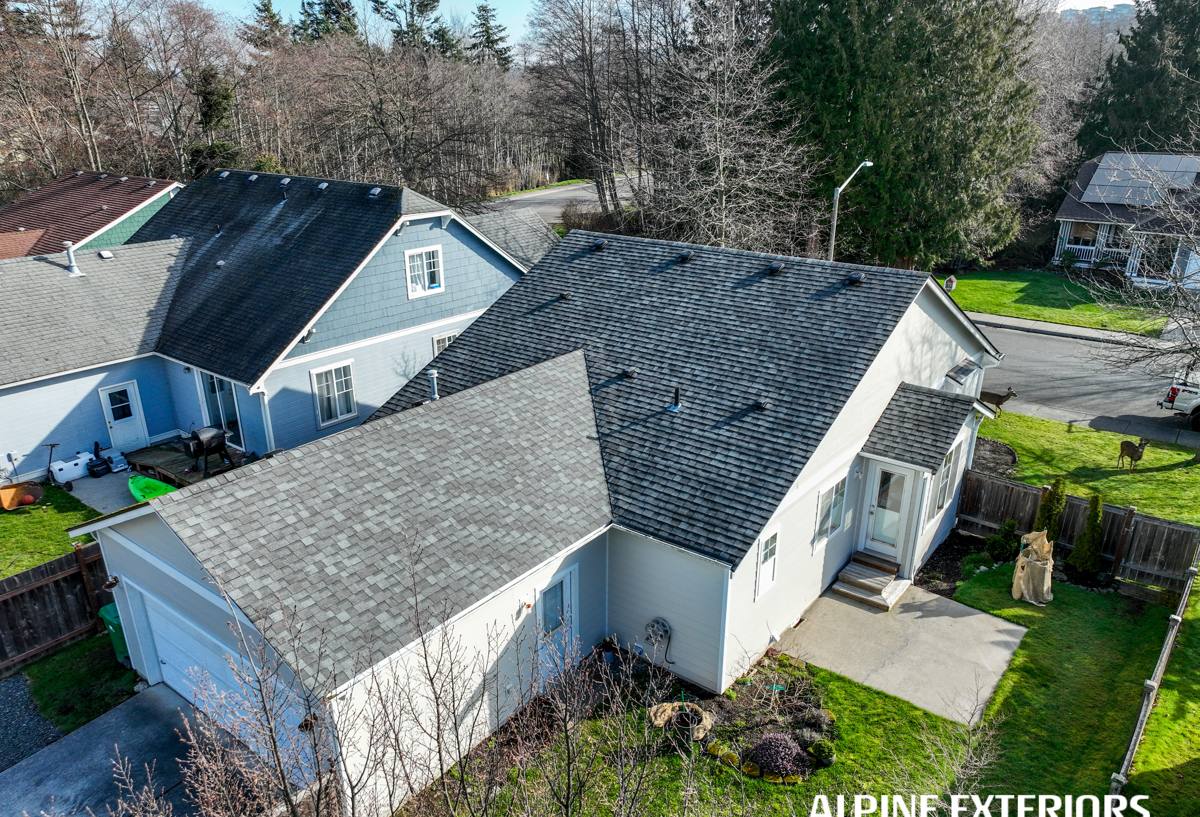
South Hill sits above the rest of Sudden Valley, which means it catches wind and driving rain a little differently than the lower streets closer to the lake. Homes up here take weather straight off the ridge, and that exposure adds up over the years in ways that aren't always obvious from the ground. When a windstorm rips through Whatcom County, South Hill roofs are often among the first to show it — a few missing shingles here, a lifted ridge cap there, water finding its way into an attic that was bone dry the week before.
We work on roofs throughout Sudden Valley, and South Hill is a neighborhood we know well. That matters more than it might seem. A roof repair crew that has already been on a dozen South Hill roofs knows what the wind exposure up here tends to do, how the tree cover changes moisture patterns from one block to the next, and what kind of repairs actually hold up instead of failing again next season.
Why South Hill Roofs Take a Different Kind of Beating
Whatcom County's climate isn't gentle on roofing, and South Hill gets a concentrated version of it. A few things stack up against a roof here:
- Salt-tinged air off the water — even at a distance, moisture carries salt content that accelerates corrosion on exposed metal flashing, nails, and fasteners over time.
- Driving, wind-blown rain — storms coming off the ridge don't just fall straight down. Wind pushes rain sideways and up under shingle edges, flashing laps, and vent boots that would stay dry in a calmer storm.
- A long moss season — the Pacific Northwest's damp, mild climate gives moss and algae a long window to establish, and once it takes hold on a roof, it holds moisture against the shingle surface and works its way under tabs and around fasteners.
- Elevation and canopy shade — South Hill's tree cover keeps sections of many roofs shaded and slow to dry after a storm, which is exactly the environment moss and rot prefer.
None of these factors cause damage overnight. They work slowly, which is why storm damage on a South Hill roof is so often "existing wear that a storm finally exposed" rather than damage that appeared out of nowhere.
What Storm Damage Actually Looks Like Up Here
Homeowners usually call us after noticing one obvious sign — a stain on a ceiling, a shingle in the yard, a gutter full of granules. But storm damage rarely shows up as just one thing. A thorough inspection after a wind or rain event typically turns up a mix of the following:
Common findings after a South Hill storm event
- Shingles lifted, cracked, or torn loose along ridge lines and roof edges, where wind uplift is strongest
- Flashing pulled away from chimneys, skylights, and sidewalls where wind-driven rain finds a path
- Granule loss on older shingles, which speeds up UV and moisture damage even where nothing is visibly torn
- Moss colonies that trapped moisture and started to lift shingle tabs from underneath, unrelated to the storm itself but often exposed by it
- Gutter and downspout damage that redirects water back toward the fascia and roof edge instead of away from the house
- Soft or discolored roof decking found only once shingles are pulled back, from slow leaks that predate the storm
That last one is the reason we don't just replace what's visibly broken and call it done. A shingle can be nailed back down over decking that's already been absorbing moisture for a season or two. Fixing the surface without checking what's underneath just delays the next call.
Our Process for a South Hill Storm Repair
1. Fast response and temporary protection
If a roof is actively leaking or has an open section, the first priority is stopping active water intrusion — tarping exposed areas and securing loose material so the damage doesn't spread while a full repair plan comes together.
2. Full roof inspection, not just the damaged spot
We walk the whole roof, not just the area the homeowner pointed us to. Wind damage on one slope often means stress on the whole roof system, and we'd rather find a second problem now than have a homeowner call us back in a month.
3. A written, plain-English scope
Before any repair work starts, we explain what we found, what needs to be fixed now, and what's worth watching. We separate "storm damage" from "pre-existing wear" honestly — that distinction matters if you're filing an insurance claim.
4. Repair with matching materials
We match shingle type, color, and exposure as closely as possible so a repair doesn't stand out as a patch job. On older roofs where an exact match isn't available, we'll tell you that upfront rather than let you find out later.
5. Follow-up check after the next real rain
A repair that looks solid on a dry day should also perform in a wind-driven rain. We stand behind the work and want to know if anything shows up once the roof gets tested by actual weather.
Repair vs. Replace: How We Make That Call
Not every storm-damaged roof needs a full replacement, and not every roof that "just needs a patch" is actually a good repair candidate. The honest answer depends on the roof's age, how widespread the damage is, and what condition the decking is in underneath.
| Factor | Leans toward repair | Leans toward replacement |
|---|---|---|
| Roof age | Under 10-12 years, most of the roof intact | Approaching or past its rated lifespan |
| Damage spread | Isolated to one section or slope | Multiple areas showing wear or damage |
| Decking condition | Dry, solid decking under the damaged area | Soft, stained, or rotted decking found on inspection |
| Moss/algae history | Minor surface growth, cleanable | Long-term growth that's degraded shingle tabs broadly |
| Shingle match | Close match available for a clean patch | Discontinued or badly faded material, patch would be obvious |
We'll tell you plainly which category your roof falls into. A repair that's likely to fail again within a couple of storm seasons isn't a good use of your money, and we won't sell it to you as one.
Why Insurance Timing Matters
If the damage is significant enough to involve a homeowner's insurance claim, timing and documentation matter. We photograph and document what we find during the inspection before any repair work covers it up, which gives you a clear record to work from with your adjuster. We're happy to walk an adjuster through what we found on-site if that's useful, and we'll always be straightforward about what's storm-caused versus what was pre-existing wear that the storm simply revealed — that honesty protects you if the claim gets a second look.
A Roofing Checklist for South Hill Homeowners
After any significant windstorm or heavy rain event, a quick check from the ground can tell you whether it's worth calling for an inspection:
- Look for shingle pieces or granules in the gutters, downspouts, or yard
- Check ceilings and attic spaces for new stains, especially near chimneys or vents
- Scan the roofline from the ground for shingles that look lifted, curled, or missing
- Note any moss patches that seem to have grown or spread since last season
- Check that gutters are still securely attached and draining away from the foundation
- Listen for dripping or notice musty smells in upper closets or attic spaces after rain
If you notice any of these, it's worth getting a professional look before the next storm rolls through — small issues on a South Hill roof tend to get worse quickly given how much weather this area sees.
Working With a Crew That Knows Sudden Valley
A lot of storm damage repair mistakes come from crews unfamiliar with local conditions — using materials or techniques that work fine in a drier climate but don't hold up to Whatcom County's combination of salt air, wind-driven rain, and extended moss season. We live and work in this area, and South Hill's roofs are ones we return to season after season, which means we're not guessing about what causes problems here — we've seen the pattern repeat.
When you're vetting any roofing contractor for storm damage work, ask about their experience with wind uplift repairs specifically, how they handle decking that turns out to be compromised, and whether they document damage for insurance purposes as a standard part of their process. A contractor who can answer those clearly, without hesitation, is one who's done this kind of work before.
If your South Hill roof took a hit in a recent storm — or you just want a professional set of eyes on it before the next one comes through — we're glad to take a look. Reach out for a free, no-pressure estimate using the form below.