 Sudden Valley
 Two Very Different Materials, One Job to Do
Homeowners in Sudden Valley and around Lake Whatcom often ask us to bid a job against a quote they already have for LP SmartSide. It's a fair question, and it deserves an honest answer instead of a sales pitch. Both fiber cement and engineered wood siding are legitimate, code-approved products used all over the country. They are not, however, the same material solving the same problem the same way. One is wood-based, one is cement-based, and in a climate that stays wet for most of the year, that difference shows up on the wall a lot sooner than most people expect.
We install James Hardie fiber cement exclusively. We don't carry LP SmartSide, vinyl, Cemplank, Allura, or primed wood siding on our trucks, and we want to explain why in plain terms — what SmartSide actually does well, where it runs into trouble here specifically, and why we decided one product line was worth standing behind completely rather than offering several and letting price decide.
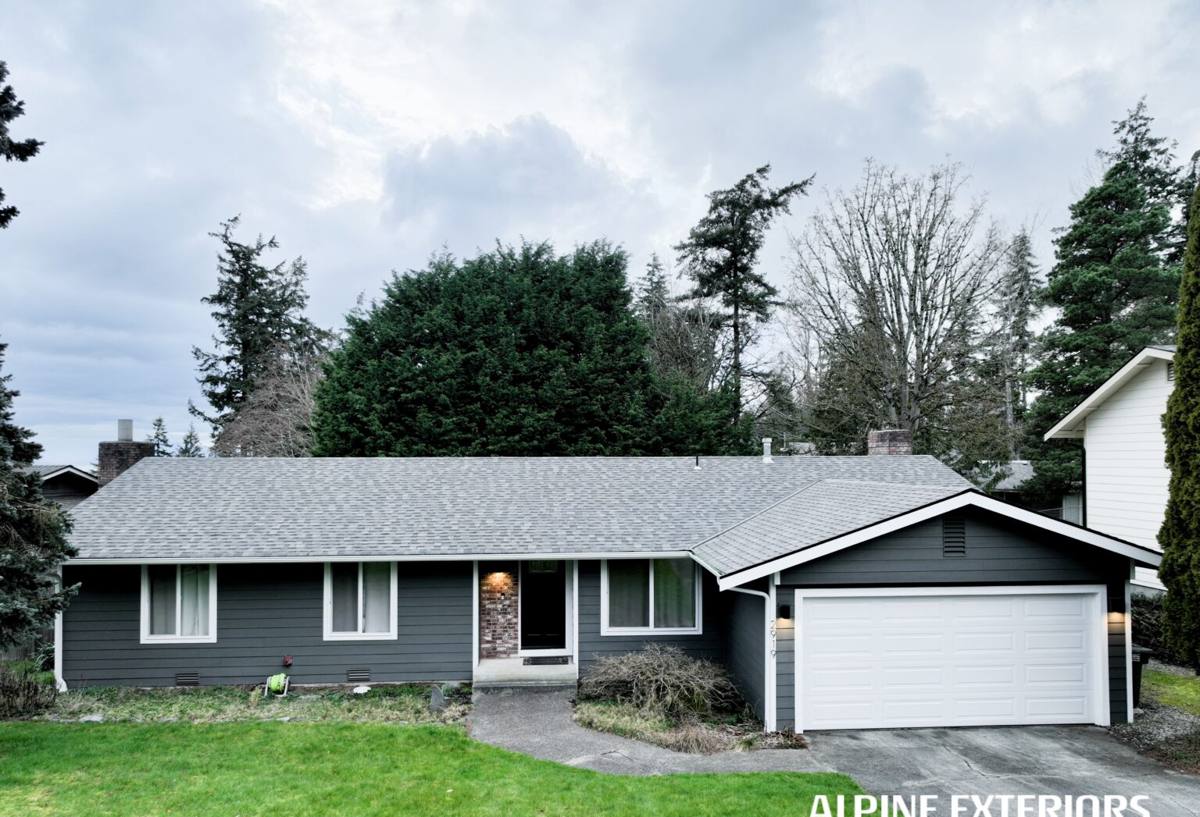
What LP SmartSide Gets Right
Credit where it's due: LP SmartSide is a real improvement over old-style solid wood and hardboard siding. It's an engineered strand product — wood fibers bonded with resin and treated with a zinc-borate preservative, then pressed under heat into panels or lap boards. Compared to raw cedar or spruce siding, it resists insects better, holds paint more evenly, and it's noticeably lighter to handle on a ladder, which matters on multi-story homes with steep gables, common in this area.
It's also easier and faster to cut and fasten than fiber cement, since it doesn't require carbide blades or generate the same silica dust. On a straightforward, well-protected wall with good roof overhangs, it can perform reasonably well for a number of years. We're not going to pretend otherwise — it's a wood product engineered to be better than wood, not a scam product.
Where Engineered Wood Struggles in a Whatcom County Climate
The problem isn't the product in a vacuum — it's the product on this coastline, under this rainfall, for this many months a year. Sudden Valley sees driving rain off the water, damp salt-laden air working its way inland, and a moss season that can run from fall through spring. That combination is hard on any wood-based product, engineered or not, because the failure mode for wood is always the same: moisture finds an entry point, gets trapped, and the material swells, softens, or rots from the inside out before it's visible from the ground.
Edge Sealing and Field-Cut Exposure
LP SmartSide's factory treatment protects the face and factory-cut edges of the board. Every cut made on site — around windows, doors, corners, and butt joints — exposes raw strand material that has to be field-primed and caulked correctly, every time, with no gaps. Miss one cut edge, or let caulk shrink and crack a few years down the road, and that's the spot where water gets in. Once moisture reaches the strand core, it doesn't dry out quickly, especially with the humidity we hold onto for weeks at a stretch in the fall and winter.
The Maintenance Calendar It Demands
Manufacturers of engineered wood siding are upfront that it needs regular repainting and recaulking to stay warrantied — typically every few years, sooner in harsher exposures. That's a real ongoing cost and a real ongoing task for the homeowner. In a climate where moss and algae take hold on north-facing and shaded walls within a season or two, that maintenance window tends to arrive faster than the paint schedule assumes, and skipping it is exactly how swelling and edge rot get started.
What Fiber Cement Brings to the Table
James Hardie fiber cement is made from Portland cement, sand, and cellulose fiber, cured into a dense, stable board. It doesn't have a wood core to swell, rot, or feed insects, and it's non-combustible — a genuine advantage during wildfire smoke and ember season, which the Pacific Northwest now sees most summers. It won't delaminate the way old wood composite products could, and it holds its shape through wet winters and dry summers without the expansion and contraction that stresses paint film and caulk joints on wood-based siding.
Engineered for This Climate Specifically
Hardie's HZ5 product line is formulated for regions with freeze-thaw cycles and sustained moisture exposure — which describes Whatcom County well. The ColorPlus finish is baked on at the factory under controlled conditions, not brushed on in the field, which means more even coverage, better fade and moisture resistance, and a finish warranty that isn't dependent on field paint quality. That factory finish is one of the biggest practical differences between the two products: with fiber cement, the weak point of field-applied paint is largely removed from the equation.
Side-by-Side: The Practical Differences
| Factor | James Hardie Fiber Cement | LP SmartSide Engineered Wood |
|---|---|---|
| Core material | Cement, sand, cellulose fiber | Wood strand, resin, zinc borate |
| Combustibility | Non-combustible | Combustible (treated) |
| Moisture response | Dimensionally stable, doesn't swell | Can swell/soften if edges aren't sealed |
| Finish | Factory-baked ColorPlus finish available | Factory-primed; topcoat is field-applied |
| Field-cut edge care | Sealed with recommended edge sealer | Must be primed and caulked, no exceptions |
| Recoat interval | Longer, especially with ColorPlus | Shorter, per manufacturer maintenance schedule |
| Weight/handling | Heavier, requires proper fastening technique | Lighter, easier to handle |
Installation Matters More Than the Brand on the Box
Neither product performs to its potential if it's installed poorly, and this is where a lot of siding failures actually originate — not the material, the installer. Fiber cement has its own installation demands: correct fastener type and spacing, proper clearance above rooflines, decks, and grade, and blind-nailing or face-nailing per the specific product's fastening schedule. Get those wrong and even the best fiber cement board can trap moisture at a butt joint or crack from over-driven nails.
The difference is that fiber cement's tolerance for small installation imperfections is higher, because the material itself isn't trying to absorb water in the first place. With engineered wood, correct installation is doing more of the work to keep the product's one real vulnerability — moisture at exposed edges — from ever becoming a problem. That's a heavier burden to place on perfect field execution, year after year, crew after crew.
Warranty Structure and Long-Term Cost
James Hardie backs its fiber cement products with a long, transferable limited warranty, and the ColorPlus finish carries its own separate finish warranty — both structured around the fact that the factory, not the field crew or the homeowner's maintenance habits, is responsible for most of the finish performance. Engineered wood warranties are typically conditioned on the homeowner keeping up with the manufacturer's required repainting and caulking schedule; skip a cycle and coverage can be affected. That's not a knock on the paperwork — it's just a real difference in who carries the ongoing risk, and it's worth reading closely on any product before you sign a contract.
Over a 20-to-30-year ownership horizon, the honest comparison isn't just the installed price per square foot. It's installed price plus the realistic cost of the recoat and recaulk cycles a product requires to hit its expected lifespan. Fiber cement usually costs more up front; the gap narrows, and can reverse, once you account for a couple of repaint cycles on engineered wood over the same period.
Why We Standardized on One Product
We could carry both products and let each homeowner split the difference between price and performance. We chose not to, because we've seen how the two materials age differently on homes exposed to this specific coastline, this rainfall, and this moss season. Standardizing on James Hardie means every crew member is deeply familiar with one fastening schedule, one set of clearance requirements, and one finish system — instead of switching methods and materials job to job, which is where installation mistakes creep in. It also means we can stand fully behind the warranty conversation with a customer, because we're not hedging between two products with different risk profiles.
Questions Worth Asking Before You Choose
- Does the quoted product require field-applied paint, and if so, who is responsible for the recoat schedule the warranty depends on?
- Is the siding rated non-combustible, and does that matter for your insurance or your specific site conditions?
- What fastener type, spacing, and clearance above grade and rooflines does the manufacturer actually require — and will the crew follow it in writing?
- Is the warranty transferable if you sell the home, and is it tied to maintenance records you'll need to keep?
- How does the installer handle field-cut edges around windows, doors, and corners?
- What's the realistic total cost over 20-plus years, including maintenance — not just the installed price today?
If you're weighing a siding replacement in Sudden Valley or anywhere else in Whatcom County and want a straight answer about what a product will actually take to maintain on your specific home, we're glad to take a look and give you a free, no-pressure estimate.