 Sudden Valley
 Siding Built for Sehome's Climate
Sehome sits close enough to Bellingham Bay that salt-tinged air is simply part of daily life, and that air does something to exterior building materials that homeowners further inland rarely have to think about. Add in the driving rain that comes off the Sound through fall and winter, and a moss season that can stretch for months on shaded north- and west-facing walls, and you have a climate that is genuinely hard on siding. We've worked on homes throughout Whatcom County long enough to know which materials hold up here and which ones start showing problems within a handful of years.
Sudden Valley Siding installs, repairs, and maintains exteriors for homes in and around Sehome, and we specialize in one product system: James Hardie fiber cement. This page walks through what the local climate does to a house, how our services address it, and why we standardized on Hardie instead of the wider mix of siding products on the market.
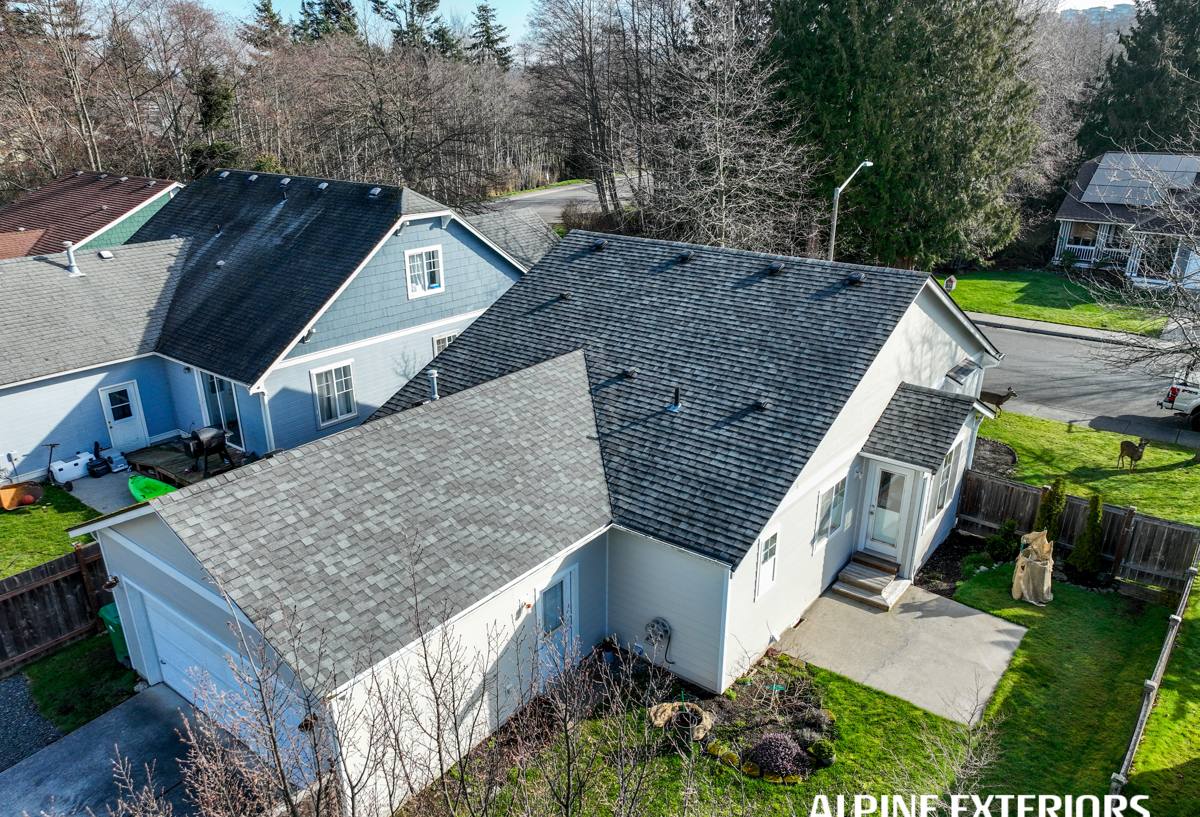
What Sehome Homes Are Up Against
Salt Air and Moisture
Homes closer to the water deal with airborne salt that accelerates corrosion on metal fasteners, flashing, and hardware, and that also speeds up the breakdown of certain paint films and wood fibers. It's a slow process, but it's constant, and it shows up first at the details — trim edges, corner boards, and anywhere water can sit against a surface instead of running off.
Driving Rain
Whatcom County doesn't get hurricane-force storms, but it gets a steady diet of wind-driven rain, especially through the wetter months. Rain that's pushed sideways into a wall finds every gap in caulking, every under-flashed window, and every seam that wasn' properly lapped during installation. Over years, that's how water gets behind siding rather than off of it — and once moisture is trapped behind a wall assembly, the damage is often invisible until it's serious.
Moss and Shade
Sehome has plenty of mature tree cover, and shaded, north-facing walls in this part of Whatcom County stay damp for extended stretches, especially in fall and winter. That's exactly the environment moss and algae need to take hold. On some siding materials, that constant dampness also feeds rot at the surface level, not just on the roof or in the gutters.
How We Approach Siding Work Here
Every project starts with an honest look at the existing exterior — what's failing, what's salvageable, and what the underlying wall assembly actually needs, not just what's visible from the curb. In a climate like this, the work underneath the siding matters as much as the siding itself.
- Inspection of existing siding, trim, and flashing for moisture damage or rot before any new material goes up
- Correct water-resistive barrier and flashing details at windows, doors, and roof intersections
- Proper fastener spacing and type to match Hardie's published installation requirements
- Attention to clearances at grade, decks, and roof lines where standing water and splash-back are most common
- Factory-finished ColorPlus panels and trim so field-painted cut edges are minimized
We also handle roofing, windows, and decks, which matters more than it might seem for a siding project. Water problems at a wall are frequently connected to a roofline detail, a window that isn't flashed correctly, or a deck ledger board that's trapping moisture against the house. Addressing siding in isolation, without looking at how it interacts with the rest of the exterior, is how the same problem comes back in a few years.
Why We Only Install James Hardie
We get asked fairly often why we don't offer vinyl, LP SmartSide, or other fiber cement brands like Cemplank or Allura. It's not that these products have no legitimate use anywhere — it's that after years of exterior work in this specific climate, we decided we'd rather stand fully behind one system we trust than offer several we have reservations about.
Vinyl
Vinyl is inexpensive and low-maintenance in the sense that it doesn't need painting, but it's a thin plastic product that expands and contracts significantly with temperature swings, can crack in impacts, and tends to fade or chalk over time in UV exposure. In a marine climate with constant moisture cycling, the seams and J-channels on vinyl installations are also a common spot for water intrusion if not detailed carefully.
LP SmartSide
LP SmartSide is an engineered wood product — strand-based, resin-treated, and genuinely improved over older wood composite sidings. But it's still wood at its core, which means it's dependent on an intact factory coating and careful field sealing of every cut edge to keep moisture out. In a climate with a long wet season and heavy shade in places like Sehome, wood-based siding gives moisture more opportunities to find a way in over the life of the product.
Other Fiber Cement Brands
Cemplank and Allura are legitimate fiber cement products and share Hardie's basic non-combustible, cement-based composition. Our preference for Hardie comes down to their HZ5 product engineering for this region's moisture and temperature profile, the depth of their ColorPlus factory finish warranty, and the transferability of their limited warranty if a home changes hands — details that matter over a 30- to 50-year ownership horizon.
Comparing Siding Options for Whatcom County
| Factor | Vinyl | LP SmartSide | James Hardie Fiber Cement |
|---|---|---|---|
| Core material | PVC plastic | Engineered wood strand | Cement, sand, cellulose fiber |
| Combustibility | Melts/deforms in heat | Combustible | Non-combustible |
| Moisture behavior | Seam-dependent | Coating/edge-sealing dependent | Engineered for wet climates |
| Finish | Molded-in color, can fade | Factory primed or coated | ColorPlus factory-baked finish |
| Typical lifespan (installed to spec) | 20-30 years | 25-30 years | 30-50+ years |
Maintenance in a Marine Climate
No siding is truly maintenance-free, but the maintenance burden varies a lot by material. Fiber cement with a factory-applied ColorPlus finish generally needs periodic rinsing to keep salt residue and organic growth from building up, and an occasional caulk check at trim joints and penetrations. It does not need repainting on the same cycle that field-finished wood products typically require, which matters in a climate where a paint job can start looking tired within a handful of years.
For homes in shaded areas prone to moss, we recommend a gentle annual rinse of north- and west-facing walls rather than aggressive pressure washing, which can force water behind panels or damage caulking. If moss is already established, it's worth having it looked at rather than assuming it's purely cosmetic — persistent dampness against any wall surface, siding included, is worth addressing at the source.
Simple Maintenance Checklist
- Rinse siding gently once or twice a year, more often on shaded or moss-prone walls
- Inspect caulking at trim, windows, and penetrations annually and reseal as needed
- Keep gutters clear so overflow doesn't run down the wall face
- Trim back vegetation and tree limbs that keep siding shaded and damp
- Have any soft spots, staining, or bubbling trim investigated promptly rather than waiting
What Correct Installation Involves
Fiber cement siding performs the way it's rated to perform only when it's installed correctly, and installation quality is where a lot of the real-world difference between contractors shows up. Manufacturer specifications on fastener type and spacing, minimum clearances from grade and roof surfaces, proper joint flashing, and correct caulking at butt joints all exist because they address specific failure points that show up over time — especially in wet climates like ours. A rushed or undertrained crew can install the right product and still create the conditions for water damage down the road.
We install to those specifications as a baseline, not an upsell, because a siding job that isn't done right doesn't actually give a homeowner the protection or the warranty coverage they think they're getting.
Roofing, Windows, and Decks Alongside Siding
Because siding, roofing, windows, and decks all interact at the same wall assembly, we handle all four. A leaking window or a poorly flashed roof-to-wall transition can undermine even well-installed siding, and a deck ledger attached without proper flashing is one of the more common sources of hidden rot we find on older homes in this area. Looking at the whole exterior together, rather than treating each component as a separate project, is generally how problems actually get solved instead of just relocated.
Why a Local Crew Matters
A contractor working in Whatcom County day in and day out has seen how homes in this specific climate age — which details fail first, which orientations take the most weather, and which shortcuts show up as callbacks two or three winters later. That local pattern recognition is hard to replace with a crew that only occasionally works this far north or this close to the water. It also means someone is nearby if a question comes up after the job is finished, not managing the project from out of the area.
If you're planning a siding project in Sehome or elsewhere in Sudden Valley, we're happy to take a look and give you a straightforward, no-pressure estimate. Use the form below to get in touch.