 Sudden Valley
 Primed Wood Siding Isn't a Bad Product — It's a High-Maintenance One
We get asked about primed wood siding often enough that it's worth a straight answer: we don't install it, and it's not because the material is junk. Finger-jointed primed pine, primed spruce, and similar engineered wood trim and lap products have been used on homes for decades, and plenty of them look fine for a while. The problem isn't day one. It's year eight, when the paint film that's doing all the work starts to fail and the wood underneath has nowhere good to go.
In Sudden Valley and the rest of Whatcom County, that failure timeline compresses. Between the marine-influenced rain we get off Lake Whatcom and the Puget Sound air moving through the corridor, the moss season that runs a good chunk of the year, and stretches of humid, low-sun weather where painted wood just doesn't dry out fast, primed wood siding is working against the climate here more than it's working with it. We'd rather be honest about that up front than sell a product we know we'll be back to talk about in a few years.
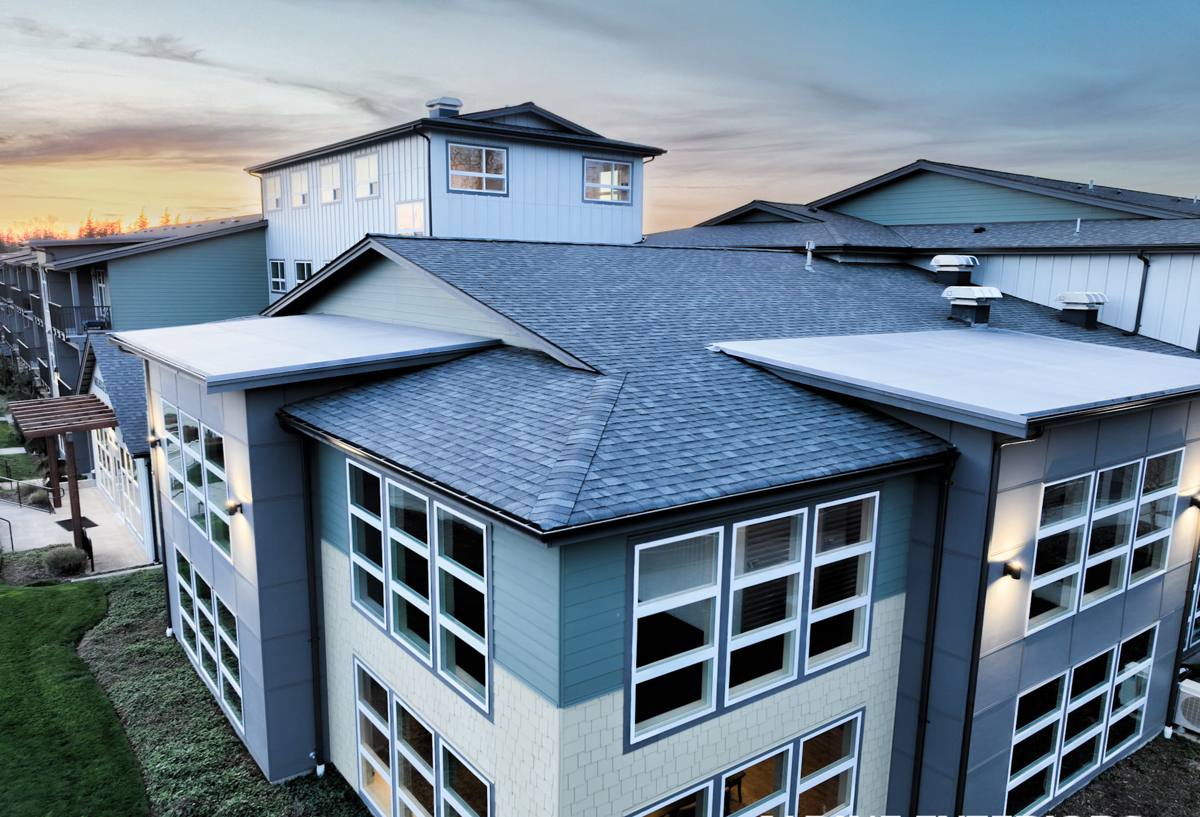
What Primed Wood Siding Gets Right
To be fair to the product: primed wood is inexpensive relative to other siding options, it's easy for crews to cut and nail, it takes paint well when it's fresh, and it can be touched up in small sections without redoing an entire wall. If you're budget-constrained on a shed, an outbuilding, or a short-term flip, it can make sense. It's also familiar — a lot of Whatcom County homes built in the '80s and '90s have some version of it, so there's no learning curve for most local painters.
The trade-off is that "primed" only means the wood has a factory-applied base coat, not that it's protected for the long haul. Primer is a foundation for paint, not a substitute for it, and paint is a maintenance item, not a one-time investment.
Where the Product Is Honest About Its Limits
Most manufacturers of primed wood trim and siding are upfront in their own installation literature that the product requires prompt painting after installation (often within 30 to 90 days), full six-sided seal on cut ends, and a repaint cycle far shorter than what homeowners expect from "new siding." That's not a knock on the manufacturer — it's just a maintenance commitment a lot of buyers don't fully register until the paint starts chalking and cracking.
Why the Paint Film Is Doing All the Work
Wood siding's water resistance is almost entirely a function of the paint or coating system sitting on top of it, not the wood itself. Once that film cracks, pinholes, or peels — from UV exposure, from a pressure washer held too close, from age — water has a direct path into the substrate. Wood is hygroscopic: it absorbs moisture, swells, and releases it as it dries. Do that cycle enough times in a climate that doesn't give siding much of a chance to fully dry between rain events, and you get:
- Cupping and warping along the plane of the board
- Soft, delaminating spots at butt joints and around fasteners
- Paint that no longer bonds because the wood surface underneath has degraded
- Localized rot at the bottom edge of courses, where water sheds and lingers
- Moss and algae growth in shaded, north-facing, or tree-covered elevations
That last point matters a lot around Sudden Valley specifically. Homes tucked into tree cover near the lake hold moisture and shade longer than homes in open exposure, and moss doesn't just sit on top of siding cosmetically — it holds water against the surface and keeps the substrate wet well after a storm has passed. On fiber cement, that's a cleaning issue. On painted wood, sustained dampness against a compromised paint film is exactly the condition that leads to soft wood.
The Local Climate Factor
Rain and Saturation
Whatcom County doesn't get the heaviest rainfall in the state, but it gets consistent, driving rain over long stretches of fall, winter, and spring, often paired with wind off the water. Wood siding needs drying time between wetting cycles to stay stable. When storms stack up back-to-back for weeks, painted wood doesn't always get that window, especially on north- and west-facing walls.
Salt and Marine Air
Proximity to Bellingham Bay and the greater Puget Sound corridor means airborne salt is part of the equation for a lot of Whatcom County homes, including exposed sites around Sudden Valley. Salt accelerates the breakdown of paint films and metal fasteners alike, which shortens the interval before a wood-sided home needs its next coat.
Moss Season
Locally, moss isn't a once-a-year nuisance — it's close to a year-round presence on shaded or north-facing exterior walls, particularly under mature tree canopy, which describes a lot of lots around the lake. Moss removal on painted wood siding, if done aggressively with a pressure washer, is itself a common cause of paint and substrate damage, which creates a maintenance catch-22: leave it and it holds moisture, remove it wrong and you open the surface up.
The Real Maintenance Math
The sticker price on primed wood siding looks attractive next to fiber cement until you price out what keeping it watertight actually costs over time. This is a rough, honest comparison based on typical maintenance intervals for each material — not a guarantee, since every home's exposure is different.
| Factor | Primed Wood Siding | James Hardie Fiber Cement (ColorPlus) |
|---|---|---|
| Initial paint/finish needed after install | Yes, typically within 30-90 days | No — factory-baked ColorPlus finish arrives complete |
| Typical repaint interval in this climate | Roughly every 3-7 years, often sooner on wet-side elevations | ColorPlus finish is warrantied for years without repainting; a repaint, when eventually desired, is optional, not required for protection |
| Vulnerability to moisture swelling/warping | High — wood expands and contracts with moisture | Very low — fiber cement is dimensionally stable |
| Combustibility | Combustible | Non-combustible core |
| Moss/algae staining risk | Moderate to high on shaded walls | Present but generally easier to clean without damaging the finish |
| Insect/rot susceptibility | Susceptible once paint film is compromised | Not a food source; no rot risk from the material itself |
The pattern is consistent: primed wood asks for ongoing attention, and skipping that attention doesn't save money — it defers it into a bigger repair later.
Where Installation Sensitivity Adds Risk
Even a well-made primed wood product depends heavily on installation details that are easy to get wrong and expensive to get right:
- Every field cut needs to be back-primed and sealed on the spot, not left bare, or that cut end becomes a wicking point
- Butt joints need proper flashing and shouldn't be face-nailed tight without a gap for movement
- Fasteners need to be corrosion-resistant and set correctly — too proud or too countersunk both create failure points
- Caulking at joints and penetrations needs regular inspection, since caulk fails well before the siding does
- Ground clearance and drainage behind the cladding matter more on wood than on materials that don't absorb water
None of that is exotic carpentry, but it does mean the product's real-world performance depends more on execution than the material itself lets on. We'd rather build our installation standard around a product where the material forgives more, not less.
Why We Standardized on James Hardie Instead
We install James Hardie fiber cement exclusively, and the reasoning ties directly back to everything above. Hardie's HZ5 product line is engineered for the freeze-thaw and moisture cycling common to our region, the core material is non-combustible, and the ColorPlus factory finish means the color and protective coating are baked on before the siding ever reaches a job site — not applied in the field where weather, timing, and technique all introduce variables. It carries a strong transferable warranty that reflects the manufacturer's confidence in how the product performs over decades, not just years.
That doesn't mean fiber cement is maintenance-free forever — no exterior cladding is. But it means the baseline performance doesn't hinge on a paint film holding up against Whatcom County rain, salt air, and moss season year after year. For a lake community like Sudden Valley, where a lot of homes sit under tree cover with limited drying exposure, that difference plays out over the life of the siding, not just in the first few years.
Our Honest Recommendation
If you already have primed wood siding and it's holding up, regular inspection and prompt repainting when the film starts to fail will extend its life — that's a legitimate maintenance path, not a reason to panic. But if you're planning a new install or a full re-side and considering primed wood because of the upfront cost, we'd rather you go in with the real maintenance schedule in front of you, and know there's an option that doesn't require the same recurring attention.
If you'd like a straightforward, no-pressure look at your home and what it would take to move to a lower-maintenance siding system, we're happy to walk your property, talk through what we're seeing, and put together a free estimate — no obligation either way.