 Sudden Valley
 Why Fairhaven's Climate Is Harder on Siding Than Most of Whatcom County
Fairhaven sits close to Bellingham Bay, and that proximity to saltwater changes what a home's exterior has to deal with year-round. Homes just a few miles inland in Whatcom County still get plenty of rain, but they don't get the same steady exposure to salt-laden air moving off the water. Salt air is corrosive to metal fasteners, trim, and flashing, and it accelerates the breakdown of paint films and lower-grade siding materials. Add in Western Washington's long, wet winters and the moss and algae growth that comes with them, and a Fairhaven home's siding is working harder than siding almost anywhere else in the region.
None of this means a home near the bay is doomed to constant repairs. It means the materials and installation details matter more here than they do on a dry inland lot. A siding system that's marginal in a drier climate can fail faster in a marine one, and a system that's genuinely built for moisture and salt exposure will hold up noticeably better.
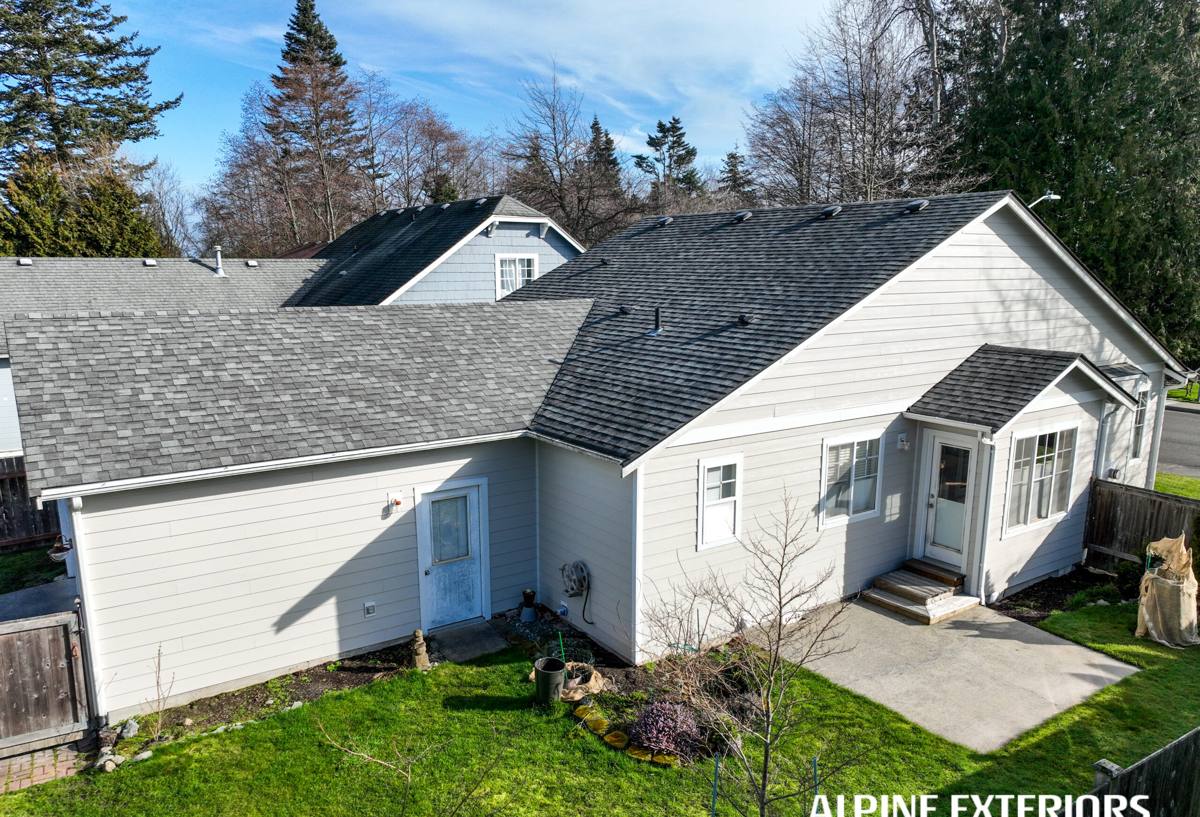
What Salt Air Actually Does to a House Over Time
Corrosion You Can't Always See
Salt air doesn't just sit on the surface of a home — it works its way into seams, fastener heads, and any exposed metal. Over years, this shows up as rust bleeding through paint, corroded flashing at windows and rooflines, and fasteners that weaken faster than their rated lifespan suggests. Once corrosion starts at a fastener or a piece of trim, it tends to spread, and by the time it's visible from the ground, it's often further along underneath.
Paint and Finish Breakdown
Salt in the air combines with UV exposure and constant damp-dry cycling to break down paint film faster than in a typical inland climate. Homes near the water often need repainting on a shorter cycle than the same house would if it sat a few miles inland — unless the siding itself has a finish that's built to resist that cycle rather than relying on site-applied paint.
Moss, Algae, and the Long Wet Season
Whatcom County's wet season runs long, and shaded or north-facing walls near mature trees or dense landscaping stay damp for extended stretches. That moisture supports moss and algae growth on siding surfaces, especially in horizontal seams, under trim, and anywhere water doesn't shed cleanly. Materials that absorb moisture rather than shedding it give moss more to hold onto, and prolonged dampness against the substrate is where real damage — not just cosmetic staining — starts.
Why We Install James Hardie and Nothing Else
Sudden Valley Siding installs James Hardie fiber cement siding exclusively. We don't install vinyl, LP SmartSide, Cemplank, Allura, primed spruce, or cedar, and that's a deliberate standard, not a default. In a marine climate like Fairhaven's, the differences between these materials aren't cosmetic — they show up in how the siding handles years of salt air and moisture.
Why Not Vinyl
Vinyl siding is affordable and low-maintenance in the sense that it doesn't need painting, but it's a thin plastic product that expands, contracts, and can become brittle with temperature swings and long-term UV exposure. In coastal wind, seams and panels are more prone to working loose over time, and vinyl doesn't offer the same fire resistance or impact durability as fiber cement. It's a reasonable product for some climates — we just don't think it's the right call for a home taking on salt air and driving rain year after year.
Why Not Wood-Based Products (LP SmartSide, Primed Spruce, Cedar)
Engineered wood and solid wood siding products can look great and perform well when maintenance stays on schedule, but they share a fundamental vulnerability: they're wood, and wood absorbs moisture. In a climate with this much sustained dampness and salt exposure, any lapse in caulking, painting, or edge-sealing opens the door to swelling, rot, and moss anchoring itself into the material. These products ask a lot of a homeowner's maintenance discipline in exactly the climate where that margin for error is smallest.
Why Not Other Fiber Cement Brands (Cemplank, Allura)
Other fiber cement brands are a closer comparison to Hardie — they're the same general material category and hold up better than vinyl or wood in wet climates. Where we see the real difference is in factory-applied finish quality, the depth of climate-specific engineering across product lines, and the strength and structure of the warranty. We standardized on Hardie because we trust the product consistency and the backing behind it, not because other fiber cement is a bad material.
What Makes James Hardie the Right Fit for a Coastal Whatcom County Home
| Concern | How Hardie Addresses It |
|---|---|
| Salt air corrosion | Fiber cement doesn't corrode like metal; correct fastener specification limits exposed metal points |
| Constant moisture and rain | Fiber cement doesn't swell, warp, or rot the way wood-based siding can |
| Moss and algae in shaded, damp areas | Dense, engineered material sheds water rather than absorbing it, reducing what moss can anchor to |
| Coastal wind exposure | Rigid panel and lap systems installed to Hardie's fastening spec hold tight over time |
| Fire risk | Non-combustible material, a genuine advantage during dry-season wildfire smoke and ember exposure |
| Finish longevity | ColorPlus factory-baked finish resists fading and chipping better than most site-applied paint |
James Hardie also builds specific product lines engineered for different climate zones (their HZ5 line, for example, is designed for the wetter, harsher weather found in the Pacific Northwest). That's the kind of climate-specific engineering that matters on a bay-adjacent property — it's not the same siding sold everywhere in the country with no regard for what a given region actually throws at a house.
Beyond Siding: Roofing, Windows, and Decks for a Coastal Property
Siding doesn't work in isolation — it's one part of a building envelope that has to keep water out. We also handle roofing, windows, and decks, and on a Fairhaven-area home, all of these interact with the same climate pressures your siding is dealing with.
- Roofing: A roof in poor condition sends water down onto siding and trim, so roof drainage and flashing directly affect how well your siding performs.
- Windows: Window flashing and sealing are common failure points where water gets behind siding — this is one of the most common sources of hidden moisture damage we see.
- Decks: Exterior decks near the water take the same salt and moisture exposure as siding, and ledger board attachment to the house is a spot that needs to be done right to avoid trapped moisture against the structure.
When we're on-site for a siding project, we're looking at the whole exterior, because a new siding job installed against a leaking roof edge or poorly flashed window doesn't hold up regardless of how good the siding material is.
Why a Local Crew Matters for This Specific Climate
A contractor who mostly works drier inland jobs isn't necessarily thinking about salt air corrosion at every fastener, or about which walls on a bay-adjacent lot will stay damp longest through a Whatcom County winter. A crew that regularly works Bellingham Bay-area properties builds a feel for where moss takes hold first, which sides of a house need more attention to flashing detail, and how coastal wind loads affect panel and trim fastening. That local pattern recognition doesn't replace following manufacturer installation specs — it's what makes sure those specs get applied where they matter most on your specific house.
What Correct Installation Looks Like in a Marine Climate
James Hardie siding performs the way it's rated to perform only when it's installed correctly, and in a climate like Fairhaven's, a few details matter more than usual:
- Proper clearance between siding and grade, decks, and roof lines so water has somewhere to go
- Correct fastener type and spacing to resist both moisture and coastal wind loads
- Careful flashing and sealing at every window, door, and penetration
- Rainscreen or drainage gap detailing where appropriate, so any moisture that does get behind the panel can drain and dry
- Attention to how siding meets the roofline, since that's a common spot for water intrusion on any home near the water
These aren't exotic techniques — they're the manufacturer's own installation requirements, applied with the level of care a coastal property actually needs.
Planning a Siding Project on a Fairhaven-Area Home
If your current siding is showing chronic moss staining, soft spots, peeling paint that won't hold, or visible corrosion at trim and fasteners, those are signs the material is losing the battle with the local climate rather than a one-time cosmetic issue. Replacement timing often comes down to how much longer the existing material can realistically be maintained versus the cost of ongoing repairs and repainting.
Every home is different — orientation to the water, tree cover, roof condition, and age of the existing siding all factor into what a project actually needs. That's why we look at the whole exterior before recommending a scope of work rather than quoting a generic siding job.
If you'd like a straightforward look at how your home's exterior is holding up against the salt air and rain, we're glad to take a look and give you a free, no-pressure estimate — no obligation, just an honest read on where things stand.