 Sudden Valley
 Siding Built for South Hill's Climate
South Hill sits within the broader Sudden Valley community in Whatcom County, tucked among the hills and tree cover that make this part of the county so desirable — and so hard on exterior building materials. Homes here deal with a combination most siding products were never designed to handle at once: salt-tinged air moving in off the Sound, long stretches of driving rain through fall and winter, and a moss season that can run half the year in the shadier lots. If you've owned a home in South Hill for more than a few years, you've probably already seen what that combination does to paint, trim, and siding that wasn't built for it.
We're a local exterior contractor, not a national franchise, and South Hill is part of our regular service area. That matters because siding decisions here aren't generic — they need to account for slope, shade, sun exposure on a given lot, and how close a home sits to tree lines or water. What works on a south-facing wall in full sun behaves differently than the same product on a shaded north wall thirty feet away.
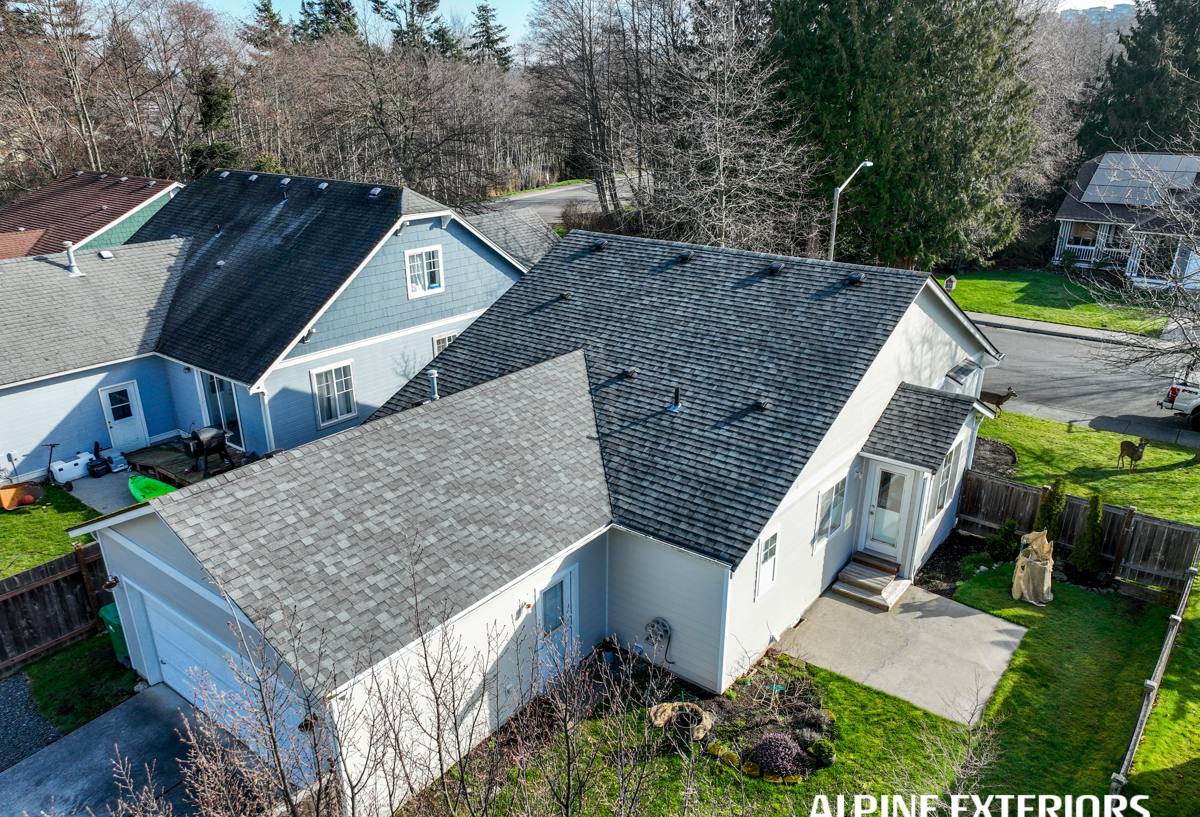
What South Hill Homes Are Up Against
Salt-Influenced Air
Whatcom County's proximity to the Sound means homes throughout the area, including South Hill, take on a low but steady dose of salt-laden moisture in the air. Over years, that moisture works into seams, fastener heads, and any place where a coating has started to fail, accelerating corrosion and paint breakdown in ways drier inland climates don't see.
Driving Rain
Rain here doesn't just fall — wind pushes it sideways into walls, especially on exposed elevations. That means water testing at laps, seams, and butt joints matters more than it would in a calmer climate. A siding system that's only rated for vertical rain exposure is being asked to do more than it was designed for.
Moss and Shade
Between the tree cover common to South Hill lots and the region's long damp season, moss and algae growth on north-facing and shaded walls is a fact of life. Some siding materials tolerate that biological growth and repeated cleaning far better than others — this is one of the biggest long-term differences between product types, and one homeowners often don't think about until they're pressure-washing green streaks off their siding every couple of years.
Why We Install Only James Hardie Fiber Cement
We made a decision, as a company, to install James Hardie fiber cement siding exclusively — not vinyl, not LP SmartSide, not Cemplank, not Allura, not primed spruce, and not cedar. That's not a marketing angle; it's a standard we hold because of what we've seen these climate conditions do to alternative products over time, and because Hardie's engineering is specifically built around moisture and fire performance.
Fiber cement is non-combustible, which matters increasingly in Washington as wildfire risk becomes part of insurance and building conversations statewide. It doesn't feed insects, doesn't rot the way wood-based products can when a seal fails, and it holds paint and factory finish far longer than wood or engineered wood siding in a wet climate. Hardie's ColorPlus factory-applied finish is baked on under controlled conditions rather than field-painted, which gives it more consistent coverage and a longer service life before it needs attention.
None of that means other products are without merit — LP SmartSide and cedar both have real design advantages, and vinyl remains the cheapest option on the market. We simply don't think those trade-offs hold up well against a South Hill winter, year after year, and we'd rather stand behind one product system we trust completely than offer several we have reservations about.
Our Process for South Hill Exteriors
We handle siding, roofing, windows, and decks, which means we look at a South Hill home's exterior as one connected system rather than a single product swap. Siding failures often trace back to a roofing or flashing issue, and a new window install done without attention to the surrounding siding detail can create the very moisture path we're trying to eliminate.
- On-site assessment of existing siding, trim, and any moisture or moss damage specific to the lot's sun and shade exposure
- Inspection of flashing, window and door transitions, and roofline intersections before any siding goes on
- Removal of failing material and repair of any sheathing or framing issues found underneath
- Installation of James Hardie siding to manufacturer specification, including correct fastening, clearances, and caulking practices
- Coordination with roofing or window work when a project touches more than one system
That last point is worth underlining: a lot of exterior problems we get called out to inspect in Sudden Valley and South Hill aren't pure siding failures. They're a roof edge detail, a window flashing gap, or a deck ledger board that's been letting water into the wall assembly for years. Because we do all four trades, we're not incentivized to sell you a siding job when the real fix is somewhere else.
Choosing the Right Hardie Product Line
James Hardie makes several distinct product lines, and the right one depends on the home's style and exposure, not just personal preference.
| Product | Best Suited For | Notes |
|---|---|---|
| HardiePlank Lap Siding | Most traditional and contemporary home styles | Most common choice; available in multiple textures and exposure widths |
| HardieShingle | Craftsman and cottage-style homes, accent gables | Mimics cedar shingle look without the moisture maintenance |
| HardiePanel | Modern builds, board-and-batten detailing | Vertical application, often paired with trim battens |
| HardieTrim | Corner boards, window and door casing | Matches ColorPlus finish system for a uniform look |
ColorPlus finish is available across these lines and is worth strong consideration for a South Hill home specifically — factory-cured finish resists the fading and chalking that field-applied paint tends to show first on sun-exposed elevations, and it removes the need for an early repaint that a lot of homeowners in this climate end up facing within the first several years of a standard paint job.
A Local Crew Advantage
South Hill and the surrounding Sudden Valley area have their own microclimate quirks — lots that stay shaded most of the day, others that catch full afternoon sun and wind off the water, and elevation changes that affect how hard rain drives against a wall. A crew that works this specific area regularly knows which details to double down on: extra attention to flashing on a shaded north wall, or wider clearances at grade on a lot with heavy tree drip. That local knowledge doesn't show up in a national contractor's standard install checklist, but it shows up in how the siding performs five and ten years out.
Maintenance That Actually Matters Here
James Hardie siding is low-maintenance compared to wood or vinyl, but "low-maintenance" doesn't mean "no maintenance," especially with South Hill's moss and moisture exposure. A simple annual routine keeps a Hardie exterior performing the way it's designed to.
- Rinse siding annually, focusing on shaded and north-facing walls where moss and algae take hold first
- Check caulking at trim joints, window returns, and penetrations for cracking or separation
- Keep gutters clear so overflow isn't running down and pooling against siding at corners
- Trim back vegetation and tree limbs that keep a wall section damp and shaded longer than the rest of the house
- Walk the exterior after major wind and rain events to catch any loose trim or fastener issues early
What Drives Cost on a South Hill Siding Project
| Factor | Why It Matters |
|---|---|
| Home size and wall complexity | More corners, gables, and transitions mean more cutting, trim, and labor time |
| Extent of existing damage | Rot or moisture damage found under old siding adds repair scope before new siding goes on |
| Product line and finish | ColorPlus factory finish costs more upfront than primed material but reduces early repainting |
| Access and site conditions | Slopes, tree cover, and tight lot access common in South Hill can affect staging and labor time |
| Scope beyond siding | Bundling roofing, window, or deck work with siding can reduce overall disruption and sometimes total cost |
Every one of these varies enough by property that we don't quote siding work sight-unseen — an accurate number requires actually looking at the home.
Get a Straight Answer for Your Home
If you're weighing a siding project in South Hill or anywhere else in the Sudden Valley area, we're happy to come take a look, tell you honestly what condition your current exterior is in, and walk through what a James Hardie installation would involve for your specific home. There's no pressure and no obligation — just a straightforward assessment from a crew that works this climate every day. Use the form below to request a free estimate.