 Sudden Valley
 Exterior Work in Happy Valley: A Climate That Doesn't Let Up
Happy Valley sits in the kind of Whatcom County microclimate that quietly wears down a house year after year. It's close enough to open water to pick up salt-laden air, tucked into terrain that holds moisture longer than the open valley floor, and shaded by mature conifers that keep roofs, siding, and decking damp well after a storm has passed. None of that is dramatic on any given day. It's the accumulation that matters — moss creeping up a north wall, paint that never quite dries between rains, trim that stays soft to the touch every winter.
We work on homes throughout Sudden Valley and the surrounding Whatcom County communities, and Happy Valley has its own personality within that footprint. Homes here tend to be shaded by tree cover, sit on sloped lots that channel runoff toward the foundation and lower wall sections, and face a longer wet season than homeowners moving up from drier parts of the state expect. Siding, roofing, windows, and decks all take that punishment together — which is part of why we treat the exterior of a house as one connected system rather than a set of separate projects.
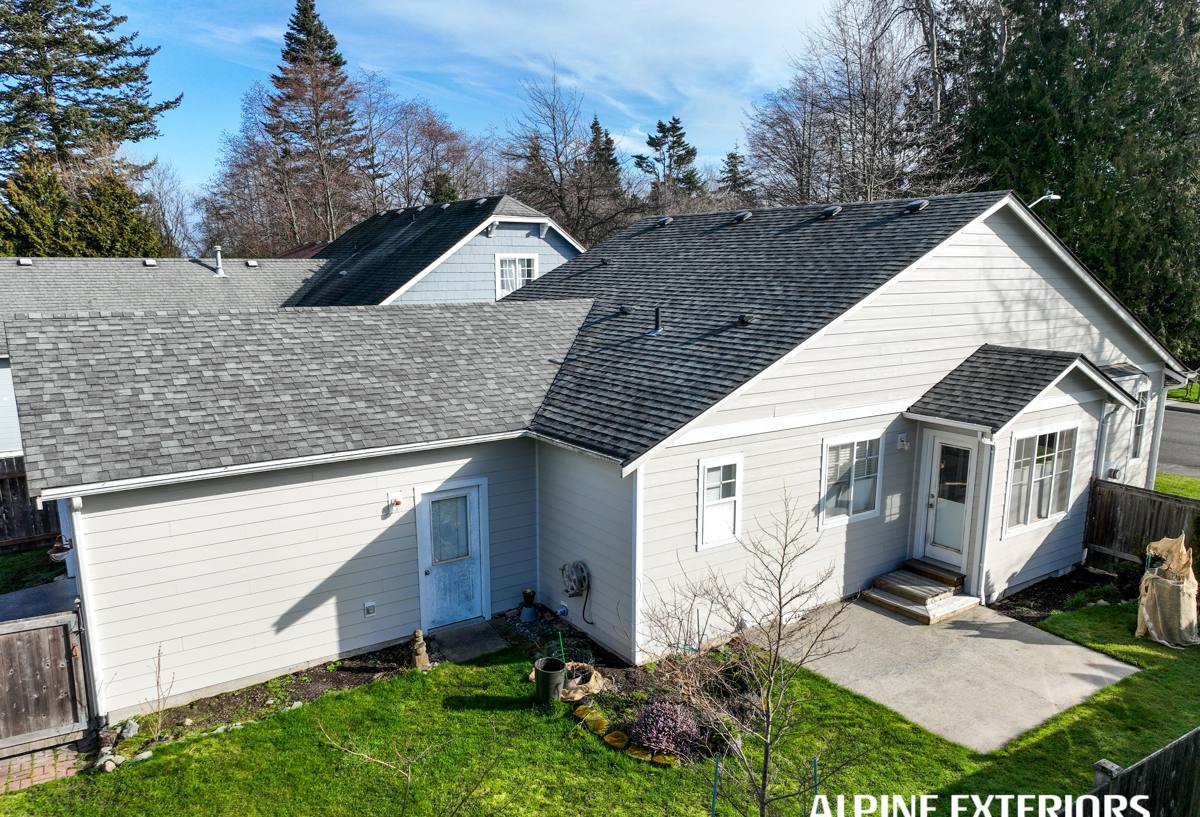
What the Local Climate Actually Does to Siding
Driving Rain and Wind-Driven Moisture
Storms coming off the water don't just fall straight down — wind pushes rain sideways into wall assemblies, seams, and any gap where flashing or caulking has started to fail. Over time, that wind-driven moisture finds its way behind poorly installed siding, and once water gets behind the cladding, the sheathing and framing underneath are what actually pays the price.
Salt Air
Proximity to Puget Sound and Bellingham Bay means a steady low-level exposure to salt-laden air, even well inland. Salt accelerates corrosion on fasteners, flashing, and any metal trim components, and it degrades some paint and coating systems faster than manufacturers' published timelines assume. Product choice and installation detailing both matter more here than they would in a dry inland climate.
A Long Moss and Mildew Season
Shade, moisture, and mild temperatures are exactly what moss and mildew need. On siding, that shows up as green-black staining on north- and west-facing walls, more aggressive growth in shaded side yards, and — on materials that absorb moisture — subtle swelling or softening that isn't visible until you're already looking at a repair. Some siding materials shrug this off with an occasional wash. Others need real attention to stay ahead of it.
Why We Install Only James Hardie Fiber Cement
We made a deliberate decision years ago to install one siding system: James Hardie fiber cement. We don't install vinyl, LP SmartSide, Cemplank, Allura, or bare cedar and primed spruce, and we're upfront with homeowners about why. In a climate like this one, the material's real-world behavior over 15-30 years matters far more than its installed cost or its appearance on day one.
Fiber cement is non-combustible and dimensionally stable — it doesn't expand and contract with moisture the way wood-based products do, and it doesn't have the long-term moisture-absorption profile that makes engineered wood siding vulnerable at cut edges and seams if a house isn't maintained perfectly. James Hardie's ColorPlus factory finish is baked on under controlled conditions, which holds up better against UV and salt exposure than field-applied paint, and it comes with a genuinely transferable, long-term warranty backing that finish.
The HZ5 Product Line
James Hardie engineers its HZ product lines for specific climate zones, and the products rated for our Pacific Northwest region are built with this exact weather pattern in mind — sustained moisture exposure, freeze-thaw cycling, and the kind of year-round dampness that Happy Valley sees more of than most. That's not a marketing detail; it's the reason we standardized on this system instead of offering several options and letting climate performance be an afterthought.
We're not going to tell you every other siding product is worthless — vinyl, engineered wood, and cedar all have legitimate uses and loyal installers. What we will tell you is that we've drawn a line based on what we've seen hold up on homes in this specific climate, and we'd rather turn down a job than install something we don't believe in for the conditions here.
How We Approach a Happy Valley Exterior Project
Starting With an Honest Look at the House
Every project starts with a walk-around, not a sales pitch. We're looking at moss and staining patterns (they tell us where moisture collects), the condition of existing trim and flashing, how the roofline sheds water onto the walls below, and whether decking or window units near ground level are showing early rot or seal failure. Because we handle siding, roofing, windows, and decks, we can flag issues in one trade that are actually being caused by another — a leaking gutter that's rotting the siding beneath it, or a deck ledger board trapping moisture against the house.
Installation Detail Matters More Here Than the Product Itself
Fiber cement performs the way it's supposed to only when it's installed to manufacturer spec — correct clearances above grade and roof lines, proper flashing at every penetration, and fastening patterns that account for our wind exposure. A lot of the siding failures we get called out to inspect on other companies' work aren't material failures at all; they're installation shortcuts that let water in around windows, at butt joints, or at the bottom starter course.
Sequencing Roofing, Windows, Siding, and Decks Together
When a homeowner is replacing more than one exterior component, sequencing saves money and prevents damage. Flashing details at rooflines and window openings need to tie into the new siding correctly, and it's far cheaper to coordinate that in one project than to have a siding crew work around windows that get replaced by someone else six months later.
Cost Factors for Happy Valley Homes
Every house is different, but the same handful of factors drive most of the cost variation we see on local projects:
| Factor | Why It Matters Here |
|---|---|
| Existing moisture or rot damage | Shaded, moss-prone walls often hide sheathing damage that isn't visible until old siding comes off |
| Home size and wall complexity | Dormers, multiple gables, and cut-up wall planes take more time and trim detail than a simple rectangular home |
| Trim and accent choices | Board-and-batten, shake-style panels, and custom trim profiles cost more than standard lap siding |
| Access and site conditions | Sloped lots and mature tree cover common in Happy Valley can affect staging and scaffolding needs |
| Combined-scope projects | Pairing siding with roofing, window, or deck work can reduce total cost versus separate projects |
Roofing, Windows, and Decks: The Rest of the Envelope
Siding doesn't work in isolation, and in this climate it's rarely the only thing that needs attention. A roof that's shedding granules or has failing flashing will eventually send water down behind even correctly installed siding. Windows with degraded seals let moisture into framing around every rough opening. Decks exposed to the same driving rain and moss conditions need materials and fastening details that account for standing water and shade.
Because we handle all four trades, a Happy Valley homeowner doesn't need to coordinate between separate roofing, window, siding, and deck contractors who may never talk to each other. We look at the whole exterior and prioritize what actually needs attention first, rather than upselling every trade at once.
Maintaining Fiber Cement Siding in This Climate
Hardie siding is genuinely low-maintenance compared to wood-based alternatives, but "low-maintenance" doesn't mean "no maintenance" — especially with our moss season. A simple annual routine keeps a system performing for decades:
- Rinse siding annually with a garden hose or low-pressure wash, focusing on shaded north- and west-facing walls where moss and mildew take hold first
- Keep gutters clear so overflow doesn't run down the face of the siding
- Trim back tree limbs and shrubs that keep wall sections shaded and damp
- Inspect caulking at trim, window, and door edges every year or two and re-caulk as needed
- Watch for any staining or soft spots at the bottom starter course, where splashback and standing moisture are most common
- Address minor impact damage or chips in the factory finish promptly to keep the moisture barrier intact
Why Hiring a Local Crew Actually Matters
A lot of exterior contractors work statewide or send crews from out of the area for a job and move on. A crew that works Sudden Valley and Happy Valley regularly has already seen how specific lots, tree cover, and drainage patterns in this area affect a house — which walls take the worst of the driving rain, which lots hold moisture longest, where moss shows up first. That local pattern recognition shows up in better flashing decisions and fewer callbacks, not just faster response times.
It also means accountability doesn't disappear once the project is done. A warranty is only as good as the company standing behind it, and a local, established crew has every reason to get the details right the first time.
If you're dealing with moss buildup, aging siding, or you're just planning ahead for an exterior project in Happy Valley, we're happy to take a look and give you an honest read on what your home actually needs. Reach out for a free, no-pressure estimate using the form below.