 Sudden Valley
 Why Decks in Geneva Wear Out Differently Than You'd Expect
Geneva sits close enough to the water and the marine air moving through Whatcom County that decks here take a different kind of beating than decks in a dry inland climate. It isn't one dramatic event that finishes off a deck — it's the slow accumulation of moisture-laden air, near-constant driving rain through the fall and winter, and a moss season that can stretch from October well into spring. Add in the shade many Geneva lots get from mature evergreens, and you have a recipe for decking that stays damp far longer than it should after every storm.
That combination shows up as soft or spongy boards, rust streaks from failing fasteners, algae and moss buildup that turns a deck slick and dangerous, and — most seriously — rot at the ledger board where the deck attaches to the house. None of that means every deck in Geneva is doomed early. It means the materials, fasteners, and details have to be chosen and installed with this climate specifically in mind, not just built to a generic spec that might work fine somewhere drier.
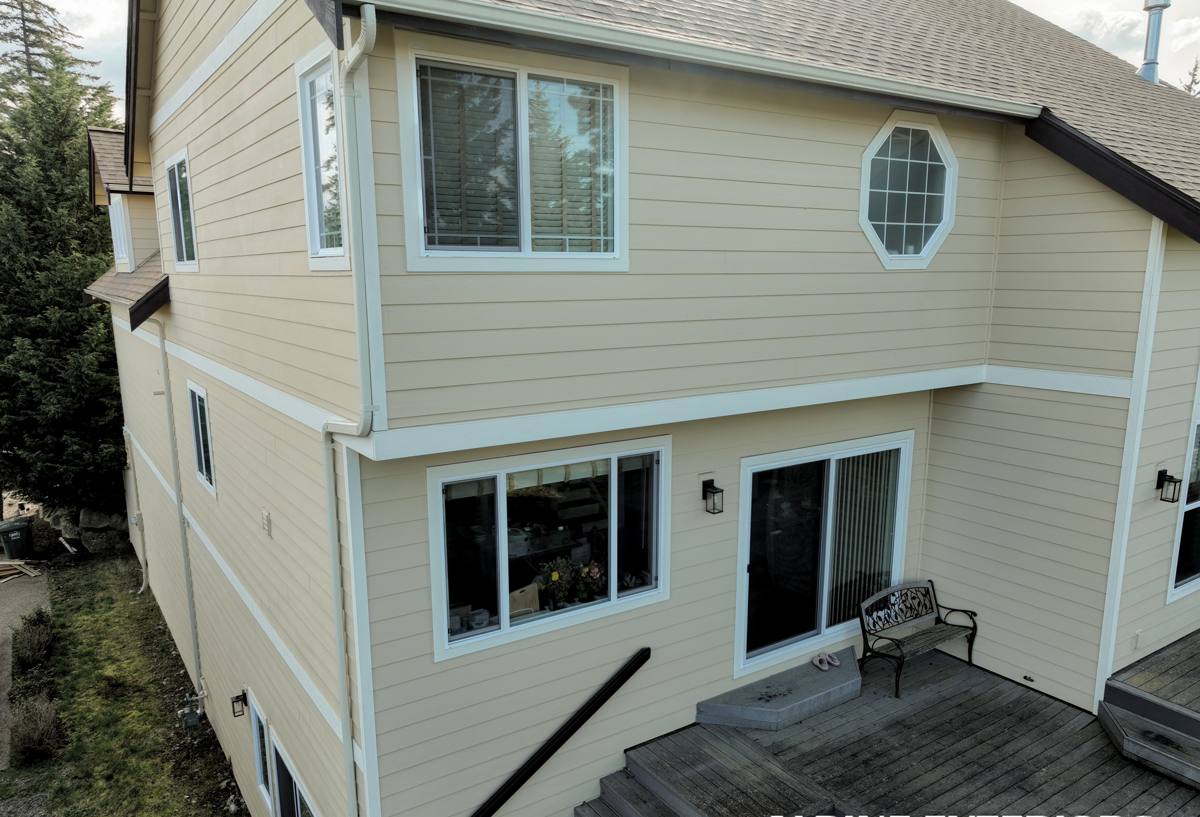
What a Correct Deck Replacement Involves Here
A deck replacement is more than pulling up old boards and screwing down new ones. Done right in a climate like this, it means addressing every point where water can get in and sit.
The Ledger Board and House Connection
The ledger — where the deck bolts to the house — is the single most common failure point we find on old decks in this area. If it was installed without proper flashing, or with flashing that's degraded, water tracks behind it and rots both the ledger and the rim joist it's attached to. Any real deck replacement includes inspecting this connection down to bare wood and installing correct flashing, not just resting a new ledger against old, hidden damage.
Framing and Structural Wood
Joists, beams, and posts need to be rated for ground contact or exposure as appropriate, spaced correctly for the decking material chosen, and treated at every cut end — a cut end with exposed, untreated wood is where rot starts fastest. In a climate with this much sustained dampness, we also pay attention to airflow underneath the deck, since stagnant, shaded air under a low deck accelerates moisture problems in the framing.
Fasteners and Hardware
Standard fasteners corrode faster in persistently damp, marine-influenced air. Hot-dip galvanized or stainless hardware, and structural connectors rated for exterior/wet-use, cost more up front but are the difference between hardware that lasts the life of the deck and hardware that's staining the boards and loosening within a few years.
Decking Surface
Whatever material is chosen, it needs a fastening and spacing approach that lets water shed and boards dry between rain events, rather than trapping moisture against the framing below.
Choosing the Right Decking Material for Geneva's Climate
There's no single "best" decking material — there's a best fit for how a homeowner wants to use the deck and how much upkeep they want to commit to. Here's how the common options actually perform under sustained moisture and moss pressure:
| Material | Moisture Behavior | Maintenance | Typical Lifespan Here |
|---|---|---|---|
| Pressure-treated lumber | Resists rot well when treated end cuts and proper fastening are maintained; can cup or check if it dries out unevenly between wet spells | Needs re-staining/sealing every 2-3 years to shed water and resist moss | 15-20 years with upkeep |
| Cedar | Naturally rot- and insect-resistant, but softer and more prone to surface wear from constant damp/dry cycling | Regular sealing recommended; shows weathering faster if left untreated | 15-20 years with upkeep |
| Composite decking | Doesn't absorb water or rot, but can stay slick longer in shaded, damp spots and needs a surface that resists algae growth | Periodic washing to prevent moss/algae film; no staining or sealing | 25-30+ years, manufacturer-dependent |
We don't push one product over another as a blanket rule — we walk through the trade-offs (upfront cost, upkeep tolerance, how shaded the lot is, how the deck gets used) and land on what actually fits the home. What we do insist on, regardless of decking material, is correct framing and flashing underneath — a good composite surface over a poorly flashed ledger just hides a structural problem for a few more years instead of solving it.
Signs a Geneva Deck Needs Replacement, Not Repair
Not every issue means a full tear-out. But certain signs point to problems that spot repairs won't fix:
- Soft, spongy, or springy spots underfoot, especially near the house
- Visible rot, dark staining, or fungal growth at the ledger board
- Posts or railings that wobble or have visible base rot
- Persistent moss or algae film that returns within weeks of cleaning
- Rust streaking from fasteners paired with soft wood around them
- Gaps or separation where the deck meets the house siding or foundation
- A deck more than 20-25 years old that hasn't been reframed or re-flashed
- Boards that feel damp days after the last rain, indicating trapped moisture below
If what you're seeing is limited to a few worn boards on an otherwise sound frame, a repair may be the honest answer — we'll tell you that rather than sell a full replacement that isn't needed.
Our Deck Replacement Process
- On-site assessment — we inspect the existing deck, ledger connection, and framing to determine what's driving the damage, not just what's visible on the surface.
- Material and layout discussion — we go over decking options, railing style, and any layout changes, with straightforward pricing for each.
- Permitting — deck replacements in Whatcom County typically require a permit depending on size, height, and attachment to the structure; we handle that process as part of the job.
- Tear-out — full removal of the old deck, with a check of the ledger and rim joist condition once the old structure is off.
- Framing and flashing — new joists, beams, and posts as needed, with correct flashing at the ledger and treated cut ends throughout.
- Decking and railing installation — surface material and railing installed per manufacturer spec, with attention to fastening patterns that allow proper drainage and airflow.
- Final walkthrough and cleanup — site cleared of debris, hardware checked, and a walkthrough so you know what maintenance the new deck needs going forward.
Local Permit and Site Considerations
Deck replacements around Sudden Valley and the broader Geneva area typically fall under Whatcom County building requirements once you're replacing structural framing or increasing the footprint or height of the deck. Lots near the lake can also carry setback or shoreline-related considerations depending on proximity to the water. We handle the permit application and inspection scheduling as part of the project so you're not tracking that down yourself, and we won't cut corners on permitting to save time — an unpermitted deck can become a real problem at resale.
Why Hiring a Crew That Already Works Geneva Matters
A deck replacement crew that's worked other homes in Geneva and the surrounding Sudden Valley area already understands the moisture patterns, the shade conditions on wooded lots, and the permitting expectations for this specific part of Whatcom County. That familiarity shows up in small but important decisions — where to add extra flashing detail, which framing spacing holds up best under the local moss and damp cycle, how to grade the ground under a low deck for better drainage. It also means we're not learning the county's permit process on your job; we've been through it before.
Maintaining Your New Deck in This Climate
A correctly built deck still needs some seasonal attention to reach its full lifespan here:
- Sweep off leaves and debris regularly, especially in fall — trapped organic matter holds moisture and feeds moss
- Rinse or lightly scrub surfaces showing early algae film before it spreads
- Re-seal or re-stain wood decking on the schedule recommended for the product (typically every 2-3 years)
- Check railings and fastener heads once a year for movement or corrosion
- Keep gutters and downspouts near the deck clear so runoff isn't draining directly onto or under it
- Trim back overhanging branches where practical to reduce shade and speed drying time
What Affects the Cost of a Deck Replacement
| Factor | Why It Matters |
|---|---|
| Deck size and height | More framing, more decking material, and taller decks often need engineered footings or additional bracing |
| Decking material chosen | Pressure-treated, cedar, and composite carry different material costs and installation labor |
| Ledger and framing condition | Hidden rot discovered during tear-out can require additional framing repair beyond the original scope |
| Railing style and hardware | Code-compliant railing systems and upgraded hardware add cost but are not optional on most decks |
| Permitting and site access | Permit fees and difficult site access (slopes, limited equipment access) affect labor time |
We give a written estimate that breaks these factors out so you know what you're paying for, rather than a single lump number with no explanation.
If your deck is showing soft spots, moss that won't quit, or you're just planning ahead for a replacement, we're happy to take a look and give you a straightforward, no-pressure estimate — use the form below to get started.