 Sudden Valley
 Windows Built for Where Edgemoor Actually Sits
Homes in and around Edgemoor face a specific combination of weather that most window installers never have to think about. You've got salt-laden air drifting in off the water, wind-driven rain that hits window assemblies from angles a lot of flashing details were never designed for, and a long stretch of the year — fall through spring — where moss, algae, and general dampness sit against exterior surfaces without much of a break. Individually, none of that is unusual for Whatcom County. Together, and applied to a window opening year after year, it's exactly the kind of exposure that separates a window installation that lasts fifteen years from one that lasts forty.
We install and replace custom windows for homes in this area regularly, and the lessons don't come from a manual — they come from pulling out windows that failed early and seeing exactly why. This page is about what that means in practice: what your windows are actually up against here, what a correct installation involves, and how we approach the job so it holds up.
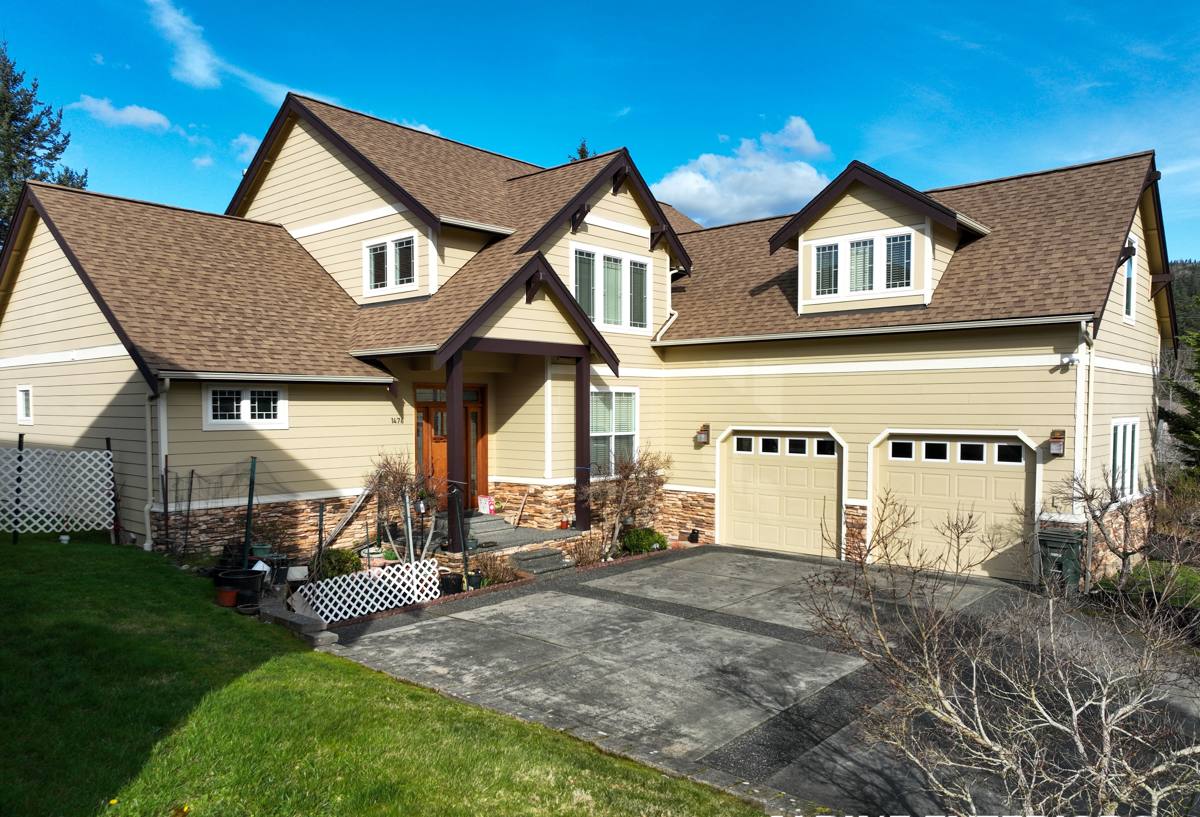
What Salt Air, Driving Rain, and Moss Season Do to a Window
Salt air and hardware corrosion
Airborne salt accelerates corrosion on anything metal — hinges, cranks, locks, and especially lower-grade fasteners or cladding that isn't rated for coastal-adjacent exposure. It's slow and easy to miss until a window that used to open smoothly starts sticking or a lock mechanism starts failing. Marine-grade or corrosion-resistant hardware costs a little more up front and matters a lot over a decade-plus lifespan.
Driving rain and wind pressure
Rain that falls straight down is easy to shed. Rain that's being pushed sideways by wind — which is common on exposed lots near the water — tests every seam, joint, and flashing detail in a window assembly. A window that's watertight in a calm rain can still leak under wind-driven conditions if the flashing, sill pan, or sealant details weren't done with that specific load in mind.
Moss, algae, and prolonged dampness
Whatcom County's wet season means exterior surfaces around windows — trim, sills, and the wall assembly just beyond the frame — stay damp for extended stretches. That feeds moss and algae growth, which holds moisture against wood trim and finishes, and it's a major driver of rot in window surrounds that aren't detailed and finished correctly. This is less about the window unit itself and more about everything around it.
What a Correct Custom Window Installation Involves Here
A window is only as good as the opening it's set into. The unit itself is a manufactured product with a warranty; the installation is a field job, and it's where most failures actually originate. For this climate, the details that matter most are:
- Sill pan flashing — a sloped, sealed pan under the window that directs any water that gets past the frame back outside instead of into the wall cavity.
- Proper flashing sequencing — house wrap, flashing tape, and window flanges layered so water always sheds outward, shingle-style, never trapped behind a layer.
- Backer rod and sealant, not sealant alone — gaps around the frame need proper backer rod before sealant so the sealant can flex with temperature and moisture changes instead of cracking.
- Correct shimming and squaring — an out-of-square window stresses the frame, which stresses the seals, which is where leaks start.
- Interior air sealing — often skipped, but it controls condensation and drafts as much as the exterior work does.
Skip or rush any one of these and the window itself can be excellent quality and still fail early. This is the part of the job that doesn't show up in a brochure but is the actual difference-maker in a climate like this one.
Choosing Window Materials for a Marine-Influenced Climate
There's no single "best" window material — the right choice depends on your home's exposure, your budget, and how much upkeep you want to take on. Here's how the common options actually perform under salt air, driving rain, and sustained dampness:
| Material | Behavior in This Climate | Maintenance | Relative Cost |
|---|---|---|---|
| Vinyl | Won't rot or corrode; performs well against moisture and salt air | Low — occasional cleaning | Lower |
| Fiberglass | Very stable dimensionally, strong resistance to moisture and temperature swings | Low | Mid to higher |
| Wood (unclad) | Attractive but vulnerable to prolonged dampness and moss-fed rot without diligent upkeep | High — regular refinishing needed | Mid to higher |
| Wood-clad (exterior aluminum or vinyl over wood) | Wood warmth inside, protected exterior — good option if detailed and flashed correctly | Moderate | Higher |
| Aluminum | Durable but can corrode near salt air unless properly coated; more prone to condensation without thermal breaks | Moderate | Mid |
For most homes in this area, vinyl and fiberglass are our default recommendations — not because wood or wood-clad windows can't work, but because they demand more consistent maintenance to hold up against the moisture and moss exposure typical here. If you want the look of wood, wood-clad units with a well-detailed exterior can be a solid middle ground, as long as the installation gets the flashing and drainage right.
Signs Your Current Windows Are Losing the Battle
Windows rarely fail all at once — the warning signs show up gradually, and catching them early usually means a simpler repair or targeted replacement instead of dealing with hidden wall damage later.
- Fogging or moisture between panes (a failed seal on double- or triple-pane glass)
- Soft or discolored trim or sill material around the frame
- Visible moss or dark staining building up on sills or exterior trim
- Drafts or noticeable temperature difference near the window on windy days
- Hardware that's stiff, sticking, or showing rust or corrosion
- Paint or finish peeling specifically around the window perimeter, even if the rest of the siding looks fine
- Condensation forming on the interior glass regularly, even in mild weather
Any one of these on its own isn't necessarily urgent. Several showing up together, especially around the same window, usually means water is getting past the seal and it's worth having someone look at it before it becomes a wall repair instead of a window repair.
Our Process for Custom Window Installation
We treat every window opening as its own small project, because on older homes especially, no two openings are built quite the same.
- On-site assessment — we look at the existing window, the condition of the surrounding wall assembly, and the specific exposure that opening gets (sun, wind direction, roof overhang or lack of one).
- Material and unit selection — matched to that exposure and your priorities, not a one-size answer for the whole house.
- Removal and opening prep — checking for hidden rot or moisture damage before anything new goes in, since that's the point where problems are cheapest to fix.
- Flashing and sill pan installation — done to shed water outward regardless of wind direction.
- Setting, shimming, and sealing the unit — square, properly supported, and sealed with backer rod and sealant rather than sealant alone.
- Interior and exterior finish work — trim, caulking, and touch-up finished cleanly on both sides.
- Final check — operation, seal, and drainage confirmed before we call it done.
Energy Performance and Condensation in a Marine Climate
Window ratings like U-factor (how well the window resists heat transfer) and condensation resistance matter more here than in drier climates, because the combination of cool temperatures and high humidity common in this part of Washington makes condensation a real, recurring issue rather than an occasional one. A window with a poor thermal break or single-pane glazing will fog and sweat on cold, damp mornings — not because anything is wrong with your home, but because the glass and frame can't keep up with the humidity differential. Choosing a unit with the right glazing package and a properly insulated frame for our climate zone, and making sure it's air-sealed correctly on installation, addresses most of that before it starts.
Maintenance That Actually Matters Around Here
A well-installed, correctly chosen window doesn't need much — but a little seasonal attention goes a long way given the moss and moisture exposure typical of this area:
- Clear moss and debris off sills and tracks before it holds moisture against the frame
- Rinse salt residue off exterior surfaces periodically if you're in a more exposed, wind-facing spot
- Check and re-caulk any cracked or gapped sealant lines before the wet season sets in
- Operate hardware periodically so corrosion doesn't set in on parts that sit unused
- Keep gutters and downspouts clear so roof runoff isn't dumping extra water near window heads
Why a Crew That Already Works This Area Matters
A lot of window problems we get called out to fix weren't caused by a bad window — they were caused by an installation crew treating a coastal-influenced Whatcom County home the same way they'd treat a house in a drier, more sheltered inland location. The flashing details, sealant choices, and even the hardware specs that hold up here aren't universal — they're specific to what this climate actually does to a building over time. Working in and around Edgemoor and the broader Sudden Valley area regularly means we're not guessing at exposure conditions or relearning local weather patterns on your project. That familiarity shows up in fewer callbacks and windows that are still performing correctly well past the point where a poorly installed one would already be showing problems.
If you're dealing with drafty, foggy, or aging windows, or you're planning a custom install as part of a larger renovation, we're happy to take a look and give you a straightforward, no-pressure estimate — just fill out the form below.