 Sudden Valley
 Windows Built for Cordata's Marine Climate, Not a Catalog Average
Cordata sits close enough to the water and the foothills that its homes take on a specific mix of weather stress: salt-tinged air drifting in off Bellingham Bay, long stretches of driving rain that hits siding and window trim sideways, and a moss season that can run most of the year in shaded, north-facing spots. Windows here don't fail the way they do in a dry inland climate. They fail at the seams, at the sill, and at the frame corners where moisture has time and opportunity to work its way in.
A window that's rated efficient in a lab doesn't automatically perform well on a house in Whatcom County. Efficiency and durability are tied together out here — a window that lets in wind-driven moisture around the frame will lose its insulating value long before the glass itself gives out. When we talk about energy-efficient windows for Cordata, we're talking about the whole assembly: glass, frame, flashing, and installation, working together against this specific climate.
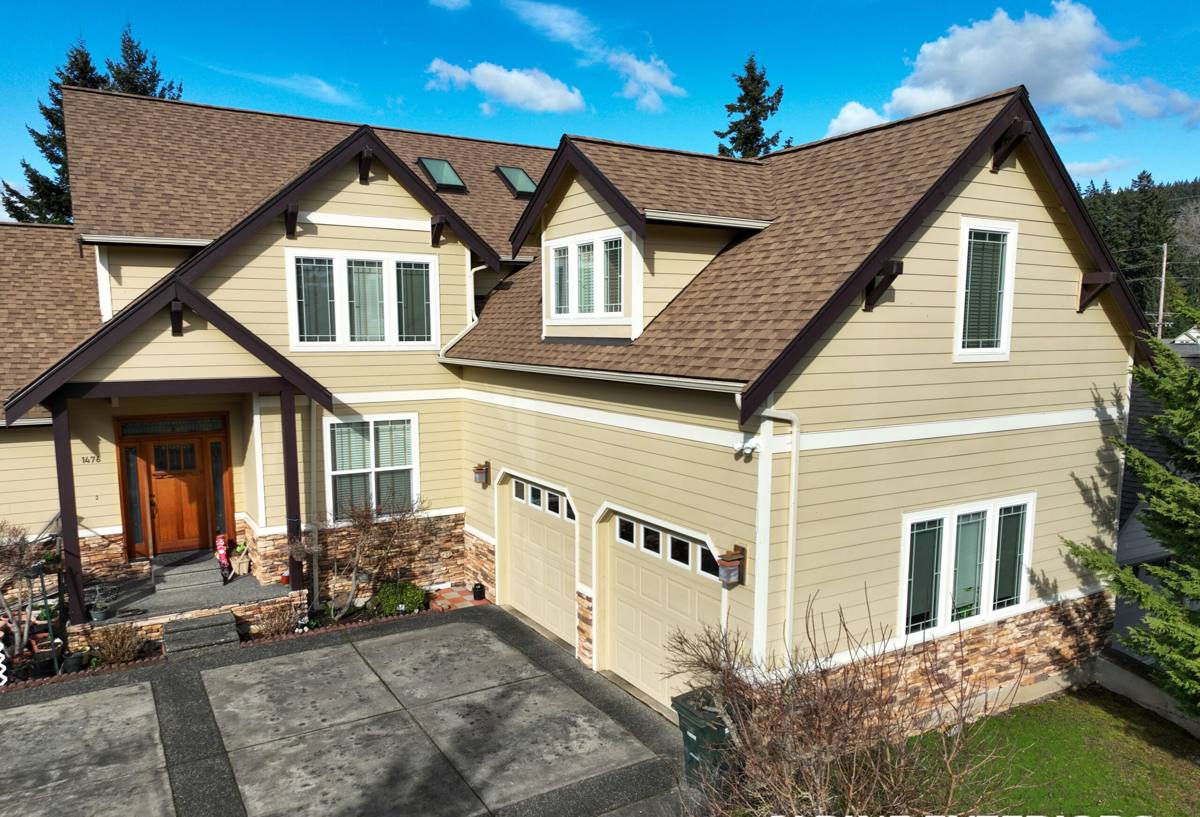
What "Energy-Efficient" Actually Means in This Climate
Efficiency ratings like U-factor and Solar Heat Gain Coefficient (SHGC) matter, but they're only part of the picture in a marine climate like ours.
U-Factor: Heat Loss Through the Window
Lower U-factor means less heat escapes through the glass and frame during our cool, wet winters. For this area, a lower U-factor pays off more in comfort — fewer cold spots near windows — than in dramatic energy bill savings, since our winters are damp and mild rather than bitterly cold.
SHGC: Solar Heat Gain
Cordata doesn't get the intense summer sun that inland Washington sees, so a moderate SHGC usually strikes the right balance — enough solar gain to help warm rooms on clear days, without overheating south- and west-facing rooms during the handful of hot stretches we do get.
Condensation Resistance
This is the one homeowners underestimate most. High humidity, cool surface temperatures, and long stretches of gray, still weather make interior condensation a real issue on lower-quality windows. Warm-edge spacers and a properly sealed insulated glass unit reduce fogging and the moisture that feeds mold growth on sills and trim.
Signs Your Current Windows Are Working Against You
Most homeowners don't notice window failure until it shows up somewhere else — a heating bill that keeps creeping up, or a spot of mildew that keeps coming back no matter how often it's cleaned. A few honest signs worth checking for:
- Condensation or fogging between the panes of an insulated glass unit — this means the seal has failed and can't be repaired, only replaced
- Visible moss or dark streaking building up on the sill or lower frame, even after cleaning
- Drafts you can feel near the frame on a windy day, especially during the wetter months
- Wood trim around the window that's gone soft, spongy, or is showing paint failure
- Difficulty opening, closing, or latching — often a sign the frame has shifted from moisture absorption
- Noticeably colder rooms near large window areas compared to the rest of the house
Any one of these on its own might just need attention. Several together usually mean the windows are past the point where caulk and weatherstripping fixes will hold.
What a Correct Installation Actually Involves
The window unit itself is maybe half the job. The other half — the part that determines whether it performs well in this climate for the next twenty years — is how it's flashed, sealed, and tied into the wall assembly.
Flashing and Moisture Management
In an area with as much driving rain as Cordata sees, the flashing details around a window matter more than the window brand. Proper sill pan flashing, correctly lapped house wrap, and sealed integration with the siding keep wind-driven rain from getting behind the window frame — the single most common cause of hidden rot we see when we open up an older wall.
Sealing and Insulation
Low-expansion foam or backer rod and sealant around the rough opening closes air gaps without bowing the frame. A window installed with gaps left uninsulated will underperform its own rating, no matter how good the glass package is.
Fastening and Support
Windows need to be shimmed level, plumb, and square, then fastened per the manufacturer's schedule — not just enough screws to hold it in place. An out-of-square frame stresses the seals over time and is a common reason double-pane units fail early.
Comparing Frame Materials for a Wet, Salt-Air Climate
Frame material affects how a window handles humidity, salt-laden air, and years of rain exposure. Here's how the common options stack up for a home in this area:
| Frame Material | Moisture & Salt-Air Performance | Maintenance | Typical Lifespan Here |
|---|---|---|---|
| Vinyl | Good — won't rot or corrode, handles humidity well | Low — occasional cleaning | 20-30 years |
| Fiberglass | Excellent — very stable in temperature and moisture swings, resists warping | Low | 30+ years |
| Wood (unclad) | Poor without diligent upkeep — absorbs moisture, prone to rot in shaded, damp spots | High — regular painting/sealing | Highly dependent on maintenance |
| Aluminum | Fair — durable but conducts heat/cold and can corrode near salt air over time | Moderate | 20-25 years |
We steer most Cordata homeowners toward vinyl or fiberglass for this reason: both hold up against the moisture load this area sees without the ongoing maintenance a bare wood frame demands. That's a practical recommendation based on how these materials behave in wet, salt-influenced air over decades — not a knock on wood windows generally, which can perform well in drier climates or with committed upkeep.
Our Process, Start to Finish
- On-site assessment — we look at existing window condition, framing, and any moisture or rot signs before quoting anything
- Honest recommendation — glass package and frame material sized to the specific exposure of each window, not a one-size answer for the whole house
- Written estimate — clear on scope, materials, and timeline, no pressure to sign same-day
- Removal and prep — old units removed, opening checked and repaired for any hidden rot before the new window goes in
- Installation — proper flashing, sealing, and fastening per manufacturer spec
- Final walkthrough — we test operation, check seals, and confirm the site is left clean
Why Local Experience in Cordata Matters
A crew that's worked houses across Whatcom County knows which orientations catch the worst of the wind-driven rain, which shaded elevations grow moss fastest, and how the humidity here behaves differently than it would forty minutes inland. That's not something a general handyman or an out-of-area crew picks up on the first visit. It shows up in small decisions — how much flashing overlap to use, whether a sill needs an extra moisture break, how tight to run the sealant bead — that don't show up on an invoice but do show up in how the window performs ten years later.
It also matters for timing. Scheduling installation around the wetter stretches of the year, when openings can't be left exposed for long, is a judgment call that comes from having done this work locally, season after season.
Living With These Windows: Maintenance in a Moss-Prone Climate
Even a well-installed, high-quality window benefits from a little seasonal attention here:
- Rinse pollen, salt residue, and moss spores off frames and sills a couple of times a year
- Keep weep holes on the exterior clear so water can drain out instead of pooling
- Check exterior caulk lines annually, especially after a hard winter, and touch up any cracking
- Trim back vegetation or overhangs that keep a window in constant shade, since that's where moss and mildew take hold fastest
What Affects the Cost
Every home is different, but a few factors consistently move the price on a window replacement project in this area:
| Factor | Why It Matters |
|---|---|
| Number and size of openings | More or larger windows means more material and labor |
| Frame material chosen | Fiberglass typically costs more upfront than vinyl but needs less long-term upkeep |
| Existing rot or framing damage | Hidden damage found during removal adds repair scope before the new window goes in |
| Glass package (Low-E, gas fill, tempered where required) | Higher-performance glass costs more but pays off in comfort and condensation resistance |
| Access and site conditions | Second-story or hard-to-access windows take more time and equipment |
We'd rather walk a homeowner through these trade-offs honestly during the estimate than quote a number that doesn't reflect the actual condition of the house.
If your windows are showing any of the wear signs above, or you're just planning ahead for a home in Cordata, we're happy to come take an honest look. The estimate is free, there's no pressure, and you can use the form below to get started.