 Sudden Valley
 Why Metal Roofing Gets a Second Look in Bellingham
Homeowners around Sudden Valley and Bellingham tend to ask about metal roofing for the same reason: the climate here is hard on a roof. Salt-laden air off the water, long stretches of driving rain, and a moss season that can run most of the year put steady stress on any roofing material. Asphalt shingles hold up fine in drier parts of the country, but in Whatcom County they're fighting algae streaking, granule loss, and moss intrusion almost from the day they're installed. Metal roofing doesn't eliminate every maintenance task, but it changes the equation — fewer surfaces for moss to grip, no granules to shed, and a material that sheds water fast instead of absorbing it.
This page covers what metal roofing actually needs to do well in this specific climate, what a correct installation looks like, and how we handle the job for homes in and around Bellingham.
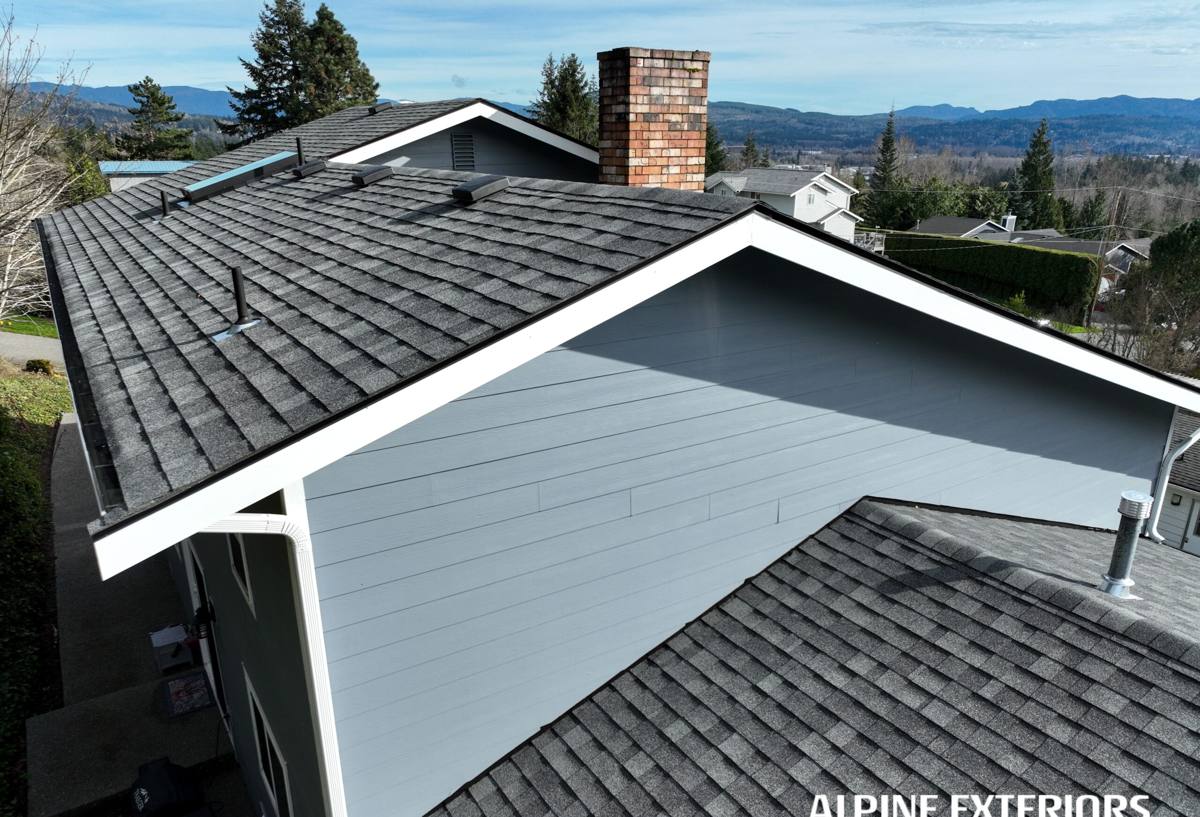
What This Climate Actually Does to a Roof
Salt Air and Corrosion
Homes closer to Bellingham Bay deal with airborne salt that settles on exposed metal — fasteners, flashing, gutters — and slowly works on any coating that isn't built for it. Bare or poorly coated steel will show rust streaking at cut edges and fastener heads well before the panels themselves fail. It's not usually the panel that fails first in a salt-exposed environment; it's the fasteners, the flashing, and the cut edges that were left unsealed.
Wind-Driven Rain and Water Intrusion
Rain here rarely falls straight down. Wind off the water pushes it sideways and up under laps, ridge caps, and flashing that would be fine in a calmer climate. A roof that isn't detailed for driving rain will leak at the transitions — valleys, chimneys, skylights, wall-to-roof intersections — long before the field of the roof ever gives out.
Moss, Shade, and Trapped Moisture
Tree cover is heavy through this part of Whatcom County, and shaded, north-facing slopes stay damp for weeks at a time. On asphalt, moss roots into the granules and lifts shingles as it grows. On a smooth, properly installed metal roof, moss has almost nothing to grip — but debris that collects in valleys, at panel laps, or behind poorly flashed penetrations can still hold moisture against the metal and undercut even a good coating over time.
Metal Panel Systems We Install
Not every metal roofing system is built the same way, and the differences matter more here than they would in a dry climate. Here's how the common options compare for a Bellingham-area home.
| Panel Type | How It's Attached | Maintenance in This Climate | Trade-offs |
|---|---|---|---|
| Standing seam | Concealed clips, no exposed fasteners on the field | Lowest — no exposed screws to back out or corrode | Higher upfront cost, requires a crew comfortable with precise seaming |
| Exposed-fastener (corrugated/ribbed) | Screws driven through the panel face, with washers | Fastener washers need periodic checking and eventual replacement | Lower upfront cost, but washers are the weak point in wet, salty air |
| Stone-coated steel | Interlocking panels, often nailed like tile | Moderate — coating protects the steel but joints need attention | Mimics shingle or shake look, adds weight versus standard panels |
For homes closer to the water or fully exposed to wind, we generally steer people toward standing seam because it removes the exposed-fastener failure point entirely. For more sheltered lots, exposed-fastener panels can be a reasonable, more affordable option as long as the fastener quality and spacing are right — and as long as whoever installs it plans to actually check those fasteners down the road, not just walk away after the last panel goes up.
What a Correct Metal Roof Installation Involves
Underlayment
Metal panels are only as good as what's underneath them. In a climate with this much wind-driven rain, we don't treat underlayment as an afterthought — synthetic or self-adhered underlayment at eaves, valleys, and penetrations gives the roof a backup layer if wind ever pushes water past the panel laps. Skipping or skimping on underlayment is one of the most common shortcuts we see on roofs that end up leaking.
Fastening and Panel Layout
Panel layout has to account for the direction of prevailing wind and rain on the specific roof, not just run panels in whatever direction is easiest to install. Fastener spacing, screw length, and washer quality all affect how the roof holds up over years of salt exposure and wind uplift — this is not a place to use whatever fasteners happen to be cheapest.
Flashing Details
Almost every metal roof leak we're called to inspect traces back to a flashing detail, not the panels themselves — a valley that wasn't formed correctly, step flashing that was reused from the old roof, or a penetration boot that wasn't rated for the panel profile. Getting flashing right takes more time than running field panels, and it's the part of the job that separates a roof that lasts decades from one that starts leaking in year three.
Our Process for Sudden Valley and Bellingham Roofs
- Inspection and assessment — we look at the existing roof, decking condition, ventilation, and how the specific site is exposed to wind, rain, and shade before recommending anything.
- Tear-off vs. overlay decision — we'll tell you honestly whether the existing roof can be built over or whether a tear-off is the right call given the decking and any moisture damage underneath.
- Ventilation check — trapped attic moisture works against a metal roof from the underside, so we confirm intake and exhaust ventilation are adequate before panels go on.
- Underlayment and flashing installation — done first and inspected before a single panel goes up.
- Panel installation — laid out for the site's wind and water exposure, fastened to spec, not to whatever's fastest.
- Cleanup and walk-through — we walk the finished roof with you and explain what maintenance, if any, it'll actually need.
Living With a Metal Roof Through Moss Season
A properly installed metal roof needs far less attention than an asphalt one, but "less" isn't "none." A short seasonal routine keeps small issues from becoming leaks:
- Clear valleys, gutters, and any debris pockets before the fall rains start — trapped needles and leaves hold moisture against the panel even when the panel itself sheds water fine.
- Trim back branches that overhang the roof to cut down on shade and debris, which is what drives most moss growth in the first place.
- After a significant windstorm, do a visual check of ridge caps, flashing, and any exposed fasteners for movement.
- On exposed-fastener panels, check washer condition every couple of years — a cracked or backed-out washer is a small fix now and a leak later.
- Rinse off algae or organic staining with a gentle wash rather than a pressure washer, which can damage coatings and force water under laps.
- Keep an eye on sealant at any penetration — pipe boots, vent flashing — since sealant is the first thing to fail in prolonged salt-air exposure.
Why a Crew That Already Works This Area Matters
Metal roofing installed correctly in Arizona and metal roofing installed correctly in Whatcom County aren't the same job. A crew that works Bellingham and Sudden Valley regularly already knows which lots get hammered by wind off the water, which shaded slopes hold moss and moisture longest, and which older homes in the area are more likely to need decking repair once the old roof comes off. That local knowledge shows up in the details — fastener choice, flashing sequence, underlayment placement — that don't show up on a spec sheet but decide whether the roof holds up.
It also matters after the job is done. A roof is a long-term investment, and if a question or warranty issue comes up five or ten years down the road, it's worth being able to reach the crew that actually installed it rather than tracking down a company that only passed through once.
What Affects Your Estimate
Every roof is different, and we'll walk you through the specifics before giving you a number, but a few factors consistently move the price on jobs in this area:
| Factor | Why It Matters |
|---|---|
| Roof pitch and complexity | Steep roofs, multiple valleys, and dormers all add labor time and flashing work |
| Tear-off vs. overlay | Removing an old roof and repairing decking underneath adds cost but is often necessary |
| Panel system chosen | Standing seam costs more upfront than exposed-fastener panels but needs less long-term attention |
| Decking condition | Moisture damage found once the old roof comes off can require repair before panels go on |
| Access and site conditions | Steep lots, limited access, or heavy tree cover around the home can add time to the job |
As a general rule, metal roofing costs more upfront than an asphalt shingle replacement — but it's also built to last several times longer with a fraction of the maintenance, which is why so many homeowners in this climate see it as the better long-term value rather than the cheaper short-term fix.
If you're weighing metal roofing for a home in Sudden Valley or anywhere around Bellingham, we're happy to take a look and give you a straight answer on what your roof actually needs — no pressure, no upsell. Use the form below to request a free estimate.