 Sudden Valley
 Why Lake Whatcom Roofs Wear Differently
A roof around Lake Whatcom doesn't fail the same way a roof in a dry inland climate does. Homes here sit under tree cover, catch moisture rolling off the water, and get hit with the marine air that moves through Whatcom County off the Sound. That combination — shade, standing humidity, and driving rain that comes in sideways during fall and winter storms — shortens the life of roofing materials that would hold up fine somewhere drier. We've repaired enough roofs in this area to know the failure patterns are consistent: moss where sun doesn't reach, granule loss on slopes that take the worst of the wind-driven rain, and slow leaks that started small and got ignored until they weren't.
This page is specifically about roof repair for homes around Lake Whatcom and Sudden Valley — not a general roofing overview. If you're dealing with a leak, missing shingles, moss creeping across your roofline, or a repair another company did that didn't hold up, this is what a correct fix actually looks like and how we approach it.
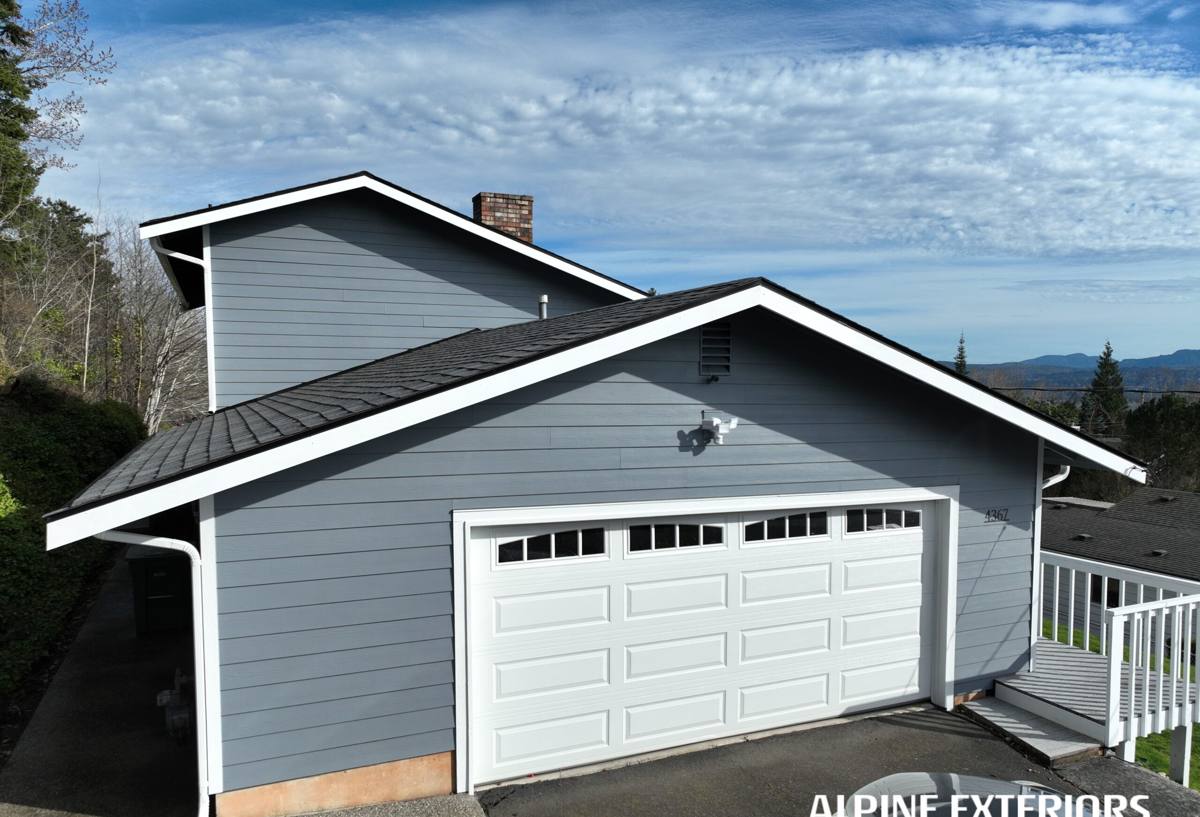
Signs Your Roof Needs a Repair Call
Most roof problems in this climate don't announce themselves with a dramatic leak on day one. They show up as small signals first, and catching them early is the difference between a repair and a much bigger bill.
- Moss or dark streaking concentrated on the north- or shade-facing slope of the roof
- Granules collecting in gutters or at the base of downspouts after rain
- Shingles that look curled, lifted, or cracked at the edges
- Soft or spongy spots when walking the roof (a sign of trapped moisture underneath)
- Water stains on interior ceilings or in the attic, even faint ones
- Daylight visible through the roof deck when you look up from inside the attic
- Flashing around chimneys, vents, or skylights that looks separated or rusted
None of these by themselves mean you need a full roof. Most of them mean you need a repair done correctly, soon, before the moisture behind them does more damage.
What Moss and Moisture Actually Do to a Roof
Moss Isn't Just Cosmetic
Moss on a shaded roof slope isn't just an eyesore — it holds water against the shingle surface long after the rest of the roof has dried out. Over a wet Whatcom County winter, that constant dampness accelerates granule loss and can lift shingle edges, which is exactly where wind-driven rain finds its way underneath. By the time moss is visible from the ground, it's usually been established for a season or more, working on the roof the whole time.
Where Trapped Moisture Goes
Once moisture gets past the shingle layer, it doesn't just sit there — it travels along the underlayment, finds the nearest fastener or seam, and works its way into the roof deck. A repair that only addresses the visible symptom (patching a shingle, caulking a flashing joint) without checking what's happening underneath is a repair that fails again within a year or two. We've reworked roofs where a previous patch job covered the surface problem but left saturated decking underneath — the kind of thing you don't see until it's rotted through.
What a Correct Repair Actually Involves
A proper roof repair isn't just replacing what's visibly damaged. It's tracing the problem to its source and making sure the fix addresses the cause, not just the symptom. That typically means:
- Inspecting beyond the damaged area — checking the decking, underlayment, and flashing around the repair zone, not just the shingles that look bad
- Identifying the actual water path — a stain on your ceiling often traces back several feet from where the leak actually enters the roof
- Removing and replacing compromised material — soft decking, saturated underlayment, and damaged shingles all need to come out, not just get covered over
- Re-flashing correctly — flashing around chimneys, vents, valleys, and skylights is where the majority of leaks in this region actually originate
- Matching materials properly — new shingles need to tie into the existing roof's pattern and drainage path, not just get nailed on top
- Checking attic ventilation — poor airflow traps moisture from the inside, which undermines even a well-done exterior repair
Skipping any of these steps is how a repair becomes a callback. We'd rather take the extra twenty minutes to check the decking than come back in eight months to fix the same leak.
Repair or Replace? How We Make That Call
Not every roof problem around Lake Whatcom needs a full replacement, and we're not going to tell you it does. But there's a point where patching stops making financial sense. Here's how we weigh it:
| Factor | Points Toward Repair | Points Toward Replacement |
|---|---|---|
| Roof age | Under 15–18 years | Approaching or past expected lifespan |
| Extent of moss/algae | Isolated to one slope or area | Widespread across most of the roof |
| Decking condition | Solid, dry, no soft spots | Multiple soft or rotted sections found |
| Number of past repairs | First or second repair | Third-plus repair in the same area |
| Granule loss | Localized, shingles otherwise intact | Widespread, shingles brittle or cracking broadly |
| Leak pattern | Single, traceable source | Multiple leak points appearing over time |
We'll walk your roof, show you what we find, and give you an honest read on which side of that line your situation falls. If a repair is the right call, that's what we'll recommend and price — we don't upsell a replacement a roof doesn't need yet.
Our Process, Start to Finish
When you call for a roof repair, here's what to expect:
- Inspection — we get on the roof (not just a look from the ground) and check the deck, flashing, and ventilation around the problem area
- Honest assessment — we tell you what's actually going on, what's causing it, and what it'll take to fix it right
- Written estimate — a clear scope of work and price before anything starts, no surprise add-ons
- The repair itself — removal of damaged material, correct flashing and underlayment work, matched shingle replacement
- Cleanup — old materials and debris hauled off, gutters checked and cleared if they took on debris during the work
- Follow-up — we'll tell you honestly if we think the rest of the roof is on borrowed time, so you're not caught off guard later
Materials and Methods That Hold Up Here
Underlayment Matters More Than People Think
In a climate that gets sustained wet weather for months at a time, the underlayment beneath your shingles is doing a lot of the real work. We use synthetic or self-adhered underlayment in vulnerable areas — valleys, eaves, around penetrations — because it holds up better against prolonged moisture exposure than older felt products, especially in spots where wind-driven rain has a chance to work its way under the shingle layer.
Flashing Done Right, Not Just Sealed
A lot of the "leaks" we get called out for started as a flashing joint that was caulked instead of properly integrated with the roofing layers. Caulk is a maintenance item, not a repair — it degrades, shrinks, and cracks within a season or two in this climate. Proper flashing work ties into the shingle courses so water sheds over it, not just seals a gap and hopes.
Ventilation Is Part of the Repair
An attic that isn't venting properly traps warm, moist air against the underside of the roof deck, which contributes to rot and can shorten the life of a repair you just paid for. If we find inadequate ventilation while we're up there, we'll flag it — it's often a low-cost fix that protects the rest of the work.
Why It Matters That We Already Work This Area
Roofing crews that don't work Lake Whatcom regularly tend to treat every repair the same way, regardless of climate. A crew that's used to drier conditions elsewhere in the state doesn't always think to check for the moisture patterns that are routine here — the shaded-slope moss, the valley buildup from surrounding tree cover, the way driving rain off the lake hits certain roof orientations harder than others. Knowing the local pattern means we're not troubleshooting from scratch on your roof; we already know where problems in this area tend to start.
Sudden Valley homes also tend to share certain layout and exposure characteristics given the terrain and tree canopy around the lake, so a crew that's worked several roofs in the neighborhood has a real sense of what to check first — which speeds up the inspection and keeps the estimate accurate instead of padded for the unknown.
Keeping a Repair From Turning Into a Repeat Call
A good repair should hold up for years, not months. A few habits make a real difference in this climate:
- Clear gutters and downspouts at least twice a year — clogged gutters back water up under the roof edge
- Have moss treated before it spreads across a full slope, not after
- Trim back tree limbs that keep sections of the roof shaded and damp
- Walk the attic after major windstorms and check for new light gaps or damp insulation
- Address small leaks the season you notice them — waiting through a wet Whatcom County winter almost always makes the repair bigger
If you're dealing with a leak, visible moss, or damage from a recent storm on a home near Lake Whatcom or in Sudden Valley, we're glad to take a look and give you a straight answer on what it needs. Reach out for a free, no-pressure estimate using the form below.