 Sudden Valley
 Why Decks in Barkley Wear Out Faster Than You'd Expect
A deck in Barkley doesn't fail because the lumber was bad or the builder was careless. It fails because Whatcom County weather is relentless in a specific, predictable way: moisture-heavy Pacific air, salt-tinged winds working inland off the Sound, driving rain for months at a stretch, and a moss season that can run from October through May. None of those things destroy a deck overnight. They work slowly, at the joints, fasteners, and end grain, until a homeowner notices a soft board or a wobble in the railing and realizes the damage has been building for years.
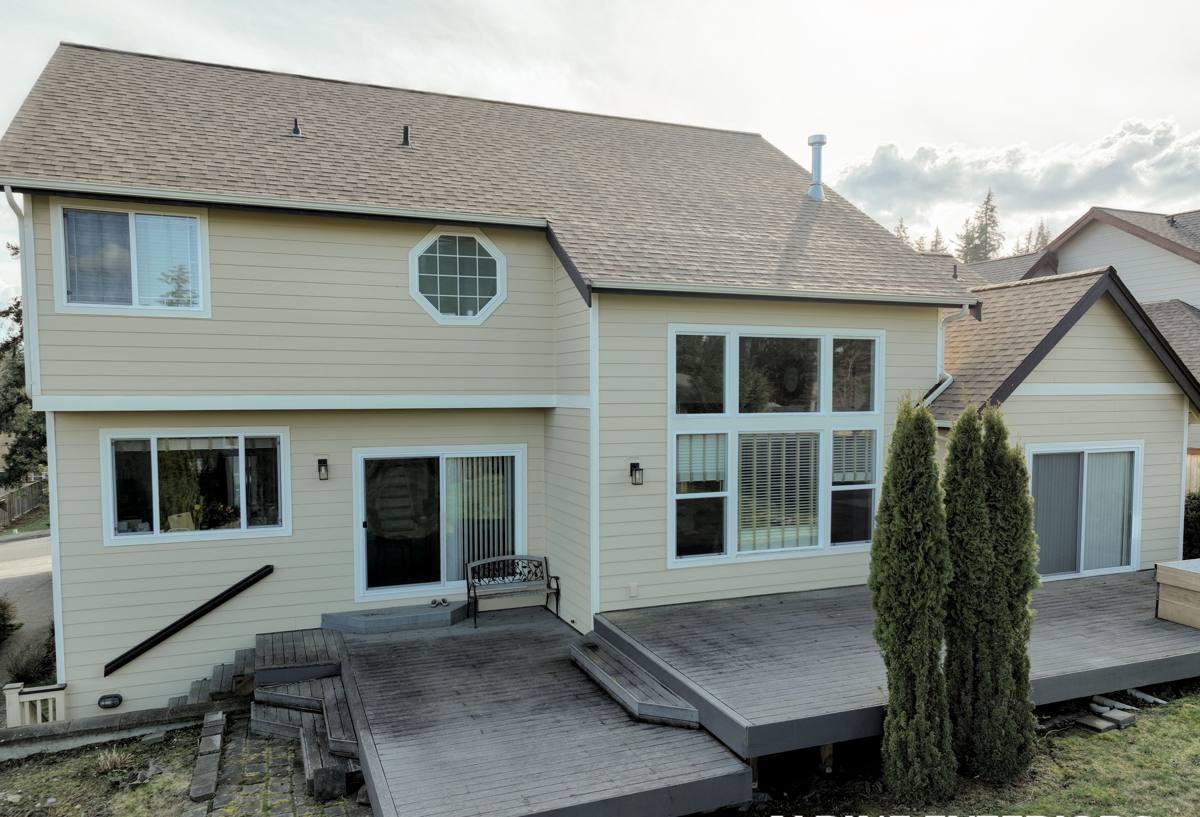
Decks that face north or sit under tree cover — common in and around Barkley — dry out slower after every rain. That extra dwell time is what turns ordinary weathering into rot, fastener corrosion, and slick, moss-covered surfaces. Understanding that pattern is the first step to repairing a deck correctly instead of just patching what's visible.
What Barkley's Climate Actually Does to a Deck
Moss and Organic Buildup
Moss holds moisture directly against wood fibers and decking surfaces for days after the rain stops. On horizontal surfaces — deck boards, stair treads, the tops of railings — that constant dampness accelerates rot far more than rain alone would. Moss also makes stairs and landings dangerously slick, which is a safety issue as much as a maintenance one.
Fastener and Hardware Corrosion
Salt-influenced, damp coastal air is hard on metal. Nails, screws, and structural hardware that aren't rated for exterior or coastal exposure corrode faster here than they would inland. Corroded fasteners lose holding strength quietly — a board can look fine while the screws underneath it are failing.
Wood Movement and Ledger Board Stress
Constant wetting and drying cycles cause wood to swell and shrink repeatedly. This is hardest on the ledger board — where the deck attaches to the house — and on any joint that isn't properly flashed. Water that gets behind the ledger or into end grain at joist hangers is one of the most common sources of hidden structural rot we find.
Signs Your Deck Needs Repair — Not Just Cleaning
- Boards that feel spongy, springy, or noticeably softer underfoot than the rest of the deck
- Visible gaps, cupping, or splitting concentrated in shaded or north-facing sections
- Rust streaks running down from screw heads or metal connectors
- A railing that flexes or moves when you lean on it
- Stairs or landings that stay slick with moss even after cleaning
- Any gap, staining, or dark discoloration where the deck meets the house at the ledger board
- Wood that a screwdriver or awl sinks into easily near ground contact posts
Any one of these on its own might be minor. Several together, especially near the ledger or support posts, usually mean the problem has moved from the surface into the structure.
What a Correct Deck Repair Actually Involves
A repair that only replaces the boards you can see often leaves the actual cause untouched, which means the same failure comes back in a season or two. A repair done right looks at the whole system:
Structural Inspection First
Before any board comes off, we check the ledger board attachment and flashing, the condition of joists and beams, post bases and footings, and the connectors holding it all together. This is where hidden rot from years of moss and standing water usually shows up.
Fastener and Hardware Upgrades
If we're opening up a section that was built with standard fasteners, we replace them with hardware rated for exterior, corrosion-prone environments. Patching new boards onto old, corroding hardware just resets the clock on the same failure.
Flashing and Water Management
Where the deck meets the house, proper flashing is what keeps rain from tracking behind the siding and the ledger board. A repair that doesn't correct missing or failed flashing is treating a symptom, not the cause — and it's one of the most common gaps we find on older decks in this area.
Matching Materials to the Rest of the Deck
New boards, railings, or structural lumber need to match the existing deck's species and dimension closely enough that they weather at a similar rate. Mismatched materials age unevenly and can create new moisture traps at the seams.
Repair vs. Replacement: How We Help You Decide
| Factor | Repair usually makes sense | Replacement usually makes sense |
|---|---|---|
| Structural framing (joists, beams, posts) | Sound, with only isolated soft spots | Widespread rot or repeated past patch jobs |
| Ledger board attachment | Solid with intact or repairable flashing | Rot has spread into the rim joist or house framing |
| Decking surface | Damage limited to a few boards or one section | Cupping, splitting, or softness across most of the deck |
| Railings and stairs | Cosmetic wear, minor looseness | Flex, movement, or rot at connection points |
| Age and prior maintenance | Deck was maintained and is under ~15 years old | Never sealed/stained, or original build is 20+ years old |
We'll walk the deck with you, point out exactly what we find, and give you an honest read on which side of that line your deck falls on — including when a partial repair genuinely is the smarter money.
Decking and Repair Material Options
| Material | Moisture resistance | Maintenance needs | Best repair use case |
|---|---|---|---|
| Pressure-treated lumber | Good when properly sealed and maintained | Needs re-sealing/staining every 1-3 years in this climate | Structural framing repairs, budget-conscious board replacement |
| Cedar | Naturally moisture- and insect-resistant | Benefits from periodic sealing to hold color and resist moss | Visible board and railing repairs where appearance matters |
| Composite decking | Very good — doesn't rot or splinter | Low; occasional cleaning to keep moss from gaining a foothold | Full surface replacement over sound framing |
We don't push one material for every job. If your existing deck is wood and structurally sound, matching with quality treated lumber or cedar is often the right call. If you're already replacing most of the surface, that's a natural point to consider composite decking to reduce future maintenance — a straightforward trade-off between upfront cost and long-term upkeep, not a case of one product being "better" outright.
Our Deck Repair Process
- On-site inspection. We check the deck structurally, not just visually — framing, ledger, fasteners, and footings, in addition to the surface.
- Written scope and estimate. You get a clear list of what's being repaired and why, with pricing broken out so you're not guessing what you're paying for.
- Demo of only what's necessary. We remove damaged material without disturbing sound structure any more than needed.
- Structural correction. Rotted framing, corroded hardware, and failed flashing get addressed before any new decking goes down.
- Rebuild to match. New boards, railings, or stair components are installed to match the existing deck's look and dimensions.
- Final walkthrough. We show you what was fixed and give straightforward maintenance guidance for this climate — not a generic care sheet.
Maintenance That Actually Extends a Barkley Deck's Life
- Sweep leaves and debris off the deck regularly in fall — trapped organic matter is what starts moss growth
- Clean visible moss off boards and stairs before it spreads, using a deck-safe cleaner rather than a pressure washer alone
- Check the ledger board area at the house each spring for staining, gaps, or soft wood
- Re-seal or re-stain wood decking on the schedule your material needs — don't wait until it looks obviously weathered
- Look at exposed fasteners and hardware yearly for rust streaks or looseness
- Keep gutters and downspouts near the deck clear so runoff isn't draining directly onto or under it
Why a Crew That Already Works in Barkley Makes a Difference
Deck repair isn't the same job everywhere. A crew that mostly works drier inland climates will size up a Barkley deck differently than one that repairs decks here every season and already knows where moss builds up fastest, which ledger connections tend to fail first, and which fastener grades actually hold up to this area's moisture and salt-tinged air. That familiarity shows up in fewer surprises during the job and in repairs that are built for the conditions your deck actually faces, not generic textbook conditions.
It also means we're not guessing at what's "normal" wear for this area versus what's a genuine red flag. We've seen enough decks in Sudden Valley and the surrounding Whatcom County neighborhoods to tell the difference quickly, which keeps inspections efficient and estimates accurate.
Get a Straight Answer on Your Deck
If your deck has soft spots, a wobbly railing, or areas that never seem to dry out, it's worth having someone look before those issues spread into the framing. We offer free, no-pressure estimates for deck repair in Barkley and the surrounding Sudden Valley area — use the form below to get a time on the calendar.