 Sudden Valley
 New-Construction Windows: What the Term Actually Means
"New-construction window" is a specific term, not just a marketing phrase. These are windows built with a nailing fin around the perimeter of the frame, meant to be installed into an open stud wall before the siding and exterior trim go on. That's different from a replacement or "pocket" window, which is sized to slide into an existing frame without disturbing the surrounding wall. Homes along Yew Street run into this decision in two situations: a new build going up from the studs, or a major remodel or re-side where the wall is opened back to the sheathing anyway. In either case, a new-construction window gives us direct access to the water-resistive barrier (WRB), the sheathing, and the framing — which matters a lot in this part of Whatcom County.
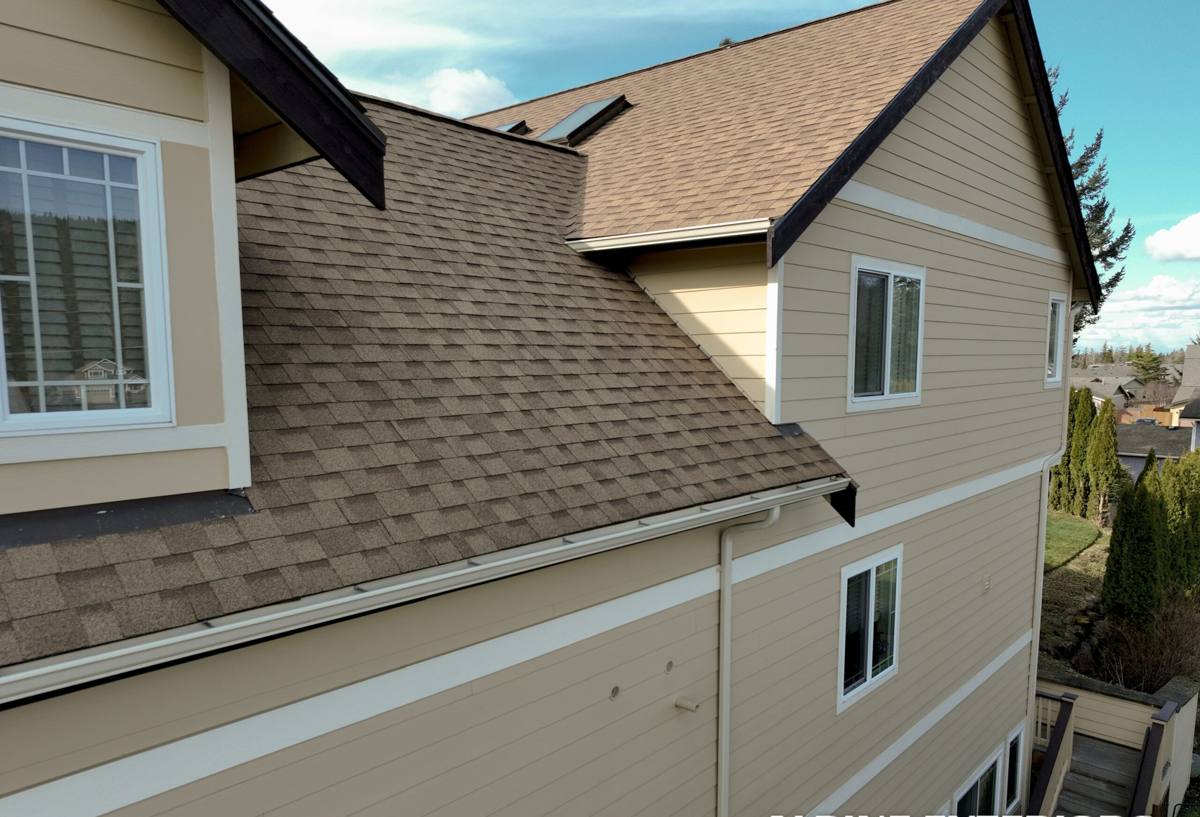
Why Sudden Valley's Climate Changes How This Job Should Be Done
Sudden Valley sits in a marine climate zone, and that shapes every decision on a window install. Salt-tinged air drifting in off the Sound accelerates corrosion on unprotected fasteners, flashing, and hardware faster than it would in a dry inland climate. Driving winter rain — often wind-driven, not just falling straight down — pushes water sideways against window heads and jambs, which means flashing details that would be adequate in Arizona simply won't hold up here. And the long moss season, stretching from fall through spring in this region, means anything that stays damp for extended periods becomes a growth surface, including window sills, trim boards, and the caulk lines around a poorly sealed opening.
The Wooded, Lakeside Lot Factor
Many lots in and around Yew Street sit under heavy tree cover, which is part of the appeal of living here but also part of the challenge. Shaded walls dry more slowly after rain, so any water that gets behind the siding or trim through a bad flashing detail has more time to do damage before it evaporates. That's why we treat window flashing as a system, not a single step — one gap in the sequence and the shade does the rest of the damage over a few wet seasons.
What a Correct New-Construction Window Install Actually Involves
There's a specific order of operations that keeps water moving out and away from the wall assembly instead of into it. Skipping or reordering any of these steps is the single most common cause of window-related rot we get called out to fix in this climate.
- Rough opening is checked for square, level, and correct dimensions before the window ever shows up on site
- A sloped sill pan flashing goes in first, so any water that gets past the window has a built-in path back outside
- Self-adhering flashing tape is applied at the jambs, then the head, in a shingle-lap sequence — each piece overlapping the one below it, never the reverse
- The window is set, shimmed for square and plumb, and fastened through the nailing fin per the manufacturer's pattern
- The head flashing (and a drip cap where appropriate) directs water out over the siding below, not behind it
- The gap between the frame and rough opening is insulated — not just caulked shut, which traps moisture instead of managing it
- Interior air sealing is finished with backer rod and sealant so conditioned air isn't leaking out around the frame
Every one of these steps ties directly into how the siding gets installed around the window afterward. That's the part that gets missed when the window sub and the siding sub are two unrelated crews who've never worked the same house before.
New-Construction vs. Replacement Windows: Which One Applies to Your Project
| Factor | New-Construction Window | Replacement (Pocket) Window |
|---|---|---|
| Best suited for | New builds, additions, full re-side or gut remodels | Swapping an existing window without opening the wall |
| Access to WRB and flashing | Full access — flashing built into the wall system | Limited — relies on the existing flashing already in place |
| Long-term moisture control in this climate | Strongest, when installed correctly | Only as good as the original install it's built on |
| Sizing flexibility | Can change size or shape of the opening | Locked to the existing rough opening dimensions |
| Labor and trim work | More involved — exterior trim and siding are part of the job | Faster — interior and exterior trim usually stay intact |
| Typical cost position | Higher per window, but bundled into siding/build cost | Lower per window as a standalone project |
If your Yew Street project is a full re-side, this decision is worth having up front rather than mid-project. Once the old siding is off and the wall is open, it's the right time to correct any window that's undersized, poorly located, or already showing early signs of water damage at the sill.
Frame Material and Glazing: What Actually Holds Up Here
Vinyl, fiberglass, and wood-clad frames all have a place, but they don't perform identically in a wet, moss-prone, salt-influenced climate. Vinyl is low-maintenance and handles moisture well, but cheaper extrusions can flex or discolor over time in constant damp shade. Fiberglass costs more up front but holds its shape and resists the expansion/contraction cycle that this region's temperature swings can cause. Wood-clad windows look great and perform fine when the cladding is intact, but any breach in that cladding exposes real wood to a climate that will rot it — which turns a small problem into a full frame replacement if it's not caught early.
On glazing, double-pane with a low-E coating is the baseline we'd recommend for this area; it manages both heat loss and the interior condensation that shows up on cold, damp mornings. Triple-pane is worth discussing for north-facing or particularly exposed walls, but it's a cost-vs-benefit conversation, not an automatic upgrade. On hardware — hinges, cranks, locks — we steer toward corrosion-resistant finishes given the salt content in the regional air. It's a small line-item difference that pays off in five to ten years when the hardware still operates smoothly instead of seizing up.
Our Process for Yew Street Window Projects
We start with a site visit, not a phone quote — window openings, wall assemblies, and site access all vary enough on these wooded lots that an accurate number requires actually seeing the house. If it's a new build, we coordinate directly with your builder or general contractor so the window install lines up with their framing and WRB schedule instead of working against it. If it's a re-side, we sequence the window work into the siding tear-off so flashing goes in once, correctly, rather than being patched around old material.
On install day, we follow the same sequence every time: verify the opening, install sill pan flashing, set and shim the window, complete the shingle-lapped flashing at jambs and head, insulate and air-seal, then tie the surrounding siding and trim back in. Before we call the job done, we walk the finished window with you — checking operation, checking the seal lines, and going over anything relevant to the manufacturer's warranty, since most warranties require documented proper installation to stay valid.
Before You Sign Off: A Homeowner's Checklist
- Sloped sill pan flashing was installed under the window, not just caulk
- Flashing tape at the jambs and head follows a proper shingle-lap sequence
- Head flashing or a drip cap directs water out over the siding, not behind it
- Fasteners and visible hardware are corrosion-resistant, appropriate for a marine climate
- The gap around the frame is insulated, not sealed shut with caulk alone
- Interior air sealing is finished with backer rod and sealant, not just trim covering a gap
- Installation followed the window manufacturer's instructions closely enough to keep the warranty intact
- Siding and trim around the window are tied back in cleanly, with no exposed WRB or gaps
Cost Factors Worth Understanding Up Front
Pricing on new-construction window work varies with the number and size of openings, frame material, whether it's a new build or a mid-remodel retrofit, and how much siding and trim work is bundled in around each window. As a rough starting point, homeowners in this region typically see new-construction windows run from the low hundreds to over a thousand dollars per unit installed, with fiberglass and larger or custom-shaped units at the higher end. Accessibility matters too — a second-story window on a steep, wooded Sudden Valley lot takes more time and equipment than a ground-floor opening on a flat, cleared site. We'll walk through the specific factors driving your number during the estimate rather than quoting off a generic average.
Why Hiring a Crew That Already Works This Area Matters
A lot of what makes a window install hold up here isn't in the manufacturer's instructions — it's knowing how Sudden Valley lots actually behave. Crews who haven't worked wooded, lakeside sites before sometimes underestimate how long a wall stays damp after a storm, or treat flashing as a formality instead of the main defense against the region's rain patterns. Working Yew Street and the surrounding streets regularly also means we're not learning site access, slope, and tree-cover challenges for the first time on your job — and when the same crew handles both the window flashing and the siding tie-in, there's no gap between trades for water to find. That coordination is where a lot of long-term problems either get prevented or get built in.
Maintenance That Protects the Investment
Once the windows are in, a little seasonal attention keeps them performing. Check sealant lines at the frame perimeter once a year for cracking or separation, especially after a hard winter. Keep gutters and downspouts clear so water isn't sheeting down over window heads. And where moss has established on nearby siding or trim, treat it before it spreads onto window sills and sash — moss holds moisture against the surface it's growing on, and that's exactly the kind of sustained dampness that shortens the life of any exterior building material in this climate.
If you're planning a new build or a re-side along Yew Street and want windows installed the right way the first time, we're happy to walk the site and put together a free, no-pressure estimate — just fill out the form below.