 Sudden Valley
 Why Sunnyland's Climate Is Harder on Siding Than Most Homeowners Realize
Homes in Sunnyland sit close enough to the water and the wet Whatcom County air that siding here works harder than siding in drier parts of the state. Three conditions do most of the damage over time: salt-laden air moving in off the water, wind-driven rain that gets pushed sideways into wall assemblies instead of just running down them, and a moss season that can stretch from fall through spring in shaded, north-facing spots. None of these are dramatic events — no single storm wrecks a wall — but they compound year after year on siding that wasn't built or installed to handle them.
Salt air is corrosive to exposed metal fasteners and trim flashing, and it accelerates the breakdown of paint films on wood and composite products. Driving rain finds every gap in a butt joint, every under-caulked seam, and every place where siding was hung too tight to the ground or a deck. And moss doesn't just look bad — it holds moisture against the siding surface far longer than open air would, which is exactly the condition that rots wood-based products and blisters cheap coatings.
None of this means Sunnyland is an unusually harsh place to own a home. It means the margin for error in material choice and installation quality is smaller here than it is in a dry inland climate, and that's the lens we use on every siding job in the neighborhood.
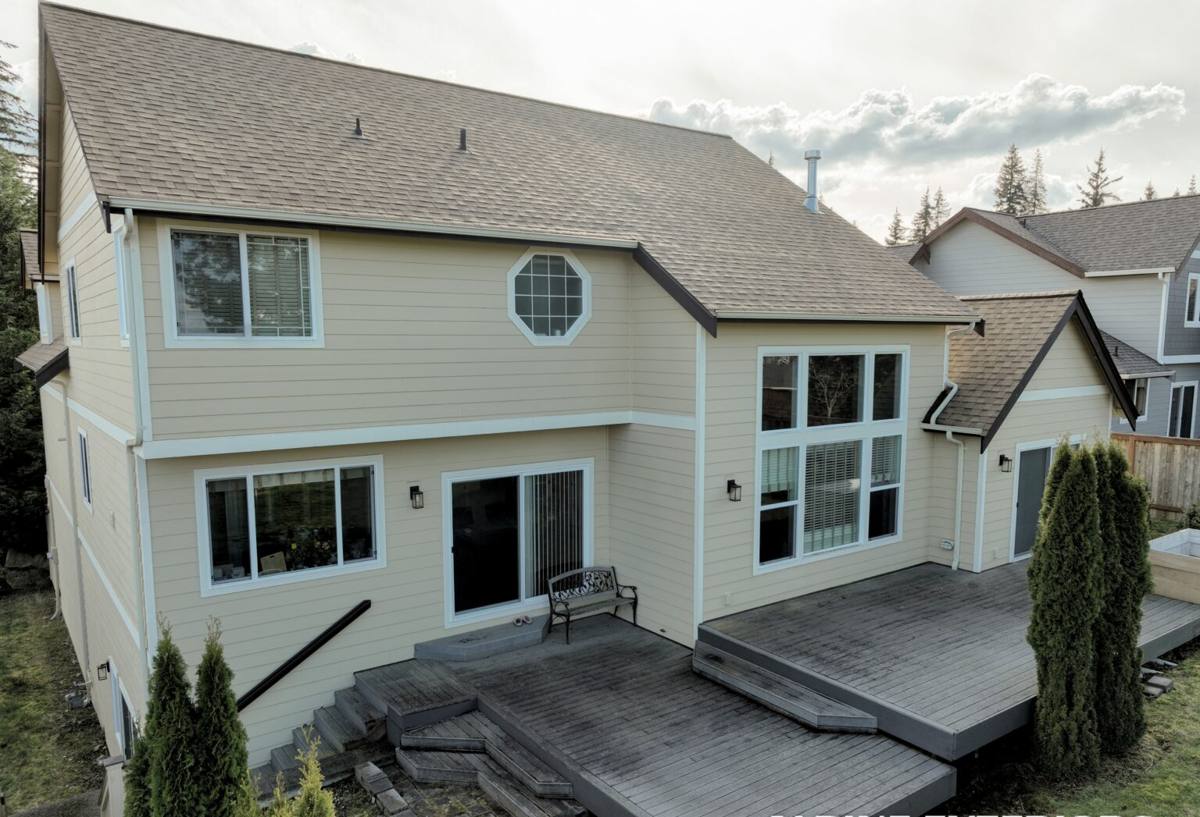
What "Correct" Siding Installation Actually Means Here
A siding job can look finished and still be wrong in ways that only show up two or three winters later. Correct installation in a wet coastal climate isn't just nailing panels to a wall — it's a sequence of decisions that either manage water or don't.
The parts homeowners rarely see
- Weather-resistive barrier: a continuous, properly lapped house wrap or building paper behind the siding, not just whatever was left from the original build.
- Flashing at every penetration: windows, doors, hose bibs, light fixtures, and vents all need flashing that sheds water outward, not just caulk covering a gap.
- Rainscreen or drainage gap: a small air space between the siding and the wall so any moisture that does get behind the panels can drain and dry instead of sitting against the sheathing.
- Correct fastener spacing and type: under- or over-driven nails, or the wrong fastener for the product, are one of the most common causes of early siding failure.
- Clearance at grade and roof lines: siding held too close to soil, concrete, or a roof surface wicks moisture continuously, regardless of how good the material is.
Every one of these is invisible once the job is done and the paint is on. They're also exactly what separates a siding job that looks good for one summer from one that performs for decades.
Why We Install Only James Hardie Fiber Cement
We made a deliberate decision to install one siding system rather than offer a menu of products at different price points. We install James Hardie fiber cement exclusively — we don't install vinyl, LP SmartSide, cedar, primed spruce, or other fiber cement brands. That's not a marketing position; it's a standard we hold because of what we've seen happen to other materials in exactly this climate.
Fiber cement is non-combustible, doesn't rot the way wood-based products can when moisture gets trapped behind them, and holds up to sustained coastal moisture and salt exposure better than vinyl, which can warp, fade, and become brittle under UV and temperature swings. James Hardie's ColorPlus factory-applied finish is baked on under controlled conditions rather than field-painted, which matters in a climate where field-applied coatings have to cure in damp, cool air more often than not. Hardie also engineers specific product lines (its HZ5 line, for example) for wetter, colder regions, which is a level of climate-specific engineering most competing products don't offer.
We're upfront that fiber cement costs more upfront than vinyl and is heavier and less forgiving to install than either vinyl or wood — it demands a crew that knows the material, cuts it correctly (with the right blades and dust control), and follows Hardie's fastening and clearance specifications to the letter. That installation sensitivity is exactly why the warranty and the long-term performance depend as much on the installer as on the product.
How Siding Materials Compare in a Salt-Air, High-Moisture Climate
| Material | Moisture behavior | Salt air resilience | Maintenance | Typical lifespan here |
|---|---|---|---|---|
| James Hardie fiber cement | Won't rot; manages moisture well with proper installation | Strong — factory finish resists fading and coastal wear | Occasional wash; repaint only if desired, decades out | 30-50 years |
| Vinyl siding | Doesn't rot, but seams can allow water intrusion behind panels | Fair — can become brittle and fade faster in sun and salt | Low, but cracks and warping aren't repairable, only replaceable | 20-30 years |
| Cedar / wood siding | Absorbs moisture; prone to rot if coatings fail or moss holds moisture | Moderate — needs diligent maintenance near salt air | High — regular refinishing and moss/mildew treatment | 15-25 years with upkeep |
| Primed spruce / engineered wood | Vulnerable at cut edges and joints if not sealed and maintained | Moderate to poor without consistent upkeep | High — edge sealing and repainting on a schedule | 15-25 years with upkeep |
These ranges assume typical exposure and reasonable maintenance. Any material can underperform if it's installed poorly, and any material can outperform its average if it's detailed correctly and maintained. Installation quality is the variable most homeowners underestimate when comparing products on a spec sheet.
Our Installation Process for Sunnyland Homes
1. On-site assessment
We look at your home's specific exposure — which walls take the most wind-driven rain, where moss and shade are a persistent issue, and where the existing siding or trim shows signs of trapped moisture. This shapes decisions like drainage gap use and flashing detail at vulnerable transitions.
2. Tear-off and sheathing check
Once old siding comes off, we inspect the sheathing underneath. This is the point where hidden rot, compromised house wrap, or old flashing failures get found and addressed — not covered over.
3. Water management layer
We install or verify a continuous weather-resistive barrier and, where appropriate, a rainscreen gap, before any Hardie panel goes up. This is the layer that decides whether incidental moisture dries out or gets trapped.
4. Flashing and trim
Windows, doors, and every penetration get properly lapped flashing before trim and siding close around them. This is the step most commonly rushed on lower-bid jobs, and it's the step that causes the most callbacks industry-wide when skipped.
5. Installation to Hardie spec
Fastener type, spacing, panel clearance from grade and roofing, and joint treatment all follow James Hardie's published installation guidelines, which is also what preserves your product warranty.
6. Final walkthrough
We walk the exterior with you, point out anything worth knowing about long-term care, and make sure caulking, paint touch-up at cut ends, and trim details are finished cleanly.
Signs Sunnyland Siding Is Telling You It's Time
- Persistent moss or dark streaking that returns within weeks of cleaning, especially on shaded or north-facing walls
- Soft spots, bubbling paint, or a spongy feel when you press on wood-based or composite siding
- Visible gaps, warping, or buckling panels, particularly after wind events
- Rising energy bills with no other explanation, which can point to compromised weather barriers behind the siding
- Cracked or peeling caulk at trim and window edges that hasn't been addressed in several years
- Siding that's more than 20-25 years old, regardless of visible condition, especially wood or engineered wood products
What Affects the Cost of a Sunnyland Siding Job
| Factor | Why it matters |
|---|---|
| Home size and wall complexity | More corners, gables, and dormers mean more cutting, flashing, and labor time |
| Condition of existing sheathing | Hidden rot or water damage found during tear-off adds repair scope before new siding goes up |
| Siding profile and finish | Lap width, texture, and ColorPlus finish selections affect material cost |
| Trim and accessory scope | Fascia, soffit, and trim replacement alongside siding changes total project cost |
| Access and site conditions | Slopes, tight lot lines, and landscaping near the home affect labor time |
We don't publish blanket price-per-square-foot numbers because the range genuinely depends on these factors — but we'll walk your home and give you a clear, itemized estimate before any work starts.
Why Hiring a Crew That Already Works in This Area Matters
Whatcom County's coastal microclimates aren't uniform. A crew that mostly works drier, inland jobs can still do competent general carpentry, but they may not default to the drainage-gap and flashing decisions that matter most where salt air and driving rain are a constant rather than an occasional event. A crew that regularly works Sunnyland and the surrounding Sudden Valley area already knows which walls take the worst weather, how aggressive moss growth gets in shaded spots, and where past installation shortcuts on older homes tend to fail first. That local pattern recognition shows up in better decisions before the first panel ever goes on the wall.
Caring for Your Siding After Installation
- Rinse siding gently once or twice a year to keep salt residue and organic buildup from accumulating, especially on shaded or water-facing walls
- Trim back vegetation and tree limbs that hold moisture and shade against the siding surface
- Check caulking at trim, window, and door edges annually and re-caulk any cracked or separated joints promptly
- Address moss at the first sign of regrowth rather than letting it establish, particularly on north-facing walls
- Keep gutters and downspouts clear so roof runoff isn't dumping extra water directly onto siding and trim
If you're weighing a siding replacement or dealing with a home in Sunnyland that's showing its age, we're happy to take a look and give you a straightforward, no-pressure estimate — no obligation, just an honest read on where your home stands and what it needs. Use the form below to get started.