 Sudden Valley
 Why Decks in Sunnyland Need to Be Built Differently
A deck in Sunnyland doesn't fail the way a deck fails in a dry climate. It doesn't crack from sun exposure or bake apart from UV alone. It fails from the inside out — moisture that gets trapped where it shouldn't, wood that never fully dries between rain events, and hardware that corrodes years before the boards on top show any sign of wear. Whatcom County's marine climate means long stretches of damp weather, salt-laden air moving in off the water, and a moss season that can run most of the year in shaded, north-facing yards.
None of that means a deck can't last. It means the build has to account for water from the start — not as an afterthought, and not just at the surface. A deck that looks identical to one built in a drier region can perform very differently after five winters if the substructure, flashing, and fastener choices weren't matched to this climate.
What "Built Right" Means for This Climate
Ledger Attachment and Flashing
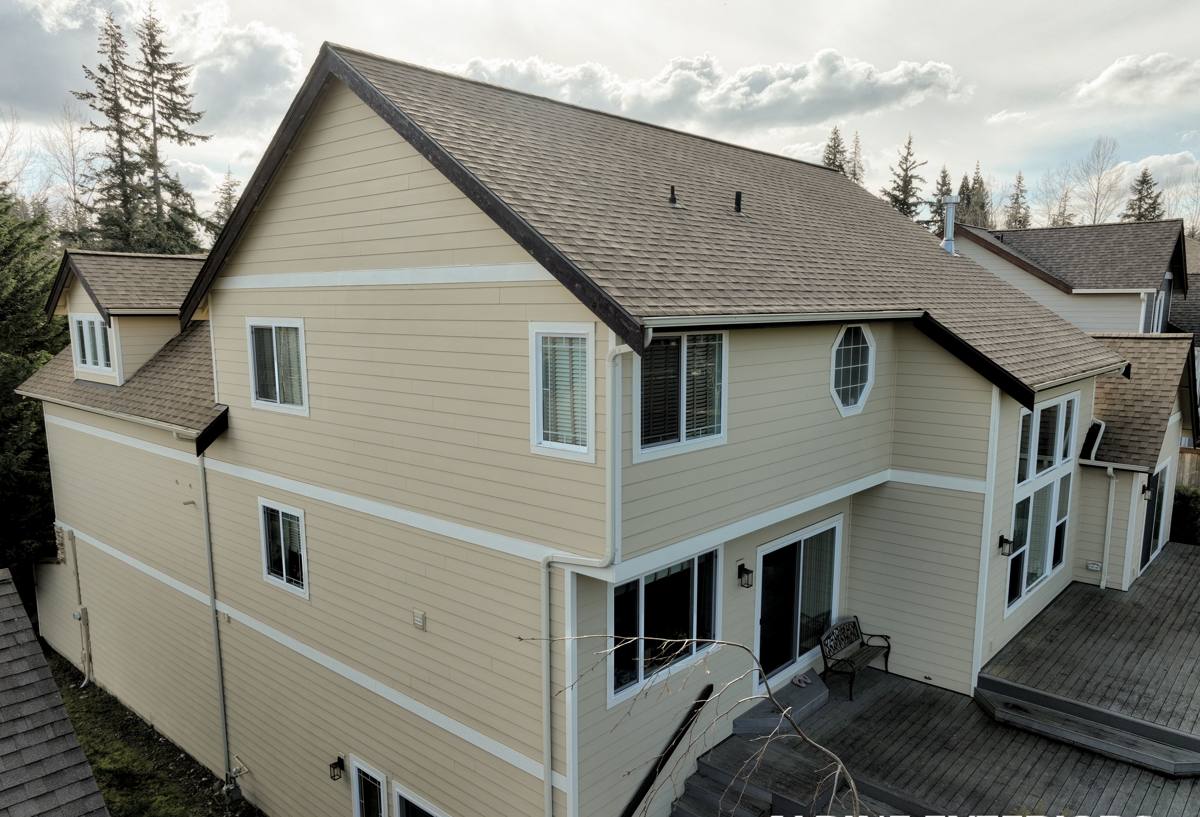
Where the deck attaches to the house is the single most common failure point we see on older decks in this area. If the ledger board isn't flashed correctly — with proper step flashing and a water-resistant barrier behind it — water works its way behind the ledger and into the house's rim joist. In a climate that gets this much sustained rain, a poorly flashed ledger doesn't just risk deck failure, it risks rot getting into the structure of the house itself.
Joist Protection
Every cut end and top edge of a joist should be protected with a self-adhering flashing tape before decking goes down. Untreated cut ends are where rot starts first, even on pressure-treated lumber, because the factory treatment doesn't penetrate a fresh cut.
Footings and Drainage
Footings need to be sized and set below frost depth and positioned so water doesn't pool against the post base. In yards with heavy shade or poor natural drainage — common in parts of Sudden Valley with mature tree cover — we also look at grading around the footing area so standing water isn't sitting against untreated wood or concrete all winter.
Choosing a Decking Material for Sunnyland's Climate
There's no single "best" decking material — there's a best material for a given budget, maintenance tolerance, and how much sun or shade the deck actually gets. Here's how the common options hold up in a wet, moss-prone climate:
| Material | Moisture Behavior | Moss/Algae Resistance | Maintenance |
|---|---|---|---|
| Cedar | Naturally rot-resistant, but still needs sealing to stay stable | Moderate — needs periodic cleaning in shaded areas | Annual cleaning, re-sealing every 2-3 years |
| Pressure-treated pine | Treated for rot resistance; cut ends are the weak point | Low without maintenance — moss takes hold quickly in shade | Regular cleaning and sealing to prevent graying and splitting |
| Capped composite | Excellent — the cap layer sheds water and doesn't absorb moisture | Good — smooth cap surface resists moss buildup better than wood | Occasional washing, no sealing or staining |
| PVC/cellular decking | Very good — fully synthetic, no wood fiber to hold moisture | Good, though can still get algae film in deep shade | Occasional washing, no sealing needed |
In heavily shaded yards, or decks that sit under tree cover for most of the day, we often steer homeowners toward capped composite or PVC simply because they cut the maintenance burden dramatically. In sunnier, more open lots, real wood still performs well and gives a look a lot of homeowners prefer — it just needs a homeowner willing to keep up with cleaning and sealing.
Why We Don't Push Uncapped, Budget Composite
Early-generation composite decking without a protective cap layer can absorb moisture into the wood-plastic core over time, especially in a climate this wet, which leads to swelling, staining, and mold growth on the board surface. It's not that the material is unusable — it's that in a climate with this much sustained moisture, we don't think it's the right trade-off for most homeowners, and we say so upfront rather than sell a product we wouldn't stand behind.
Hardware and Fasteners: The Part Nobody Sees
Salt-laden air moving inland off the water accelerates corrosion on standard fasteners faster than most homeowners expect. Galvanized screws and joist hangers that would be fine in a dry inland climate can start showing rust streaks within a couple of seasons here. We build with stainless steel or heavy-coated, corrosion-rated fasteners and hangers rated for the specific wood treatment being used — treated lumber especially requires hardware compatible with the chemical treatment, or the hardware corrodes from contact, not just weather exposure.
Railings, Stairs, and Finish Details
Railings and stair stringers take the brunt of foot traffic and weather at the same time, and they're usually the first thing to look worn even when the deck frame underneath is fine. A few details matter more here than in a drier climate:
- Post bases should be set to drain, not sit flush in standing water or wet mulch
- Stair stringers cut from solid lumber need the same cut-end sealing as joists
- Metal railing components should be rated for coastal or marine exposure, not just standard exterior use
- Fascia boards benefit from a back-primed or capped material since they take direct rain runoff off the deck surface
Our Process, Start to Finish
- On-site walkthrough — we look at sun/shade exposure, drainage, grade, and how the deck will tie into the house before talking materials
- Design and material selection — sized to how the space will actually be used, with material recommendations based on exposure, not just budget
- Permitting — we handle the paperwork required for the jurisdiction the property falls under
- Substructure build — footings, framing, ledger flashing, and joist protection, inspected before decking goes down
- Decking, railing, and finish work — installed to manufacturer spec so warranties stay valid
- Final walkthrough — we go over care and maintenance specific to the material installed
Living With a Deck Through Moss Season
Even a well-built deck needs some seasonal attention in this climate. Moss and algae growth on a deck surface isn't just cosmetic — left alone, it holds moisture against the board and creates a genuinely slick, unsafe walking surface during wet months. A yearly cleaning before the wet season sets in, keeping gutters and downspouts clear of the deck area, and trimming back overhanging branches to let more light and airflow reach the surface all go a long way. Wood decks need re-sealing on a schedule; composite and PVC decks mostly just need washing to stay looking new.
Signs a Deck Needs Attention
- Soft or spongy spots underfoot, especially near the ledger or stair landing
- Rust streaking around fastener heads or hanger hardware
- Persistent moss or algae film that comes back within weeks of cleaning
- Gaps opening up between decking boards beyond normal seasonal movement
- Water pooling on the surface instead of draining off between boards
What Custom Decks Typically Cost Here
Every deck is different, but the main cost drivers are consistent. This isn't a quote — it's a starting point for the conversation:
| Factor | Why It Moves the Price |
|---|---|
| Size and shape | Multi-level decks and non-rectangular footprints add framing complexity and labor |
| Decking material | Pressure-treated is the lowest upfront cost; capped composite and PVC cost more upfront but less over time |
| Height above grade | Taller decks need engineered footings, stairs, and often guardrails per code |
| Site access and grading | Sloped or hard-to-access lots, common around Sudden Valley's terrain, add site work |
| Railing style | Cable, glass, and metal railings cost more than standard wood balusters |
| Permitting requirements | Larger or taller decks may require engineering review, adding time and fees |
Why Hire a Crew That Already Works This Area
A deck built to a generic national spec sheet isn't automatically wrong — but it usually isn't matched to what Whatcom County actually throws at a structure year-round. A crew that regularly works in and around Sudden Valley knows which yards hold moisture longest, which sides of a house take the worst of the driving rain, and where moss becomes a maintenance headache versus a minor nuisance. That local pattern recognition shows up in small decisions — footing placement, hardware grade, which material gets recommended for a shaded lot versus an open one — that a one-size-fits-all build doesn't account for. It also means faster, more useful answers when something does need attention years down the line, because we're not learning this climate for the first time on your project.
If you're planning a new deck or replacing one that's showing its age, we're happy to take a look and talk through what makes sense for your yard, your budget, and how you actually plan to use the space. There's a free, no-pressure estimate form below — fill it out and we'll follow up to schedule a time to come out.