 Sudden Valley
 Asphalt Shingle Roofing Built for the Alger Area
Homes in and around Alger sit in a stretch of Northwest Washington where the roof works harder than it looks. Moist marine air moves in off the water, rain settles in for days at a time rather than passing through, and shaded, tree-lined lots hold onto moisture long after a storm clears. An asphalt shingle roof that's installed correctly for this specific climate will hold up for decades. One that's installed to a generic standard, or rushed by a crew unfamiliar with the area, tends to show problems early — granule loss, soft spots, and moss colonies that start small and spread fast.
This page covers what asphalt shingle roofing actually requires for homes in the Alger area near Sudden Valley: what the climate does to a roof over time, what a correct installation involves step by step, how our process works from first call to final walkthrough, and why it matters to hire a crew that already knows this specific stretch of Whatcom County weather rather than one working from a one-size-fits-all playbook.
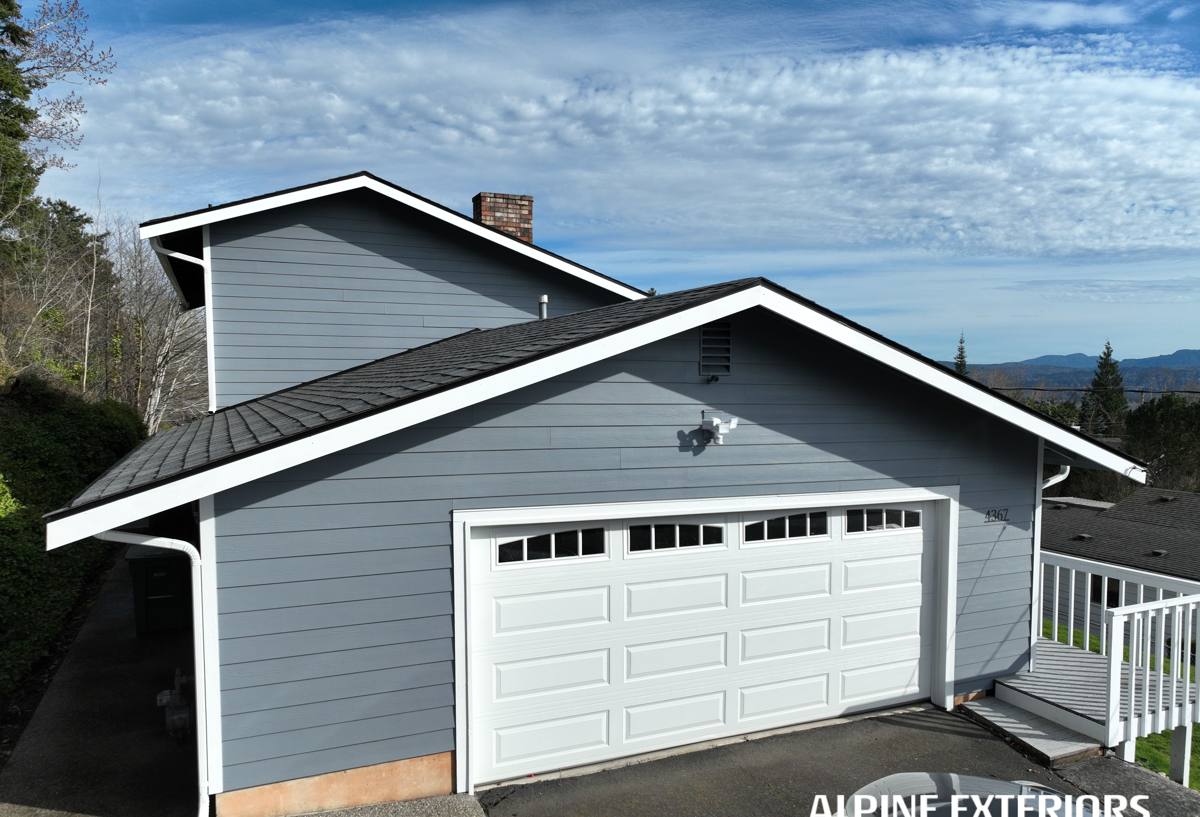
What Salt Air, Driving Rain, and Moss Season Do to a Roof
Three regional conditions do most of the damage to asphalt shingle roofs here, and they compound each other.
Salt-Influenced Air
Proximity to the water means the air carries fine salt and moisture even miles inland. Over years, this accelerates the breakdown of exposed metal — flashing, drip edge, nail heads, and vent stacks — well before the shingles themselves are due for replacement. A roof with weak metal components fails at those points first, not across the whole field of shingles.
Driving, Sustained Rain
Rain here doesn't just fall straight down and drain off. Wind-driven rain gets pushed sideways and upward under shingle tabs, into valleys, and around penetrations like chimneys and skylights. A roof system that relies only on the shingles themselves to keep water out — without proper underlayment and flashing detail — will eventually leak, usually at a transition point rather than through the shingle field.
A Long Moss Season
Shade, humidity, and mild temperatures give moss a long window to establish itself, especially on north-facing slopes and anywhere debris collects. Moss isn't just cosmetic — it holds moisture against the shingle surface, lifts tabs as it grows, and works its way under the roofing over time. Left unchecked for a few seasons, moss growth shortens the usable life of an otherwise sound roof.
What a Correct Asphalt Shingle Roof Install Involves
A shingle roof is a system, not a single layer. Every component below has to be right for the roof to perform in this climate — skipping or shortcutting any one of them is where premature leaks and warranty disputes usually start.
Tear-Off and Deck Inspection
We remove the old roofing down to the deck rather than layering over it. This lets us actually see the plywood or OSB underneath, check for soft spots or rot, and replace any damaged sections before new material goes down. Roofing over a compromised deck just hides a problem that gets more expensive later.
Underlayment
Given how much wind-driven rain this area sees, underlayment choice matters more here than in drier climates. We use synthetic or ice-and-water underlayment in the areas most exposed to wind-driven moisture — eaves, valleys, and around penetrations — as a second line of defense behind the shingles themselves.
Flashing and Metal Detail
Because salt air degrades metal faster here, we pay close attention to flashing quality and installation at every transition: roof-to-wall, chimneys, skylights, and valleys. Properly lapped, sealed flashing at these points prevents the majority of leaks we get called out to investigate on other companies' work.
Ventilation
A shingle roof needs balanced intake and exhaust airflow to manage heat and moisture in the attic. Poor ventilation traps humidity, which shortens shingle life from underneath and can contribute to moss and mildew even on a well-installed roof. We check existing ventilation as part of every roofing project, not as an afterthought.
Shingle Installation
Correct nailing pattern, proper exposure, and manufacturer-specified starter strips and ridge caps all affect wind resistance and warranty validity. This is also where fastening standards matter most for a roof exposed to sustained coastal wind — under-nailed shingles are one of the most common causes of early wind damage.
How Our Process Works
Homeowners generally want to know what to expect before committing to a roof project. Here's the straightforward version.
- On-site inspection: We walk the roof (or use ladder/drone inspection where access is limited) and check the deck, flashing, ventilation, and current shingle condition before quoting anything.
- Written estimate: You get a clear scope of work and price — what's being torn off, what underlayment and materials are going down, and what the flashing and ventilation plan looks like.
- Scheduling around weather: Given how much rain this region gets, we plan installation windows carefully and protect the open deck if conditions shift mid-project.
- Installation: Tear-off, deck repair as needed, underlayment, flashing, shingles, and ridge detail, done in sequence with the deck never left exposed longer than necessary.
- Cleanup and walkthrough: Magnetic sweep for nails, full site cleanup, and a walkthrough so you can see the finished work and ask questions before we consider the job done.
Choosing the Right Shingle for This Climate
Not every asphalt shingle product is built the same way, and the differences matter more in a wet, moss-prone climate than they do somewhere dry. Here's a general comparison of the common tiers homeowners in the Alger area choose between.
| Shingle Type | Typical Lifespan | Moss/Algae Resistance | Best Fit |
|---|---|---|---|
| 3-Tab (economy) | 15–20 years | Standard, no built-in resistance | Budget-conscious projects, secondary structures |
| Architectural / Dimensional | 25–30 years | Often available with algae-resistant granules | Most primary homes in this climate |
| Premium Architectural | 30+ years | Enhanced algae/moss-resistant granule options | Homes with heavy shade or north-facing slopes |
For most homes in this area, we steer homeowners toward architectural shingles with algae-resistant granules given how long moss season runs here. It's a matter of matching the product to the exposure, not upselling — a heavily shaded, north-facing roof simply asks more of its shingles than a sun-exposed one.
What Affects the Cost of a Shingle Roof
Every roof is different, so we don't quote sight-unseen, but these are the factors that most commonly move the price up or down.
| Factor | Why It Matters |
|---|---|
| Roof size and pitch | Steeper roofs take longer and require more safety setup |
| Deck condition | Rot or soft spots found at tear-off require repair before shingles go down |
| Number of penetrations | Chimneys, skylights, and vents each need individual flashing work |
| Shingle tier chosen | Economy, standard, and premium products carry different material costs |
| Access and site conditions | Tree cover, tight driveways, and staging space affect labor time |
Signs Your Alger-Area Roof May Need Attention
Most roof problems in this climate develop slowly, which is why they're easy to miss until a leak shows up inside the house. Watch for:
- Visible moss or dark streaking on shaded slopes
- Granules collecting in gutters or at downspout outlets
- Curling, cracked, or missing shingles, especially after a windstorm
- Soft or spongy spots when walking the roof (inspection only — don't do this yourself if unsure)
- Water stains on interior ceilings, especially near chimneys or valleys
- Rusted or lifted flashing around vents, chimneys, or roof-to-wall transitions
- Daylight visible through the attic roof deck
Catching these early is almost always cheaper than waiting. A moss problem caught in its first season is a cleaning and treatment job; left for a few years, it can mean replacing sections of decking.
Why a Crew That Already Works This Area Matters
Asphalt shingle roofing isn't installed differently on paper from one region to another, but the judgment calls — where to add extra underlayment, how much ventilation an attic actually needs, which shingle grade makes sense for a shaded north slope — come from having done the work here repeatedly. A crew that already services homes around Sudden Valley and the wider Whatcom County area has seen how salt air ages flashing, how driving rain finds weak points, and how fast moss can take hold on a shaded roof. That local pattern recognition is what separates a roof that's technically installed correctly from one that's actually built for how this area's weather behaves year after year.
It also matters for response time and accountability. A local crew is easier to reach for a warranty question, a storm-damage check, or a follow-up inspection a few years down the line — not just for the initial installation.
Get a Free, No-Pressure Estimate
If your roof is showing early signs of wear, dealing with moss, or simply due for a look, we're happy to come take a look and walk you through what we find — no obligation. Use the form below to request a free estimate for your Alger-area home.