 Sudden Valley
 Building New in South Hill? Get the Windows Right the First Time
If you're framing a new home in South Hill, you have one shot at getting the window installation right before siding, trim, and interior finishes go on top of it. A mistake here — a missed flashing lap, a rough opening that's out of square, a nailing fin that isn't sealed correctly — doesn't show up on day one. It shows up two or three winters later as a stain on the drywall or soft sheathing behind the trim. New-construction windows aren't just "windows installed in a new house." They're a specific installation method, done before the weather barrier and cladding are finished, and it has to be done in the right order or none of it works.
We install new-construction windows for homes going up in and around Sudden Valley, and we work this stage of the build often enough to know what Whatcom County weather does to a house over time, not just what it looks like on move-in day.
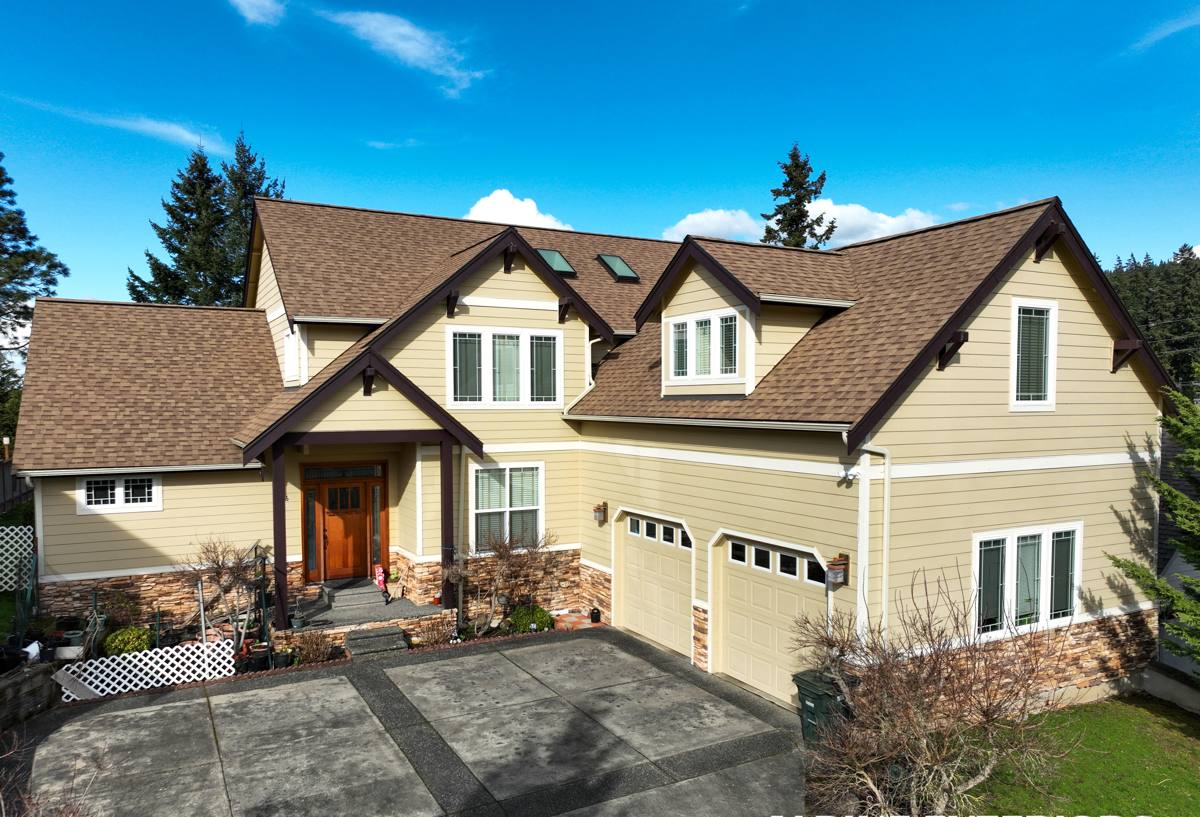
What Sudden Valley's Climate Demands From a New-Construction Window Install
Driving Rain and Wind-Driven Water
This part of Washington doesn't just get rain, it gets rain pushed sideways by wind off the water and through the trees. A window that's watertight in a still, straight-down rain can still leak under wind-driven rain if the flashing details around the rough opening weren't built to shed water downward and outward at every layer — head flashing, side flashing, sill pan, and the housewrap integration. On a new build, this is the one stage where you can build that drainage path correctly instead of retrofitting it later.
Moss, Mildew, and the Long Wet Season
Whatcom County's wet season runs long, and anything that stays damp for weeks at a time grows moss and mildew — window sills, trim, and the transition points where window meets siding are classic spots. New-construction detailing that leaves a ledge or a gap where water can sit instead of draining sets that cycle up from day one. Getting the sill pan pitch and the sealant joints right during rough-in avoids a maintenance headache that otherwise starts within a year or two.
Marine and Salt-Influenced Air
Homes in this part of Whatcom County also deal with salt-influenced marine air, which is harder on exposed metal fasteners, flashing, and hardware than an inland climate. It's a reason to be deliberate about which flashing and fastener materials go around a new window opening rather than defaulting to whatever's cheapest.
New-Construction Windows vs. Replacement Windows: Why the Method Matters
These are two different products installed two different ways, and using the wrong one — or having a crew install a new-construction window like it's a retrofit — is where a lot of new-build leaks start.
| Factor | New-Construction Window | Replacement (Insert) Window |
|---|---|---|
| Installed when | Before siding/cladding, into an open rough opening | Into an existing finished wall, after the old frame is removed or reused |
| Attachment | Nailing fin fastened to sheathing, integrated with housewrap and flashing | Fastened through the existing frame; no nailing fin |
| Water management | Built as a full flashing system: sill pan, jamb flashing, head flashing, lapped with housewrap | Relies on sealant and the condition of the existing opening |
| Where it's appropriate | New builds, additions, full wall re-sides down to the sheathing | Existing homes keeping their siding and trim in place |
For a South Hill new build, the answer is always a new-construction unit installed with a proper flashing sequence. Anything else skips the parts of the assembly that actually keep water out.
What a Correct New-Construction Window Install Involves
Rough Opening Prep
Before a window ever gets set, the rough opening needs to be checked for square, plumb, and correct sizing against the window's actual dimensions — not just the plan spec. Sheathing gaps, uneven framing, or an opening that's slightly out of square all get fixed here, because shimming and caulking around a bad opening later is a permanent weak point.
Sill Pan and Flashing Sequence
Water management is built in layers, and the order matters: sill pan first, sloped to drain outward; then the window set into it; then jamb flashing over the nailing fin on the sides; then head flashing last, lapped over the housewrap above the window so water sheds down and over every seam below it, never into one. Getting this lap order backward is one of the most common causes of hidden leaks in new construction, and it's invisible once siding goes on.
Sealing and Insulation
The gap between the window frame and the rough opening gets sealed and insulated correctly, not just stuffed with whatever's on hand. Too much rigid-expanding foam can bow a frame and cause the sash to bind; too little leaves an air and moisture gap. This step also affects the home's energy performance for as long as the window is in the wall.
Final Check Before Cladding
Before siding closes everything in, the window gets checked for square, operation, and a continuous flashing lap. This is the last point where a problem is cheap to fix — after siding's on, it's a tear-out.
Choosing the Right Window Product for a South Hill Home
We don't push one brand for every job. What we do recommend, as a standard we hold ourselves to, is matching the frame material and glazing package to what this climate actually does to a house over the years — not just what looks good on a spec sheet.
| Cost/Performance Factor | What It Affects |
|---|---|
| Frame material (vinyl, fiberglass, wood-clad) | Long-term maintenance, expansion/contraction in temperature swings, upfront cost |
| Glazing package (Low-E coating, gas fill, spacer type) | Energy performance, condensation resistance in our humid winters |
| Cladding/finish exposure | How the exterior frame surface holds up under sustained rain and marine air |
| Hardware and weatherstripping quality | How well the window seals over 15-20 years of daily use |
| Warranty structure | What's actually covered — glass seal failure, frame defects, labor — and for how long |
We're generally cautious about window systems that depend heavily on perfect field sealant application to stay watertight, with little redundancy built into the frame or flashing design itself. Sealant degrades over time in a climate this wet; a system with real mechanical water management built in ages a lot better than one that's relying on a bead of caulk holding up for two decades.
Our Process for South Hill New-Construction Projects
- Plan review: We look at the window schedule and rough opening sizes against the actual units being ordered, before framing locks anything in.
- Rough opening walk-through: Once framing's up, we check openings for square and size before scheduling install.
- Install and flashing: Windows go in with a full sill pan, jamb, and head flashing sequence, integrated with the housewrap as it's applied.
- Pre-cladding inspection: Every opening gets a final check for operation, square, and flashing continuity before siding closes it in.
- Documentation: We note window locations, models, and install dates for warranty reference later.
Because we coordinate this step directly with framing and siding crews on the same build, there's no gap where one trade assumes another already handled the flashing detail. That handoff is exactly where leaks get built into new houses.
Why a Local South Hill Crew Matters on a New Build
New-construction window installation isn't just a product install, it's a sequencing job that depends on working smoothly with the framers, the housewrap crew, and the siding crew on site. A crew that already works jobs in Sudden Valley and the surrounding South Hill area knows the typical framing practices, permitting expectations, and inspection points local builders and inspectors look for, and knows what this climate does to a poorly detailed opening because we've gone back and fixed those jobs. That's different from a crew installing windows the same way regardless of where the house sits.
Checklist: What to Confirm Before Your Windows Go In
- Rough openings measured and checked square against actual window sizes, not just plan dimensions
- Sill pan flashing installed and sloped to drain outward, before the window is set
- Flashing lap order confirmed: sill pan, then window, then jamb flashing, then head flashing over housewrap
- Frame material and glazing package matched to long-term maintenance expectations, not just upfront price
- Insulation around the frame checked — not overpacked, not skipped
- Final pre-cladding inspection done and documented before siding closes the opening
- Warranty terms in writing, covering both product defects and labor
If you're framing a home in South Hill or elsewhere around Sudden Valley, we're happy to walk the site, look at your window schedule, and give you a straight, no-pressure estimate for the install. Use the form below to get in touch.