 Sudden Valley
 New Roof Installation for Deming Homes
Deming sits back in the Nooksack River valley, tucked against the foothills that climb toward Mount Baker. That location means more rainfall and more shade than you'll find closer to open water, and both of those things are hard on a roof. If you're looking at a new roof installation for a home in Deming, the job isn't just about picking shingles — it's about building a roof system that can handle standing moisture, heavy tree cover, and a moss season that runs longer here than it does in drier parts of Whatcom County.
We install new roofs for homeowners throughout the Sudden Valley area and out into communities like Deming, and the approach we take changes depending on what the site is actually dealing with. A roof on an open, sun-exposed lot ages differently than one shaded by fir and cedar most of the day. This page covers what a correct roof installation looks like for a Deming property specifically — what the climate demands, how we handle the tear-off and install, and what questions to ask before you sign with anyone.
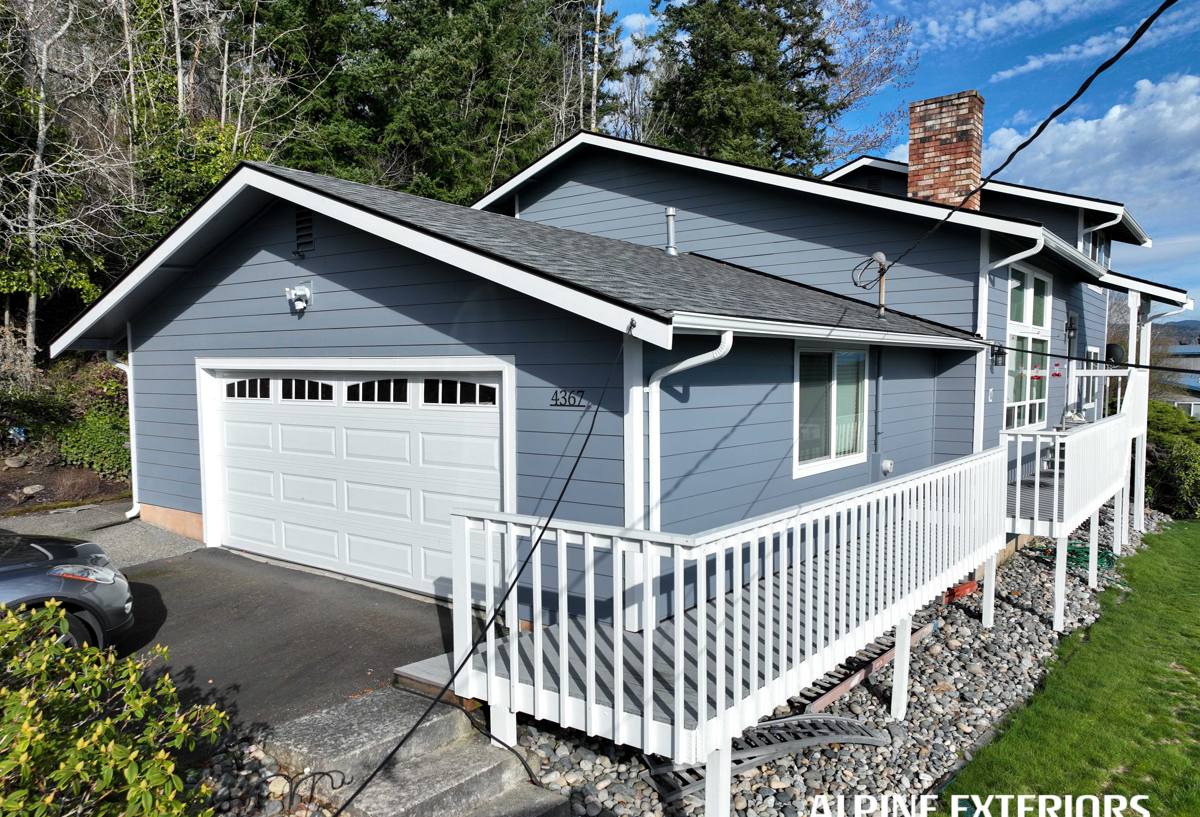
Why Deming's Climate Is Tough on Roofs
Rain That Doesn't Let Up
Western Whatcom County gets a long, wet stretch from fall through spring, and Deming's position in the valley means water sits on roofs longer than it would on a windier, more exposed site. Slow-draining roofs are exactly what lets moss, algae, and eventually rot get a foothold. A roof design that ignores this — flat-pitched sections, undersized valleys, gutters that back up — will show problems years before it should.
Moss and Shade
Tree cover keeps a lot of Deming properties shaded most of the day, which is nice for cooling costs but bad for shingles. Moss thrives in that combination of moisture and shade, and once it takes hold it lifts shingle edges, holds water against the roof deck, and accelerates granule loss. A roof installed without moss-resistant materials or proper drainage detailing in a spot like this is fighting an uphill battle from day one.
Wind and Driving Rain
Whatcom County as a whole sees plenty of driving rain, and even inland from the water, wind-driven storms push moisture sideways into flashing, fascia, and roof-wall intersections. Homes closer to Sudden Valley and the open water catch more of that salt-tinged marine air directly, but the same storm systems roll through Deming with heavy rain and gusts that test every seam and penetration on a roof. Correct flashing and underlayment matter everywhere in this county — they're not optional extras.
What a Correctly Installed Roof Needs Here
- Ice-and-water shield or equivalent self-adhered membrane at eaves, valleys, and roof-wall intersections — not just felt paper
- Properly sized and clear gutters, with attention to how water sheds off shaded, slower-drying sections
- Moss-resistant shingle lines or copper/zinc strip options for homes with heavy tree cover
- Ventilation that actually balances intake and exhaust, so moisture doesn't get trapped in the attic
- Step flashing and counter-flashing installed correctly at every wall intersection, chimney, and skylight — the most common source of leaks we find on tear-offs
- Ridge caps and hip lines rated for wind, not just nailed on as an afterthought
None of this is exotic. It's standard, correct roofing practice — but it's exactly the detail work that gets rushed on a fast, low-bid job, and it's the difference between a roof that lasts its full rated life and one that starts leaking in year eight.
Our Installation Process
1. On-Site Inspection and Honest Assessment
We start by walking the roof, not just looking at it from the ground. We check the deck condition, look for existing moss or moisture damage, evaluate ventilation, and look at how water currently moves off the roof — especially in shaded areas. If a full replacement isn't actually needed yet, we'll tell you that.
2. Material Selection Based on Your Site
We'll walk you through options based on your home's exposure, tree cover, and budget — not a one-size-fits-all pitch. A heavily shaded lot in Deming might call for different shingle specs or algae-resistant granules than a more open site closer to Sudden Valley.
3. Tear-Off and Deck Inspection
We remove the old roofing down to the deck rather than layering over it. This lets us catch rot, soft spots, or old flashing problems that can't be seen or fixed any other way. Any damaged decking gets replaced before anything new goes down.
4. Underlayment and Flashing First
This is where most of a roof's long-term performance is actually decided. We install self-adhered membrane in the vulnerable spots — valleys, eaves, wall intersections — and handle flashing as its own careful step, not something rushed through between rows of shingles.
5. Roofing Material Installation
Shingles, metal, or your chosen material go down to manufacturer spec, with nailing patterns and exposure lines checked as we go — not just at the end.
6. Ventilation and Final Details
We check that intake and exhaust venting are balanced, install ridge caps correctly, and do a final walk-through so you know exactly what was done and what to expect going forward.
Roofing Material Comparison for Deming Properties
| Material | Moss/Moisture Resistance | Typical Lifespan | Best Fit |
|---|---|---|---|
| Standard asphalt shingle | Moderate — needs periodic moss treatment | 20–25 years | Budget-conscious, less shaded lots |
| Algae/moss-resistant shingle | Good — copper granules discourage growth | 25–30 years | Shaded, tree-covered properties like much of Deming |
| Metal roofing | Excellent — sheds water fast, little surface for moss to grip | 40–50+ years | Long-term owners, steep or heavily wooded sites |
| Cedar shake | Poor without diligent upkeep — holds moisture | 20–30 years with maintenance | Homeowners committed to regular treatment/upkeep |
We don't push cedar shake for heavily shaded Whatcom County lots as a rule — not because it's a bad product, but because it demands a maintenance schedule most owners don't keep up with once the novelty wears off, and moisture trapped under shake in a shaded valley setting is a real long-term risk. If you want the look, we'll talk through what upkeep actually requires so you can decide with your eyes open.
Cost Factors for a Deming Roof Replacement
Every roof is priced on its own specifics, but the variables that move the number most for homes in this area are:
| Factor | Why It Matters |
|---|---|
| Roof size and pitch | More surface area and steeper pitch mean more material and labor time |
| Deck condition | Rot or soft decking found during tear-off adds repair cost but is necessary to fix |
| Access and tree cover | Wooded lots common in Deming can slow staging, debris removal, and material delivery |
| Material choice | Standard shingle vs. moss-resistant vs. metal changes both material and install cost |
| Number of penetrations | Chimneys, skylights, and vents each need proper flashing, which adds labor |
We'll give you a specific number after we've actually seen the roof — broad ballpark ranges without an inspection don't do you any favors, and we'd rather give you an accurate figure than a lowball that changes once we're on the ladder.
Signs Your Deming Roof May Need Replacing
- Moss or algae streaking that keeps returning after cleaning
- Granules collecting in gutters or at downspout outlets
- Shingles that are curling, cracked, or missing, especially on shaded slopes
- Daylight visible through the attic roof deck
- Water stains on interior ceilings, particularly near valleys or chimneys
- A roof approaching or past 20–25 years old with no major work done
If you're seeing more than one of these, it's worth having someone look before a small problem turns into deck damage or interior water intrusion.
Why a Locally Familiar Crew Matters
A roofing crew that regularly works Whatcom County properties already knows how shaded, tree-lined lots like the ones common around Deming behave differently than open, coastal-facing sites nearer Sudden Valley. That's not a small thing — it affects material recommendations, ventilation planning, and where we pay the closest attention during flashing work. It also means we're not guessing at permitting requirements or driving in from out of the area for warranty callbacks. We show up, we know the terrain, and we stand behind the work because we're not going anywhere.
Get a Straight Answer on Your Roof
If your roof is showing its age — or you just want an honest read on how many years it has left — we're glad to come take a look. No pressure, no inflated scare tactics, just a clear assessment and straight numbers. Use the form below to request a free estimate for your Deming property.