 Sudden Valley
 Building Decks That Hold Up in South Hill
A deck in South Hill takes a different kind of beating than one built in a dry climate. Between the driving rain that rolls through Whatcom County most of the year, the moss season that stretches longer here than almost anywhere else in the state, and the damp, salt-tinged marine air that moves in off the water, an outdoor structure is under near-constant moisture pressure. Wood that would last decades in Eastern Washington can start showing rot in half that time here if it's built without accounting for the climate. We build decks for South Hill homes with that reality in mind from the first footing to the last board.
This isn't a generic "we build decks" page. It's specifically about what a deck needs to survive and look good in this part of Sudden Valley, and how we approach that job differently than a crew that mostly works drier inland areas.
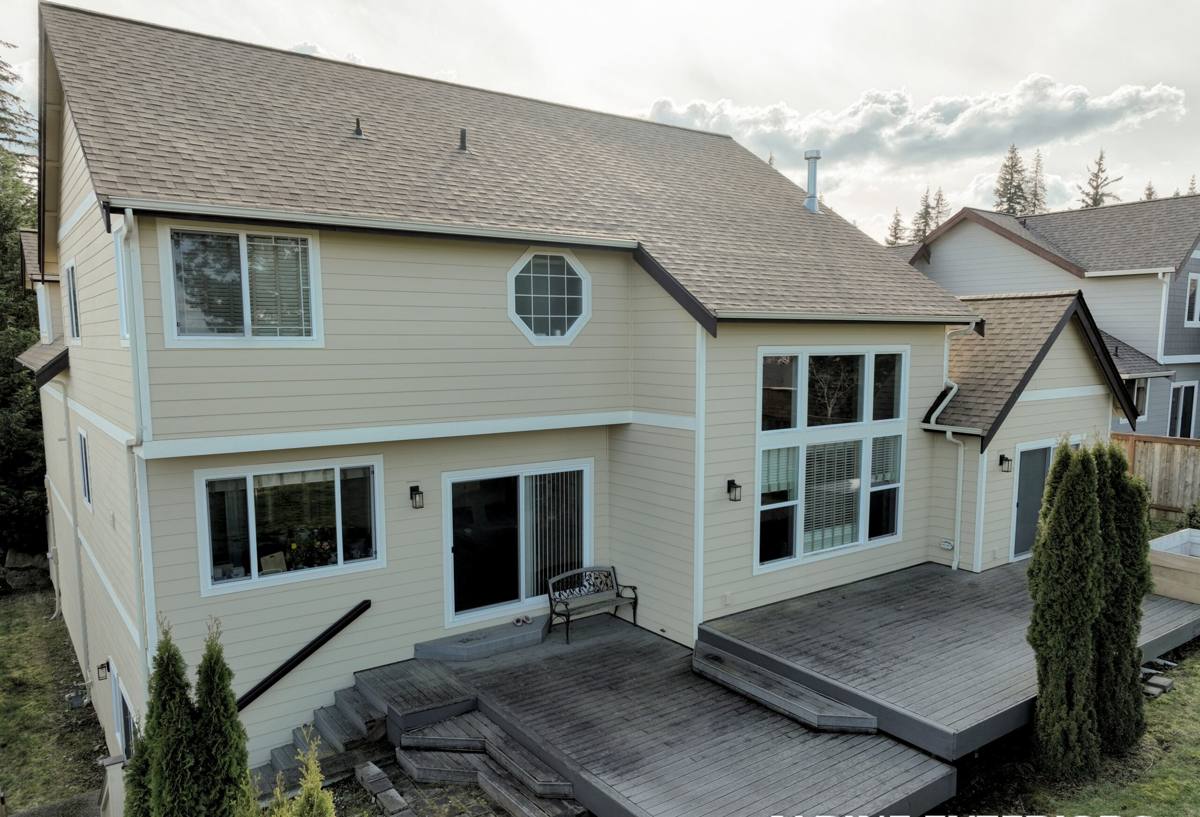
What South Hill's Climate Actually Does to a Deck
Before getting into materials and process, it helps to understand the specific failure points we see over and over on decks that weren't built for this environment.
Driving Rain and Standing Water
Wind-driven rain doesn't just fall straight down — it gets pushed sideways into ledger connections, under railing posts, and into any joint that isn't properly flashed or sealed. Combined with the naturally damp ground common around Lake Whatcom's hillsides, poor drainage under and around a deck is one of the fastest ways to shorten its life.
Moss and Algae Growth
Whatcom County's moss season runs long — often eight months or more of conditions damp enough to support growth. Moss holds moisture against decking boards and framing, and on stairs and ramps it becomes a genuine slip hazard, not just a cosmetic issue.
Marine Air and Metal Fasteners
Salt-laden, moisture-heavy air corrodes standard fasteners and hardware faster than in drier inland regions. A deck built with the wrong grade of screws, joist hangers, or structural connectors can develop rust streaks and weakened connections years before the decking itself wears out.
What a Correctly Built Deck Requires Here
Footings Sized for Wet, Sloped Ground
Many South Hill lots have grade changes and soil that stays saturated for long stretches of the year. Footings need to be sized and placed for the actual soil conditions on your lot, not just poured to a minimum code depth and called done. On sloped sites this also affects how posts are braced and how the deck ties back to the house.
Ledger Board Flashing
The ledger board — where the deck attaches to the house — is the single most common source of hidden rot on any deck in a wet climate. It needs proper flashing that sheds water away from the house sheathing, not just a bead of caulk. This is the detail that separates a deck that lasts from one that quietly rots the band joist behind it.
Corrosion-Resistant Hardware Throughout
Given the marine air common to this part of Whatcom County, we use fasteners, joist hangers, and structural connectors rated for the moisture and salt exposure the deck will actually see, not just whatever is cheapest at minimum code compliance. This is a small cost difference at build time and a large difference in how the frame looks and performs ten years out.
Airflow Underneath and Between Boards
Decking that's installed too tight, or over a structure with no airflow underneath, traps moisture and accelerates both rot and moss growth. Proper board spacing and ventilation beneath the deck are structural decisions, not finishing touches.
Choosing the Right Decking Material for This Climate
There's no single "best" decking material — the right choice depends on your budget, how much maintenance you're willing to do, and how much moss and moisture exposure your specific site gets. Here's how the common options actually perform in a climate like South Hill's.
| Material | Moisture & Moss Behavior | Maintenance | Typical Cost Range |
|---|---|---|---|
| Pressure-treated lumber | Resists rot when properly sealed; moss will still grow on the surface if not cleaned | Needs cleaning and re-sealing every 1-2 years | Lowest upfront cost |
| Cedar | Naturally rot-resistant but softer; can gray and hold moisture if not maintained | Regular cleaning and periodic sealing or staining | Mid-range |
| Capped composite | Excellent moisture and moss resistance; surface doesn't absorb water like wood | Occasional washing, no sealing or staining | Higher upfront cost |
| Uncapped composite | Better than wood but can absorb some moisture at cut edges over time | Low, but edge sealing matters at install | Mid-to-high |
Our honest take: in a climate with this much sustained moisture and moss pressure, capped composite generally gives homeowners the best long-term value because it removes the yearly sealing cycle that wood requires. That said, pressure-treated and cedar remain solid, proven choices for homeowners who don't mind the maintenance rhythm or who prefer the look and feel of real wood. We'll walk through the honest trade-offs for your specific site rather than push one product line.
Design Decisions That Matter on South Hill Lots
Grading and Drainage Around the Deck
Where the deck sits relative to the slope of your lot determines whether water runs away from the structure or pools against it. We plan drainage paths as part of the design, not as an afterthought once the frame is up.
Railing and Stair Placement for Wet Conditions
Stairs and any sloped transitions are where moss becomes a safety issue rather than just an eyesore. We factor board orientation, spacing, and sometimes texture into stair design specifically to reduce how much moss can take hold in high-traffic, wet areas.
Covered vs. Open Deck Sections
A partial roof or pergola over part of the deck can meaningfully cut down on how much standing water and moss buildup that section deals with — worth discussing if you're planning a deck for regular use through our wetter months.
Our Deck Building Process
The steps are similar to any deck build, but the details at each stage are shaped by what actually works in this part of Whatcom County.
1. Site Visit and Assessment
We look at your lot's slope, drainage, soil, sun exposure, and how the deck will connect to your house before recommending a design or material.
2. Permitting
Most new decks and significant deck rebuilds require a permit. We handle the permitting process so you don't have to navigate it yourself, and we build to the code requirements that apply to your specific structure and lot.
3. Framing and Footings
This is where the climate-specific decisions happen — footing depth, ledger flashing, hardware grade, and structural bracing appropriate to your site.
4. Decking, Railing, and Finish Work
Board installation, railing, stairs, and any finishing (sealing, staining, or trim work) happen once the structure is inspected and approved.
5. Final Walkthrough
We walk the finished deck with you, explain how it's built, and go over what maintenance (if any) the material you chose will need going forward.
Maintaining a Deck Through Moss Season
Whatever material you choose, a little seasonal attention goes a long way in this climate. Here's the basic checklist we give homeowners after a build:
- Sweep debris and standing leaves off the deck regularly, especially in fall — trapped organic material is what moss and algae feed on
- Wash the deck surface at least once a year with a deck-safe cleaner to remove early moss growth before it establishes
- Check that gaps between boards haven't filled with debris that blocks drainage and airflow
- Inspect the ledger board area and any flashing once a year for signs of water staining or soft wood
- Re-seal or re-stain wood decking on the schedule appropriate to that product — don't wait until it's visibly gray and dry
- Look at fastener heads and visible hardware periodically for early rust, especially on older builds
None of this is complicated, but skipping it for a few years in a climate like this is how a well-built deck starts to look tired well before its time.
Why a Crew That Already Works South Hill Makes a Difference
Deck building isn't exotic work, but building one that's genuinely set up to handle Whatcom County's rain and moss season, year after year, comes down to details that aren't obvious unless you've seen how decks in this specific area actually fail. A crew that already works in and around Sudden Valley has already seen which ledger details rot first, which hardware holds up to the marine air, and which drainage mistakes show up two winters later instead of on day one. That's the difference between a deck that needs real repair work in year five and one that's still solid in year twenty.
We also already know the local permitting process and the practical realities of building on South Hill's sloped, sometimes tight lots — which means fewer surprises and a smoother project for you from the first site visit to the final walkthrough.
Get a Straightforward Estimate
If you're planning a new deck or replacing one that's showing its age, we're happy to take a look and give you an honest assessment of what your site needs and what it will cost. There's a free, no-pressure estimate form below — reach out and we'll walk you through your options.