 Sudden Valley
 Why South Hill's Climate Is Hard on a Deck
South Hill sits inside the same weather pattern that shapes every project we do around Sudden Valley: damp air blowing in off the water, long stretches of driving rain, and a moss season that can run from early fall well into spring. Add tree cover, which is heavy through most of this part of Whatcom County, and you get a surface that rarely gets a full day to dry out between storms. That combination is exactly what wears out an outdoor deck faster than almost anything else in the exterior of a home.
Wood decking is the classic victim. It grays, checks, and splinters, and the gaps between boards become a place for moss and algae to take hold within a season or two. Composite decking doesn't feed mold spores the way untreated wood does, and it won't splinter or need annual staining, but it isn't maintenance-free either. If it's installed without attention to airflow, drainage, and flashing, a composite deck can still trap moisture underneath, stay slick on top longer than it should, and show the same green film wood decks get, just on a different material. The product solves some problems automatically. The install has to solve the rest.
What South Hill's Terrain and Tree Cover Change About the Job
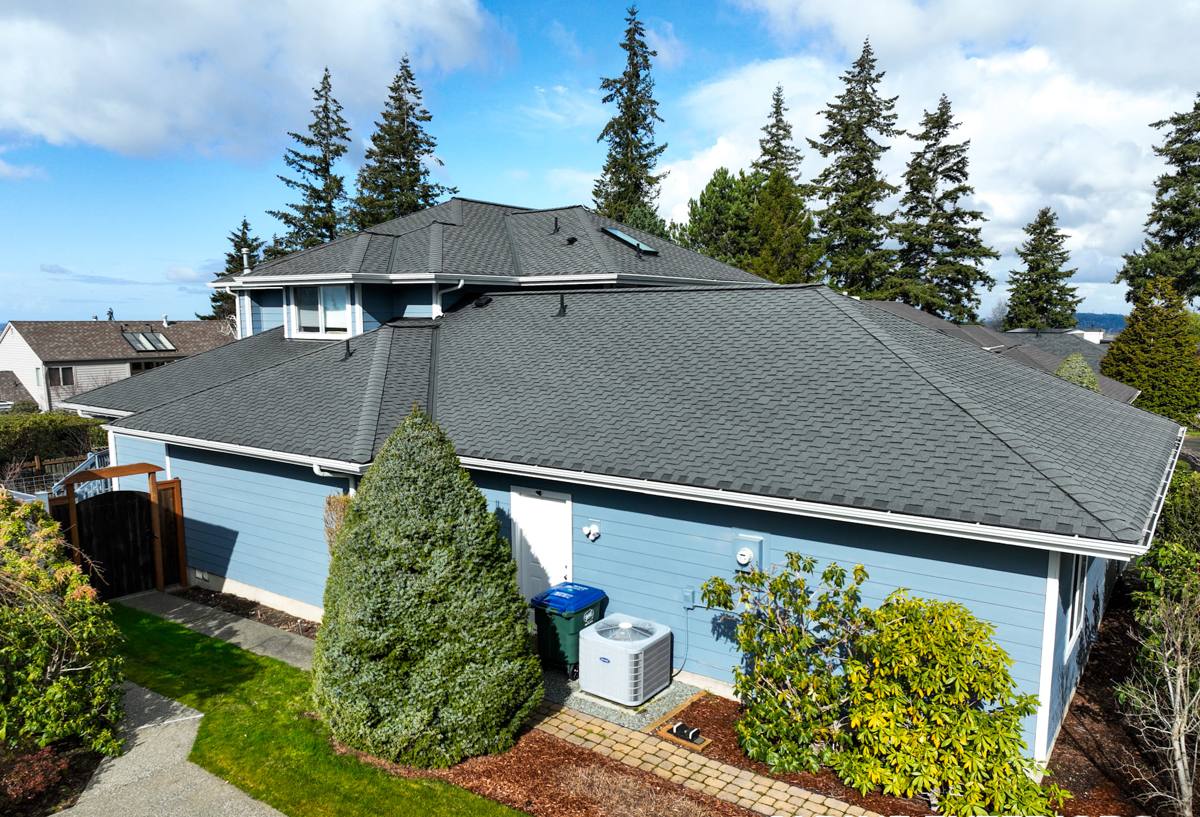
A lot of lots in this part of Sudden Valley sit on real grade, not flat pads, which changes how a deck gets framed and how water moves around it. On a sloped lot, runoff doesn't always drain away from the house on its own — it can just as easily sheet toward the foundation or pool under the deck structure if the framing and grading aren't planned for it. Taller stairs, guardrails at grade transitions, and footings set to the right depth all matter more here than they would on a level suburban lot.
The tree canopy adds a second layer to the problem. Conifer needles and leaf litter collect between boards and in stair treads, holding moisture against the decking surface long after a storm has passed. That's the main driver of the moss and algae you see on decks, sheds, and roofs throughout this area. A deck built without airflow underneath, or with board spacing too tight for good drainage, is going to hold onto that moisture and grow moss faster than one built with those details right.
Composite Decking vs. Wood and PVC
Every decking material handles this climate differently. Here's how the honest trade-offs shake out for a South Hill project:
| Material | Moisture & Moss Resistance | Maintenance | Upfront Cost |
|---|---|---|---|
| Pressure-treated wood | Absorbs water, grows moss/algae readily in shaded areas | Annual cleaning, periodic staining or sealing | Lowest |
| Composite (capped) | Doesn't absorb water into the board itself; surface can still film with algae if not cleaned | Occasional wash, no staining or sealing | Mid to upper |
| Cellular PVC | Fully water-resistant board; still needs surface cleaning in shaded, wet spots | Lowest ongoing maintenance | Highest |
We install capped composite on most South Hill decks because it strikes the right balance for this climate: it holds up to constant damp without the upkeep wood demands, and it costs less than full PVC systems. We won't put wood decking under a full tree canopy in this climate and call it low-maintenance — it isn't, and telling a homeowner otherwise just sets them up for a bad surprise two winters in.
What a Correct Composite Deck Installation Involves
Substructure and Framing
Composite boards are heavier than wood and behave differently under load and temperature swings, so joist spacing has to match the manufacturer's spec for composite — often tighter than what's fine for a wood deck, especially with picture-frame borders or diagonal board patterns. On sloped South Hill lots, we also set footings and beam heights to keep water moving away from the house rather than pooling under the frame.
Ledger Board and Flashing
Where a deck attaches to the house is the single most common failure point on any deck in a wet climate, composite or not. A ledger board that isn't properly flashed will let water track behind the siding and into the rim joist over time, which is a rot problem hiding behind a perfectly good-looking deck. We flash that connection with the same care we'd flash a siding transition — because structurally, it is one.
Joist Tape and Fasteners
Joist tape over the framing protects the wood underneath the composite boards from the moisture that inevitably gets between them, which matters more here than in a drier climate. Hidden fastener systems keep screw heads out of the walking surface and out of standing water, and correct board spacing lets rain and needle debris drain through instead of collecting on top.
Railings, Stairs, and Code
Guardrail height, baluster spacing, and graspable handrails on stairs all follow building code, and that code gets stricter to enforce on sloped lots where a fall has farther to go. We build to code as a floor, not a suggestion — it's also what keeps your homeowner's insurance and any future home sale from turning into a headache.
How the Project Runs, Start to Finish
- On-site assessment of the lot's slope, drainage path, and tree cover, and a look at the existing structure if we're replacing a deck
- Material and layout selection, including board color and railing style
- Permit handling through Whatcom County where required, so you're not the one chasing paperwork
- Demo of the old deck (if applicable) and prep of the ledger and footings
- Framing, ledger flashing, and joist tape installation
- Decking, railing, and stair installation
- Final walkthrough covering drainage, maintenance, and warranty coverage
Living With a Composite Deck in This Climate
Composite cuts down on maintenance, but it doesn't eliminate the need for it in a place with this much shade and moisture. A little seasonal attention keeps a South Hill deck looking and draining the way it should:
- Sweep needles and leaf litter off the deck regularly through fall and winter rather than letting them sit and hold moisture
- Keep gutters and downspouts clear so roof runoff isn't sheeting onto or under the deck
- Wash the deck surface once or twice a year to stop surface algae before it takes hold, especially in shaded corners
- Check railing connections and fasteners annually — wood movement underneath can loosen hardware over time even when the composite itself hasn't changed
- Look at the ledger flashing and under-deck area every year or two, since that's the spot most likely to show a problem early
What Affects the Cost of a South Hill Composite Deck
| Factor | Why It Moves the Price |
|---|---|
| Size and shape | Square footage and cut complexity (angles, curves, multiple levels) both add labor and material |
| Slope and site access | Sloped lots need taller framing, more footings, and sometimes harder equipment access |
| Decking tier | Base capped composite vs. premium composite or PVC boards changes material cost per square foot substantially |
| Railing material | Composite or metal railing systems cost more than basic wood but need less upkeep |
| Old deck removal | Tear-off and disposal of an existing structure adds labor before the new build even starts |
As a rough range, homeowners in this area typically see installed composite decking land somewhere in the mid to upper range per square foot once framing, railing, and site conditions are factored in — a sloped, tree-covered South Hill lot generally runs toward the higher end of that range because of the extra framing and drainage work involved. We'll give you a real number for your specific lot, not a generic estimate that falls apart once we see the site.
Why It's Worth Hiring a Crew That Already Works This Area
A deck built by someone who's never dealt with a South Hill lot's slope, shade, and moss cycle tends to look fine on installation day and show problems two or three winters later — flashing that wasn't sized for this much rain, board spacing that seemed adequate somewhere drier, drainage that assumed a flatter lot. We do siding work across Sudden Valley and the surrounding Whatcom County area, and a lot of what makes a deck last here — flashing details, moisture management, matching materials to a specific microclimate — is the same knowledge that goes into a correct siding job. That overlap is why we don't treat decking as a separate, disconnected service.
If you're planning a new composite deck or replacing an aging wood one on South Hill, we're happy to walk the site with you and talk through what your specific lot needs. Reach out for a free, no-pressure estimate using the form below.