 Sudden Valley
 Siding Installation Built for Silver Beach's Climate
Silver Beach sits in the part of Whatcom County where lake moisture, dense tree cover, and marine air all work on a house at the same time. Homes here don't fail because of one bad storm — they fail slowly, from years of moisture finding its way behind siding that was never quite sealed right, or from a product that couldn't keep up with how much shade and dampness this area holds onto for most of the year. If you're planning a siding installation in Silver Beach or the surrounding Sudden Valley area, the climate isn't a side note. It's the whole reason certain products and certain installation details matter more here than they would somewhere drier.
This page is about one thing: what it actually takes to install siding correctly on a Silver Beach home, and why the crew doing it matters as much as the material itself.
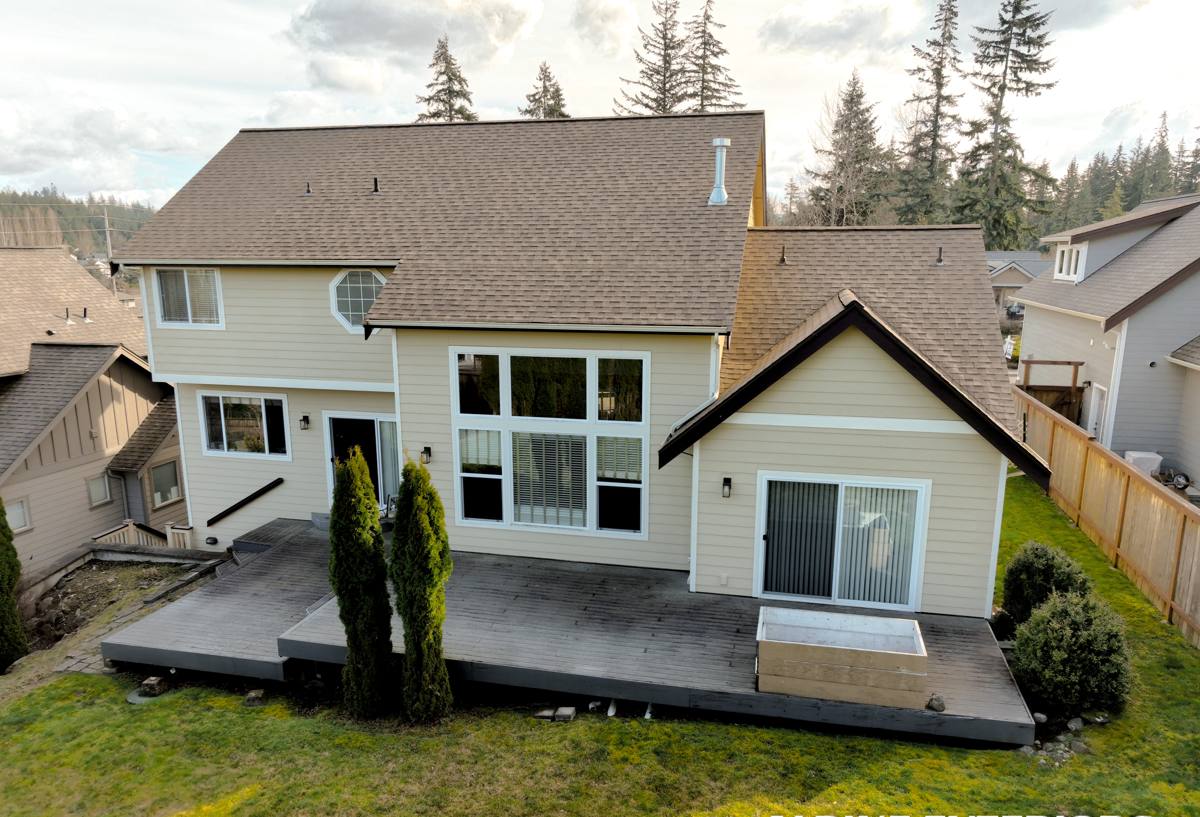
What This Climate Does to Siding Over Time
Moisture and a Long Moss Season
Whatcom County doesn't get a short rainy season — it gets a long stretch of overcast, damp weather that keeps siding surfaces wet far longer than they'd stay wet in a sunnier climate. Combine that with tree canopy and lake-adjacent humidity, and you get ideal conditions for moss and algae to take hold on north-facing walls, under eaves, and anywhere airflow is limited. Moss itself doesn't destroy siding, but it holds moisture against the surface, and that constant dampness is what breaks down products that aren't built to handle it.
Driving Rain and Wind-Driven Water
Storms off the water don't just fall straight down — wind pushes rain sideways into wall assemblies, testing every seam, joint, and piece of trim. A siding installation that relies on caulk and good intentions instead of proper flashing and water-management details will eventually let that wind-driven water in, usually at the weak points: window and door trim, butt joints, and anywhere siding meets a roofline.
Marine-Influenced Air
Whatcom County's proximity to the Sound means the air carries more moisture and salt content than an inland climate, even away from the immediate waterfront. That marine influence accelerates corrosion on unprotected fasteners and speeds up the breakdown of coatings and caulks that aren't rated for it. It's a slow, cumulative effect — not dramatic, but it adds up over a decade or two on a product that wasn't engineered with it in mind.
Why We Only Install James Hardie Fiber Cement
We don't install vinyl, LP SmartSide, Cemplank, Allura, primed spruce, or cedar. That's not a marketing position — it's a standard we hold because of what this climate does to siding over years, not just at the time of installation. Each of those products has real strengths, but each also has a trade-off — moisture sensitivity, expansion and contraction, ongoing maintenance, or coating limitations — that shows up faster in a climate like Whatcom County's than it would somewhere drier.
James Hardie fiber cement is what we've standardized on because it's engineered specifically for the conditions we deal with here:
- Non-combustible core — fiber cement doesn't feed a fire the way wood-based products can.
- HZ climate-engineered formulations — Hardie's HZ5 and HZ10 product lines are formulated for specific moisture and freeze-thaw conditions, which matters in a wet, marine-influenced county like this one.
- ColorPlus factory finish — a baked-on finish applied under controlled conditions, which holds up better against UV and moisture than field-applied paint and doesn't need repainting on the same schedule.
- Dimensional stability — fiber cement doesn't swell, warp, or rot the way wood-based sidings can when it stays damp for long stretches, which is exactly the condition Silver Beach homes deal with much of the year.
- A strong, transferable warranty — backed by decades of real-world performance data, not just a marketing claim.
We're honest that Hardie costs more upfront than vinyl or LP, and it's heavier and less forgiving to install than either. That's exactly why installation quality matters as much as the product choice.
What a Correct Installation Actually Involves
Fiber cement siding is only as good as the assembly behind it. A lot of the problems we get called out to fix on other contractors' work aren't product failures — they're installation shortcuts that let water get where it shouldn't.
| Detail | Done Right | Common Shortcut |
|---|---|---|
| Weather-resistive barrier | Continuous house wrap, properly lapped and taped at every seam | Torn, gapped, or reused wrap from the old siding |
| Flashing at windows and doors | Integrated flashing that directs water out and away from the sheathing | Caulk used as the primary water seal instead of flashing |
| Fastener placement | Corrosion-resistant fasteners set to Hardie's exact spec for pattern and depth | Standard fasteners over- or under-driven, splitting the board or leaving it loose |
| Clearances | Proper gap from grade, roofline, and decks to prevent wicking | Siding installed tight to grade or butted against roofing |
| Joints and butt seams | Sealed and backed per manufacturer detail, staggered for water shedding | Unsealed joints or seams aligned in a way that channels water inward |
Every one of those "done right" details takes more time on the job than the shortcut version. That's the difference between siding that looks fine for a couple of years and siding that still performs after two decades of Whatcom County weather.
Our Process for a Silver Beach Siding Installation
1. On-Site Assessment
We walk the home and look at what's actually going on behind the current siding where we can access it — sheathing condition, existing moisture damage, and any trouble spots specific to the lot's sun exposure, tree cover, or drainage.
2. Tear-Off and Substrate Check
Old siding comes off and we inspect the sheathing underneath. Any soft, water-damaged, or compromised sheathing gets addressed before anything new goes up — installing new siding over a damaged substrate just hides the problem.
3. Weather Barrier and Flashing
A new, continuous weather-resistive barrier goes on, with flashing integrated at every window, door, and penetration. This layer is what actually keeps water out — the siding itself is the second line of defense, not the first.
4. Hardie Installation to Spec
Boards are installed to James Hardie's published installation requirements — fastener pattern, clearances, joint treatment — not a generalized "siding install" approach. This is where a crew's familiarity with the product shows.
5. Final Inspection
We walk the finished job checking trim lines, caulk joints, and clearances before calling it done.
What Drives Cost on a Silver Beach Project
| Factor | Why It Matters |
|---|---|
| Home size and wall complexity | More corners, dormers, and trim details mean more labor and material waste |
| Existing siding removal | Tear-off and disposal of old material adds time, especially with multiple prior layers |
| Sheathing repair | Water damage found during tear-off has to be fixed before new siding goes on |
| Access and site conditions | Tree-lined lots, steep grades, or limited driveway access around Sudden Valley can affect staging and labor time |
| Hardie product line and profile | HZ10 vs. HZ5, plank width, and profile (lap, shingle, panel) all affect material cost |
| Trim and accessory work | Corner boards, frieze boards, and trim detailing add both material and labor |
We'll never quote a job without walking it first — every Silver Beach property has its own combination of these factors, and a real number only comes from seeing the actual walls.
Why a Crew That Already Works This Area Matters
Siding installation isn't just a product application — it's a set of judgment calls about how a specific house sits in a specific environment. A crew that's already worked homes around Sudden Valley and the surrounding lake-adjacent neighborhoods has seen where moisture tends to collect on this terrain, how tree cover affects drying time on different sides of a house, and what detailing actually holds up through a full wet season here — not just in a showroom or a drier part of the state. That local pattern recognition shows up in small decisions: where to add extra flashing, which walls need closer attention to ventilation, and how to sequence a job around this area's weather windows.
After Installation: Keeping Silver Beach Siding Performing
Correctly installed Hardie siding is low-maintenance, not no-maintenance. A little attention keeps it looking and performing the way it should for the long run:
- Rinse off moss, algae, and organic buildup on shaded or north-facing walls once or twice a year before it gets a foothold
- Keep gutters clear so overflow isn't running down the siding face
- Trim back vegetation and tree limbs that keep walls shaded and slow to dry
- Check caulk joints at trim and penetrations every year or two and touch up as needed
- Have any impact damage or loose boards addressed promptly rather than waiting
None of this is heavy work — it's the kind of upkeep that takes an afternoon and keeps small issues from becoming siding replacement issues.
If you're weighing a siding installation for a home in Silver Beach or elsewhere around Sudden Valley, we're happy to come take a look and give you a straightforward, no-pressure estimate — no obligation, just an honest read on what your home needs.