 Sudden Valley
 Fiber Cement Siding Built for Silver Beach's Waterfront Climate
Silver Beach sits close enough to Lake Whatcom's shoreline microclimate that homes here take a different kind of weathering than siding just a few miles inland. Wind off the water drives rain sideways into wall assemblies, shaded lots hold moisture longer after a storm passes, and the long gray stretch from November through April gives moss, algae, and mildew months to get established on anything that stays damp. We install James Hardie fiber cement siding in Silver Beach because it's one of the few claddings that holds its shape, its paint, and its seams under that kind of sustained exposure — and because we've seen what happens to the products that don't.
This page is about one job in one place: replacing or installing fiber cement siding on a Silver Beach home. Not a general siding overview — the specifics of what this neighborhood's exposure actually demands from the material and the install.
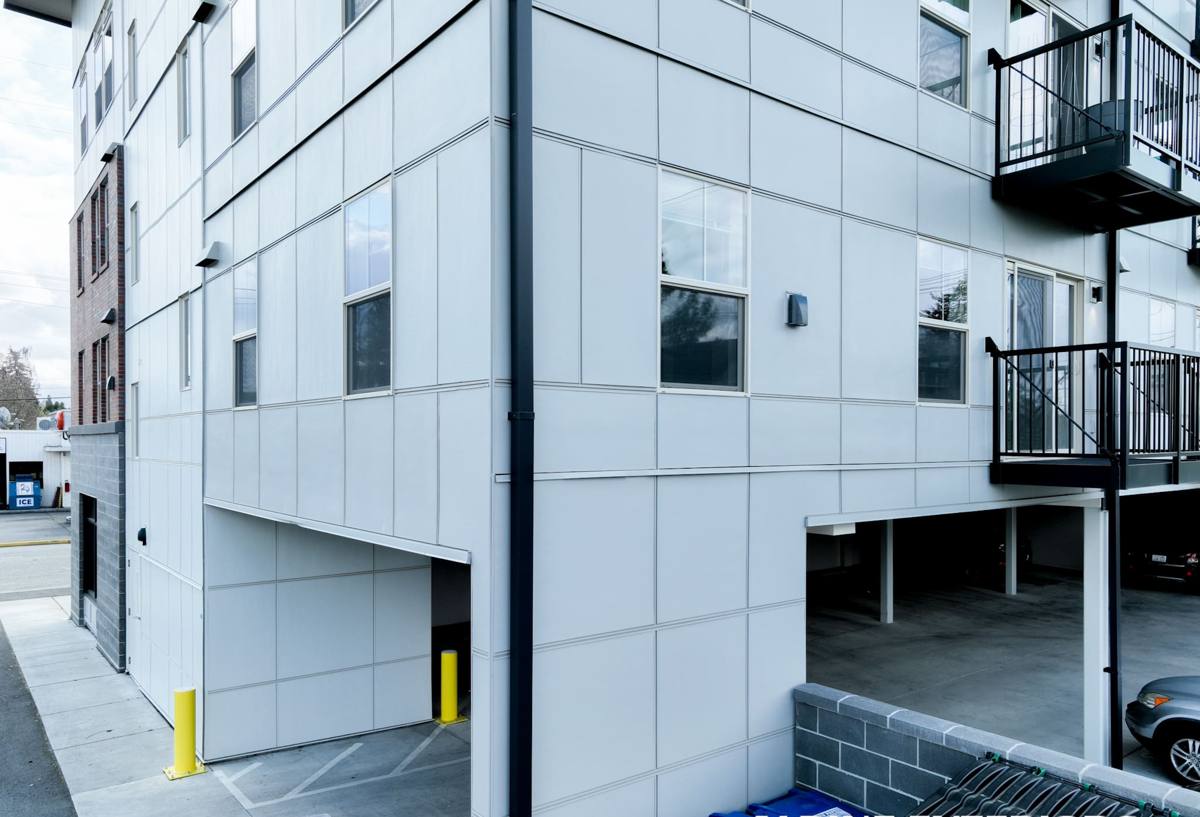
What Silver Beach's Climate Actually Does to Siding
Three conditions show up over and over on homes in this pocket of Sudden Valley and along the Lake Whatcom shoreline:
- Wind-driven rain: Open exposure toward the water means rain doesn't just fall — it's pushed horizontally into lap joints, corner boards, and trim intersections. Any siding with weak seams or poor water management will eventually let moisture behind the cladding.
- Persistent shade and moisture retention: Mature trees and steep, north-facing lots common around Silver Beach keep siding damp longer after rain than a home on an open, sunny lot. That extended dry-time is exactly what moss, algae, and mildew need to take hold.
- Long moss season: Whatcom County's wet season stretches roughly October through May. Siding that absorbs even a small amount of moisture becomes a growth surface during that window, and once moss or algae get a foothold, it's a recurring maintenance problem, not a one-time cleaning.
None of this is unique to Silver Beach — it's a Pacific Northwest lake-adjacent condition — but it's more pronounced here than on a typical inland Whatcom County lot, and it should change what siding you choose and how it's detailed.
Why This Matters More Near the Water
Homes set back from the lake with more sun exposure and less wind funnel can get away with siding choices that would struggle on a shaded, breeze-exposed Silver Beach lot. The margin for error is smaller here. A siding product that's merely "fine" in a dry climate can show moisture stress, panel swelling, or coating failure within a handful of seasons under sustained damp-and-shade conditions.
Why We Only Install James Hardie Fiber Cement
We don't offer vinyl, LP SmartSide, primed wood, or other fiber cement brands as options for Silver Beach homes — not because there's no market for them, but because we've made a professional call about what holds up correctly in this exposure and don't want to install something we can't stand behind ten years out.
| Property | Why It Matters in Silver Beach |
|---|---|
| Fiber cement composition (no wood fiber to absorb water) | Won't swell, rot, or delaminate the way wood-based or wood-fiber siding can when it stays damp under shade and lake-effect humidity |
| ColorPlus factory-applied finish | Baked-on finish resists fading and holds up to repeated wet/dry cycling far better than field-applied paint, reducing repaint cycles |
| HZ5 climate-engineered formulation | Hardie's Pacific Northwest product line is engineered for moisture and freeze-thaw exposure typical of this region |
| Non-combustible core | Doesn't affect moss resistance directly, but it's part of the overall standard we hold to for every home we side |
| Rigid panel and lap profiles | Holds tighter tolerances at joints and corners, which matters most where wind is pushing rain into those seams |
Vinyl siding can warp or buckle under sun-shade temperature swings and its joints are never truly sealed against wind-driven rain — water gets behind it and just takes longer to show. LP SmartSide is a wood-strand product; it performs well when detailing and maintenance stay perfect, but a wood-based substrate in a shaded, damp lakeside lot is exactly the condition that stresses that material over time. We'd rather tell you that upfront than sell you something and have moisture problems show up in year six.
What a Correct Fiber Cement Install Looks Like Here
Fiber cement siding is only as good as its installation. In a high-moisture, wind-exposed setting like Silver Beach, a handful of details separate a siding job that lasts 30+ years from one that has moisture problems in under a decade.
Water Management Behind the Cladding
- Correct weather-resistive barrier (house wrap) lapped and taped per manufacturer spec, not just stapled up and covered
- Rain screen gap or drainage plane where the wall assembly calls for it, so any moisture that gets past the siding can drain and dry instead of sitting against sheathing
- Properly flashed windows, doors, and penetrations — this is where most water intrusion actually starts, not through the siding field itself
Fastening and Joint Detail
- Manufacturer-specified nailing pattern and fastener type — under- or over-driven nails are one of the most common causes of premature Hardie siding failure
- Properly caulked and back-primed cut edges at every joint, since factory finish doesn't extend to field cuts
- Correct clearance from grade, decks, and roof lines so siding isn't sitting in a moisture trap at the bottom edge
Site-Specific Adjustments for Silver Beach Lots
On shaded, tree-covered lots we pay extra attention to soffit and gutter integration, since backsplash and roof runoff are common secondary moisture sources that have nothing to do with the siding material itself but will undermine even a perfect install if ignored. On lots with more direct lake-wind exposure, we're more conservative with caulk joints and flashing laps at corners and window heads, since that's where driving rain finds gaps first.
Our Process for a Silver Beach Siding Job
- On-site assessment: We walk the home, check the current siding and sheathing condition, look at drainage, tree cover, and wind exposure specific to the lot, and note any moisture damage already present.
- Written scope and estimate: You get a clear breakdown of siding profile, color, trim details, and what's included — no vague allowances.
- Tear-off and sheathing check: Old siding comes off and we inspect sheathing for rot or moisture damage before anything new goes up. This step gets skipped by crews in a hurry, and it's the step that matters most.
- Weather barrier and flashing: House wrap, flashing, and drainage details go in correctly before a single piece of Hardie touches the wall.
- Hardie installation: Panels and laps installed to manufacturer fastening spec, with attention to joint sealing and clearances noted above.
- Final walk-through: We review the finished work with you and cover basic care and what to expect over the coming seasons.
Cost Factors for a Silver Beach Fiber Cement Job
| Factor | How It Affects Your Job |
|---|---|
| Home size and wall complexity | More corners, dormers, and trim detail mean more labor and cut waste |
| Existing sheathing condition | Rot or moisture damage found during tear-off adds repair scope before new siding goes on |
| Siding profile and finish | Lap width, shingle-style panels, and trim color options affect material cost |
| Site access | Steep or wooded Silver Beach lots can slow staging and material handling compared to open, flat lots |
| Drainage plane requirements | Adding a proper rain screen where none existed is worth the added cost on shaded, damp-prone walls |
We give straight, written numbers after we've actually looked at the house — not a phone-quote guess. Broad ranges without seeing the wall assembly and access conditions aren't useful to you or to us.
Why Hiring a Crew That Already Works This Area Matters
Silver Beach and the rest of Sudden Valley have specific conditions — lake-effect moisture, shaded lots, wind funnel patterns off the water — that a crew unfamiliar with the area might not account for. A contractor who mainly works drier, more open parts of Whatcom County can install Hardie siding correctly by the book and still miss the site-specific judgment calls that keep water out of a shaded, wind-exposed wall long-term. We work this area regularly, which means we're not guessing at how a given lot behaves in a wet November — we've already seen how homes with this exposure age, both when the siding job was done right and when it wasn't.
If your Silver Beach home has moss buildup, paint failure, soft spots, or siding that's simply past its service life, we're happy to take a look and give you a straightforward assessment — no pressure, no upsell script.
Signs Your Silver Beach Home May Need New Siding Soon
- Moss or algae returning within a few months of cleaning, even after pressure washing
- Visible warping, buckling, or gaps at panel joints and corners
- Paint or finish peeling, chalking, or fading unevenly across shaded versus sun-exposed walls
- Soft or spongy spots when pressed, especially near the bottom courses or under windows
- Visible water staining on interior walls near exterior corners after heavy rain
If you're seeing any of these on a Silver Beach home, we're glad to come take a look and walk you through a free, no-pressure estimate for James Hardie fiber cement siding built for what this lakeside climate actually throws at a house.