 Sudden Valley
 Deck Replacement Built for Silver Beach's Climate
Silver Beach sits close to the water, and that proximity shapes everything about how a deck ages here. Homes in this pocket of Whatcom County deal with a longer wet season than most of the state, steady moisture off the lake, and the kind of shaded, humid air that keeps moss and algae established on horizontal surfaces for much of the year. A deck that would hold up fine in a drier inland town can start failing early here if it wasn't built with this specific environment in mind. When we talk about deck replacement in Silver Beach, we're not just talking about swapping old boards for new ones — we're talking about correcting the structural and drainage weaknesses that let this climate win in the first place.
Sudden Valley and the surrounding Lake Whatcom communities see a lot of driving rain that comes in at an angle, soaking under railings and against ledger boards rather than falling straight down. Combine that with long stretches of shade from mature trees and you get surfaces that stay damp far longer than they would in full sun. That's the environment your deck's framing, fasteners, and decking material all have to survive, year after year.
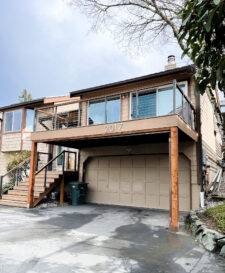
Why Replacement Instead of Repair
Not every tired deck needs a full teardown. But there's a point where patching individual boards or sistering a few joists stops making sense — where the underlying structure has absorbed enough moisture damage that repair work is just delaying an inevitable rebuild, and often at a worse price than doing it right the first time. Part of our job on the initial visit is telling you honestly which side of that line your deck is on.
Signs It's Time to Replace, Not Repair
- Soft or spongy spots in the decking that go beyond a board or two
- Rot at the ledger board where the deck attaches to the house — a common failure point in wet climates
- Persistent moss or algae growth that returns within weeks of cleaning, especially on shaded sections
- Rusted, streaking, or loosening fasteners and connectors
- Visible gaps, sagging, or bounce in the framing when you walk across it
- Posts or footings that show cracking, heaving, or movement
- A railing system that flexes or feels loose when leaned on
If your deck shows two or more of these, especially rot at the ledger or in the main framing, replacement is almost always the more honest recommendation than another round of spot repairs.
What a Correct Deck Replacement Involves
A deck is only as good as what you can't see once it's finished. In a climate like this one, the parts hidden under the decking boards matter more than the decking itself.
Ledger and Flashing
The ledger board — where the deck bolts into the house — is the single most common point of water intrusion and structural failure on decks in wet regions. A correct replacement uses proper flashing integrated with your home's existing weather barrier, not just caulk over the top of a lag-bolted board. This is the detail that keeps water from tracking behind your siding and rotting both the deck framing and the wall it's attached to.
Framing and Footings
We use pressure-treated lumber rated for ground contact where it's near soil, and we check footing depth and condition against current code rather than assuming the old footings are adequate. Undersized or shallow footings are a common shortcut in older decks, and they show up as movement or settling over time.
Fasteners and Hardware
Everything below the decking — joist hangers, structural screws, post bases — should be corrosion-resistant hardware rated for treated lumber. Standard hardware reacts badly with the chemicals in modern treated wood and corrodes faster in damp, humid conditions, which is exactly what this area delivers for months at a time.
Drainage and Airflow
Water needs somewhere to go, both off the surface and underneath. Proper board spacing, joist spacing that allows airflow, and grading that directs water away from the foundation all reduce how long moisture sits against wood. This is one of the biggest differences between a deck that lasts fifteen years here and one that starts failing in five.
Choosing the Right Decking Material for This Climate
Material choice matters more in a high-moisture, high-shade environment than it does in most parts of the country. Every option has real trade-offs — there's no material that's maintenance-free, and we'll tell you honestly what each one asks of you.
| Material | Moisture Behavior Here | Maintenance | Typical Lifespan |
|---|---|---|---|
| Pressure-treated wood | Absorbs and releases moisture; prone to moss/algae without upkeep | Annual cleaning and periodic sealing | 10-15 years |
| Cedar | Naturally rot-resistant but still needs sealing in this much rain | Sealing every 1-2 years | 15-20 years |
| Composite decking | Won't rot, but low-quality boards can trap surface moisture and grow algae | Periodic cleaning; no sealing needed | 25-30 years |
| PVC/capped composite | Best moisture resistance of the group; sheds water off the cap layer | Occasional cleaning | 25-30+ years |
We don't push one material on every job. A shaded, tree-covered lot near the lake is a strong case for composite or capped PVC decking because it removes the ongoing moss battle that wood decking here requires. A more open, sun-exposed section of the yard can make wood a perfectly reasonable choice if you're willing to keep up with sealing. What matters is matching the material to your specific site conditions, not defaulting to whatever's cheapest up front.
Our Deck Replacement Process
- On-site assessment. We inspect the framing, ledger connection, footings, and existing drainage to determine what's actually failing and why.
- Honest scope and estimate. You get a clear breakdown of what needs to be replaced, what materials we recommend for your site's sun and shade exposure, and a straightforward price — no vague allowances.
- Permitting. We handle the permit process where required so the work is inspected and documented correctly.
- Demolition and disposal. The old deck comes down and off your property; we don't leave debris piled up for weeks.
- Structural rebuild. Footings, framing, ledger flashing, and hardware go in to current code, sized for the actual loads your deck will see.
- Decking, railing, and finishing. Your chosen material goes down with proper spacing for drainage and airflow, followed by railings and any final trim work.
- Final walkthrough. We go over the finished deck with you, including basic care guidance specific to the material you chose.
Permits and Code Considerations
Deck replacement in Whatcom County typically requires a building permit once you're doing more than minor cosmetic repair, particularly when framing, footings, or the ledger connection are being replaced. Requirements can vary depending on deck size, height off grade, and whether it's attached to the house. We handle this as part of the job rather than leaving it on the homeowner to sort out, and we build to the current code rather than just matching whatever the original deck happened to meet when it went in years ago.
What Affects the Cost of a Deck Replacement
| Factor | Why It Matters |
|---|---|
| Deck size and shape | More square footage and complex angles mean more material and labor |
| Decking material | Wood costs less up front; composite and PVC cost more initially but less over time in maintenance |
| Framing and footing condition | Rotted framing or undersized footings add rebuild work beyond just the surface |
| Height and railing requirements | Taller decks need more substantial railings and often stairs, adding cost |
| Site access | Sloped or wooded lots near the lake can make demolition and material staging slower |
| Permit and inspection scope | Larger structural changes mean more inspection steps built into the timeline |
Most full deck replacements land in a broad middle range once you factor in structural work and a mid-tier decking material, with wood decks on the lower end and full composite or PVC systems on the higher end. We'll give you a firm number for your specific deck, not a guess pulled from a general price sheet.
Why Hire a Crew That Already Works Silver Beach
Building a deck that survives this climate isn't guesswork — it's knowing which failure points show up repeatedly on homes near the lake and building past them from the start. A crew that's worked this specific area has already seen where ledger boards rot first, which shaded lots need a different material recommendation than sunny ones, and how much drainage detailing actually matters versus what's just upsold extra work. That local pattern recognition is worth more than a generic deck-building checklist.
It also means realistic scheduling. We know what the wet season does to a project timeline in this part of Whatcom County and plan around it instead of promising a schedule that weather is going to blow up. And when you have questions six months or two years after the work is done, you're calling a crew that's still working in your neighborhood, not chasing down a company that only showed up once.
Maintaining Your New Deck
Whatever material you choose, a little seasonal attention goes a long way in this climate. Sweep leaves and debris off the surface regularly, especially in fall when they trap moisture against the boards. Clean moss and algae before it establishes rather than after, since a light annual wash is far easier than scrubbing in a heavy growth. If you go with wood or cedar, keep sealing on schedule — skipping a year or two is exactly when moisture damage gets a foothold. Check railings and stair connections annually for any looseness, since these get the most physical stress and are the first place hardware issues tend to show up.
If you're weighing repair versus replacement, or just want an honest look at what your current deck can and can't handle going into another wet season, we're glad to come take a look. Reach out for a free, no-pressure estimate using the form below.