 Sudden Valley
 Window Replacement Built for South Hill's Climate
South Hill homes sit in one of the more demanding window environments in Whatcom County. The combination of salt-laden air moving in off the water, wind-driven rain that hits window assemblies sideways instead of straight down, and a moss season that stretches for months means window materials and installation details that work fine in a dry climate often fail here years ahead of schedule. Sudden Valley Siding replaces windows on South Hill homes with that reality built into every decision — not as an afterthought.
Window replacement is one of those projects that looks simple from the outside and isn't. Swapping a window is easy. Swapping a window so that the opening stays dry, sealed, and structurally sound for the next twenty-plus years in a wet coastal climate is a different job entirely. This page covers what South Hill homes specifically need, what a correct installation involves, and how we handle the work from estimate to final walk-through.
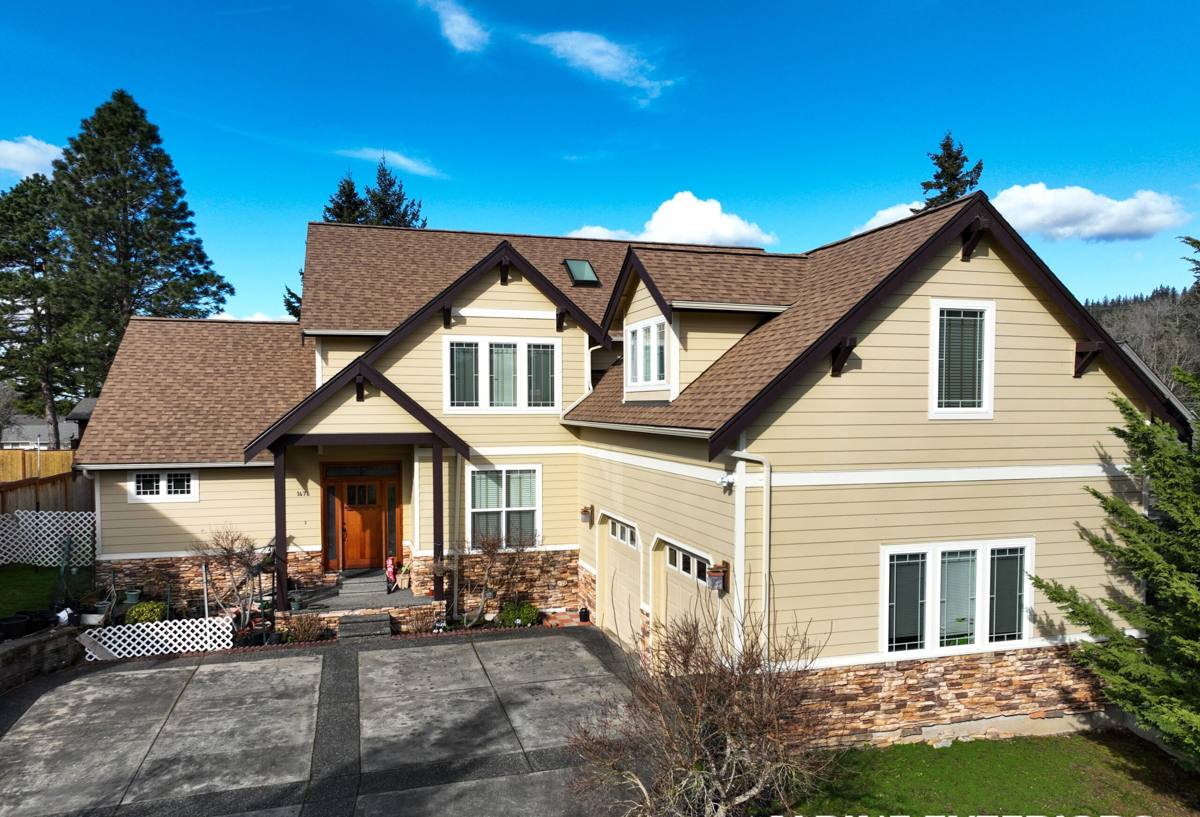
Why South Hill Windows Wear Out Faster
Older or lower-grade windows in this part of Whatcom County tend to fail in a few predictable ways, and understanding them helps explain why replacement — not just re-caulking — is often the right call.
Salt Air and Metal Fatigue
Salt-carrying air corrodes exposed metal hardware, aluminum frames, and fasteners faster than it would inland. Once corrosion sets in on hinges, balances, or cranks, windows stop sealing tightly even when the glass itself is fine. That gap is where moisture starts working its way into the wall assembly.
Driving Rain and Sideways Water
Rain in this region doesn't always fall straight down. Wind pushes it sideways and up under sills, sashes, and trim edges. Windows and flashing details designed for calmer climates weren't built to shed water moving in that direction, and over time water finds its way behind trim and into framing.
Moss, Algae, and Trapped Moisture
A long moss season means organic growth doesn't just sit on roofs and siding — it collects in window sills, tracks, and drip caps too. Moss and algae hold moisture against wood and painted surfaces far longer than bare material would, accelerating rot in sills and trim long before most homeowners notice a problem.
Signs a South Hill Home Needs Window Replacement
Not every issue means a full replacement, but these are the signals worth taking seriously before they turn into a wall-repair job instead of a window job:
- Visible fogging or moisture between panes of double-pane glass — a sign the seal has failed
- Soft, spongy, or discolored wood at the sill or lower frame corners
- Windows that are difficult to open, close, or lock, especially after being fine for years
- Noticeable draft or cold spots near the window even with it fully closed
- Paint that bubbles or peels repeatedly at the sill despite regular touch-ups
- Visible gaps between the window frame and siding or trim
- A musty smell near windows, which often points to moisture already trapped in the wall
What a Correct Window Replacement Involves
The window itself is only part of the job. In a climate like Whatcom County's, the installation details around the window matter as much as the product.
Flashing and Water Management
Proper flashing directs any water that reaches the window opening back out and away from the framing, rather than letting it collect. This includes sill pan flashing at the bottom of the opening, house wrap integration at the sides and top, and correctly lapped layers so water always moves down and out — never up and in. This is the single most common shortcut on rushed installations, and it's the one that causes the most expensive damage later.
Air Sealing and Insulation
The gap between the window frame and the rough opening needs to be sealed with the right materials — not just caulk on the exterior trim. Low-expansion foam or backer rod and sealant around the perimeter keeps both air and moisture from tracking into the wall cavity while still allowing the window to expand and contract with temperature changes.
Frame, Sill, and Trim Condition
Before a new window goes in, the opening gets inspected. If there's soft or rotted framing underneath old trim, that gets addressed first. Installing a new window into a compromised opening just hides the problem behind a new frame — it doesn't fix it.
Exterior Trim and Caulking Detail
The final caulk lines and trim work aren't cosmetic afterthoughts. Where and how a bead of sealant is placed determines whether water sheds away from the window or gets trapped behind trim boards.
Choosing the Right Window for a Coastal-Influenced Climate
Material choice matters more here than in drier parts of the state. We steer homeowners toward window frame materials and glass packages based on how they actually perform in salt air, driving rain, and sustained moisture — not just upfront cost.
| Frame Material | How It Handles Local Conditions | Trade-Offs |
|---|---|---|
| Vinyl | Resists corrosion and moisture well; no repainting needed | Limited color options; can flex in large sizes |
| Fiberglass | Very stable in wet, temperature-swinging conditions; low maintenance | Higher upfront cost than vinyl |
| Wood (clad exterior) | Warm interior look with a protected exterior face | Exposed wood surfaces need consistent maintenance in this climate |
| Bare Aluminum | Strong but conducts cold and is prone to condensation and corrosion near salt air | We generally don't recommend it for this area without a thermal break and protective finish |
Glass packages matter too. Dual-pane windows with a quality low-E coating and an argon or krypton gas fill handle the region's cooler, damp climate well and cut down on condensation — a common complaint in older single-pane or poorly sealed windows during the wet months.
Our Window Replacement Process
- On-site assessment: We look at existing windows, framing condition, and any signs of moisture intrusion before recommending anything.
- Honest scope and estimate: You get a clear picture of what's needed — including if we find rot or damage that should be addressed alongside the window work — before any commitment.
- Removal and opening inspection: Old windows come out carefully, and the opening gets checked and repaired as needed before the new unit goes in.
- Flashing and installation: Sill pan flashing, house wrap integration, and proper air sealing happen at this stage — the part that determines long-term performance.
- Trim, caulking, and finish work: Exterior trim is reinstalled or replaced and sealed correctly to shed water.
- Final walk-through: We check operation, seals, and finish work with you before calling the job done.
Cost Factors for South Hill Window Replacement
Every home is different, but a few factors consistently move the price up or down. We won't quote exact numbers without seeing the job, but here's what typically drives cost:
| Factor | Why It Affects Cost |
|---|---|
| Number of windows | Per-window cost drops somewhat with larger jobs due to shared setup and labor efficiency |
| Frame material chosen | Vinyl, fiberglass, and clad-wood carry different material costs |
| Existing rot or framing damage | Repair work at the opening adds labor and materials beyond the window itself |
| Window size and configuration | Larger units, custom shapes, or multi-pane assemblies cost more than standard single units |
| Access and height | Second-story or hard-to-reach windows require more setup time |
Why Local Experience on South Hill Matters
A crew that regularly works homes in South Hill and around Sudden Valley already knows how Whatcom County's climate behaves against a window assembly — how far driving rain pushes water up under a sill, how quickly moss establishes in a shaded north-facing frame, how salt air ages hardware compared to an inland install. That's not something you get from a national install crew rotating through on a one-off job. It shows up in the flashing details, the sealant choices, and the willingness to flag a rot problem instead of trimming over it.
We stand behind the installation work we do, and we're straightforward about what a window can and can't fix — sometimes a drafty room points to insulation or siding issues beyond the window itself, and we'll tell you that rather than sell you a window that won't solve the real problem.
Get a Free Estimate
If you're noticing drafts, fogged glass, sticking sashes, or soft trim around your windows, it's worth getting a second set of eyes on it before winter's driving rain finds the weak spot for you. Fill out the form below for a free, no-pressure estimate on window replacement for your South Hill home.