 Sudden Valley
 Siding Replacement in Sehome: A Climate That Doesn't Forgive Shortcuts
Sehome sits on the hillside above Bellingham Bay, which means homes here catch a combination of weather that's harder on siding than most homeowners realize. You've got salt-tinged air rolling up off the water, wind-driven rain that hits walls sideways instead of falling straight down, and long stretches of gray, damp months where moss and algae get a real foothold on anything that stays wet. None of that is unusual for Whatcom County, but it does mean a siding replacement here has to be done differently than it would in a drier climate. We work Sehome regularly as part of our service area out of Sudden Valley, and the patterns we see on tear-offs are consistent enough that we can tell you what to expect before we even get on a ladder.
This page is specifically about siding replacement for Sehome homes — not a general overview. If you're trying to figure out whether your siding needs replacing, what a correct job actually involves, and why the product choice matters more here than in a milder climate, this is written for you.
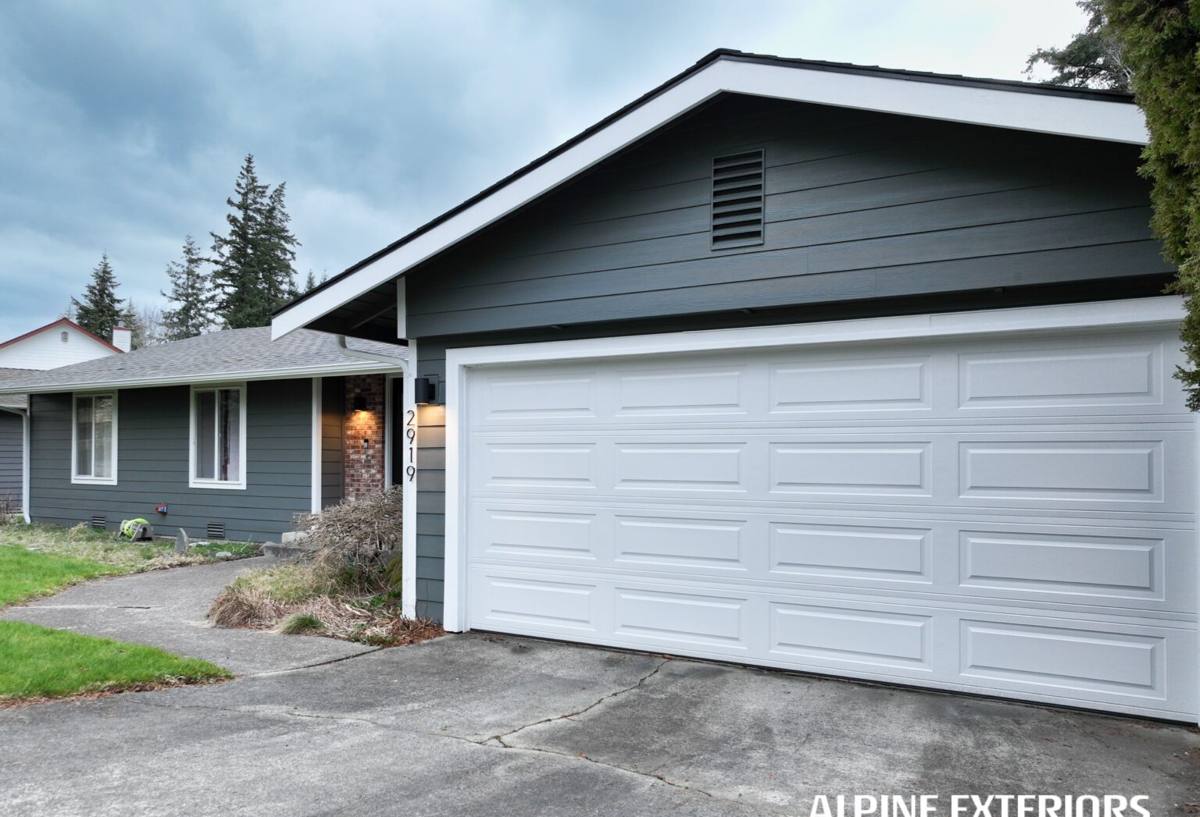
Why Sehome Siding Wears Out the Way It Does
Salt Air and Slow Material Breakdown
Proximity to Bellingham Bay means airborne salt settles on exterior surfaces even when you can't see or smell it. Over years, that salt exposure accelerates corrosion on fasteners, trim metal, and any siding product that relies on paint film integrity to keep moisture out. It's a slow process, which is exactly why it gets ignored until the damage is already done.
Driving Rain and Wind Exposure
Sehome's elevation and orientation relative to the water mean walls that face the prevailing weather take rain at an angle, not straight down. That matters because siding systems are engineered assuming water sheds downward — wind-driven rain finds every lap, seam, and fastener hole that wasn't detailed correctly. Homes with poor flashing or old caulking as their main defense are the ones we see with hidden rot behind otherwise decent-looking siding.
The Long Moss Season
Whatcom County's mild, wet winters and shaded, tree-covered lots are ideal growing conditions for moss and algae. On siding, that's not just cosmetic — moss holds moisture against the surface for weeks at a time, which is exactly the condition that rots wood-based products and stains lower-quality finishes. A siding replacement that doesn't account for airflow, overhang, and product moisture-resistance is setting the next owner up for the same problem in a few years.
What a Correct Siding Replacement Actually Involves
Replacing siding is not just pulling off old boards and nailing up new ones. A job done right in this climate involves several steps that are easy to skip and impossible to check once the new siding is up.
Tear-Off and Sheathing Inspection
Once the old siding comes off, we inspect the sheathing underneath for soft spots, staining, or rot — especially around window and door openings, deck ledgers, and any spot where trim previously trapped moisture. This is the one point in the whole project where hidden damage is visible and fixable. Skipping it just means covering up a problem instead of solving it.
Water-Resistive Barrier and Flashing
A new weather-resistive barrier goes on correctly lapped, and flashing gets installed at every horizontal transition, window head, and penetration — the details that actually keep wind-driven rain out of the wall assembly. This is the least visible part of the job and the part that matters most over the next 20-plus years.
Product Selection Matched to Exposure
Not every wall of a house faces the same conditions. A wall exposed to prevailing wind and rain needs the same product quality as a sheltered wall, but the installation details — starter strips, gaps, sealant use — often need to be more conservative on the exposed sides. We plan for that at the estimate stage, not as an afterthought during install.
Why We Install Only James Hardie Fiber Cement
We don't install vinyl, LP SmartSide, primed spruce, cedar, or other fiber cement brands. That's a deliberate standard, not a sales pitch, and it comes down to how those products perform specifically in a climate like ours.
Wood-based and engineered-wood siding products can perform well when maintained aggressively, but they depend on an intact factory coating and diligent upkeep to resist moisture — and Sehome's moss season and driving rain are exactly the conditions that punish any gap in that maintenance. Vinyl sheds water fine but can warp under sun exposure on south and west walls and doesn't hold paint if a homeowner ever wants to change the color. James Hardie fiber cement is non-combustible, doesn't absorb water the way wood-based products do, and its ColorPlus factory finish is baked on rather than applied on site, which matters when you're dealing with salt air and constant moisture cycling. Hardie also makes climate-engineered HZ product lines specifically formulated for wetter regions, which is a better match for Whatcom County than a one-size-fits-all product. The warranty is transferable and backed by a company that's been making fiber cement siding for decades — not a small detail if you plan to sell the house eventually.
Comparing Siding Options for Sehome's Climate
| Factor | James Hardie Fiber Cement | Vinyl Siding | Engineered Wood / LP-Type |
|---|---|---|---|
| Moisture resistance | High — cement-based, doesn't absorb water like wood fiber | Sheds water but seams and J-channels can trap moisture | Depends heavily on coating integrity staying intact |
| Moss and algae resistance | Good; factory finish resists staining better than raw wood-based substrates | Fair; moss grows on the surface, harder to scrub without damage | Weaker; moisture behind moss growth is a known failure point |
| Salt air / coastal exposure | Designed for it in the HZ5 product line | Can become brittle over time; color fades faster | No specific coastal formulation |
| Fire resistance | Non-combustible | Combustible, can melt/warp near heat sources | Combustible |
| Maintenance | Occasional wash and caulk check | Low, but limited repair options if damaged | Requires regular repainting/resealing |
| Typical lifespan when installed to spec | 30+ years | 20-30 years | Varies, often shorter with heavy moisture exposure |
None of these products are "bad" in every climate — but for a hillside neighborhood with Bellingham Bay's salt air, sideways rain, and a moss season that can run half the year, the trade-offs point in one direction, which is why it's the only product we put on homes.
Our Siding Replacement Process
- Free on-site inspection, including a look at sheathing condition where accessible and a discussion of your home's specific exposure (which walls take the worst weather).
- Written estimate with product, color, and scope clearly laid out — no vague allowances.
- Tear-off of old siding and trim, with sheathing inspected and any damaged sections repaired before anything new goes on.
- New water-resistive barrier and flashing installed at all critical points.
- James Hardie siding and trim installed to manufacturer specifications, including proper fastening, clearances, and caulking.
- Final walkthrough and cleanup, plus warranty registration paperwork handled on your behalf.
What Affects the Cost of a Sehome Siding Replacement
Every home is different, but the following factors are what actually move the price on a siding replacement in this area — worth asking about when you're comparing quotes:
- Extent of hidden sheathing damage discovered during tear-off, especially on walls with a history of moss or trapped moisture
- House size, number of stories, and complexity of the roofline (more corners and transitions mean more flashing and labor)
- Whether trim, fascia, or soffit also need replacement alongside the siding
- Product selection within the Hardie lineup (lap siding, shingle-style panels, board-and-batten) and ColorPlus color
- Access — steep lots or limited driveway access around Sudden Valley and the Sehome hillside can affect staging and labor time
- Permitting requirements, which can differ depending on whether the property falls under City of Bellingham or unincorporated Whatcom County jurisdiction
Why Local Experience in Sehome and Sudden Valley Matters
A crew that's replaced siding on other homes in this specific area already knows which walls tend to take the worst weather, what the moss buildup looks like on a 15-year-old installation, and which permitting office to deal with depending on where the property sits. That's not a small thing — a contractor unfamiliar with the area is learning these lessons on your house instead of bringing them with them. We're based out of Sudden Valley and work this part of Whatcom County on a regular basis, which means the estimate you get accounts for the real conditions your home faces, not generic assumptions.
Keeping Your New Siding Looking Right
Once new Hardie siding is installed correctly, upkeep is minor but not zero. A periodic rinse-down helps keep moss and algae from getting established, especially on shaded, north-facing walls. It's worth checking caulking at trim joints every couple of years, and keeping gutters clear so runoff doesn't sheet down the siding face during heavy rain. None of this is labor-intensive — it's just the difference between siding that still looks good at year 20 and siding that needed attention it never got.
If you're noticing moss buildup, soft spots, fading, or you just want an honest read on whether your siding still has years left in it, we're happy to take a look. Reach out for a free, no-pressure estimate — there's a form right below this page.