 Sudden Valley
 Why Columbia Homes Need Siding Built for This Climate
Columbia sits inside Sudden Valley, one of the wetter, greener corners of Whatcom County, and that setting is exactly why siding choice and installation quality matter more here than in a lot of places. Homes tucked among the trees around Lake Whatcom stay shaded and damp for long stretches of the year, salt-tinged marine air moves in on a regular basis, and driving rain hits siding at an angle that finds every gap a lesser installation leaves behind. None of that is a reason to avoid siding replacement. It's a reason to be precise about how the work gets done.
We've installed siding across Sudden Valley long enough to know which details actually matter on a Columbia lot versus a drier, more exposed site elsewhere in the county. This page walks through what that means in practice: what the climate does to siding over time, what a correct installation involves, and why the crew you hire should already understand this specific pocket of Whatcom County before they ever pick up a nail gun.
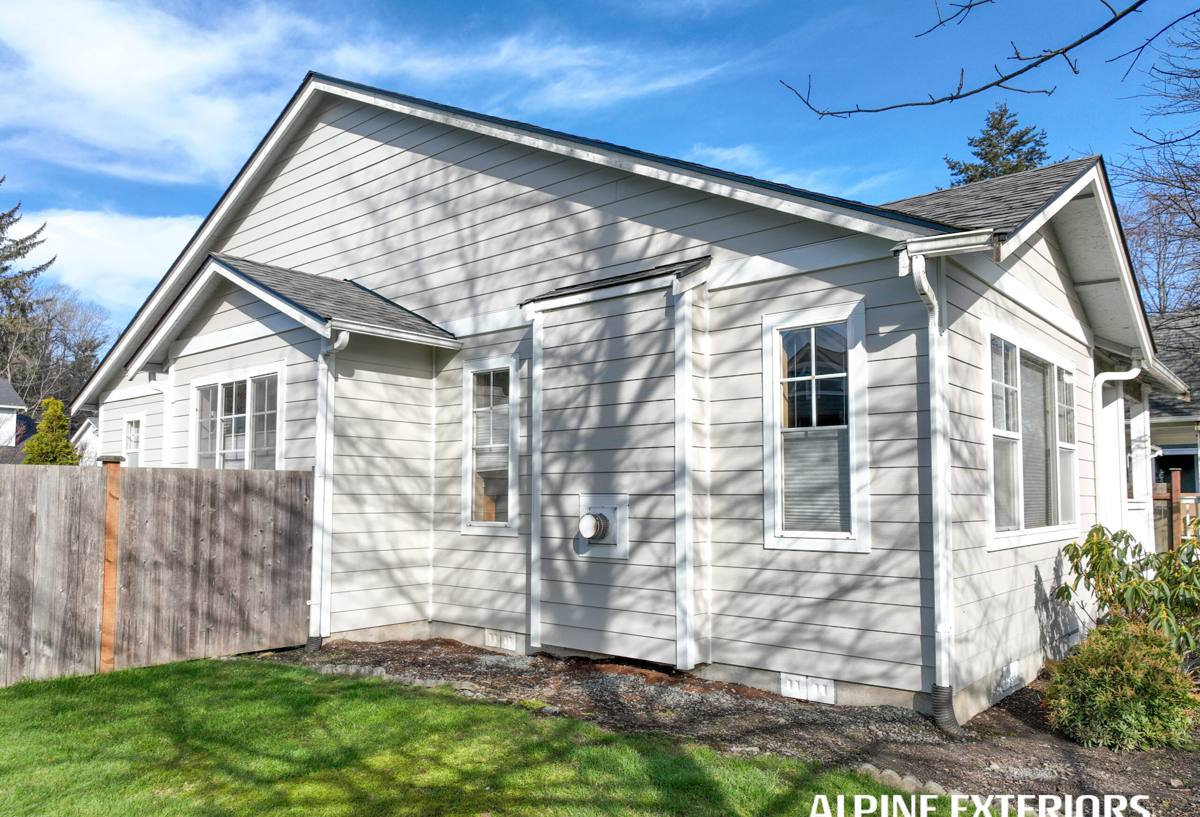
What Sudden Valley's Weather Actually Does to Siding
Salt-Tinged Marine Air
Whatcom County sits close enough to Puget Sound and the coast that marine air carries a measure of salt inland, and that air doesn't stop at the water's edge. It moves through the valleys and settles on homes well away from open water. Salt-laden moisture accelerates corrosion on fasteners, flashing, and any metal trim that isn't rated for it, and it breaks down paint films faster than dry inland air does. Siding and the hardware behind it need to be chosen and installed with that in mind, not treated as an afterthought.
Driving Rain and Wind-Driven Moisture
Rain in this part of Washington rarely just falls straight down. Wind pushes it sideways into wall assemblies, and over years that wind-driven rain finds every unsealed seam, undersized overlap, and poorly flashed penetration. Siding that looks fine from the street can be failing behind the surface if the water-resistive barrier, flashing, and drainage plane underneath it weren't installed correctly. This is where most siding problems in this climate actually start, not with the siding material itself, but with what's behind it.
Moss, Shade, and Tree Canopy
Sudden Valley's tree cover is part of what makes the community appealing, but it also means many Columbia homes sit in shade for a large part of the day, especially on north- and east-facing walls. Shaded, damp surfaces support moss and algae growth for much of the year, and moss that's allowed to establish itself on siding holds moisture against the surface long after the rest of the house has dried out. Over time that constant dampness degrades paint finishes, softens wood-based products, and works its way into seams and fastener holes.
What a Correct Siding Installation Involves
Water Management Behind the Siding
The siding itself is the last line of defense, not the only one. A correct installation starts with a continuous water-resistive barrier, properly lapped and taped seams, and flashing at every window, door, and penetration that directs water out and down rather than letting it collect. Skipping or rushing this layer is the single most common reason siding fails early in a climate like this one, regardless of what material ends up on the outside.
Fastening and Clearances
Fiber cement siding has specific fastening requirements. Nail type, placement, and depth all affect how the board performs over time, and getting them wrong can void manufacturer warranties even when the product itself is sound. Clearances matter just as much: siding installed too close to grade, roof lines, decks, or hardscaping traps moisture against the wall and invites the kind of moss and rot that Columbia's shaded lots are already prone to.
Trim, Flashing, and Caulking Details
The places where siding meets something else — corners, window trim, roof lines, utility penetrations — are where failures concentrate. Correct flashing, paired with the right caulk in the right places rather than caulk used as a substitute for flashing, keeps wind-driven rain from working its way behind the cladding. These are small details that take a little longer to do right, and they're the first things to fail when a crew is moving fast to close out a job.
Why We Install Only James Hardie Fiber Cement
We don't install vinyl, LP SmartSide, Cemplank, Allura, primed spruce, or cedar. That's a deliberate standard, not a limitation of what we're capable of installing. Each of those products has real strengths, but none of them holds up as consistently against Whatcom County's combination of salt-tinged air, sustained moisture, and heavy shade as James Hardie fiber cement does when it's installed to spec.
| Consideration | Wood & wood-composite siding | Vinyl siding | James Hardie fiber cement |
|---|---|---|---|
| Moisture behavior | Absorbs water; can swell, delaminate, or rot in shaded, damp settings | Doesn't absorb water but can trap moisture behind it if the wall isn't detailed properly | Doesn't rot, swell, or support fungal growth |
| Fire performance | Combustible | Combustible; can soften or deform under radiant heat | Non-combustible |
| Finish stability | Needs repainting every few years, especially in shaded areas | Can fade or become brittle with long-term UV exposure | Factory ColorPlus finish holds color far longer than field-applied paint |
| Warranty | Varies by manufacturer, often material-only | Varies, often prorated over time | Strong transferable warranty when installed to manufacturer spec |
Hardie's HZ5 product line is engineered for climates like ours — the freeze-thaw swings, sustained rain, and humidity that define a Whatcom County winter. It's non-combustible, it doesn't feed moss and mildew the way wood-based products can, and the ColorPlus factory finish means the color layer isn't relying on a field-applied coat of paint to survive years of shade and damp. We put it on Columbia homes because we've seen how it performs here, not because it's the only product we know how to install.
Our Installation Process for Columbia Homes
- Walk the home and assess existing siding, sheathing, and any moisture or moss damage before quoting anything.
- Remove old siding and inspect the sheathing underneath for rot or water damage, replacing any compromised material before moving forward.
- Install a continuous water-resistive barrier with properly lapped and taped seams.
- Flash all windows, doors, and penetrations to direct water out and away from the wall assembly.
- Install James Hardie panels or lap siding to manufacturer fastening specifications, maintaining correct clearances at grade, roof lines, and decks.
- Detail trim, corners, and caulking at every transition point.
- Walk the finished job with the homeowner before we consider it closed out.
We don't skip the steps that don't show up in a driveway photo. The water-resistive barrier, the flashing sequence, and the fastening schedule are what determine whether a Columbia home's siding is still performing well in fifteen years, not just in the first one.
Cost Factors for Siding Installation in Columbia
Every home is different, and we don't publish blanket prices because the honest answer depends on the specifics of your house. What consistently moves the number one way or another:
| Factor | How it affects the project |
|---|---|
| Condition of existing sheathing | Water or moss damage found during tear-off often needs repair before new siding goes on, which adds cost |
| Home size and wall complexity | More corners, dormers, and trim details mean more labor and material |
| Siding profile and accessories | Lap width, trim style, and accent choices affect material cost |
| Access and site conditions | Steep lots, tree cover, and limited driveway access common around Sudden Valley can add setup and labor time |
| Scope of tear-off | Full removal versus partial replacement changes the labor total significantly |
We give a written, itemized estimate after we've actually looked at the house, not a phone-quote guess, so you know exactly what you're paying for before work starts.
Maintenance After Installation
James Hardie siding installed correctly needs far less upkeep than wood or vinyl, but "less" isn't "none," especially under Columbia's tree canopy. A simple annual routine keeps it performing the way it's supposed to:
- Rinse siding once a year with a garden hose to keep moss spores and organic debris from establishing on shaded walls.
- Keep gutters clear so overflow doesn't run down the siding face and stay wet longer than it should.
- Trim back branches and vegetation that keep siding shaded and damp longer than necessary.
- Inspect caulking at trim and penetrations every year or two and have any cracked joints redone before they let water in.
- Address moss or algae growth promptly rather than letting it establish and hold moisture against the surface.
Why Hire a Crew That Already Works in Sudden Valley
A crew that's only ever sided homes in drier, more open parts of the county will make different assumptions than one that already knows what Columbia's shade, moisture, and access conditions require. That's not a knock on general contractors. It's just that the details that matter here — clearance at grade on a sloped, shaded lot, flashing sequencing under sustained rain, fastening schedules that hold up to salt-tinged marine air — are the kind of thing you learn by doing the work in this specific place, not by installing siding somewhere dry and open.
We also know what Columbia's lots tend to look like before we show up: mature tree cover, sloped access in places, and homes that have likely gone through more than a few wet winters already. That familiarity shortens the assessment phase and means fewer surprises once tear-off starts.
If you're weighing siding replacement on a Columbia home, we're glad to come take a look, walk the property with you, and put together a straightforward, no-pressure estimate — no obligation, just an honest read on what your home actually needs.