 Sudden Valley
 Why Sehome's Climate Is Hard on Siding
Sehome sits close enough to Bellingham Bay that salt-laden air is a constant, low-grade stress on anything attached to the outside of a house. Add Whatcom County's long stretch of driving rain — wind-driven, not just falling straight down — and a moss season that can run eight or nine months out of the year, and you have a climate that punishes siding choices made for drier, calmer regions. Products that perform fine in Spokane or Boise often struggle here within a decade.
The three stresses compound. Salt air accelerates corrosion on fasteners and trim metal. Driving rain finds any gap, seam, or under-lapped joint and pushes water sideways and upward, not just down. And moss — which thrives in the shade, moisture, and mild temperatures common to Sehome's tree-covered lots — holds water against the siding surface for weeks at a time, which is exactly the condition that rots wood-based products and delaminates poorly made composites.
What This Means for Material Choice
Any siding installed in Sehome needs to do three things well: resist moisture intrusion at every seam, tolerate being wet for extended periods without swelling or softening, and hold its factory finish without chalking, fading, or absorbing organic growth into the surface texture. That's a short list, but it rules out a lot of products that look fine on a spec sheet and fail in this specific combination of conditions.
Why We Install James Hardie and Nothing Else
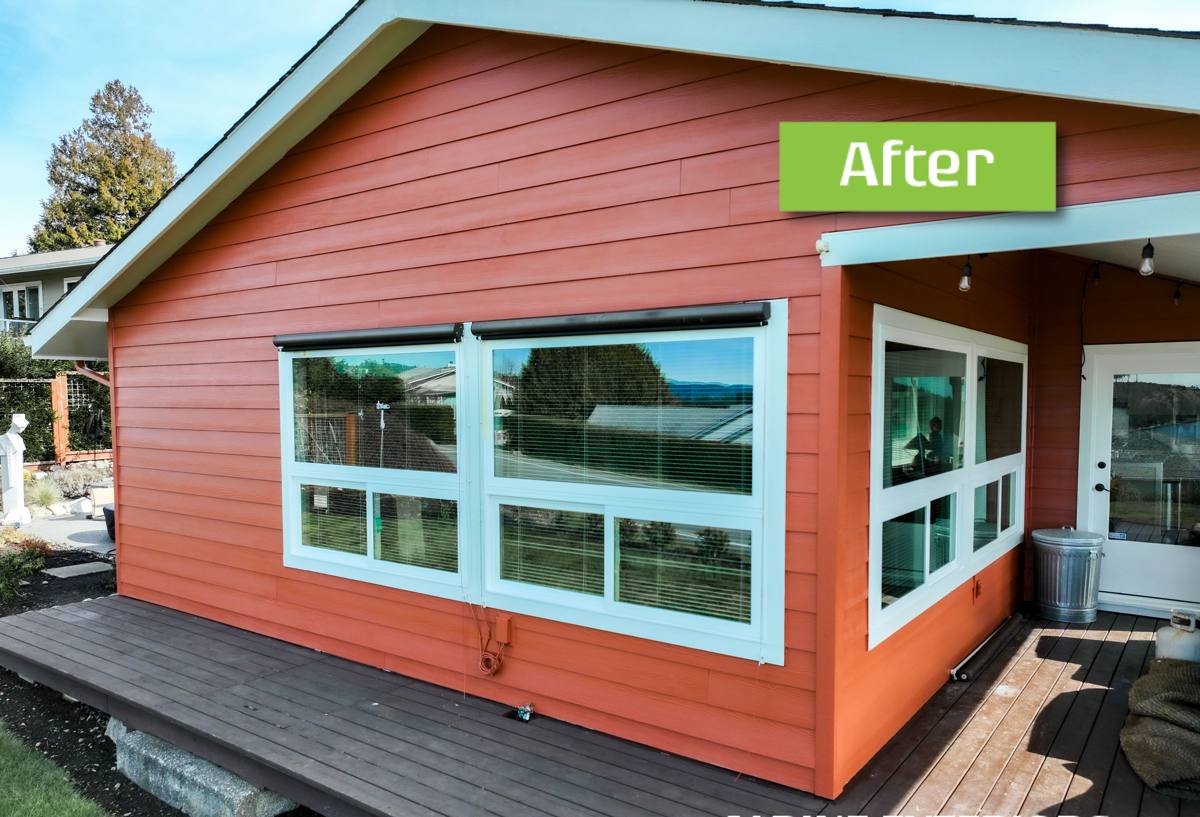
Sudden Valley Siding installs James Hardie fiber cement exclusively. We don't offer LP SmartSide, vinyl, Cemplank, Allura, primed spruce, or cedar as alternatives, and that's a deliberate standard, not a lack of options. Fiber cement made by James Hardie is engineered specifically for climate zones like ours — the company makes an HZ5 product line built for wetter, more humid regions, which is a meaningful distinction from siding designed as a one-size-fits-all national product.
James Hardie board is non-combustible, which matters less for moss and rain but adds real value on a coastal PNW property where wildfire smoke and ember exposure have become a bigger regional concern in recent summers. It doesn't absorb water the way wood-based composites can, it won't swell at cut edges the way engineered wood products sometimes do, and the factory-applied ColorPlus finish is baked on rather than field-painted, which gives it far better resistance to fading and chalking under the region's UV and salt exposure than a site-applied coat.
What ColorPlus Actually Buys You
ColorPlus isn't just a paint job — it's a multi-coat finish cured in a controlled factory environment, which produces a harder, more consistent surface than anything sprayed or rolled on-site after installation. In a salt-air environment, finish integrity is what keeps water from working its way into the substrate at hairline cracks. A factory finish also comes with a longer, separate warranty against fading and peeling than field-applied paint typically carries.
What a Correct James Hardie Installation Involves
Fiber cement siding is only as good as the installation behind it. Hardie's own installation instructions are detailed for a reason — this is not a forgiving product to install wrong, and mistakes tend to show up as moisture problems two to five years later rather than immediately.
- A properly lapped weather-resistant barrier (housewrap) installed shingle-style so water sheds outward at every seam
- Correct flashing at every window, door, and roof-to-wall transition, integrated with the housewrap rather than just caulked over it
- Minimum clearances maintained between the siding's bottom edge and grade, decks, and roof lines, so splash-back and standing water can't wick into the board
- Proper fastener spacing, type, and penetration depth — corrosion-resistant fasteners are non-negotiable this close to the bay
- Correctly gapped and sealed butt joints, with sealant rated for the movement and moisture exposure the joint will actually see
- Caulking used only where Hardie's instructions call for it — over-caulking traps moisture just as badly as under-caulking lets it in
Where Installs Commonly Go Wrong
The most common failure point we see on other contractors' work isn't the board itself — it's the housewrap and flashing details underneath it. A crew that rushes the drainage plane to get boards up faster is setting up a moisture problem that won't be visible until the siding is pulled off for repair. In Sehome's rain pattern, a poorly flashed window head or a missed kick-out flashing at a roof-wall intersection is often where the damage starts.
Our Process for a Sehome Project
We approach every Sehome home with the same sequence, because skipping steps is where problems start.
- Assessment. We inspect the existing wall assembly, check for hidden moisture or rot behind current siding, and evaluate drainage around the foundation and roof lines.
- Prep and drainage plane. Old siding and damaged sheathing are removed, and a new weather-resistant barrier is installed correctly lapped, with attention to every penetration.
- Flashing. Windows, doors, and roof transitions get flashed to shed water outward, not just sealed with caulk.
- Installation. Boards are hung to Hardie's fastening and clearance specifications, with joints staggered and gapped per manufacturer instructions.
- Finish details. Trim, corners, and caulking are completed using products compatible with ColorPlus finishes so the warranty stays intact.
- Final walkthrough. We review the completed exterior with the homeowner and note any manufacturer maintenance items specific to their color and product line.
Choosing the Right James Hardie Product Line for Sehome
James Hardie makes several distinct product lines, and the right one depends on the home's architecture and how much of the moss and moisture exposure it sees.
| Product Line | Best Suited For | Notes for Sehome |
|---|---|---|
| HardiePlank lap siding | Traditional and craftsman-style homes | Most common choice; performs well in wind-driven rain when lapped correctly |
| HardiePanel vertical siding | Modern facades, accent walls, gable ends | Fewer horizontal seams reduces water-catching joints on shaded, moss-prone walls |
| HardieShingle | Cottage or shingle-style homes | Higher joint count means flashing detail matters even more in high-rain areas |
| HardieTrim | Corners, fascia, window and door surrounds | Matched finish resists the same salt and moisture exposure as the field siding |
Cost Factors on a Sehome Siding Project
Every home is different, but the same variables tend to move the price on Sehome jobs specifically.
| Factor | Why It Matters Here |
|---|---|
| Existing moisture or rot damage | Sehome's tree cover and moss exposure mean sheathing repair is more common than in drier neighborhoods |
| Home height and roofline complexity | More flashing details and cut points increase both labor and material |
| Product line and profile | Lap, panel, shingle, and trim carry different material costs |
| Site access | Sloped or tree-lined lots common in Sehome can add setup and staging time |
| Color and finish selection | Certain ColorPlus finishes and custom trim combinations cost more than standard offerings |
We give every homeowner a written, itemized estimate before work starts — no vague ranges, no surprises added mid-project.
What Maintenance Looks Like After Installation
James Hardie siding is low-maintenance compared to wood or engineered wood products, but "low-maintenance" doesn't mean "no maintenance," especially in Sehome's climate.
Moss and Organic Growth
Because ColorPlus is a hard, factory-cured finish, moss and algae have a harder time gripping the surface than they do on porous or field-painted materials — but shaded, north-facing walls near mature trees will still need an occasional gentle rinse to keep growth from taking hold in caulk lines and trim joints.
Fasteners and Trim Metal
In a coastal air environment, it's worth having an annual visual check of exposed fasteners and any trim metal for early corrosion signs. This is a five-minute look, not a maintenance project, but it's the kind of thing that catches a small issue before it becomes a moisture path into the wall.
Caulk Joints
Sealant at butt joints and trim transitions is the one component that ages faster than the board itself. Checking and refreshing caulk every few years — sooner in the most rain-exposed elevations — keeps the drainage plane doing its job.
Why Hiring a Crew That Already Works Sehome Matters
A contractor who works Sehome regularly already understands the specific combination of shade, moisture, and salt exposure this part of Whatcom County deals with, rather than treating it as a generic siding job. That shows up in small but consequential decisions — where extra flashing attention is warranted, which elevations need tighter joint sealing, and how the local moss cycle should factor into a maintenance conversation with the homeowner.
It also matters for permitting and inspection familiarity. Local jurisdictions have their own inspection expectations, and a crew that's pulled permits in the area before isn't learning the process on your project.
Questions Worth Asking Any Siding Contractor
- Are you a certified James Hardie installer, and can you explain their fastening and clearance specs without looking them up?
- Will you show me the flashing plan before boards go up, not just describe it?
- What's your process if you find hidden rot or moisture damage once old siding comes off?
- Is the estimate itemized, and does it specify the exact Hardie product lines and finishes?
- Who is responsible for the workmanship warranty, separate from the manufacturer's material warranty?
Get a Straight Answer for Your Sehome Home
If your siding is showing moss buildup, soft spots, or finish failure, or you're planning ahead of a repaint you'd rather not do again in ten years, we're happy to take a look and give you a straightforward, no-pressure estimate for James Hardie siding built for what Sehome's climate actually throws at a house. Fill out the form below and we'll set up a time to walk the property with you.