 Sudden Valley
 Why Lake Whatcom's Climate Is Hard on Siding
Homes around Lake Whatcom, including those in Sudden Valley, sit in one of the damper pockets of Whatcom County. The lake itself keeps humidity high through most of the year, the surrounding tree cover holds shade and moisture against exterior walls, and the marine-influenced air that moves inland off Bellingham Bay and the Puget Sound region adds a steady dose of moisture-laden air on top of it. None of this is unusual for the Pacific Northwest, but it's a tougher environment for exterior siding than a drier inland climate, and it shows up first in the paint, the caulk lines, and the material itself.
A Long, Damp Moss Season
Between the fall rains and the late-spring dry-out, siding here can stay damp for months at a stretch, especially on north- and east-facing walls shaded by mature evergreens. That prolonged dampness is exactly what moss and algae need to take hold. Once organic growth establishes on a wall, it holds even more moisture against the surface underneath it, which accelerates whatever problem is already brewing — peeling paint, softening wood fiber, or corroding fasteners.
Wind and Driving Rain Off the Water
Homes with open exposure toward the lake take wind-driven rain differently than a sheltered lot. Rain doesn't just run down these walls, it gets pushed sideways into laps, corner boards, and trim joints. If the flashing details and joint treatment underneath the siding aren't done correctly, water finds its way behind the cladding long before a homeowner ever sees a stain on the surface.
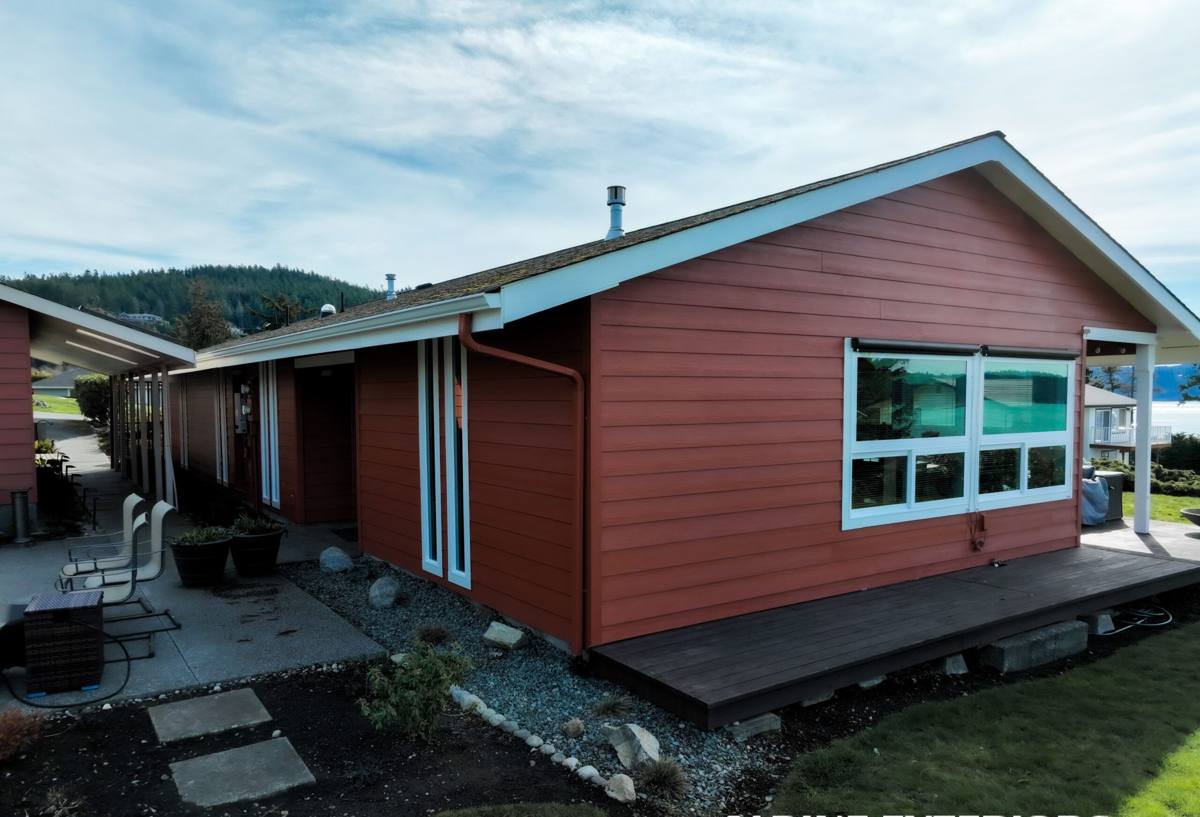
Why We Only Install James Hardie Fiber Cement Here
We install James Hardie fiber cement exclusively — not vinyl, not LP SmartSide, not cedar, not other fiber cement brands. In a climate like this one, the material itself matters as much as the workmanship, and Hardie's product line is engineered specifically for wet, humid regions like ours.
Built for Moisture, Not Just Painted Against It
Fiber cement is made from cement, sand, and cellulose fiber — it doesn't have the organic wood sugars that feed mold and moss growth the way solid wood or wood-based composite siding can. It doesn't swell, cup, or rot when it stays damp for weeks at a time. Hardie's HZ5 product line is specifically formulated for Pacific Northwest–type moisture exposure, which is the version we spec for Lake Whatcom homes rather than a generic national product.
A Factory Finish That Holds Up in Shade
ColorPlus finish is baked onto the boards in multiple coats at the factory, under controlled conditions, rather than rolled or sprayed on site. That matters most exactly where this area struggles — shaded, damp walls that never get a full dry cycle. Field-applied paint on wood or primed products tends to fail first in those conditions; a factory-cured finish resists that early breakdown and stretches out the repaint cycle, which is a real consideration on a lake-view home where scaffolding and access aren't simple.
What a Correct Fiber Cement Installation Actually Involves
Fiber cement is only as good as the details behind it. Most of the siding failures we get called out to inspect aren't a material problem — they're an installation problem that let water get where it shouldn't.
Flashing, Clearances, and the Drainage Plane
Every correct install starts with a weather-resistive barrier and a drainage plane behind the siding, so any moisture that does get past the cladding has somewhere to go instead of sitting against the sheathing. That means proper kickout flashing at roof-to-wall intersections, correct clearance from grade, roof lines, and decks, and head flashing over every window and door. In a climate that stays wet as long as this one does, that drainage path isn't optional — it's what keeps a small amount of incidental moisture from turning into rot behind the wall.
Fastener Pattern and Joint Treatment
Hardie specifies fastener type, spacing, and placement for a reason — get it wrong and you get cracking, popped nails, or a warranty that no longer applies. Butt joints need to be gapped correctly and treated with a sealant that stays flexible through our wet winters and drier summers, not caulked shut in a way that traps water. We follow the manufacturer's installation guide to the letter, because in a moisture-heavy climate like this one, shortcuts here are exactly what show up as problems two or three years later.
How Fiber Cement Compares for a Lake Whatcom Home
| Material | Moisture / Moss Resistance | Maintenance | Typical Lifespan | Fire Rating |
|---|---|---|---|---|
| James Hardie Fiber Cement | Does not rot or feed organic growth; factory finish sheds moss better than field-painted surfaces | Occasional rinse; no repainting on the standard cycle other materials need | Decades, per manufacturer warranty terms | Non-combustible |
| Cedar / Wood | Absorbs moisture; prone to rot and moss in shaded, damp areas without diligent upkeep | Regular staining or painting, ongoing moisture monitoring | Shorter in wet climates without heavy maintenance | Combustible |
| Vinyl | Doesn't rot, but seams and panels can trap moisture behind them; can warp | Low, but repairs are visible and color can't be touched up | Variable; degrades with UV and temperature swings | Combustible, can melt/deform |
| LP SmartSide (engineered wood) | Treated to resist moisture, but still wood-based and installation-sensitive in wet zones | Field-applied finish needs monitoring and eventual repainting | Depends heavily on installation quality and site exposure | Combustible |
Our Process for Lake Whatcom Siding Projects
Assessment and Sheathing Check
We start by looking at what's actually happening behind the existing siding, not just how it looks on the surface. On a home that's held onto moisture for years, we check the sheathing condition before we ever talk about the new material, because siding installed over compromised sheathing fails no matter how good the product is.
Product and Color Selection
We walk through Hardie's HZ5-rated lines and ColorPlus color options for the home, factoring in sun exposure, shading from tree cover, and which elevations face the lake versus which sit more sheltered. Darker colors and full-sun walls behave differently than shaded, north-facing ones, and we account for that in the plan.
Installation and Site Cleanup
Installation follows Hardie's fastening, flashing, and clearance specifications on every wall, not just the visible ones. We manage job-site debris and dust control throughout — fiber cement cutting produces silica dust that needs to be handled correctly — and we walk the finished job with the homeowner before calling it done.
Caring for Your Siding After Installation
Fiber cement is low-maintenance compared to wood, but "low-maintenance" isn't "no-maintenance," especially in a climate that grows moss as readily as this one does. A short annual routine keeps it looking right for the long haul:
- Rinse shaded or north-facing walls once or twice a year to clear moss spores and organic buildup before it takes hold
- Keep gutters and downspouts clear so overflow doesn't sheet down the wall face during heavy rain
- Trim back branches and shrubs so air can move across the siding and it has a chance to dry between rain events
- Check caulking around trim, windows, and penetrations annually and have it touched up if it's cracked or pulling away
- Use a garden hose or soft wash rather than an aggressive pressure washer, which can drive water behind laps and joints
Why Local Lake Whatcom Experience Matters
A crew that already works this area knows which elevations need extra flashing attention because of prevailing wind and rain direction, and which walls stay shaded long enough to need a different maintenance conversation with the homeowner. Many homes around the lake, including in Sudden Valley, fall under a community association with design review for exterior changes, so a contractor familiar with that process can help keep a siding project moving instead of stalling on paperwork. That local familiarity, combined with Whatcom County permitting knowledge, is the difference between a project that goes smoothly and one that hits avoidable delays.
Warranty and Long-Term Value
James Hardie backs its siding with a transferable limited warranty, and the ColorPlus finish carries its own finish warranty separate from the product warranty. Both are tied to correct installation according to the manufacturer's specifications, which is part of why we don't cut corners on flashing, fastening, or joint treatment — an installation error doesn't just risk a callback, it can void the coverage that makes Hardie worth choosing in the first place. For a home that's going to sit in a wet, shaded, lake-adjacent climate for decades, that combination of a moisture-resistant material and a warranty that actually holds up matters more here than it would in a milder, drier region.
If you're weighing siding options for a home in or around Sudden Valley, we're happy to take a look and walk you through what we'd recommend for your specific walls and exposure. Reach out for a free, no-pressure estimate using the form below.