 Sudden Valley
 Building Decks for Life on Lake Whatcom
A deck on or near Lake Whatcom isn't just an outdoor living space — it's where most of the actual living happens for a good chunk of the year. Morning coffee looking at the water, evening cookouts, gear staged for the boat launch. But a deck built for that lifestyle in Sudden Valley has to survive a very different set of conditions than a deck in a dry climate. Between the marine-influenced air moving up from the Puget Sound region, driving rain off the lake, and heavy tree cover that keeps large sections of a yard in shade for most of the day, Whatcom County decks take a beating that a lot of manufacturers' warranty language simply doesn't account for.
We build custom decks specifically for this environment. That means material choices, fastener choices, and structural details that assume near-constant moisture exposure and a long moss season, not a generic build pulled from a national spec sheet.
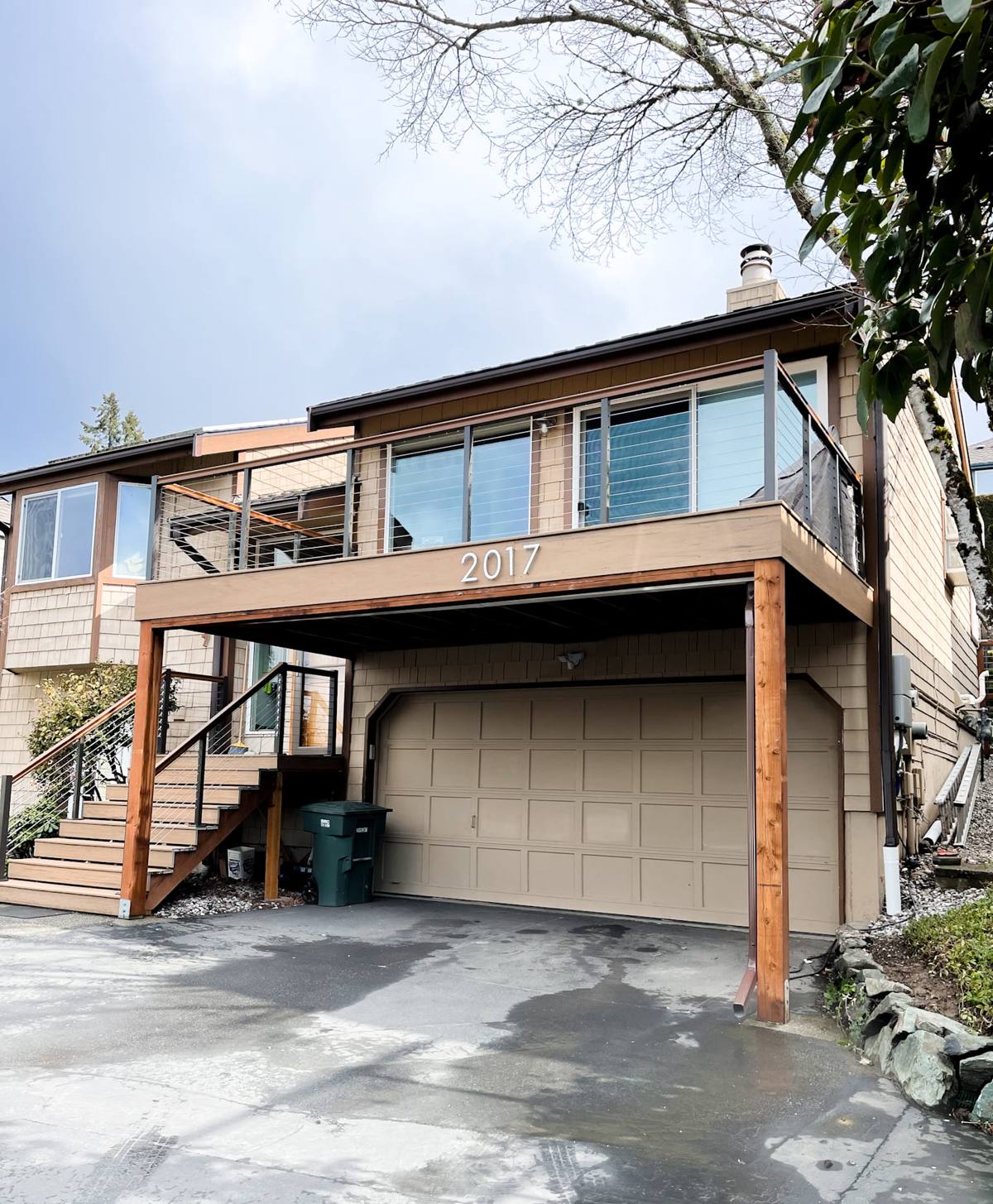
What Lake Whatcom's Climate Actually Does to a Deck
It helps to understand the specific failure points before talking about the fix. In Sudden Valley, the issues we see over and over aren't dramatic — they're slow, and they're almost always moisture-driven.
Moss and Algae Growth
Shaded lots near the lake, combined with long stretches of damp weather, create ideal conditions for moss and algae on horizontal deck surfaces. Beyond looking bad, moss holds moisture against the wood or composite surface far longer than open air ever would, which accelerates rot in wood decking and can stain or degrade the surface layer of composite boards over time.
Driving Rain and Wind-Driven Moisture
Storms coming across the lake don't just fall straight down — wind pushes rain sideways into fascia boards, under railings, and into any gap where end grain or fasteners are exposed. Over years, that's where you see soft spots develop first: not in the open field of the deck, but at the edges and connection points.
Salt-Laden Marine Air
Whatcom County sits close enough to Puget Sound and Bellingham Bay that salt-bearing air reaches inland properties, including around Lake Whatcom, especially during windier weather patterns. That salt content accelerates corrosion on standard fasteners, hardware, and hidden fastening systems — which is a big part of why fastener selection matters as much as decking material selection.
Freeze-Thaw Cycling
Whatcom County winters aren't brutally cold, but they do dip below freezing while staying damp. Water that's soaked into end grain, ledger connections, or post bases can freeze, expand, and slowly work joints loose over a few seasons if the structure wasn't detailed to shed water in the first place.
What a Correctly Built Deck Looks Like Here
None of the problems above are exotic — they're well understood in the trade. The difference between a deck that holds up in Sudden Valley for decades and one that starts showing problems in five years usually comes down to a handful of details done right the first time.
- Ledger board flashing that actually sheds water away from the house rim joist, not just a bead of caulk
- Joist tape or a comparable moisture barrier on top of every joist, so end grain and fastener penetrations aren't sitting in standing water
- Stainless steel or coated fasteners rated for coastal/marine exposure, not standard interior-grade hardware
- Proper airflow underneath the deck — correct joist spacing and skirting that doesn't trap ground moisture against framing
- Post bases set above grade with a capillary break, so posts aren't wicking moisture up from wet soil
- Decking gapped correctly for drainage and seasonal wood movement, not tight-fit for looks at the expense of drying time
- Railing post connections through-bolted into framing, not just screwed to a rim board
Any one of these skipped won't cause an obvious problem in year one. They show up as callbacks in year four or five — soft decking near the house, a railing post with play in it, staining that won't pressure-wash off because it's already gone into the wood fibers.
Choosing Materials for a Shaded, Damp Lake Lot
There's no single "best" decking material for every Lake Whatcom property — it depends on how much direct sun the lot gets, how close it is to the water, and how much maintenance the homeowner actually wants to do.
| Material | How It Handles This Climate | Maintenance |
|---|---|---|
| Pressure-treated wood | Solid structural option; needs consistent sealing to resist the moss and moisture cycle, especially in shaded spots | Annual cleaning and re-sealing recommended |
| Cedar | Naturally more rot- and insect-resistant than most softwoods, ages well with the regional look, but still needs periodic finish maintenance in a wet climate | Regular cleaning, periodic oil or stain |
| Composite decking | Resists rot outright, but shaded, damp composite surfaces still grow moss and algae on top and need cleaning to stay slip-safe | Low — periodic washing, no sealing |
| PVC decking | Fully moisture-resistant material, holds up well in constant shade, generally the lowest-maintenance option for heavily treed lots | Lowest — occasional washing |
We'll walk a specific lot with you and talk through sun exposure, tree cover, and proximity to the water before recommending a material — a south-facing open lot and a heavily shaded lot two streets back from the lake genuinely call for different decisions.
Structural Considerations for Lakeside and Sloped Lots
A lot of Sudden Valley properties near Lake Whatcom sit on sloped terrain, which changes the engineering of a deck build. Taller support posts, additional footings, and sometimes multi-level deck designs come into play to get usable outdoor space on a grade. Taller structures also mean more wind and rain exposure on posts and framing, which reinforces why post base detailing and fastener grade matter even more here than on a flat, in-town lot.
If your property backs up to greenbelt or heavy tree cover — common throughout Sudden Valley — we also factor in root proximity and drainage patterns before placing footings, so the deck isn't fighting root growth or sitting in a natural runoff path a few years down the line.
Our Process for a Custom Deck Build
- On-site walkthrough. We look at sun exposure, tree cover, slope, drainage, and how you actually plan to use the space before talking materials or layout.
- Design and material selection. We go over the honest tradeoffs — cost, maintenance, appearance, longevity — for your specific lot conditions, not a one-size answer.
- Permitting. Deck permitting requirements vary by scope and by Whatcom County jurisdiction rules; we handle the paperwork so you're not chasing it down.
- Build. Framing and moisture-detailing first — flashing, joist protection, fastener grade — then decking, railing, and finish work.
- Final walkthrough. We go over the finished deck with you, including basic maintenance guidance specific to the material you chose.
Why a Local Crew Matters for This Job
Deck building isn't a job you want handled by a crew that mainly builds in a different climate zone and treats Whatcom County as an afterthought. A crew that regularly works Sudden Valley and the Lake Whatcom area already knows which lots hold water, which slopes need extra footing work, and which fastener grade actually holds up against the salt content in the air here — because we've seen what happens when those details get skipped. That's not something you learn from a spec sheet; it's something you learn from doing the work in this specific place, season after season.
It also means faster response if something needs a look after a big storm, and a crew that stands behind work they'll be nearby to service — not a name that shows up once and is gone.
Maintaining a Deck Once It's Built
Whatever material you choose, a little seasonal attention goes a long way in this climate:
- Clear leaves and debris out of gaps between boards regularly, especially in fall
- Wash off moss and algae buildup before it has a chance to stain or hold moisture long-term
- Check railing posts and stair connections annually for any looseness
- Keep gutters and downspouts near the deck clear so runoff isn't dumping directly onto the structure
- Re-seal wood decking on the schedule appropriate to the finish product used
None of this is complicated, but skipping it is exactly how a well-built deck starts developing the same problems a poorly-built one would have from day one.
Get a Straight Answer for Your Property
Every lot around Lake Whatcom is a little different — sun exposure, slope, tree cover, and distance from the water all change what the right build looks like. If you'd like a straightforward, no-pressure look at what a custom deck would take on your property, use the form below to request a free estimate.