 Sudden Valley
 Why Asphalt Shingle Roofs Take a Beating Around Lake Whatcom
A roof over a home in Sudden Valley works harder than the same roof would ten miles inland in open country. Lake Whatcom sits in a bowl of second-growth forest, and most of the homes around it live under heavy tree cover with steep, shaded lots. That combination of shade, moisture, and tree debris is exactly the environment asphalt shingles struggle with most, and it's why a roof that would last three decades in a dry, sunny neighborhood can show real wear here in twenty or less if it wasn't built for the site.
Shade, Moisture, and a Long Moss Season
North-facing slopes and roof sections tucked under fir and cedar canopy stay damp for days after a storm passes. That extended dampness is what moss and algae need to get established, and once moss takes hold on a shingle roof it doesn't just sit there looking bad — its root structure lifts shingle edges, holds water against the mat, and slowly opens the door to leaks. In Whatcom County, moss season isn't a few weeks in spring; on shaded lake-adjacent roofs it can run most of the year.
Wind-Driven Rain Off the Lake
Storms that track across Lake Whatcom pick up speed over open water and hit the surrounding slopes at an angle, not straight down. That driving rain pushes water sideways under shingle tabs, into valleys, and around anything penetrating the roof deck — vents, chimneys, skylights. A roof detailed for calm, vertical rainfall doesn't hold up the same way against wind-driven water year after year.
Marine Climate and Temperature Swings
Even set back from salt water, Sudden Valley sits inside the same Pacific marine weather pattern that carries damp, salt-tinged air off Bellingham Bay and pushes it inland over the lake basin. That marine influence means fewer extreme temperature swings than you'd get further east, but it also means near-constant humidity — shingles here rarely get a long dry stretch to fully release the moisture they absorb, which is part of why organic growth and slow granule loss are the dominant aging factors rather than sun damage or thermal cracking.
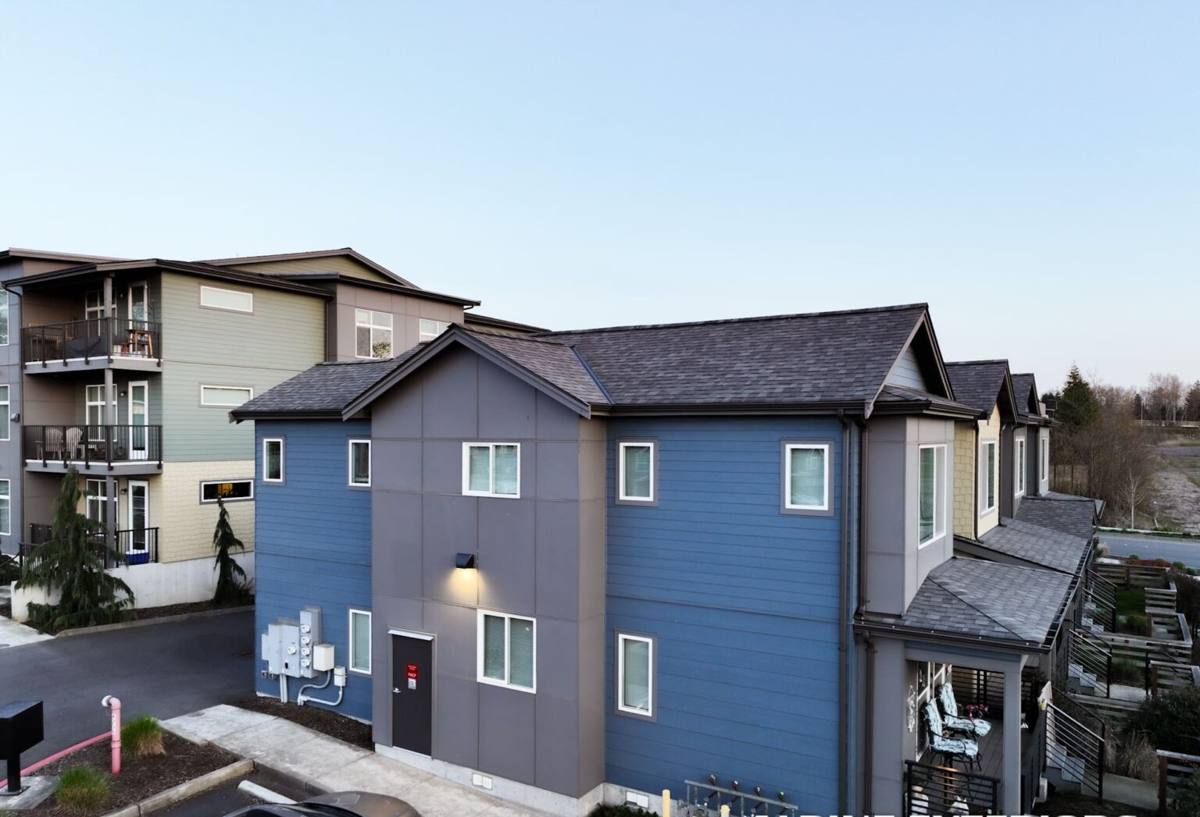
What a Correctly Installed Shingle Roof Needs in This Climate
The shingles themselves matter, but most early roof failures we see around the lake trace back to what's underneath and around them, not the shingle brand. A roof built for this specific site needs a few things done right that get skipped or rushed on cheaper jobs.
Underlayment and Ice-and-Water Protection
Self-adhering ice-and-water membrane belongs at eaves, valleys, and around every roof penetration — not just in the coldest parts of the state. On a shaded, moisture-heavy roof, this membrane is what keeps wind-driven rain and any ice-dam backup from ever reaching the deck, even if a shingle tab lifts. Synthetic underlayment across the rest of the field gives a second line of defense that won't break down from the extended dampness the way old felt paper does.
Ventilation That Actually Works
A shaded roof that can't breathe traps moisture in the attic, and that trapped moisture works its way back up into the roof deck from underneath — accelerating the same rot and mold that heavy exterior moss encourages from above. Balanced intake at the eaves and exhaust at the ridge, sized correctly for the attic volume, is not optional on a lake-adjacent home. We check existing ventilation on every reroof rather than assuming it was done right the first time.
Flashing and Valleys
Valleys carry more water per square foot than any other part of the roof, and they're where wind-driven rain concentrates. We run woven or metal valley flashing sized for real volume, not the minimum code allows, and we re-flash chimneys, skylights, and wall intersections rather than reusing old flashing under new shingles — a shortcut that causes a disproportionate share of the leak calls we get on homes that were "reroofed" a few years earlier by someone else.
Choosing the Right Shingle for a Lake Whatcom Roof
Every major shingle line today comes in a few performance tiers. For a shaded, high-moisture, wind-exposed roof like most of what's around the lake, the tier matters more than the color or brand name on the wrapper.
| Shingle Tier | Algae/Moss Resistance | Wind Rating | Best Fit |
|---|---|---|---|
| Standard 3-tab | Base level unless AR-rated | Lower | Open, sunny lots with little tree cover |
| Architectural / laminate | Algae-resistant (AR) granules standard on most lines | Mid-to-high | Most Sudden Valley homes — our default recommendation |
| Premium / designer laminate | Highest granule density, best AR performance | Highest | Heavily shaded, north-facing, or lakefront-exposed roofs |
Algae-resistant (AR) granules — usually copper- or zinc-infused — are the single biggest factor in how long a shingle stays clean under tree cover. We rarely install standard, non-AR shingles on a shaded lot near the lake; the moss and streaking come back too fast and the labor cost of repeated cleanings outweighs the small upfront savings.
Our Installation Process
- Roof and attic inspection — we check the deck, existing ventilation, and flashing conditions before quoting anything, not after tear-off starts.
- Tear-off and deck check — old material comes off down to the deck so we can see and repair any soft or rotted sheathing, which is common under long-standing moss growth.
- Underlayment and ice-and-water membrane — installed at eaves, valleys, and penetrations first, then synthetic underlayment across the field.
- Flashing — new step, valley, and penetration flashing, not reused metal from the old roof.
- Shingle installation — nailed to manufacturer spec for wind exposure, with starter strips and ridge caps matched to the field shingle.
- Ventilation check and correction — intake and exhaust balanced before we call the job finished.
- Cleanup and walkthrough — magnetic sweep for nails, debris hauled off, and we walk the roof and gutters with you before we leave.
Keeping Moss and Debris From Shortening Your Roof's Life
A properly installed AR shingle roof still needs basic upkeep on a shaded lake lot — the climate doesn't take a year off. A short annual routine catches most problems while they're still cheap to fix.
- Clear needles, cones, and leaf litter from valleys and behind chimneys each fall, before winter rain compacts them into a wet mat.
- Keep gutters and downspouts flowing freely — a backed-up gutter drives water up under the first course of shingles.
- Watch for dark streaking or green-black patches on north-facing slopes; that's early algae or moss, and it's far easier to address before it's established.
- Trim back overhanging branches where it's safe to do so, to cut down on both shade and debris load.
- Have the roof looked at after any significant windstorm, not just when a leak shows up inside.
- Skip the pressure washer — it drives water under shingles and strips granules; a soft rinse or approved treatment is the safer route for moss removal.
Repair or Replace? Reading the Warning Signs
Not every issue on a shingle roof means starting over. Isolated cracked or lifted shingles, a single failed flashing point, or a small area of granule loss are usually repairable if the rest of the roof and deck are sound. What tips a roof from "repair" to "replace" is usually widespread granule loss across multiple slopes, soft spots in the decking you can feel from inside the attic, moss that's been established long enough to have lifted shingle edges in several areas, or a roof that's already past the manufacturer's expected service life and starting to show more than one of these signs at once. We'll always tell you honestly which category your roof falls into rather than defaulting to a full replacement recommendation.
What Actually Drives Your Roofing Cost
Every roof is priced on its own specifics, and we don't publish blanket numbers because they'd be misleading — but the factors that move a bid up or down are consistent from job to job.
| Factor | Why It Matters |
|---|---|
| Roof size and number of planes | More square footage and more valleys/hips mean more material and labor |
| Pitch and access | Steep or hard-to-access roofs (common on hillside lots around the lake) take longer and need more safety setup |
| Layers to remove | Tearing off one existing layer versus two or three adds disposal and labor time |
| Deck condition | Rotted sheathing found at tear-off requires repair before new shingles can go down |
| Shingle tier | Standard, architectural, and premium AR lines carry different material costs |
| Ventilation and flashing work | Correcting inadequate intake/exhaust or replacing old flashing adds scope but prevents repeat problems |
Why Hire a Crew That Already Works Sudden Valley
A crew that only sees Lake Whatcom's climate occasionally tends to build roofs the way they'd build them anywhere else — standard underlayment, minimum-code ventilation, whatever shingle is cheapest that week. We're on this side of Whatcom County regularly enough to know which slopes hold moss longest, which lots need the extra attention to valleys and ventilation, and which shortcuts show up as callbacks two winters later. That's not a marketing line — it's the reason we spec ice-and-water membrane and AR shingles as standard practice here rather than an upsell, and it's why our tear-offs routinely turn up ventilation or flashing problems that a prior "reroof" left in place.
If you're dealing with a moss-covered roof, a leak that showed up after the last big storm, or you just want an honest read on how many years your current shingles have left, we're glad to take a look. Fill out the form below for a free, no-pressure estimate and we'll walk you through exactly what your roof needs and why.