 Sudden Valley
 Barkley's Climate Is Harder on Siding Than It Looks
Homes in the Barkley area sit inside one of the more punishing climate zones for exterior siding in Western Washington. It's not one big weather event that causes problems here — it's the combination of three quieter ones working on a house year-round: salt-laden air moving in off the water, driving rain that gets pushed sideways by wind instead of falling straight down, and a moss season that runs far longer than most homeowners realize. Individually, any one of those is manageable. Together, over ten or fifteen years, they're what separates siding that still looks sharp from siding that's chalking, staining, and softening at the seams.
This page is about one specific job: installing James Hardie fiber cement siding correctly on a Barkley home, with this climate in mind. Not a generic siding overview — the actual product, the actual installation details, and the actual reasons this is the only siding system we put on houses in this service area.
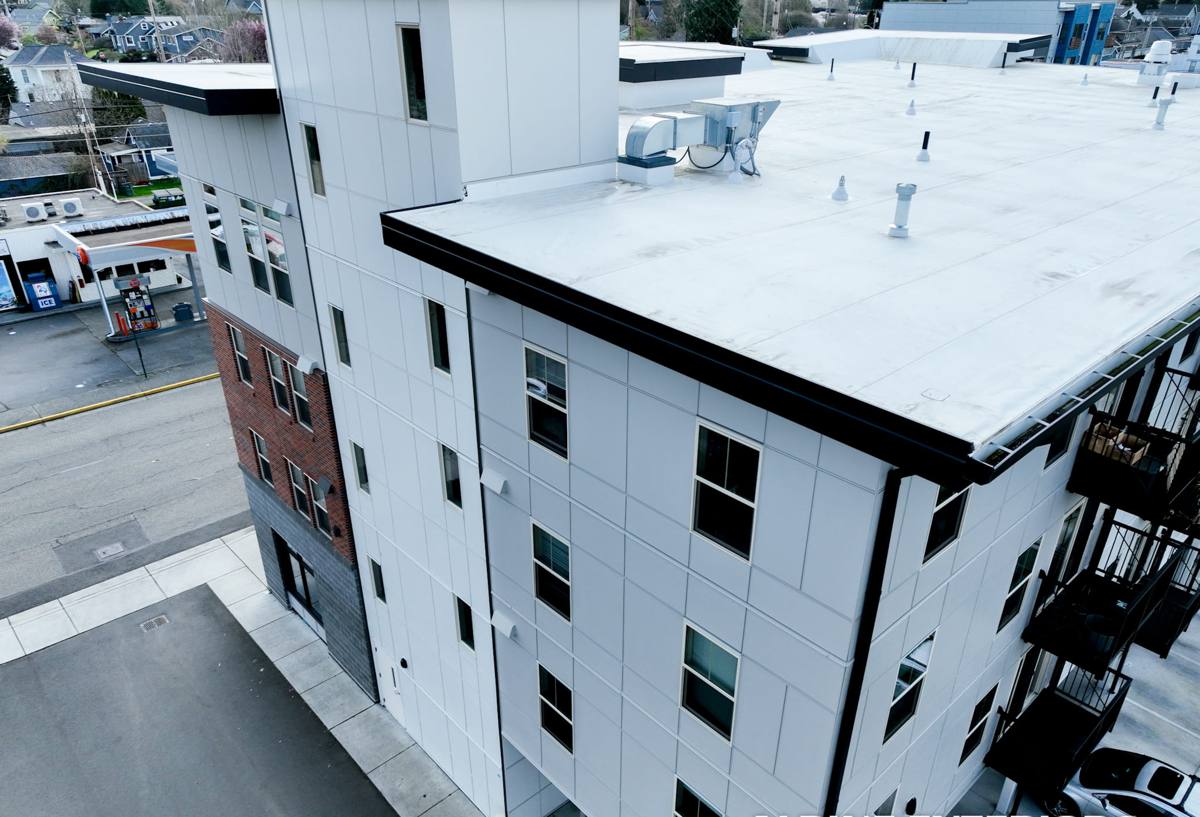
What This Climate Actually Does to Siding
Salt air is corrosive to metal and abrasive to finishes. It accelerates fastener corrosion, dulls factory paint sheens faster than inland exposure would, and works into any hairline gap in a coating. Driving rain compounds that — wind-driven moisture doesn't just hit a wall, it gets pushed up under laps, into butt joints, and behind trim that isn't flashed correctly. And the region's tree cover and cloud cover mean siding surfaces stay damp longer between dry spells, which is exactly what moss, algae, and mildew need to take hold.
None of this is exotic. It's just persistent. A siding system that's marginal on moisture resistance, or that depends on a field-applied paint job to keep water out, gets tested here more often and more thoroughly than it would in a drier inland climate.
Where Ordinary Siding Fails First
- Cut edges and butt joints — the most common entry point for moisture on any lap siding, wood-based or otherwise
- South- and west-facing walls — take the brunt of driving rain in most storm patterns here
- Shaded, tree-covered elevations — hold moisture longest and grow moss and mildew fastest
- Anywhere fasteners are exposed or under-driven — a common path for corrosion staining and water intrusion
Why James Hardie Fits This Job Specifically
We install James Hardie fiber cement siding exclusively, and this is the climate that argument is easiest to make in. Fiber cement doesn't absorb and swell the way wood-based sidings do, it doesn't warp or become brittle the way vinyl can with our temperature swings, and it carries a factory-applied finish engineered to hold up under UV and moisture cycling rather than a field-applied coat that starts degrading the day it's sprayed on.
ColorPlus Finish vs. Field-Applied Paint
James Hardie's ColorPlus finish is baked on in a controlled factory environment in multiple coats, with a warranty that follows the finish, not just the substrate. That matters here because repainting siding on a house exposed to salt air and long wet seasons is a recurring cost most homeowners underestimate — and a factory finish that's engineered for UV and moisture resistance simply holds its color and sheen longer than a job-site paint job can.
Engineered for This Exposure Zone
James Hardie manufactures different formulations for different climate zones — its HZ5 line is built for regions that see more moisture cycling and freeze-thaw stress, which describes Western Washington reasonably well. That's not a marketing detail; it affects how the product handles moisture absorption and dimensional stability over the decades it's expected to be on the house.
What a Correct Installation Involves Here
Fiber cement siding is only as good as the assembly behind it. A huge share of the siding failures we get called out to inspect aren't product problems — they're installation shortcuts that a wetter, salt-exposed climate exposes faster than a mild one would.
Drainage Plane and Rainscreen Gap
Correct installation starts underneath the siding, not at it. A weather-resistant barrier goes over the sheathing, properly lapped and taped at seams, and a drainage gap (a rainscreen) is built in behind the siding so any moisture that does get past the cladding has somewhere to go instead of sitting against the wall assembly. Skipping or shortcutting this is the single biggest reason siding that "looks fine" ends up with rot in the sheathing behind it.
Fastening, Clearances, and Gaps
James Hardie publishes specific fastener types, spacing, and penetration requirements, along with minimum clearances from grade, roof lines, decks, and other siding-to-trim transitions. Ground clearance and roof-line clearance in particular are what keep splash-back moisture and roof runoff from soaking the bottom courses — a chronic problem on homes with heavy tree cover and long wet seasons.
Flashing and Sealant Choices
Every window, door, and butt joint is a place water can find its way in if it's not flashed correctly. In this climate we treat flashing details — head flashing, kick-out flashing at roof-to-wall intersections, and properly lapped joints — as non-negotiable, and we use sealants rated for the temperature and moisture range this area actually sees, not whatever's cheapest at the yard.
Our Process on a Barkley Job
The steps don't change much house to house, but the attention to a few of them does, given the climate:
- Site assessment — we look at sun exposure, tree cover, drainage patterns, and existing moisture damage before we ever talk product
- Tear-off and sheathing check — old siding comes off and the sheathing underneath gets inspected for rot or soft spots before anything new goes up
- Weather barrier and rainscreen installation — done to spec, not shortcut, because this is the layer nobody sees again once siding is on
- James Hardie installation — fastened, spaced, and flashed to manufacturer requirements for this exposure zone
- Trim, caulking, and finish detailing — the places most callbacks come from if rushed
- Final walkthrough — we go over the finished job with the homeowner before calling it done
James Hardie Product Lines We Install
Not every Barkley home needs the same profile. The right choice usually comes down to the home's existing style, HOA or neighborhood expectations, and how much of the wall is exposed to weather versus shaded and tree-protected.
| Product Line | Best Suited For | Notes for This Climate |
|---|---|---|
| HardiePlank lap siding | Most single-family homes, traditional and modern styles | Most common choice; wide range of ColorPlus finishes and exposures |
| HardieShingle | Accent gables, dormers, craftsman-style detailing | Gives a shingle look without the moisture and moss issues of real wood shingles |
| HardiePanel | Modern or board-and-batten styles | Vertical drainage detailing matters even more on this profile |
| HardieTrim | Corners, fascia, window and door trim | Matches siding durability so trim doesn't fail before the field siding does |
What Drives Cost on a Barkley Siding Project
We don't quote a project without seeing the house, but these are the factors that move a price up or down on jobs in this area:
| Factor | Why It Matters | Typical Impact |
|---|---|---|
| Existing siding removal | Some materials come off cleanly; others (especially damaged wood siding) take longer and generate more disposal | Moderate |
| Hidden moisture or rot damage | Common on homes with long-neglected wood-based siding in this climate; sheathing repair adds labor and material | Can be significant |
| Home height and roofline complexity | Multiple stories, steep pitches, and lots of gables and dormers add labor time | Moderate to significant |
| Trim and detail work | Craftsman-style detailing, shingle accents, and custom trim take more time than a simple lap-siding box | Moderate |
| Color and finish selection | Factory ColorPlus finishes vary in cost by line but eliminate the ongoing cost of repainting | Minor upfront, saves long-term |
Why a Crew That Already Works This Area Matters
Siding installation isn't the same job in every climate, and it isn't the same job in every neighborhood. A crew that already works in and around Sudden Valley and the Barkley area knows which elevations on a typical local house take the worst of the driving rain, which lots hold moisture long enough to grow moss on siding within a couple of seasons, and how to detail flashing and clearances so the house is actually dressed for that reality rather than a generic installation checklist. That local pattern-recognition is what keeps small oversights — a gap left too tight at a roofline, a sealant that isn't rated for this moisture cycle — from turning into a callback two winters later.
It also matters for warranty registration and manufacturer accountability. James Hardie's transferable warranty coverage depends on the product being installed according to spec — a crew that installs Hardie exclusively, day in and day out, isn't guessing at those requirements on a job they do once a year.
Signs Your Current Siding May Already Be Behind
- Persistent green or black staining that comes back within a season of cleaning
- Soft spots, bubbling, or visible swelling at seams and butt joints
- Paint that's chalking, peeling, or fading unevenly across different elevations
- Gaps opening up at trim, corners, or window and door casings
- Visible warping, cupping, or panels that no longer sit flat against the wall
- Rising energy bills with no other obvious cause — a sign the wall assembly behind the siding may be compromised
If more than one or two of these apply, it's worth having someone look at what's happening behind the siding, not just at the surface.
If you're weighing a siding replacement in the Barkley area, we're happy to walk the house with you, look at what's actually going on with the current siding, and put together a straightforward, no-pressure estimate for James Hardie siding done right for this climate. There's a form below to get that started.