 Sudden Valley
 Decks in Happy Valley Face a Different Set of Problems
A deck in Happy Valley doesn't fail the way a deck fails in a dry climate. It doesn't crack from sun exposure or bake apart from UV alone. It fails from the inside out — water finding its way into a ledger board, fasteners corroding under a surface that still looks fine, and moss quietly holding moisture against wood or hardware for months at a stretch. Whatcom County's combination of salt-influenced air, driving rain off the water, and a moss season that can run from fall through spring means a deck here needs to be built differently than a generic online plan or a big-box deck kit assumes.
This page covers what deck building actually looks like when it's done right for this specific area — not a national overview, but the details that matter for a home in Happy Valley and the rest of the Sudden Valley area.
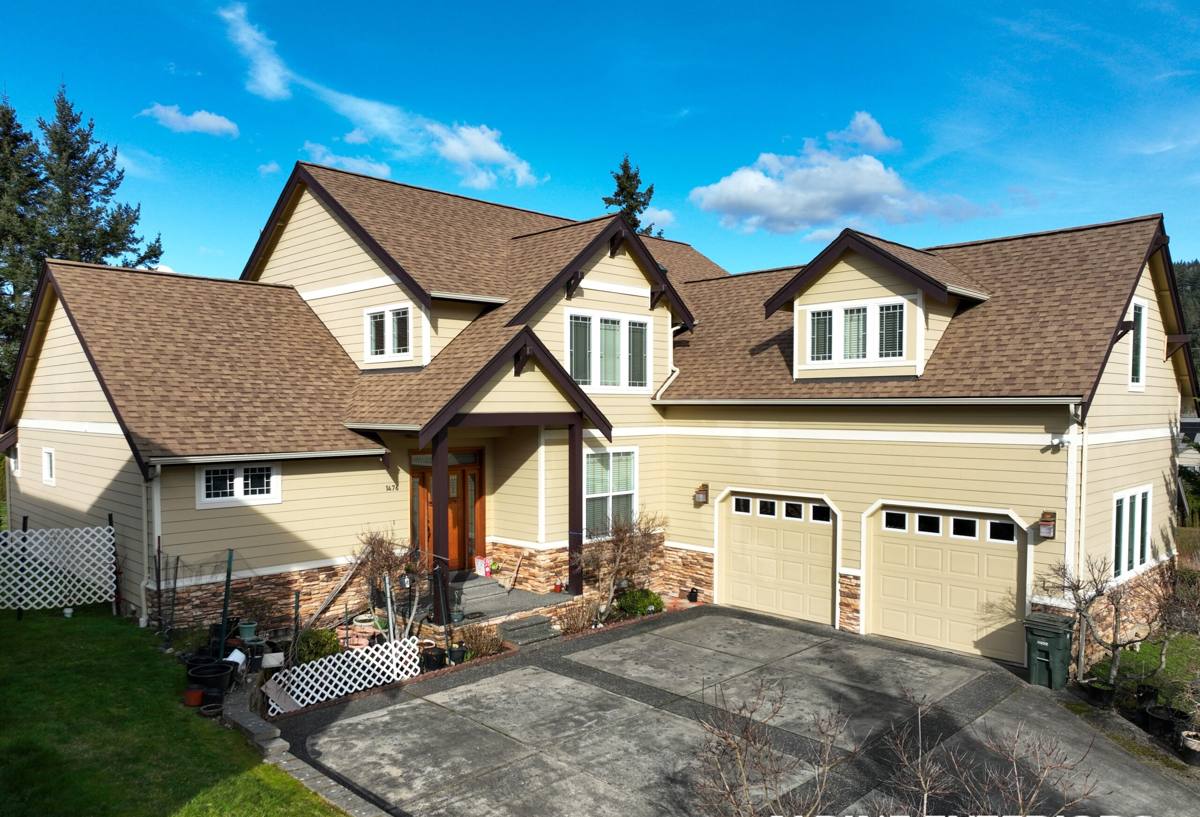
How the Local Climate Actually Attacks a Deck
Moisture at the Ledger and Framing
The single most common point of deck failure isn't the decking boards — it's the ledger board, where the deck attaches to the house, and the framing underneath. Driving rain pushes water sideways and upward under boards and flashing that would stay dry in a calmer climate. Once water gets behind a ledger without proper flashing, it doesn't dry out quickly here. It sits, and it rots framing from a spot you can't see until the deck starts to feel spongy or a railing post wiggles.
Moss, Algae, and Slippery Surfaces
A long moss season means anything horizontal and shaded — under trees, on the north side of a house, in low-traffic corners of a deck — will grow a film of moss or algae if it isn't built and maintained to shed water. Beyond looking bad, that film holds moisture against the board surface and turns stairs and landings genuinely slippery, which is a real fall risk on wet mornings that are common for a good chunk of the year.
Salt Air and Metal Fasteners
Areas influenced by salt-laden air see accelerated corrosion on anything metal that isn't rated for it — screws, joist hangers, bolts, and railing hardware. Standard electro-galvanized fasteners can start showing rust streaks and losing strength well before a deck's structure would otherwise need attention. This is one of the most overlooked causes of early deck failure, because the problem is happening inside the wood, out of sight, while the surface still looks presentable.
Signs Your Current Deck Is Losing the Battle
- Rust streaks bleeding out from screw heads or around joist hangers
- Soft or spongy spots underfoot, especially near the house or stair landings
- Persistent green or black film that comes back within weeks of cleaning
- Gaps opening up between the ledger board and the house siding
- Railing posts that flex or wiggle more than they used to
- Boards that stay damp long after the rest of the deck has dried
- A musty smell coming from underneath the deck structure
Any one of these on its own might be minor. Two or three together usually mean moisture has been working on the structure for a while, and it's worth having someone look underneath, not just at the surface.
What a Deck Built Right for This Area Actually Involves
Ledger Flashing and Water Management
Correct ledger flashing isn't optional trim — it's the single most important detail on the whole build. That means proper step flashing integrated with the house's water-resistive barrier, a sloped drip cap, and flashing tape at every fastener penetration. Done right, water that hits that joint sheds away from the house instead of tracking behind the ledger.
Fasteners and Hardware Rated for the Conditions
For a climate with salt-influenced air and near-constant dampness for months at a time, we don't use standard galvanized hardware. Stainless steel or heavy-duty coated fasteners and connectors cost more up front, but they're the difference between hardware that's still solid in fifteen years and hardware that's staining and weakening in five. This is one of those places where cutting the visible price of a build creates an invisible problem underneath it.
Footings and Framing for Local Ground Conditions
Footings need to be sized and set to local frost depth and soil conditions, with proper drainage around them so they aren't sitting in standing water through the wet months. Framing lumber should be rated for ground contact where it's close to grade, and any framing near soil or heavy shade benefits from extra airflow in the design so it has a chance to dry out between rain events instead of staying wet continuously.
Choosing a Decking Material for This Climate
There's no single "best" decking material — there's a best material for your budget, your maintenance appetite, and how much shade and moss exposure your particular site gets. Here's how the common options actually compare once you factor in Whatcom County's wet, moss-prone conditions:
| Material | Moisture & Moss Behavior | Maintenance | Typical Lifespan | Relative Cost |
|---|---|---|---|---|
| Cedar | Naturally rot-resistant but still absorbs moisture; needs sealing to shed water and resist moss | Annual cleaning and periodic staining/sealing | 15–20 years with upkeep | Moderate |
| Pressure-Treated Pine | Chemically resistant to rot but surface still holds moisture and grows moss without upkeep | Regular cleaning, periodic sealing | 15–20 years with upkeep | Lowest |
| Capped Composite | Won't rot; textured surfaces still need occasional cleaning to prevent moss film | Occasional washing, no staining/sealing | 25–30 years | Higher |
| PVC / Cellular PVC | Fully moisture-resistant, best resistance to moss holding onto the surface | Low — occasional rinse | 30+ years | Highest |
We don't push one material on every homeowner. A shaded, low-traffic deck under mature trees is a very different decision than an open, sun-exposed deck facing the water — and we'll walk through which factors actually apply to your specific site during the estimate.
Our Deck Building Process
- Site visit and assessment — we look at drainage, sun/shade exposure, ledger location, and existing structure if this is a rebuild
- Design and material selection — layout, railing style, and decking material matched to your budget and how much maintenance you want to do
- Permitting — we handle the permit application and coordinate any required inspections with the local building department
- Demolition (if replacing an existing deck) — including an honest look at the framing underneath before we build over it
- Framing and ledger installation — with full flashing detail and corrosion-rated hardware throughout
- Decking, railing, and stair installation
- Final walkthrough — checking fastener lines, railing stability, and drainage before we call it done
Permits and Code in Whatcom County
Most decks above a modest height off grade require a building permit, and guardrail and stair-railing requirements are set by code, not preference — they exist because a deck that looks solid can still fail a fall-protection standard. We handle the permit process as part of the job rather than treating it as an extra, because a deck built without the required permit can turn into a real problem at resale or insurance time. If you're unsure whether your planned project needs a permit, that's a five-minute question to ask before any work starts, not after.
Keeping a New Deck Ahead of the Moss Season
- Sweep leaves and debris off the deck regularly through fall — trapped organic matter is what moss feeds on
- Rinse or gently wash the deck surface a couple of times a year, more often in shaded areas
- Keep gutters and downspouts clear so runoff isn't dumping extra water onto or near the deck
- Trim back overhanging branches to let more light and airflow reach shaded sections
- Check railing posts and stair connections once a year for movement
- Reseal wood decking on the schedule appropriate to the product — don't wait until it looks obviously weathered
Why a Crew That Already Works in Happy Valley Matters
A contractor who builds decks in dry, mild climates and a contractor who builds them for the Sudden Valley area are solving different problems, even if the finished product looks similar from the driveway. Knowing which fastener grade actually holds up locally, how to time framing work around the wet months, and how much drainage a footing really needs in this ground isn't something you get from a national deck-building guide — it comes from building and maintaining decks in this specific climate, year after year. That local experience is what keeps a deck from becoming a five-years-later problem instead of a twenty-years-later one.
If you're planning a new deck, replacing one that's showing its age, or just want an honest opinion on whether yours needs attention, we're happy to come take a look. Reach out for a free, no-pressure estimate using the form below.