 Sudden Valley
 Why Geneva Homes Lose Siding Faster Than the National Average
Geneva sits inside a stretch of Whatcom County where the marine layer never really lets go. Homes here take on driving rain that comes in sideways during fall and winter storms, salt-laden air drifting in off the water, and long stretches of gray, damp weather that keep north-facing walls wet for days at a stretch. That combination is hard on siding in ways homeowners in drier climates rarely have to think about.
Wood-based products swell and dry out repeatedly through the wet season, which eventually opens seams at butt joints and fastener holes. Vinyl gets brittle during cold snaps and can warp under strong afternoon sun reflecting off open water. And almost every exterior surface in this region eventually grows a green film of moss or algae if it doesn't shed water fast and dry out completely between storms. If you've owned a home in or near Sudden Valley for more than a decade, you've probably already dealt with one or more of these problems firsthand.
None of this means siding is a lost cause here — it means the material and the installation both have to be matched to the conditions, not just picked off a showroom sample board.
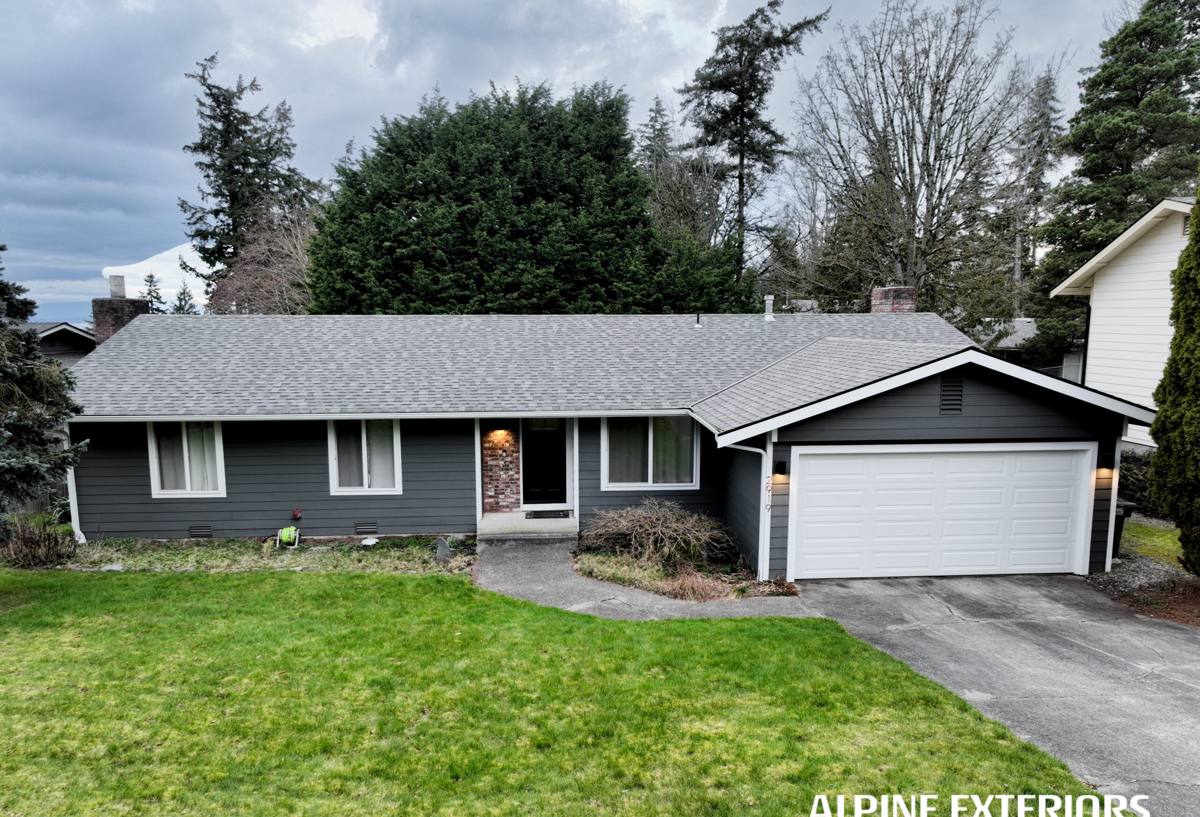
Signs a Geneva Home Needs Replacement, Not Repair
Siding repair makes sense when damage is isolated and the material underneath is still sound. Replacement becomes the right call once the siding itself, or what's behind it, has been compromised in more than one place. Here's what we look for during an inspection:
- Soft or spongy spots when you press on the siding, especially near the bottom courses and around window trim
- Visible cupping, warping, or delamination on wood-based panels
- Persistent moss or algae growth that comes back within weeks of cleaning
- Paint that won't hold for more than two or three years between coats
- Gaps at seams, corners, or trim that let daylight or drafts through
- Interior signs — musty smells, peeling paint, or discoloration on interior walls that back up to exterior siding
One or two of these on their own might point to a repair. Several at once, especially alongside visible moisture damage to the sheathing underneath, usually means it's time to start over with a full replacement rather than patching a wall that will keep failing.
What a Correct Siding Replacement Actually Involves
Full Removal, Not a Cover-Up
We remove the existing siding down to the sheathing rather than installing new panels over it. Covering old siding hides problems instead of solving them, and it changes how well the wall assembly can dry out — which matters even more in a climate that stays damp as long as this one does.
Checking What's Underneath
Once the old siding is off, we inspect the sheathing, framing, and existing weather-resistive barrier for rot, soft spots, and prior water intrusion. Any damaged sheathing gets replaced before anything new goes back up. Installing new siding over compromised sheathing just resets the clock on the same failure.
Flashing and Water Management
Most premature siding failures we see trace back to flashing, not the siding material itself — missing kick-out flashing at roof-wall intersections, poorly lapped window flashing, or house wrap that wasn't taped and lapped correctly. Given how much rain this part of Washington gets, we treat flashing and drainage detailing as the part of the job that determines whether new siding lasts fifteen years or fifty.
Installing to Manufacturer Spec
Fastener spacing, clearances at the ground and roofline, caulking at penetrations, and panel gaps all have manufacturer-specified tolerances. Skipping these to save time is one of the most common reasons siding fails early, and it's also one of the most common reasons a warranty claim gets denied when a homeowner needs it most.
Why We Install Only James Hardie Fiber Cement
We don't install vinyl, LP SmartSide, primed spruce, cedar, or other fiber cement brands. That's a deliberate standard, not a sales pitch — after years of replacing siding across Whatcom County, we've seen firsthand which products hold up to sustained coastal moisture and which ones demand more upkeep than most homeowners expect when they buy them.
Engineered for This Climate
James Hardie's HZ5 product line is engineered specifically for climates like ours — freeze-thaw cycles, sustained damp weather, and salt-air exposure. Fiber cement doesn't absorb water the way wood-based siding does and it won't rot, which also makes it far less hospitable to the moss and algae that thrive on damp, organic surfaces.
Factory-Applied Color, Not Field Paint
Hardie's ColorPlus finish is baked on at the factory under controlled conditions, giving it better fade and chip resistance than paint applied on-site after installation. That matters here — a field-painted finish that has to survive a driving-rain winter within its first year is starting from a disadvantage before it's even cured.
Non-Combustible and Backed by a Real Warranty
Fiber cement doesn't burn, which matters increasingly across Washington as wildfire risk gets more attention statewide. Hardie also backs its siding with a strong, transferable limited warranty — a meaningful detail if you plan to sell the home down the road, since the coverage follows the house rather than staying with the original owner.
Comparing Siding Options for Whatcom County Homes
Every product on the market gets marketed as low-maintenance. In a climate this wet, the real differences show up within the first few winters.
| Material | Moisture Behavior | Moss/Algae Resistance | Typical Maintenance |
|---|---|---|---|
| Vinyl | Doesn't rot, but warps and cracks with temperature swings | Grows moss and algae readily if not cleaned | Periodic washing; replacement of cracked or faded panels |
| Cedar / Primed Wood | Absorbs and releases moisture; prone to swelling | High — organic material feeds growth | Repainting or staining every few years; frequent moss removal |
| LP SmartSide | Engineered wood strand; sensitive at unsealed cut edges | Moderate; depends on coating integrity | Careful edge sealing and repainting on schedule |
| James Hardie Fiber Cement | Does not absorb water or rot | Low — dense, non-organic surface | Occasional rinse; factory finish holds color |
This is part of why our crews standardized on one product line instead of offering all of them: it lets us guarantee an installation method we know performs, on a material we know survives this specific climate, instead of hedging across several products with different weaknesses.
Cost Factors in a Geneva Siding Replacement
Every home is different, so we won't quote a number without seeing the house in person, but the same handful of factors drive most of the variation we see from project to project:
- Home size and wall complexity — more corners, dormers, and trim details mean more labor and material cuts
- Condition of the sheathing underneath — hidden rot found during tear-off adds repair scope beyond the siding itself
- Siding profile and trim package — lap width, trim boards, and accent details affect material cost
- Access and site conditions — steep grades, limited driveway access, or tight lot lines can affect staging and labor time
- Color and finish selection — factory ColorPlus finishes are priced differently than primed-for-paint options
We walk through each of these during the estimate so you know exactly what's driving the number, rather than getting a flat per-square-foot figure that doesn't reflect your home's actual condition or the amount of moisture damage waiting behind the old siding.
Our Process for Geneva Projects
Inspection and Assessment
We start with a full walk-around of the exterior, checking for the warning signs above and noting anything that suggests moisture has already reached the sheathing or framing.
Written Proposal
You get a clear, itemized proposal covering material, labor, flashing and moisture-barrier work, and an expected timeline, before any work starts on your home.
Tear-Off and Installation
We remove the old siding, address anything we find underneath, correct flashing details as needed, and install James Hardie siding to manufacturer specification from top to bottom.
Final Walkthrough
We walk the finished job with you, point out what was done and why, and confirm every detail — trim lines, caulking, touch-up paint — meets our standard before we consider the project complete.
Why a Crew That Already Works Sudden Valley and Geneva Matters
A contractor who regularly works this pocket of Whatcom County already understands things an out-of-area crew has to learn on your dime: how the local microclimate affects drying time between storms, which wall exposures take the worst of the prevailing wind-driven rain, and how much longer the moss season runs here compared to drier parts of the state. Many homes in planned communities like Sudden Valley also fall under community design guidelines for exterior colors and materials, which is worth checking before you settle on a finish — something a crew familiar with the area is used to working alongside rather than discovering midway through a project.
Keeping New Siding Looking Right
Fiber cement cuts maintenance dramatically compared to what you're likely replacing, but "low-maintenance" isn't the same as "no-maintenance" in a climate like this one. A yearly rinse-down to knock off surface grime and any early moss growth, prompt caulk touch-ups where siding meets trim or penetrations, and keeping gutters clear so runoff doesn't sheet directly down the wall will keep a correctly installed Hardie exterior looking new for a long time — and protect the investment you just made in it.
If your Geneva home is showing any of the signs above, we're happy to take a look and give you a straight answer about repair versus replacement — no pressure, no obligation. Request a free estimate below and we'll walk the exterior with you in person.