 Sudden Valley
 Why Geneva Siding Takes a Beating
Geneva sits in a stretch of Whatcom County where the weather doesn't do a home any favors. Homes here deal with salt-laden air moving in off the water, driving rain that hits siding sideways instead of straight down, and a moss season that can stretch across most of the year in shaded, north-facing spots. None of that is dramatic on its own, but stacked together year after year, it's exactly the combination that finds every weak point in a siding system — a hairline crack, an open seam, a missing dab of caulk — and turns it into a real problem.
Salt air is corrosive to fasteners and trim hardware, and it accelerates the breakdown of finishes that aren't built for coastal-adjacent exposure. Driving rain doesn't just wet the surface of siding — wind-driven moisture gets pushed up under laps and around penetrations that would stay dry in a calmer climate. And moss doesn't just look bad; it holds water against the siding surface far longer than open air would, which is a slow but steady path to rot underneath if the substrate isn't moisture-resistant to begin with.
We see the same failure patterns repeat across Geneva and the wider Sudden Valley area, which is exactly why a repair here needs to account for local conditions, not just patch what's visible.
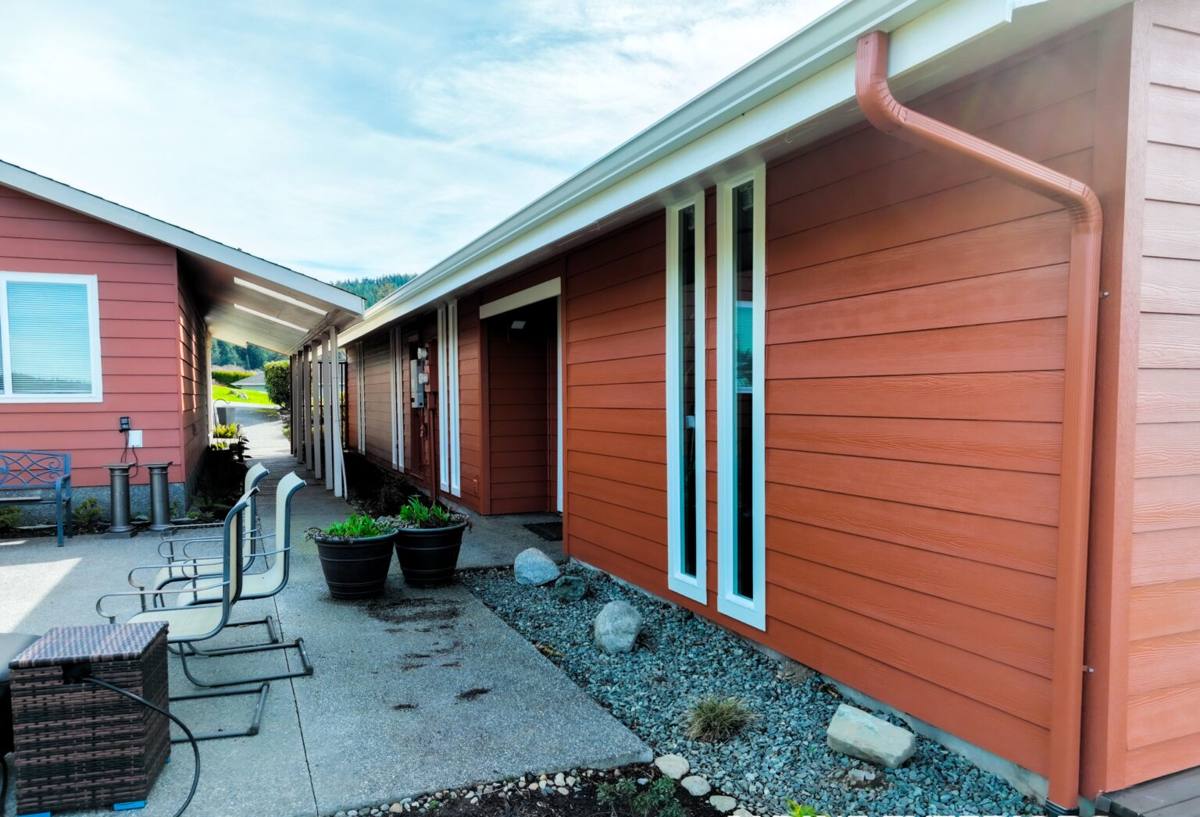
Signs Your Siding Needs Repair, Not Just Paint
A lot of siding problems get papered over with a fresh coat of paint because the surface looks fine from the driveway. Paint doesn't fix what's happening underneath. Before you decide a repair is cosmetic, check for these:
- Soft or spongy spots when you press on the siding, especially near the bottom courses or around window trim
- Visible cracking, splitting, or buckling in boards or panels
- Persistent moss or algae growth that comes back within weeks of cleaning
- Gaps opening up at seams, corners, or where siding meets trim
- Paint that's bubbling, peeling, or flaking in patches rather than evenly across a wall
- Staining or discoloration that tracks downward from a joint, nail head, or flashing line
- Fasteners backing out or rust streaks bleeding down from nail heads or trim screws
Any one of these can be minor. Two or three together, especially on a wall that takes the brunt of the weather, usually means moisture has already gotten past the surface.
Why Small Damage Doesn't Stay Small Here
In a drier climate, a small gap or a hairline crack might sit there for years without causing much trouble. In Geneva's climate, driving rain finds that opening on the very next storm, and moss holds moisture against it in between storms. That's the difference between a repair that's a half-day job and one that turns into sheathing replacement because rot had months or years to work behind the surface before anyone noticed.
What a Correct Siding Repair Actually Involves
A repair that's done right isn't just cutting out a damaged section and nailing in a new piece. It starts with figuring out why that section failed in the first place — otherwise you're just delaying the same failure by a year or two.
Diagnosis Before Anything Gets Removed
We look past the visible damage to check the flashing, house wrap, and framing behind it. If water got in, we need to know how it got in and whether it's done any damage to the wall assembly before we close it back up. Repairing over a wet or compromised substrate just hides the problem for another season.
Matching Materials, Not Improvising
If the existing siding is fiber cement, the repair needs to use compatible fiber cement — matched profile, matched exposure, and a finish that won't visibly mismatch the surrounding boards. Mixing in a different material or a different plank width to "make it work" is how you end up with a patch that's obvious from the street and behaves differently in the weather than everything around it.
Getting the Details Right
Most siding failures in this climate trace back to details, not the field of the wall: flashing above windows and doors, kick-out flashing at roof-to-wall intersections, caulking at penetrations, and proper clearance at the bottom of the wall. A repair that replaces the board but skips re-flashing the detail underneath it is a repair that fails again.
Why We Only Work With James Hardie Fiber Cement
We install and repair with James Hardie fiber cement siding exclusively — not vinyl, not LP SmartSide, not primed wood, not other fiber cement brands. That's a deliberate standard, not a lack of options.
Vinyl can crack in cold snaps and warps under concentrated heat; it also doesn't hold up structurally the way fiber cement does when a repair section needs to tie into older material. Wood-based and engineered wood products need consistent paint maintenance to keep moisture out, which is a harder standard to maintain in a climate with this much rain and shade-driven moss. James Hardie's fiber cement is non-combustible, dimensionally stable in wet climates, and its ColorPlus factory finish is baked on rather than field-applied, which matters when you're trying to match a repair patch to siding that's been on the wall for years. It also carries a strong transferable warranty when installed to Hardie's specifications — which is the other half of doing this correctly, since a warranty is only as good as the installation behind it.
When we repair a Geneva home's siding, matching into James Hardie product means the patch performs the same way the rest of the wall does — not a slightly different material aging on its own timeline next to the original.
Our Repair Process
- On-site inspection. We look at the damaged area and the surrounding wall, not just the spot you called about — related trouble spots often sit nearby.
- Moisture and substrate check. We check what's behind the siding before we quote the work, so the estimate reflects what's actually needed.
- Written scope and cost. You get a clear explanation of what failed, why, and what the repair covers — no vague line items.
- Removal and prep. Damaged boards and any compromised flashing or house wrap come out; the wall gets prepped correctly before anything new goes back on.
- Repair with matched James Hardie material. New boards are cut, fastened, and finished to Hardie's installation spec, with attention to the flashing and sealant details that caused the original failure.
- Final walk-through. We show you the completed work and flag anything else on the exterior worth keeping an eye on.
Repair or Replace? How to Tell
| Situation | Repair Usually Makes Sense | Replacement Worth Considering |
|---|---|---|
| Damage extent | Isolated to one or two wall sections | Recurring failures across multiple walls |
| Underlying moisture | Localized, caught early | Widespread rot in sheathing or framing |
| Siding age/material | Existing James Hardie siding in good general condition | Original vinyl, wood, or aging fiber cement nearing end of service life |
| Match quality | Compatible Hardie profile and finish available | Discontinued profile/color makes a seamless patch impossible |
| Cause of failure | A single fixable detail (flashing, caulk, fastener) | A systemic installation problem repeated across the house |
What Affects the Cost of a Siding Repair
| Factor | Why It Matters |
|---|---|
| Size and location of damage | A ground-level patch is simpler than repairs requiring ladders, staging, or roof access |
| Hidden moisture or rot | Sheathing or framing repair adds time and material beyond the visible siding |
| Flashing and trim involved | Re-flashing a window or roofline detail takes more labor than a straight wall patch |
| Matching the existing finish | Sourcing the right Hardie profile and ColorPlus color for a clean match |
| Access and site conditions | Slopes, landscaping, and tight setbacks common around Sudden Valley properties can add time |
We give a written estimate after seeing the actual damage — broad ranges without an inspection aren't useful to you, and we'd rather give you an honest number than a guess.
Why Hiring a Crew That Already Works Geneva Matters
Repair work is diagnostic work. A crew that's already done siding repairs around Geneva and the Sudden Valley area has seen how the local combination of salt air, wind-driven rain, and moss actually plays out on real walls — which sides of a house fail first, which details tend to leak, and how fast moss returns without proper clearance and airflow. That local pattern recognition is what keeps a repair from being a guess. It also means we're not learning the area's climate on your project; we're applying what we already know works here.
Reach out for a free, no-pressure estimate. We'll take a look at what's going on with your siding, tell you honestly whether it's a repair or something bigger, and walk you through the options — no obligation either way.