 Sudden Valley
 Why Edgemoor Puts Different Demands on Siding
Edgemoor sits close to Bellingham Bay, which means homes here deal with a combination of stresses that inland Whatcom County properties don't see nearly as often. Salt-laden air moves in off the water and settles on exterior surfaces year-round. Add the region's long stretch of driving rain each fall and winter, plus a moss season that can run eight months or more under the tree canopy common to the area, and you have a climate that is genuinely harder on siding than most manufacturers' marketing photos let on.
None of this means siding fails quickly here. It means the margin for error is smaller. A product that's marginal for the job, or an installation that cuts a corner on flashing or clearance, shows its weakness faster in Edgemoor than it would in a drier part of the state. That's the lens we use on every fiber cement project in this neighborhood.
What Salt Air Actually Does to a House
Salt air doesn't just affect metal fasteners and hardware, though it does accelerate corrosion there. It also speeds up the breakdown of paint films on wood and engineered wood products, and it draws moisture into any exposed or under-sealed edge. Over years, that combination is what turns a small maintenance item — a missed caulk line, a cut edge left unsealed — into a rot problem.
What Driving Rain and Moss Season Add
Wind-driven rain off the bay pushes water sideways into laps, seams, and trim joints that would stay dry in a calmer climate. Meanwhile, shaded, tree-covered lots near Lake Whatcom and the bay stay damp long after a storm passes, which is exactly the environment moss and algae need to take hold. Siding in this kind of setting needs to shed water reliably at every joint and resist organic growth on its face — not just look good on install day.
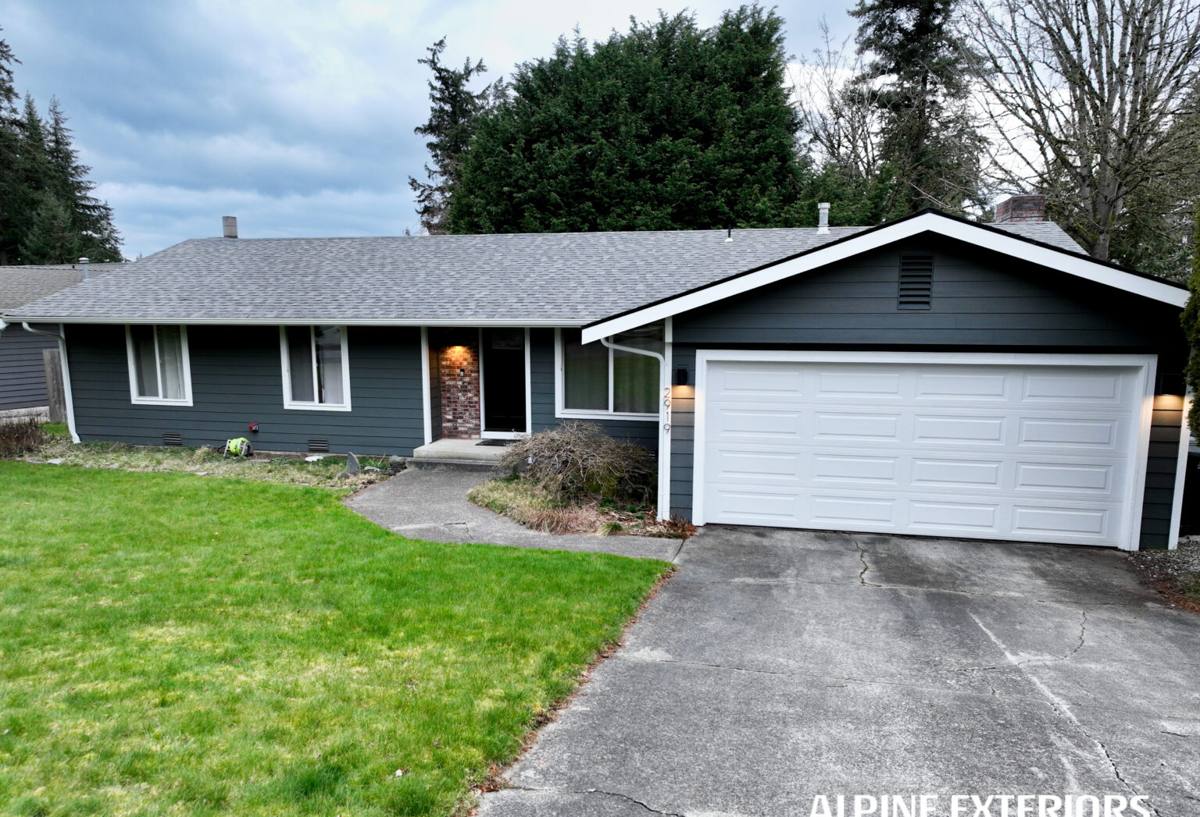
Why We Install Only James Hardie Fiber Cement
We don't install vinyl, LP SmartSide, primed wood, cedar, or other fiber cement brands. That's a deliberate standard, not a sales pitch. Vinyl expands and contracts with temperature swings and can warp or crack under sustained wind-driven rain and salt exposure. Wood-based and engineered wood sidings depend on an intact factory coating to keep moisture out, and once that coating is compromised at a cut edge or a fastener hole, the substrate underneath is vulnerable to swelling and rot — a real risk in a climate this wet. Other fiber cement brands exist, but James Hardie is the one we've found delivers a consistent factory finish, a climate-specific product line, and a warranty structure that holds up to scrutiny.
James Hardie fiber cement is non-combustible, doesn't support moss and algae growth the way wood-based products can, and comes pre-finished with ColorPlus Technology — a factory-baked finish that resists the fading and peeling that field-applied paint struggles with in salty, damp air. It's manufactured in HZ5 and similar formulations engineered for the moisture demands of Pacific Northwest climates specifically, not just for siding markets in general.
What Homeowners Give Up With Other Products
To be fair to the alternatives: vinyl is less expensive up front, and cedar has a natural look some homeowners prefer. What you give up with either is long-term stability against this exact climate — vinyl's dimensional stability in wide temperature swings, and cedar's near-total dependence on ongoing maintenance to keep water out. We'd rather be upfront about that trade-off before a project starts than have a homeowner discover it five years in.
What Correct Fiber Cement Installation Involves
Fiber cement siding is only as good as its installation. The board itself is engineered to perform for decades, but nearly every early failure we see traced back to installation, not the product. In a climate that drives rain sideways and keeps surfaces damp for long stretches, these details aren't optional extras — they're the difference between siding that lasts and siding that needs premature repair.
- Weather-resistant barrier installed correctly behind the siding, lapped shingle-style so water runs out, not in
- Proper flashing at every window, door, and roofline intersection — the single most common place we find prior failures
- Minimum clearance maintained between siding and grade, decks, roofs, and other horizontal surfaces so water doesn't wick upward
- Correct fastener type and placement, driven to manufacturer spec rather than overdriven or underdriven
- Factory-cut and factory-primed edges used wherever possible; any field cuts sealed per Hardie's specifications
- Proper joint treatment and caulking at butt joints and trim, sized for the expansion and contraction the material actually experiences
Any one of these done wrong won't necessarily show up in the first year. In Edgemoor's climate, it tends to show up in three to five, usually as a stain, a soft spot, or a paint failure at a specific joint rather than across the whole wall.
James Hardie Product Lines That Make Sense Here
Not every Hardie product is the right fit for every home, and part of our job is matching the product line to the house and its exposure. For a bluff-adjacent, tree-shaded property near the water, we're weighing sun exposure, wind exposure, and how much of the elevation faces the weather directly.
| Product Line | Best Fit | Why It Works Here |
|---|---|---|
| HardiePlank Lap Siding | Most home styles, most elevations | Widest color and texture range; proven performance in coastal PNW conditions |
| HardieShingle | Accent gables, Craftsman and cottage-style homes | Traditional look without cedar's moisture maintenance burden |
| HardiePanel | Modern facades, accent walls | Clean vertical lines; pairs well with trim-heavy Edgemoor exteriors |
| HardieTrim | Corners, fascia, window and door surrounds | Matches siding expansion rate, avoiding the seam gaps that mismatched trim causes |
ColorPlus finishes are worth prioritizing on this kind of project specifically because of the salt air factor — a factory-baked finish holds color and resists chalking far longer than a field-applied topcoat exposed to the same salt and moisture.
Our Process for a Fiber Cement Project in Edgemoor
Assessment and Product Selection
We start by walking the property and identifying which elevations take the brunt of the wind and rain, where existing moss or algae growth is already established, and whether the current siding or sheathing shows signs of moisture damage that needs to be addressed before new siding goes up. This determines product line, color, and any repair scope hiding underneath the old siding.
Tear-Off and Substrate Check
Old siding comes off in full, not patched over. This is the point where we find and fix any sheathing or framing damage — something you can't responsibly skip in a climate where hidden moisture problems are common.
Weather Barrier and Flashing
New weather-resistant barrier goes on correctly lapped, followed by flashing at every penetration and transition. This step gets more attention here than almost anywhere else in the job, because it's the layer that actually keeps driving rain out of the wall assembly.
Installation to Manufacturer Spec
Siding, trim, and fasteners go in per James Hardie's published installation guidelines — clearances, fastener spacing, and joint treatment included. This is also what keeps the manufacturer's warranty intact, which depends on installation matching spec.
Final Walkthrough
We review the finished job with the homeowner, cover basic care, and make sure everything meets the standard we'd want on our own house.
Maintenance in a Salt-Air, Moss-Prone Climate
Fiber cement is low-maintenance compared to wood, but "low-maintenance" isn't "no-maintenance" in this environment. A short annual routine keeps ColorPlus siding looking and performing the way it should for decades.
- Rinse siding annually with a garden hose to remove salt residue and airborne debris before it builds up
- Keep gutters clear so overflow doesn't run down the face of the siding and feed moss growth
- Trim back tree branches and shrubs that keep siding shaded and damp longer than necessary
- Inspect caulk lines at trim and joints every year or two and recaulk before gaps open up
- Address any moss or algae growth promptly with a gentle wash rather than pressure-washing, which can force water behind boards
Cost Factors for Edgemoor Fiber Cement Projects
Every project is different, but the variables that move the price are consistent. Knowing them ahead of time makes it easier to compare estimates apples-to-apples.
| Factor | Impact on Cost |
|---|---|
| House size and number of stories | More surface area and access complexity (ladders, staging) raises labor cost |
| Extent of substrate repair needed | Rot or sheathing damage found during tear-off adds material and labor |
| Product line and texture selected | HardieShingle and specialty textures typically cost more than standard lap |
| Trim and detail complexity | Gables, dormers, and multiple trim profiles add cutting and fitting time |
| Access and site conditions | Bluff lots, steep grades, or limited access can affect equipment and staging costs |
We'd rather walk your specific house and give you real numbers than quote a per-square-foot range that doesn't reflect what your project actually needs.
Why Hiring a Crew That Already Works This Neighborhood Matters
Edgemoor's mix of older homes, mature trees, bluff-adjacent lots, and bay-facing exposure isn't the same installation environment as a new subdivision on flatter, more open ground elsewhere in Whatcom County. A crew that's worked this kind of terrain and climate combination already knows where moisture tends to collect, which elevations need extra attention to flashing, and how to stage a job around mature landscaping and tighter lots without cutting corners on prep work.
That experience shows up in the questions we ask before we start and the details we double-check that a crew unfamiliar with coastal Whatcom conditions might treat as optional. It's also why we stand behind installation the way we do — we're not guessing at what this climate does to a house over time, we're building around it.
If you're planning a siding project in Edgemoor, we're glad to take a look at your home and talk through what it actually needs — no pressure, no obligation. Fill out the form below for a free estimate.