 Sudden Valley
 Why Ferndale Roofs Take a Different Kind of Beating
Ferndale sits close enough to the water that salt-laden air is a constant factor in how roofing materials age, and far enough inland from the open coast that homeowners sometimes underestimate it. Add Whatcom County's driving winter rain, the wind that funnels down off the Nooksack valley during a front, and a moss season that can run eight or nine months of the year, and you have a roof that's under more sustained stress than most manufacturers' warranty language assumes. Storm damage here rarely looks like a single dramatic event. More often it's wind-lifted shingles that let water start working underneath, granule loss that accelerates once salt air has been degrading the asphalt for a few seasons, or a moss mat that's been quietly holding moisture against the deck since spring.
That combination matters when it comes to repair. A patch that would hold up fine in a dry inland climate can fail within a year here if it doesn't account for how much longer everything stays wet and how much organic growth pressure the roof is under. We've built our repair process around that reality, not a generic checklist.
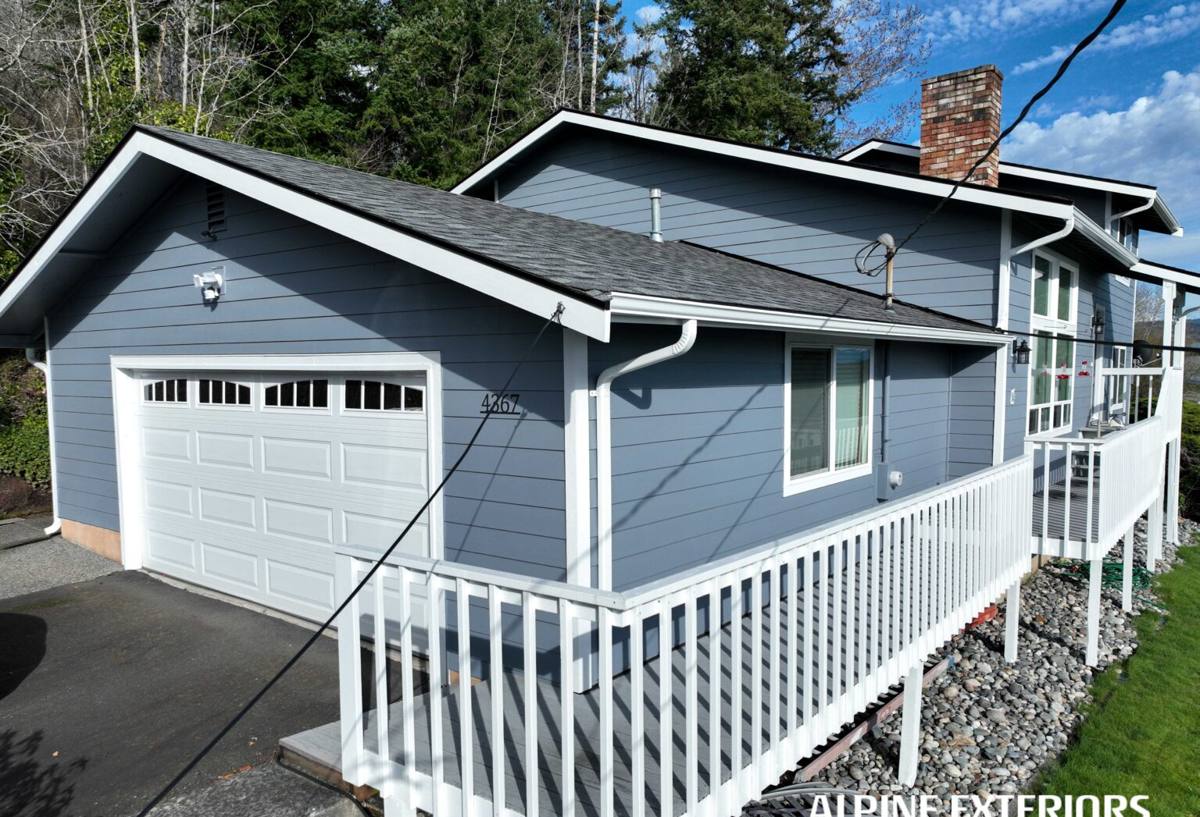
What "Storm Damage" Actually Covers
Homeowners often call us after wind or a heavy rain event, expecting the damage to be obvious. Sometimes it is — missing shingles, a torn ridge cap, a gutter pulled loose. Just as often, the visible damage is the least of it. Here's what we're actually looking for on a Ferndale roof after a storm:
- Lifted or creased shingle tabs where wind has broken the sealant strip, even if the shingle itself didn't blow off
- Flashing that's been worked loose at chimneys, skylights, and roof-to-wall transitions — a common leak point in driving rain
- Granule loss in the gutters and downspouts, a sign the shingle surface has been abraded by wind-driven debris or moss run-off
- Soft or discolored decking visible from the attic side, which points to a slow leak that predates the storm
- Moss and lichen growth at shingle edges and in valleys, which holds water against the roof surface long after the storm has passed
- Damaged or clogged gutters and downspouts that force water back under the roof edge instead of away from the house
The last two aren't technically "storm damage" in the insurance sense, but they're almost always part of the picture on a coastal Whatcom County roof, and ignoring them means the repair won't last.
Doing the Repair Right, Not Just Fast
Start With the Deck, Not the Shingles
Any storm repair worth doing starts by pulling back enough of the damaged area to check the roof deck underneath. If the plywood or OSB has absorbed moisture — which happens fast when a roof has been compromised during a wet stretch — patching over it just traps the problem. We replace soft decking before anything goes back down. Skipping this step is the single most common shortcut we see in repairs that fail within a year or two.
Match the Underlayment to the Climate, Not Just the Budget
In a region with this much sustained moisture, we lean toward synthetic underlayment with proper ice-and-water shield at eaves, valleys, and penetrations — even on repair work, not just full replacements. It costs a little more than basic felt but performs dramatically better in wind-driven rain, which is exactly what causes most Ferndale storm damage in the first place.
Flash It Like You'll Never Touch It Again
Flashing failures are behind more repeat leak calls than shingle failures. We re-flash rather than caulk-and-hope whenever a transition has been disturbed by wind or a fallen limb, because sealant is a maintenance item and flashing is a permanent one.
Address the Moss Before It Undoes the Repair
If a roof already has moss growth nearby, we treat it as part of the job. New shingles installed next to an untreated moss mat just become the moss's next meal. Where it makes sense, we'll also talk through zinc or copper strip options at the ridge, which use rainwater runoff to suppress regrowth over time — a low-maintenance approach that fits how much rain this area actually gets.
Our Process From Call to Completion
- Inspection. We walk the roof (or use a pole camera on steep or wet sections when safety calls for it) and check the attic for water staining, moisture, and daylight at penetrations.
- Written assessment. You get a clear explanation of what's storm-related, what's pre-existing wear, and what's cosmetic — no pressure to bundle in work that isn't necessary.
- Insurance coordination. If you're filing a claim, we document damage with dated photos and a scope of work your adjuster can work from directly.
- Repair. Deck check, underlayment and flashing where needed, matched shingles or roofing material, and a check of adjacent areas that took wind exposure even if they didn't fail yet.
- Final walkthrough. We show you what was done and what to keep an eye on, including any moss or drainage issues worth monitoring.
Repair vs. Replacement: How We Help You Decide
Not every storm-damaged roof needs a repair versus a full replacement conversation, but Ferndale's climate accelerates the math in ways homeowners don't always expect. A roof that's 12–15 years old and takes a hard storm hit is a different decision than a five-year-old roof with isolated damage.
| Factor | Leans Toward Repair | Leans Toward Replacement |
|---|---|---|
| Roof age | Under 10–12 years | Past 15–20 years or original warranty period |
| Extent of damage | Isolated section, clear boundary | Scattered across multiple slopes |
| Decking condition | Dry, sound plywood/OSB | Soft spots, staining in multiple areas |
| Moss/lichen history | Minor, treatable | Established growth undermining shingle edges broadly |
| Granule loss pattern | Localized to storm-exposed area | Uniform loss across the whole roof (general aging) |
We'll always give you our honest read on which side of that line your roof falls on. If a repair is the right call, we do the repair. We don't upsell a replacement to a roof that has years of life left in it.
Insurance Claims: What We Can and Can't Do
We're not a public adjuster and we won't tell you what your policy covers — that's between you and your carrier. What we do is give you accurate, well-documented information: dated photos of the damage, a clear scope of repair, and straightforward answers if your adjuster has questions about the work. A rushed or vague estimate is one of the more common reasons claims get delayed or underpaid, so we treat that documentation as part of the job, not an afterthought.
Before the Estimate, Check For
- Shingles or granules collecting in gutters or on the ground after a storm
- Visible daylight or water staining in the attic near roof penetrations
- Sagging or uneven rooflines, especially over porches and additions
- Moss buildup thicker than about a quarter inch, especially in valleys
- Gutters pulling away from the fascia or overflowing during rain
Why a Crew That Already Works Ferndale Matters
Storm repair is one of the areas where local experience genuinely changes the outcome, not just the sales pitch. A crew that works Whatcom County roofs regularly knows which shingle lines and underlayment systems actually hold up against this area's combination of salt air and prolonged wet weather, and which look fine on a spec sheet but underperform here. We also know how fast moss re-establishes itself in this climate, which shapes how we sequence a repair so it doesn't need redoing in two years. And because we're not driving in from out of the area, we can usually get someone out quickly after a storm, when a tarped section of roof shouldn't sit exposed for a week waiting on a schedule slot.
Maintenance That Prevents the Next Call
A good storm repair is also a chance to set the roof up to handle the next one better. We typically recommend:
- An annual fall inspection before the wet season ramps up, checking flashing, seals, and moss growth
- Gutter cleaning at least twice a year given the tree cover common around Ferndale properties
- Moss treatment on a schedule, rather than waiting until growth is heavy enough to lift shingles
- Prompt attention to any granule loss or lifted tabs noticed after a windstorm, before the next rain gets underneath
None of this is expensive compared to a full re-roof, and it's the difference between one storm repair every few years and a roof that needs constant attention.
If a recent storm has left your Ferndale roof with missing shingles, a leak, or damage you're not sure how to assess, we're happy to take a look and give you a straight answer — no pressure, no sales pitch. Fill out the form below for a free estimate and we'll get back to you promptly.