 Sudden Valley
 Why New-Construction Windows Are a Different Job Than Replacements
Replacing a window in an existing wall means working inside an opening that's already framed, flashed, and finished — you're matching what's there. New-construction windows are installed before the siding and trim go on, with a bare nailing flange going against the house wrap and framing. That sounds simpler, but it actually carries more responsibility: whatever water-management mistakes get made at this stage are sealed behind siding for the next 20-plus years. On a Ferndale build, where the wall assembly is going to face salt-laden air off the bay and long stretches of wind-driven rain, the new-construction window install is one of the few chances to get the water path right before it's covered up for good.
We treat new-construction window work as part of the building envelope, not just a product install. That means coordinating with the framer's rough openings, the house wrap detailing, and the siding trim — not just setting units in holes and caulking the edges.
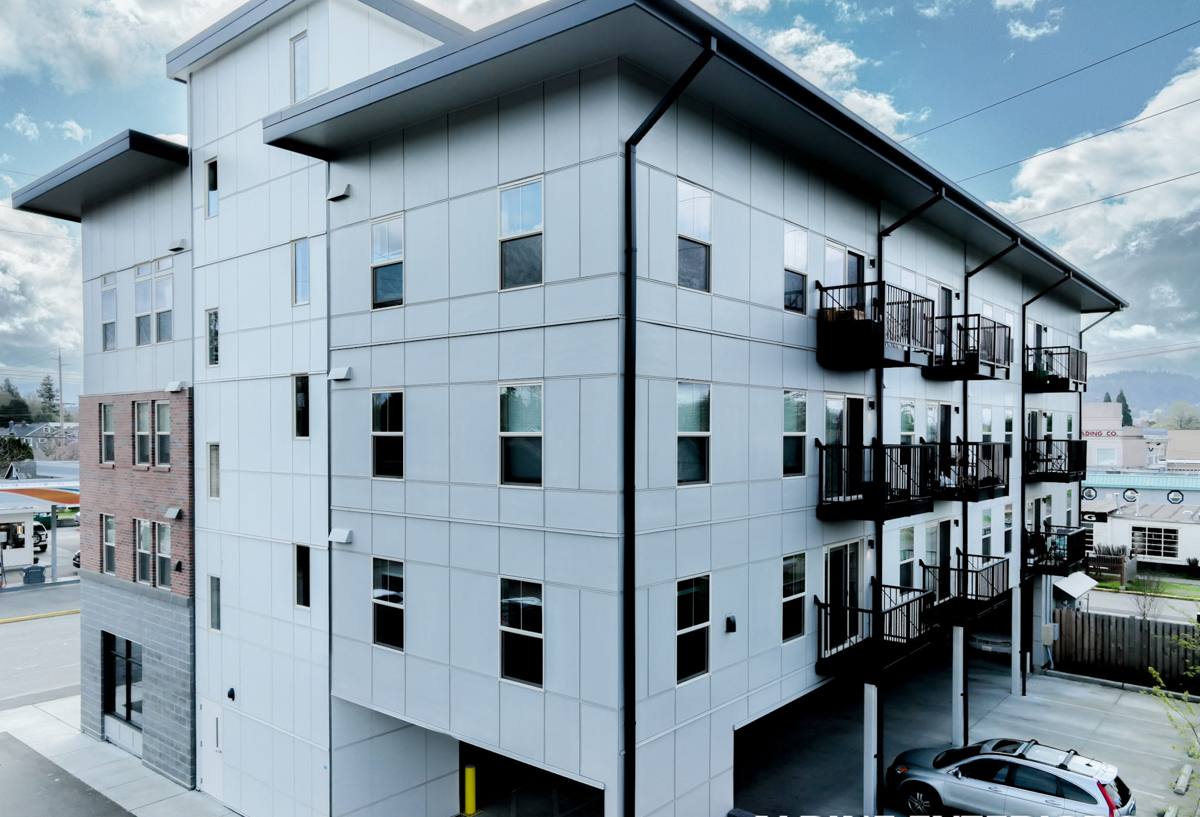
What Ferndale's Climate Actually Demands From a Window Install
Ferndale sits close enough to Bellingham Bay and the Strait of Georgia that salt-bearing air reaches homes well inland of the immediate shoreline, and it combines with Whatcom County's wet season to create conditions that are harder on window components than a drier inland climate would be.
Salt Air
Airborne salt accelerates corrosion on unprotected fasteners, hinges, and cheaper hardware finishes. It also degrades some sealants and gaskets faster than manufacturers' standard testing accounts for. This is why hardware finish and fastener selection matter as much as the window brand on a coastal-influenced job.
Driving Rain
Whatcom County storms frequently come in sideways, not straight down. A window that's watertight in a static rain test can still leak under wind-driven rain if the flashing sequence, sill pan, or head flashing isn't detailed correctly. This is the single biggest source of new-construction window leaks we get called to diagnose on homes built by out-of-area crews.
Long Moss and Damp Season
Moss and algae growth thrive in the extended damp stretch typical of a Whatcom County fall through spring. On windows, this shows up less as growth on the glass and more as slow moisture retention around sills and trim that don't shed water fast enough — which is a design and installation issue, not a cleaning issue.
Choosing Window Framing Material for a Ferndale Build
There's no single "best" frame material — the right choice depends on budget, exposure, and how the window will be finished. Here's how the common options actually perform in this climate:
| Frame Material | Moisture / Salt-Air Behavior | Maintenance | Typical Fit |
|---|---|---|---|
| Vinyl | Won't corrode or rot; performs well against salt air; can expand/contract with temperature swings | Low — occasional cleaning | Most cost-effective, good all-around choice for new construction |
| Fiberglass | Very stable dimensionally; excellent resistance to moisture and salt exposure | Low | Higher upfront cost, strong long-term value on exposed elevations |
| Wood-Clad | Interior wood needs protection from any interior humidity; exterior cladding shields from weather but seams need attention | Moderate — interior finish upkeep | Best where a wood interior look is wanted; more installation sensitivity |
| Aluminum | Conducts cold, prone to condensation; can corrode without a marine-grade finish | Moderate to high | We generally steer builders away from bare aluminum on this coastline unless it's a thermally broken, marine-rated product |
We don't push one brand or material on every job — we size the recommendation to the wall assembly, the elevation's rain and salt exposure, and what the builder's specs call for.
Glass Packages and Coatings Worth Paying For Here
For new construction in this part of Whatcom County, we generally recommend:
- Low-E coatings tuned for the Pacific Northwest — good solar control without sacrificing too much winter heat gain
- Argon or krypton gas fill between panes for better insulating performance
- A U-factor and Solar Heat Gain Coefficient (SHGC) that fit the specific elevation — south and west-facing glass often benefits from a different glass package than north-facing
- Warm-edge spacers, which resist condensation better at the glass edge in a consistently damp climate
Triple-pane glass is worth discussing for exposed elevations or homes that want maximum comfort and noise reduction, but it isn't automatically the right call for every opening — it adds weight, cost, and can be overkill on protected elevations. We'll walk through the actual trade-offs for your specific plan rather than defaulting to the most expensive option.
Flashing and Water Management: Where New-Construction Jobs Succeed or Fail
This is the part of the job that doesn't show up in the finished photos but determines whether the window performs for decades. On a proper new-construction install we:
- Install a sloped sill pan at every rough opening so any water that gets past the window has somewhere to go besides the framing
- Integrate window flanges with the house wrap using a shingle-lap sequence — sill first, then jambs, then head — so water is always directed outward and down, never trapped behind a layer
- Use flashing tape rated for the temperature range and UV exposure it'll see during construction, not just whatever's on hand
- Set head flashing with a drip edge that clears the siding below it, which matters more here than in drier climates because of how much water actually runs down a Whatcom County wall in a typical winter
- Seal and back-caulk according to the window manufacturer's installation instructions — skipping manufacturer-specified steps can void the warranty even if the window looks fine on install day
None of this is exotic. It's the same water-shedding logic roofers use — high points shed onto low points, never the reverse — applied at a smaller scale around every rough opening.
Our New-Construction Window Process
On a typical Ferndale new-build or major addition, our process runs:
- Review the plans and rough opening schedule with the builder or homeowner before windows are ordered, so sizes, swing directions, and grille patterns match the design
- Verify rough openings on-site against the ordered units before installation day — this catches framing discrepancies while they're still cheap to fix
- Install sill pans and flashing per manufacturer specs and integrate with the house wrap sequence
- Set, shim, and fasten each unit level, plumb, and square — a window that's slightly out of square will bind, won't seal correctly, and will show it within a year or two
- Insulate and air-seal the gap between the window frame and rough framing without over-packing, which can bow the frame
- Photograph flashing details before they're covered by siding, so there's a record of what's behind the wall if it's ever needed
- Walk the finished install with the builder or homeowner and confirm operation on every unit
Working With Your Builder or GC
Most new-construction window work happens on someone else's schedule — the framer needs to move on, the siding crew is waiting behind us, and the builder has a closing date. We're used to working inside that sequence: showing up when the rough openings are ready, communicating clearly if something in the framing needs to be corrected before we can set windows, and not holding up the trades behind us. On a coastal Whatcom County build, we'll also flag it early if we think an elevation needs a different flashing detail or glass package than what's in the original spec — better to have that conversation before the windows are ordered than after they're installed.
Common Mistakes We Find on New-Construction Window Jobs
When we get called to a Ferndale home with a window leak or failed seal, it's almost always one of a short list of issues:
- No sill pan, or a flat sill pan that doesn't slope water outward
- House wrap taped over the flange instead of properly shingle-lapped, which traps water instead of shedding it
- Fasteners or hardware not rated for coastal exposure, leading to early corrosion
- Windows set out of square, causing the sash to bind or the weatherstripping to compress unevenly
- Caulk used as the primary water barrier instead of proper flashing — caulk is a backup, not a strategy
These are all avoidable with a correct sequence, but they're also the kind of thing that's invisible until the siding's already up — which is why getting it right the first time matters more on new construction than on almost any other part of the exterior.
Why Hiring a Crew That Already Works Ferndale Matters
A window install done to a generic spec sheet can still underperform in this specific stretch of Whatcom County if the crew hasn't accounted for what the coastal air and driving rain actually do to fasteners, sealants, and flashing over time. We work in Ferndale and the surrounding communities regularly, so we're not guessing at how a given elevation, wall assembly, or product line holds up here — we're applying what we've already seen work and what we've already seen fail. That's the difference between a window install that looks right on day one and one that's still performing correctly ten winters from now.
If you're building new or planning an addition in Ferndale and want windows specified and installed correctly from the start, we're happy to take a look at your plans and talk through options. Reach out for a free, no-pressure estimate using the form below.