 Sudden Valley
 Fairhaven's Waterfront Climate Is Hard on Siding
Fairhaven sits close enough to Bellingham Bay that salt-laden air is a daily fact of life for the homes here, not an occasional nuisance. Add in the driving rain that comes off the water during fall and winter storms, plus tree cover and shade that keep north- and west-facing walls damp for weeks at a time, and you get a siding environment that punishes anything not built for it. Whatcom County homeowners who've dealt with cracked caulk, swollen trim, or moss creeping up a wall know this isn't hypothetical.
Siding here doesn't fail because the material is bad — it fails because it wasn't matched to the climate, or wasn't installed with the details that matter in a wet, salty, moss-prone marine environment. That's the gap we focus on closing for Fairhaven homes.
Why James Hardie Fits This Climate
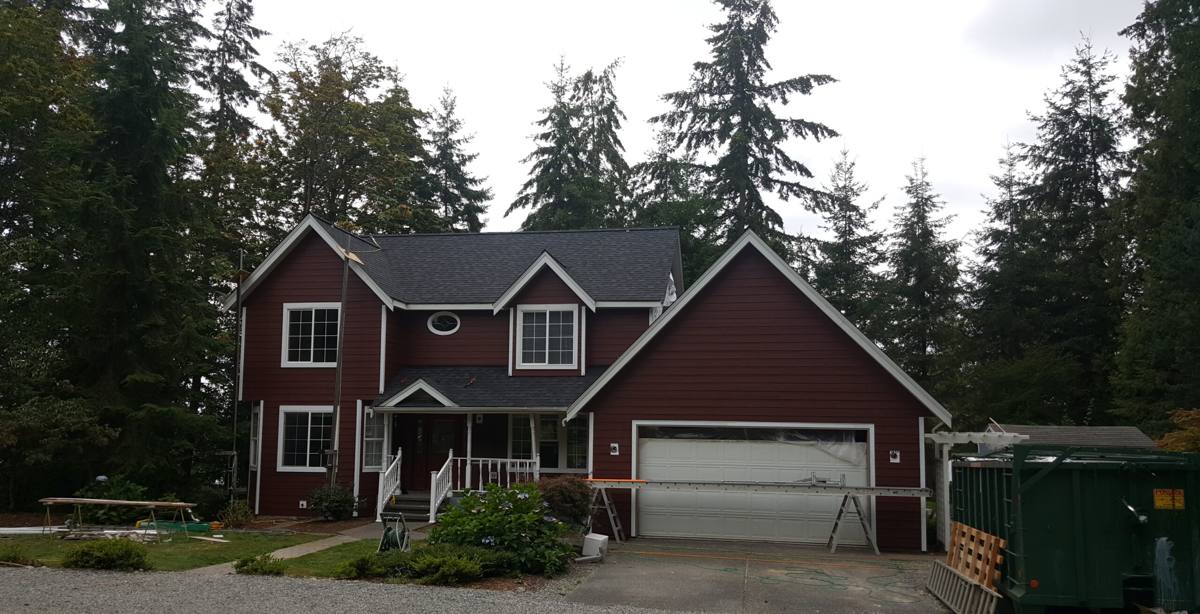
We install James Hardie fiber cement exclusively, and Fairhaven is a good example of why. Hardie's siding is engineered in climate-specific product lines — the HZ5 formulation is built for regions with prolonged moisture exposure and freeze-thaw cycling, which describes western Whatcom County well. Fiber cement doesn't absorb water the way wood-based products can, so it doesn't swell, cup, or rot from the kind of sustained dampness that a shaded Fairhaven lot produces.
It's also non-combustible, which matters for wildfire-conscious insurance underwriting even in a coastal climate, and the factory-applied ColorPlus finish is baked on rather than field-painted, so it holds color and resists the chalking and fading that salt air and UV exposure accelerate on site-finished materials. That finish is also warrantied separately from the substrate, which is not something every siding product offers.
What Salt Air Does Over Time
Airborne salt is mildly corrosive and it doesn't stay near the water — wind carries it inland and it settles on every exterior surface, including fasteners, flashing, and trim. Unprotected or poorly rated hardware corrodes faster near the bay, and corroding fasteners are one of the most common hidden causes of siding failure: a nail head rusts through, the board loses its hold, and water gets behind the plane before anyone notices from the ground.
What Driving Rain Demands
Rain that comes in sideways during a coastal storm doesn't behave like a gentle vertical rain. It gets pushed under laps, around trim, and into any gap that isn't properly flashed or lapped. Siding systems in this kind of exposure need a real drainage path behind the cladding, not just a caulk bead holding the line at the surface.
What a Long Moss Season Means
Whatcom County's moss season runs long — shaded, damp walls stay wet enough for moss and algae to establish themselves for much of the year. Moss holds moisture against the siding surface, and on materials without a ventilation gap behind them, that trapped moisture has nowhere to go. It's less about whether moss will show up on a north wall in Fairhaven and more about whether the siding assembly can tolerate it without trapping water against the sheathing.
What a Correct Installation Actually Involves
James Hardie's product is only as good as the installation behind it, and this is where a lot of the difference between a siding job that lasts and one that doesn't gets decided. A correct install in a climate like Fairhaven's includes:
- A drainage/rain-screen gap behind the siding so any moisture that does get past the cladding can drain and dry instead of sitting against the wall assembly
- A properly lapped and sealed weather-resistant barrier underneath, with all penetrations (vents, hose bibs, light fixtures) flashed before the siding goes on, not caulked over after
- Window and door flashing installed in the correct shingle-style order so water sheds outward at every layer, not just at the surface
- Fastener spacing, type, and embedment that match Hardie's published installation specs — this is also what keeps the manufacturer's warranty valid
- Corrosion-resistant fasteners and trim hardware, given the salt exposure this close to the bay
- Field-cut edges primed or sealed before installation, since factory edges come pre-sealed but a cut edge is raw material until it's treated
- Correct clearance from grade, decks, and roof lines so splash-back and ponding water don't sit against the bottom course
None of this is exotic. It's simply the difference between following the manufacturer's spec sheet and eyeballing it — and in a climate that gives water and salt this many chances to find a weak point, the spec sheet is the whole game.
Our Process for a Fairhaven Hardie Install
We run the same disciplined process on every Fairhaven job, adjusted for the specific exposure of the house — a wall facing the bay gets more attention than a sheltered, interior-lot wall, but the sequence doesn't change:
- Assessment. We look at wind and rain exposure, shade patterns, existing moisture damage, and the condition of the sheathing before quoting anything.
- Tear-off and inspection. Removing the old siding is also when we find out whether the sheathing underneath is sound. Hidden rot or old moisture damage gets addressed before new siding goes up, not covered over.
- Weather barrier and drainage plane. We install the water-resistive barrier and rain-screen furring so the wall assembly can actually dry between rain events.
- Flashing and trim. Every window, door, and penetration gets flashed in the correct order before the field siding starts.
- Hardie installation. Panels or planks go on to manufacturer spec — fastener pattern, gapping, and joint treatment included.
- Finish and walkthrough. We check caulking, touch-up paint on any field cuts, and walk the job with the homeowner before calling it done.
Why a Crew That Already Works This Area Matters
Fairhaven isn't a neighborhood we're learning on the fly. A crew that already works Sudden Valley and the surrounding Whatcom County communities has already worked through the local permitting process, already knows which wall orientations in this area take the worst weather, and already has a working relationship with Hardie material suppliers so product lines and colors aren't a scramble to source.
That local familiarity also shows up in smaller ways that add up: knowing how older Fairhaven homes were originally built and where their weak points tend to be, understanding how shade and slope on a given lot affect drying time, and having handled enough salt-air jobs to know which fastener and trim details are worth the extra step. A crew parachuting in from outside the region is starting that learning curve on your house.
Cost Factors for a Fairhaven Hardie Project
Every house is different, so we don't quote sight unseen — but these are the factors that actually move the number on a Fairhaven job:
| Factor | Why It Matters Here |
|---|---|
| Tear-off condition | Hidden moisture or rot behind old siding (more common on shaded, salt-exposed walls) adds sheathing repair time |
| Wall exposure | Bay-facing and wind-exposed walls need more careful flashing and trim detail than sheltered walls |
| Product line and profile | Lap siding, panel systems, and trim/color combinations carry different material costs |
| Trim and architectural detail | Fairhaven's mix of older character homes and newer builds means more or less custom trim work |
| Access and site conditions | Lot slope, landscaping, and proximity to neighboring structures affect staging and labor time |
Maintaining Hardie Siding in a Marine Climate
One of Hardie's advantages in this climate is how little upkeep it needs compared to wood-based siding, but "low-maintenance" isn't "no-maintenance." A short annual routine keeps it performing:
- Rinse the exterior with a garden hose (not a pressure washer, which can force water behind laps) once or twice a year, more often on shaded north-facing walls
- Check caulking at trim joints and penetrations annually and touch up before winter storm season
- Trim back vegetation and tree cover that keeps a wall section damp longer than the rest of the house
- Address moss or algae growth with a gentle wash rather than letting it build up against the surface
- Touch up any field-cut edges or fastener heads that show exposed raw material
A Straightforward Recommendation
For a Fairhaven home dealing with salt air, driving rain, and a long moss season, the material and the installation both need to be right — one without the other doesn't hold up. James Hardie's climate-engineered product line gives us the right material; following its installation spec to the letter, adjusted for this specific waterfront exposure, is what makes it last.
If you're considering siding for a Fairhaven property, we're happy to take a look and walk you through what your house specifically needs — no pressure, no obligation. Reach out below for a free estimate.