 Sudden Valley
 Why Board & Batten Fits Fairhaven and Sudden Valley Homes
Board and batten has a long history in this part of Whatcom County, and it's easy to see why. The vertical lines read as clean and traditional at the same time — a good match for the farmhouse, craftsman, and cottage-style homes common around Fairhaven and out toward Sudden Valley. It's also a practical choice for gable ends, dormers, and accent walls where homeowners want the siding profile to change without changing the whole house.
But board and batten is not a "set it and forget it" siding choice in this climate. Salt air off the water, driving rain, and a long moss season put real stress on any exterior, and board and batten has more seams per square foot than standard lap siding. Done correctly, it holds up beautifully for decades. Done with shortcuts, it's one of the faster ways to trap moisture behind a wall.
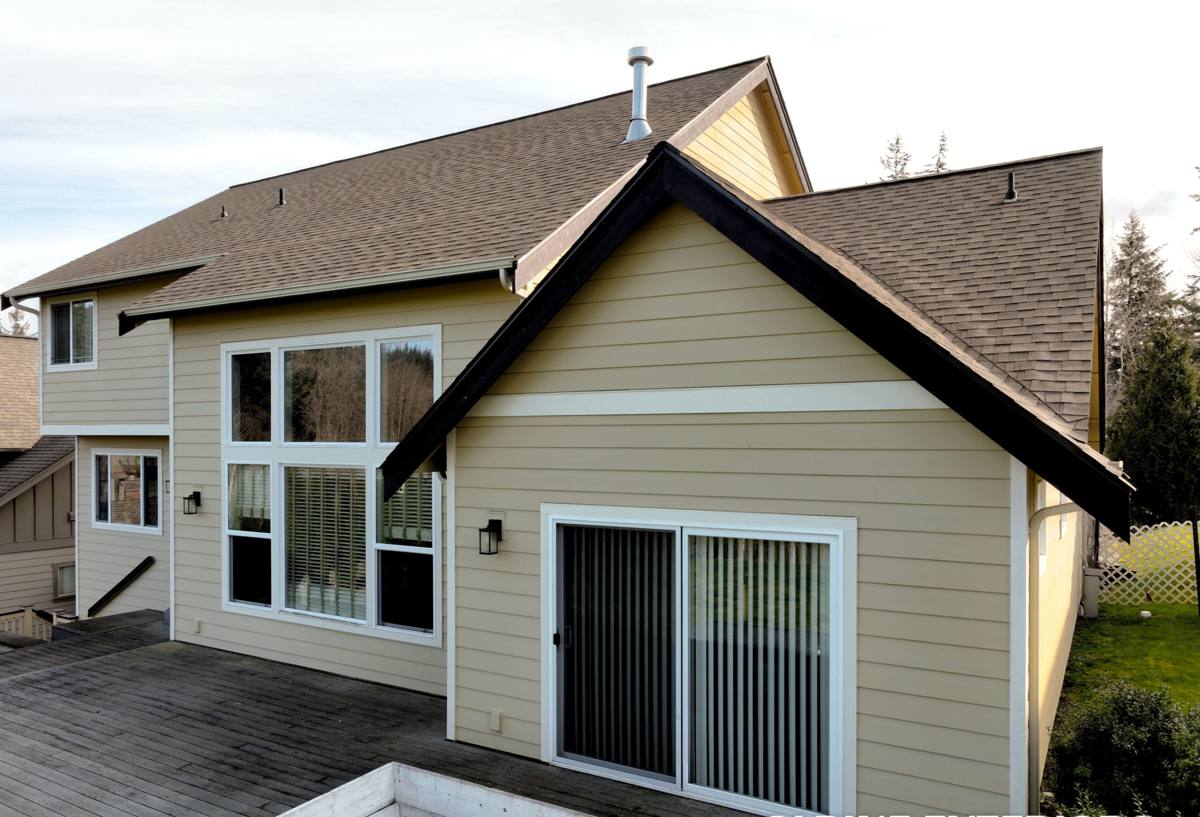
What Salt Air, Driving Rain, and Moss Actually Do to This Siding
Salt air and corrosion
Homes closer to the water pick up salt-laden air, and that air is hard on fasteners and hardware. Standard nails and staples corrode faster than most homeowners expect, and once a fastener starts to rust, it loosens its grip on the board or batten it's holding. Over a few seasons that shows up as boards working loose at the edges, hairline gaps opening at the battens, and finishes wearing thin faster than they should.
Driving rain and vertical seams
Wind-driven rain doesn't fall straight down here — it gets pushed sideways into walls, and board and batten's vertical joints are exactly where that wind-driven moisture wants to go. If the weather-resistive barrier behind the siding isn't lapped correctly, or if there's no drainage gap for water to escape once it gets behind the boards, moisture tracks down the wall cavity instead of shedding off the surface. That's how sheathing rot starts, often years before it's visible from outside.
Moss and shade
Whatcom County's tree cover and damp air are a good recipe for moss and algae, especially on north-facing walls and anywhere overhangs keep a wall shaded and damp longer after a storm. Board and batten's tight reveals can hold moisture against the surface a little longer than a flat wall does, which gives moss more time to establish if the siding isn't maintained. On a wood substrate, moss sitting against the surface accelerates rot; on fiber cement it's mostly a cosmetic issue that a rinse handles, which is one of the practical reasons material choice matters here.
What a Correct Board & Batten Installation Actually Involves
Weather-resistive barrier and drainage
Behind every board and batten wall should be a continuous weather-resistive barrier, lapped shingle-style so water is always directed outward and down, never into a seam. On exposed walls we also build in a drainage gap so any moisture that does get behind the siding has somewhere to go besides the sheathing.
Board spacing, fastening, and batten placement
Panel and batten spacing needs to follow manufacturer engineering, not just eyeballed for looks. Battens have to land over the panel joints they're covering, fasteners need to sit at the correct edge distance so they don't split the material or back out over time, and every fastener exposed to this climate needs to be corrosion-resistant — not just what happened to be in the nail gun that day.
Flashing, trim, and penetrations
Every horizontal transition, roof-to-wall intersection, and penetration — vents, hose bibs, light fixtures — needs proper flashing and sealant, not just caulk smeared over a gap. Kick-out flashing where a roofline meets a wall is a small detail that prevents a large amount of water damage over the life of the siding.
The Material Question: Why We Install James Hardie, Not Wood or Vinyl Board & Batten
We only install James Hardie fiber cement siding, and board and batten is one of the profiles where that decision matters most in this climate. Here's the honest reasoning, not a sales pitch:
- Real wood (cedar or primed spruce) board and batten looks great on day one and can look great for years if maintained, but it asks a lot of the homeowner in this environment — repainting and re-caulking on a recurring schedule to keep driving rain and salt air from working into the seams and end grain. Skip a cycle or two and moisture finds a way in.
- Vinyl board and batten is lighter and less expensive up front, but it's a poor match for a coastal climate long-term: panels can warp or distort in direct sun exposure, seams flex more than fiber cement, and the color is baked into the plastic — there's no repainting it if you want a different look later or the color fades unevenly on sun-exposed elevations.
- James Hardie fiber cement is non-combustible, dimensionally stable in wet-dry cycling, and finished at the factory with ColorPlus technology, which holds color better against UV and salt air than a field-applied paint job. Hardie's HZ product lines are engineered specifically for wet climates like ours, and the product carries a strong transferable warranty when installed to spec.
We standardized on one product because we'd rather be excellent at installing one system correctly than average at installing five. That's also why our warranty and our workmanship stand behind exactly what's on the wall.
Our Process for a Fairhaven / Sudden Valley Board & Batten Project
- On-site inspection. We look at the existing siding, sheathing, and any signs of moisture damage before quoting anything, so the estimate reflects what's actually behind the wall, not just what's visible.
- Tear-off and sheathing check. Old siding comes off, and we inspect and repair sheathing before anything new goes up. Covering damaged sheathing is how small problems become expensive ones.
- Weather barrier and flashing. A new, continuous weather-resistive barrier goes on with correct laps, along with flashing at every transition and penetration.
- Hardie panel and batten installation. Panels and battens go on per manufacturer spacing and fastening specifications, with corrosion-resistant fasteners throughout.
- Caulking, trim, and finish check. We seal penetrations and trim joints and confirm the ColorPlus finish is clean and consistent across every elevation.
- Final walk-through. We walk the exterior with the homeowner before calling the job done.
Cost Factors for Board & Batten Siding in This Area
| Factor | Why It Affects Your Price |
|---|---|
| Total wall square footage | Larger elevations mean more material, labor, and fasteners |
| Tear-off vs. install over existing sheathing | Removing old siding and repairing sheathing adds labor but avoids covering hidden problems |
| Existing moisture or rot damage | Sheathing repair or replacement is priced separately from the siding install itself |
| Trim complexity | Gables, dormers, and multiple corners take more time to flash and finish correctly than a simple rectangular wall |
| Batten spacing and design | Wider or narrower reveals change material quantities and layout planning |
| Site accessibility | Multi-story walls or steep lots require more staging and time |
Maintaining Board & Batten Siding in a Marine, Mossy Climate
Fiber cement is low-maintenance, not no-maintenance. A few habits keep it looking right for the long haul:
- Rinse salt residue off wind-facing walls periodically, especially after storms coming off the water.
- Check caulking at seams, trim, and penetrations once a year and touch up anywhere it's cracked or pulled away.
- Gently wash shaded, north-facing walls before moss gets a foothold rather than after.
- Confirm gutters and downspouts are actually routing water away from the base of the wall, not dumping it against the siding.
- Keep vegetation trimmed back from shaded walls so they get some airflow and sun between rain events.
Why Hiring a Crew That Already Works Fairhaven and Sudden Valley Matters
Exposure isn't the same on every wall of every house here. A wall that takes wind-driven rain straight off the water needs a different level of flashing attention than a shaded wall dealing mostly with moss. A crew that's worked this area knows which elevations to over-build the details on and which ones just need standard best practice. Some neighborhoods in the Sudden Valley area also have HOA guidelines governing exterior colors and siding profiles, so it helps to work with a crew that knows to check for that before ordering material, not after.
Local experience also means fewer surprises on permitting and inspection — we know what the local jurisdiction expects to see on a siding replacement before the first panel goes up.
Questions to Ask Before You Hire
- What fastener type and coating do you use, and is it rated for coastal/salt-air exposure?
- What's your weather-resistive barrier and drainage approach behind the panels?
- Are your installers factory-trained or certified on the specific product you're installing?
- How do you flash roof-to-wall intersections and penetrations like vents and fixtures?
- What does the manufacturer's warranty cover, and what does your labor warranty cover separately?
- Can I get the batten spacing and layout in writing before work starts?
If you're weighing board and batten for a home in Fairhaven or the Sudden Valley area, we're happy to take a look and walk through what your specific walls need. There's no pressure and no cost to get our honest read — just fill out the form below for a free estimate.