 Sudden Valley
 Why Edgemoor Siding Takes a Different Kind of Beating
Homes in Edgemoor sit close enough to open water that the exterior takes on a combination of stresses most inland Whatcom County neighborhoods never deal with. Salt-laden air moves off the water and settles on siding, trim, and fasteners year-round, slowly working on metal and finish surfaces even when nothing looks wrong yet. Add wind-driven rain that comes in sideways rather than straight down, and water finds its way into laps, seams, and trim joints that were never designed to shed water from that angle. Then there's moss season, which in this part of Washington can stretch from early fall through late spring — plenty of time for spores to take hold on a shaded, damp wall and start holding moisture against the siding face long after a storm has passed.
None of this means Edgemoor homes are poorly built. It means the siding on them is doing more work than siding in a drier, more sheltered location, and repairs here need to account for that rather than treating every job like a generic patch.
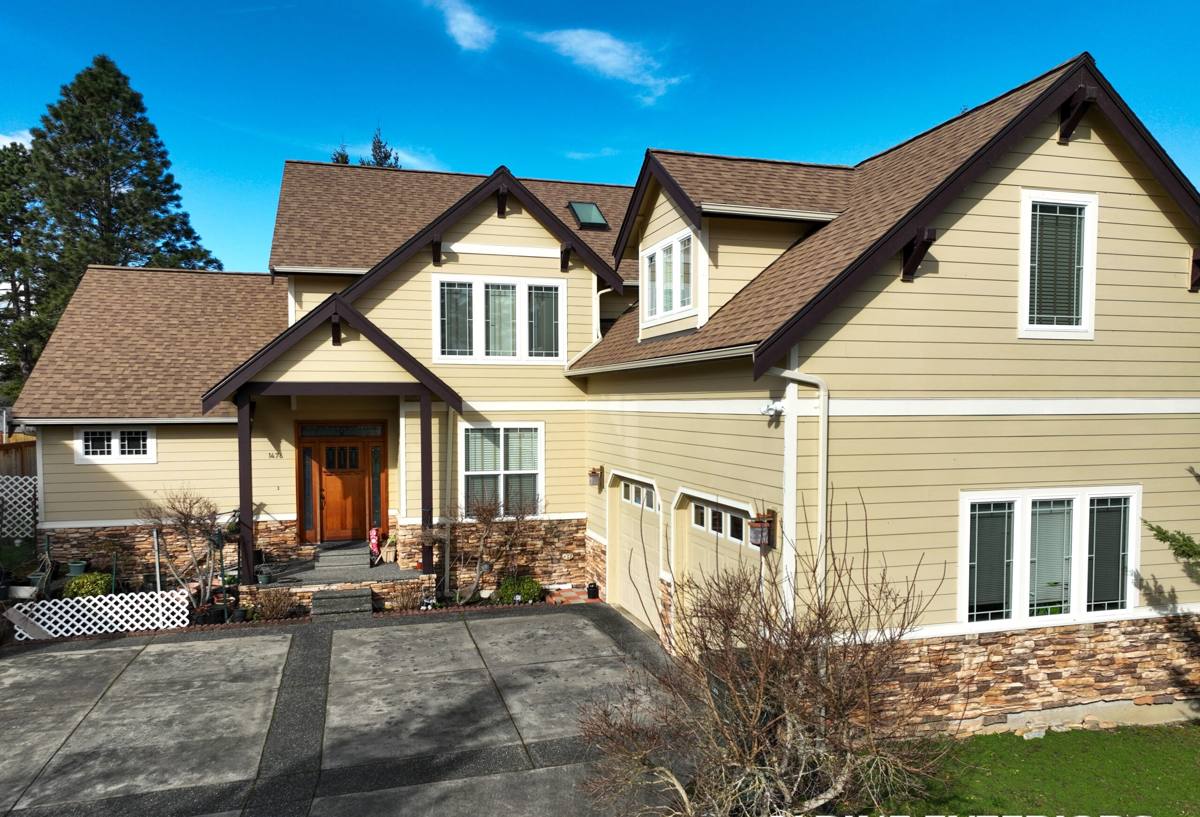
Signs an Edgemoor Home Needs Siding Repair
Some damage is obvious. Some hides in plain sight for a season or two before it becomes expensive. Here's what we tell Edgemoor homeowners to watch for:
- Soft, spongy, or crumbling spots when you press on a board
- Persistent black or green staining that returns within weeks of cleaning
- Cracked, chipped, or separated caulk joints around trim, windows, and corners
- Boards that have pulled away from the wall or show visible gaps at the laps
- Paint or finish that's bubbling, peeling, or failing in one concentrated area
- Warping or buckling near downspouts, roof valleys, or ground-level splash zones
Cosmetic Damage vs. Structural Damage
Surface staining and minor caulk failure are cosmetic — they affect appearance and, if ignored, eventually let water in, but they don't mean the wall assembly has already failed. Soft wood, delamination, or a board that flexes under hand pressure is different. That usually means moisture has been sitting against or inside the material long enough to compromise it, and the fix has to go deeper than the visible board.
What a Correct Siding Repair Actually Involves
Diagnosing the Cause Before Touching a Board
Replacing a damaged board without figuring out why it failed just buys time until the same spot fails again. A correct repair starts by tracing the water back to its source — missing or undersized flashing, a kick-out diverter that was never installed where a roofline meets a wall, grading that pitches water toward the foundation, a gutter that overflows onto the wall below, or caulk joints that dried out and opened years before anyone noticed.
Removing All Compromised Material
Once the cause is identified, the repair itself means cutting back to solid, dry material — not just the section that looks bad, but far enough that nothing soft or stained is left behind. That's also the point where we check the house wrap and sheathing behind the siding, since siding damage caused by trapped moisture often means the water reached the wall assembly before it ever showed on the surface.
Matching Material and Finish
Color and profile matching is where a lot of repairs go wrong. If the home already has James Hardie fiber cement siding, matching is straightforward — ColorPlus factory-finished boards can be sourced to match the existing color and profile without a visible seam. If the home has an older or different siding material, matching gets harder, and it's worth an honest conversation about whether patching in-kind is really the best long-term move or whether the section is due for an upgrade instead.
Repair or Replace? How We Help You Decide
Not every repair call ends in a repair, and not every damaged section needs full replacement. The right call depends on how far the damage has spread and what's driving it.
| Factor | Spot Repair | Full Section Replacement |
|---|---|---|
| Best for | Isolated impact damage, small rot pockets, moss-stained boards with sound wood underneath | Widespread moisture damage, multiple failed boards, or siding that was never installed with proper clearances |
| Typical cost range | Lower — limited material and labor, often a few hundred to low thousands of dollars | Higher — more material, staging, and labor across a wall or elevation |
| Color match | Achievable with matched ColorPlus boards or careful field finishing | Best possible match — the whole elevation gets a uniform factory finish |
| Long-term outcome | Good, provided the underlying moisture source is corrected first | Strongest — removes all compromised material and any hidden problem areas at once |
We'll always tell you honestly which side of that table your home falls on. If a repair will hold up, we recommend a repair. If the damage keeps recurring in the same area or has already spread past what a patch can fix, we'll say so before you spend money on a short-term fix.
Why We Repair — and Rebuild — With James Hardie Fiber Cement Only
Sudden Valley Siding installs one exterior siding system: James Hardie fiber cement. We don't install LP SmartSide, vinyl, Cemplank, Allura, primed spruce, or cedar, and that standard applies to repair work as much as new installs. In a marine climate like Edgemoor's, the products in Hardie's climate-engineered HZ lines are built specifically to resist the moisture cycling, humidity, and weather exposure that this stretch of Whatcom County sees most of the year. It's non-combustible, it holds its ColorPlus factory finish far longer than field-applied paint on wood or vinyl, and it carries a strong transferable warranty when installed to spec.
What This Means If You Call Us for a Repair
If your home already has Hardie siding, a repair is usually a clean, well-matched fix. If your home has a different siding material, we'll still repair it honestly and correctly — but we'll also tell you where that material's known trade-offs are likely to cause the same problem again, and what it would look like to transition that section, or eventually the whole exterior, to Hardie instead. That's not a sales pitch tacked onto a repair call; it's the same standard we'd want explained to us.
Our Siding Repair Process in Edgemoor
Every repair call follows the same sequence, whether it's one board or a full elevation:
- On-site inspection. We look at the visible damage and check the areas around it — trim, flashing, gutters, and grading — for the actual source of the problem.
- Moisture check. Where damage suggests water has been sitting for a while, we check how far it's traveled before deciding how much material needs to come off.
- Written scope and options. You get a clear explanation of what's needed, what it will cost, and whether repair or partial replacement makes more sense — in plain language, before any work starts.
- Scheduling around the weather. Fiber cement repairs need a reasonably dry window to install and finish correctly, so we work around Edgemoor's rain patterns rather than rushing a repair into a wet wall.
- The repair itself. Compromised material comes out, the cause gets corrected, new material goes in matched to the existing siding, and joints are sealed properly.
- Cleanup and a straight answer on what to watch. We leave the site clean and tell you what to keep an eye on so a similar issue doesn't sneak up on you again.
Why a Crew That Already Works in Edgemoor Matters
Exterior work in this part of Whatcom County isn't the same as exterior work twenty miles inland. A crew that's already familiar with the area knows which elevations of a home tend to take the worst of the wind-driven rain, how quickly moss reestablishes on shaded walls near the water, and how salt exposure shows up first — usually in fasteners and metal flashing before it ever shows in the siding itself. That familiarity shortens the diagnostic part of a repair call, because we're not guessing at conditions we've never seen before; we're confirming a pattern we already know to look for in this specific setting.
It also means faster response when moisture damage is caught early. A soft spot found in its first season is a small repair. The same spot left through another wet winter can turn into a much larger job — and a crew that's already local, already stocked with matched material, and already familiar with the neighborhood's exposure patterns can usually get to it sooner.
Keeping Edgemoor Siding Healthy Between Repairs
Good siding maintenance won't stop salt air or driving rain, but it slows down the damage they cause and helps you catch problems while they're still small and cheap to fix.
- Rinse siding gently once or twice a year to knock down moss spores before they take hold
- Keep gutters clear so overflow doesn't run down the wall face below
- Trim back shrubs and trees that keep sections of siding shaded and slow to dry
- Recaulk trim and joint lines every few years rather than waiting for gaps to open on their own
- Walk the exterior after major storms and note any new staining or soft spots while they're still minor
If you're noticing any of the warning signs above, or it's just been a while since anyone looked closely at your siding, we're happy to come take a look. Estimates are free, there's no pressure to move forward, and you'll get an honest answer about whether your home needs a repair, a partial replacement, or nothing at all right now.