 Sudden Valley
 Edgemoor's Climate Puts Real Demands on Exterior Siding
Homes in and around Edgemoor deal with a combination of weather stresses that doesn't show up the same way everywhere in Whatcom County. Proximity to the water means salt-laden air moves through the neighborhood on a regular basis. Add in the driving rain that comes off winter storms and a moss season that can run most of the year in shaded, damp spots, and you have an environment that is genuinely tough on exterior building materials. Siding here isn't just a cosmetic choice — it's the first line of defense against three separate problems working at the same time.
Salt Air and Moisture Off the Water
Salt air accelerates corrosion on anything metal — fasteners, flashing, trim screws — and it also carries fine moisture that settles on exterior surfaces even on days without rain. Over years, that moisture cycle can degrade paint films, swell wood-based products, and quietly work at fastener heads until they start to weep rust streaks down the face of the siding. Material choice and fastener choice both matter more here than they would twenty miles inland.
Driving Rain and Wind-Driven Water
Storms off the water don't just drop rain straight down — wind pushes it sideways, into laps, corners, and butt joints that a calmer climate would never test. That means the water management behind the siding (the house wrap, flashing, and drainage gap) has to work as hard as the siding itself. A product that looks fine on a dry day can still let water past it in a January windstorm if the details underneath weren't done right.
A Long Moss Season
Shaded north- and west-facing walls, tree cover, and the general dampness of a Pacific Northwest fall through spring give moss and algae a long window to take hold. Moss doesn't just look bad — it holds moisture against the surface it's growing on, which is exactly the opposite of what you want from siding in a wet climate. Materials and finishes that resist staining and that dry out quickly hold up noticeably better here than ones that don't.
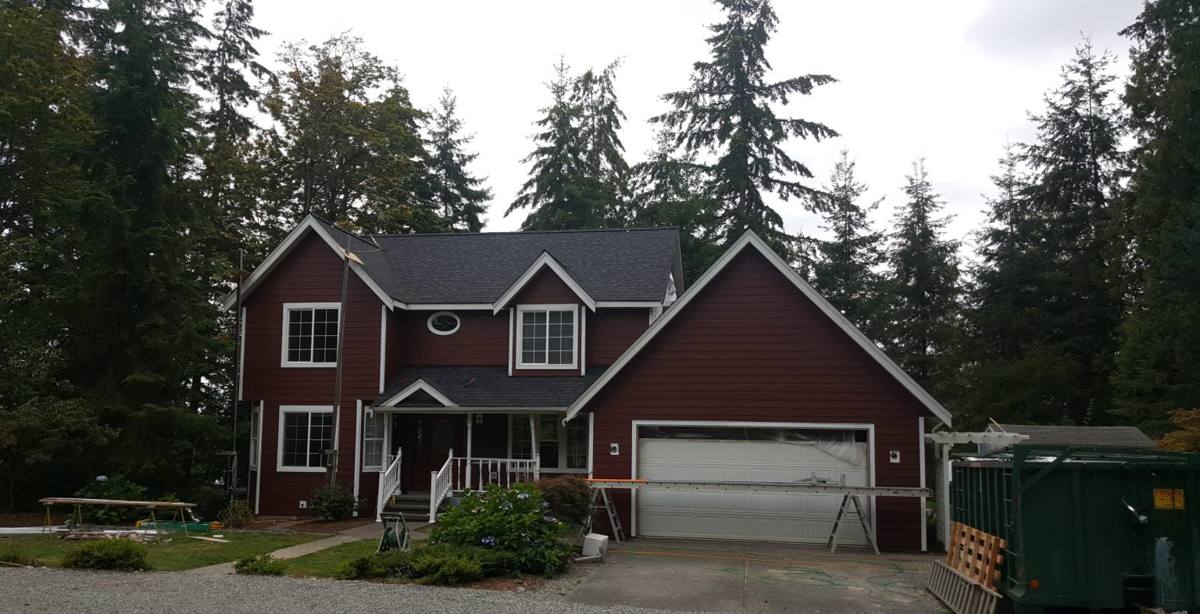
Why We Install Only James Hardie Fiber Cement Here
We standardized on James Hardie siding for every job we take on, including here in Edgemoor, because it's built to handle exactly this combination of conditions. It's not a marketing preference — it's a practical one based on what actually holds up when salt air, driving rain, and moss are part of daily life for a house.
A Cement-Based Material, Not a Wood-Based One
James Hardie siding is fiber cement — sand, cement, and cellulose fiber, cured into a dense, stable board. It doesn't absorb water and swell the way wood-based or wood-fiber composite sidings can, and it doesn't feed rot or insects. In a climate with this much ambient moisture, starting with a material that isn't organic at its core removes one of the biggest long-term failure points.
ColorPlus Factory Finish
Most of what we install carries Hardie's ColorPlus finish — a color baked onto the board at the factory under controlled conditions, rather than field-applied paint. It resists fading and chipping better than site-applied paint, and because it's more uniform and better bonded, it also resists the kind of staining and blotching that moss, algae, and salt residue can cause on lesser finishes over time. That matters directly in a moss-prone area like this one.
HZ5 Climate Engineering
Hardie makes region-specific formulations under its HZ (HardieZone) system, engineered for either wetter or drier climates. Western Washington falls in the wetter HZ5 zone, and the board formulation for that zone is built to resist moisture-related damage specific to a marine, high-rainfall climate rather than a generic one-size-fits-all mix. Installing the zone-correct product isn't optional in our process — it's the baseline.
What a Correct Installation Actually Involves
Fiber cement siding is only as good as the installation behind it. Hardie's own warranty and installation instructions are specific about clearances, fastening, and water management, and skipping steps is the single biggest reason siding fails early — not the product itself.
Water Management Behind the Board
A correct install starts with a weather-resistant barrier over the sheathing, properly lapped and taped, with flashing at every window, door, and horizontal trim transition so water is directed out and down rather than behind the cladding. Many installers also build in a drainage gap between the barrier and the siding, which lets any water that does get behind the boards drain and lets the wall assembly dry out rather than staying damp — an important detail in a climate that doesn't get long dry stretches to help things along.
Fastening and Clearances
Hardie specifies minimum clearances from grade, roof lines, and decks, and specific fastener types, spacing, and penetration depth. In a salt-air environment, we use corrosion-resistant fasteners rather than standard galvanized ones, because standard fasteners are exactly the kind of detail that starts bleeding rust streaks down a wall within a few years near the water.
Joints, Caulking, and Trim
Butt joints, corners, and trim transitions need to be treated as water-shedding details, not just visual seams. That means correct joint treatment (flashed or properly sealed, per Hardie's guidance), quality sealant at penetrations, and trim installed to shed water outward rather than trap it. This is where driving rain finds the weak points first, so it's where sloppy work shows up first too.
Installation Shortcuts We See Undo a Good Product
Because James Hardie is a widely recognized brand, we sometimes get called to look at homes where the material is right but the installation wasn't. The table below covers the differences we see most often between a correct install and a shortcut version of the same job.
| Detail | Correct Practice | Common Shortcut |
|---|---|---|
| Fasteners near the water | Corrosion-resistant fasteners, correct penetration into framing | Standard galvanized fasteners that streak and loosen over time |
| Clearance from grade/decks | Hardie's specified minimum gap maintained | Siding installed tight to grade or hardscape, wicking moisture |
| House wrap and flashing | Fully lapped, taped, flashed at every penetration | Wrap stapled up quickly with gaps left at windows and trim |
| Butt joints | Flashed or sealed per manufacturer instructions | Caulk-only joints that fail once the sealant ages |
| Product selection | HZ5-formulated boards for this climate zone | Generic stock not matched to a marine, high-rainfall zone |
Our Process for an Edgemoor Siding Job
- On-site assessment: We look at existing siding condition, moisture damage, moss/algae patterns, and how the house sits relative to prevailing wind and rain exposure.
- Scope and product selection: We confirm profile (lap, shingle, or panel), color, and trim package, and match the HZ5 product to the specific exposure of each elevation.
- Tear-off and sheathing check: Old siding comes off and we inspect sheathing for any hidden rot or moisture damage before anything new goes up — this is the point where past water intrusion actually gets found and fixed, not covered over.
- Weather barrier and flashing: New house wrap, window and door flashing, and drainage detailing go in before a single piece of siding is hung.
- Installation to Hardie spec: Fastening, clearances, and joint treatment are done to manufacturer requirements, not just "close enough."
- Final walkthrough: We go over caulking, trim lines, and touch-up needs with the homeowner before calling the job finished.
Maintaining James Hardie Siding in This Climate
Fiber cement is low-maintenance compared to wood or vinyl, but "low-maintenance" doesn't mean "no maintenance" in a salt air, high-moss environment. A little attention twice a year keeps a correctly installed job looking and performing the way it should for decades.
- Rinse siding (garden hose pressure, not a pressure washer aimed at joints) once or twice a year to clear salt residue and organic buildup before moss gets a foothold.
- Keep gutters clear so overflow doesn't run down the face of the siding and feed moss growth in a concentrated stripe.
- Trim back shrubs and tree limbs that keep a wall section shaded and damp longer than the rest of the house.
- Check caulking at trim joints and penetrations annually — sealant is a maintenance item even when the siding itself isn't.
- Address any moss or algae promptly with a gentle cleaner rather than letting it establish and stain the ColorPlus finish.
Why a Crew That Already Works Sudden Valley and Edgemoor Matters
Siding crews that mostly work drier, inland climates don't always default to the details that matter most here — corrosion-resistant fasteners, drainage gaps, and HZ5-matched product aren't universal habits everywhere Hardie is installed. A crew that already works this part of Whatcom County has already seen what salt air does to the wrong fastener and what a shaded wall looks like after a few untreated moss seasons, and builds around those realities as a matter of course rather than an afterthought. That local familiarity also means fewer surprises on scheduling — we know the weather windows that actually hold up for a clean install versus the ones that look fine in a forecast but don't in practice.
What Influences the Cost of a James Hardie Job in Edgemoor
Every home is different, but the factors that move the price on a fiber cement siding job here are consistent. We don't publish flat rates because home size, tear-off condition, and trim complexity all shift the number — but these are the factors worth understanding before you get a quote.
| Factor | Why It Matters |
|---|---|
| Tear-off vs. new construction | Removing and disposing of old siding, plus repairing any hidden sheathing damage, adds labor a fresh install doesn't have |
| Home size and wall complexity | More corners, dormers, and roof lines mean more flashing and cutting time |
| Siding profile and trim package | Shingle-style or a heavier trim scheme takes more labor than a straight lap profile |
| Access and site conditions | Slopes, tight lot lines, and limited staging area affect scaffolding and material handling |
| Underlying moisture damage | Sheathing or framing repairs found during tear-off add scope that couldn't be priced sight unseen |
Timing a Project Around Whatcom County Weather
Because a correct install depends on the house wrap and flashing staying dry and properly bonded during installation, weather windows matter more here than in a drier climate. We watch forecasts closely and sequence work to keep the wall assembly protected at every stage, rather than rushing sections closed ahead of rain and hoping the details underneath were good enough. Homeowners planning a project should expect some flexibility in start dates through the wetter months, with the tradeoff being a job that's actually sealed correctly rather than one finished on a deadline regardless of conditions.
If you're weighing a siding project for a home in Edgemoor or elsewhere around Sudden Valley, we're glad to take a look and walk through what your specific exposure, trim, and sheathing condition mean for the job — with no pressure to book anything. Use the form below to request a free estimate.