 Sudden Valley
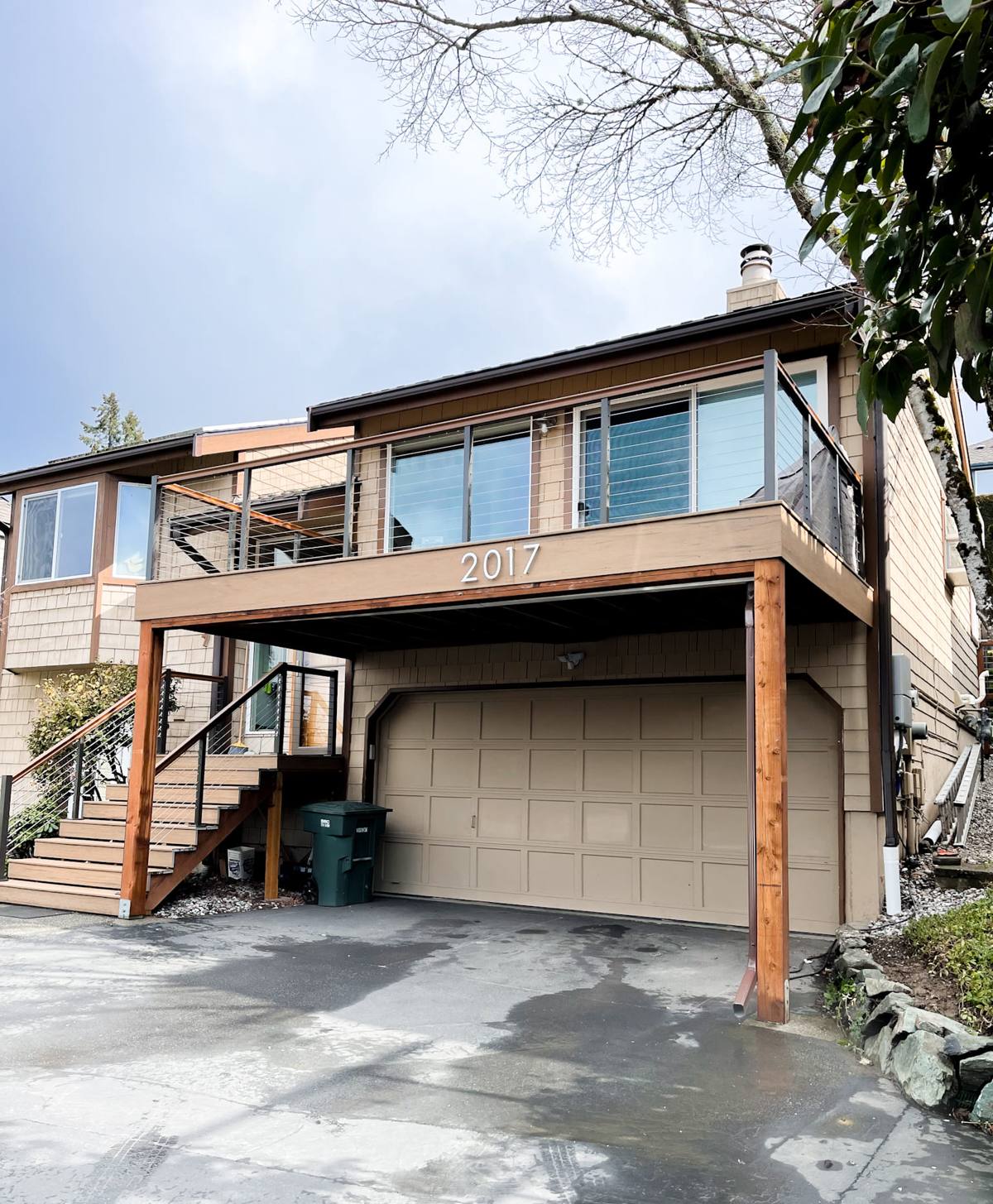
 Deck Replacement in Edgemoor: Built for What This Climate Does
Edgemoor sits along the water in the Bellingham area, close enough to Bellingham Bay that salt air is part of daily life for most homes in the neighborhood, not just the ones with a direct water view. That coastal exposure, paired with driving rain that comes ashore off the water with real force and a moss season that runs long across Whatcom County's mild, wet climate, is a tough combination for an outdoor deck to sit through year after year. A deck has no roof and no wall to take the edge off the weather — it's out there in it, all year, in exactly the conditions that wear exterior structures down fastest.
We're Sudden Valley Siding, based on the south shore of Lake Whatcom, and Edgemoor is regular territory for our crew, not a stretch we cover occasionally. This page is specifically about deck replacement — not a new deck going onto a bare stretch of yard, but what it actually takes to correctly tear out and rebuild a deck that's reached the end of its useful life on a property like the ones we see throughout Edgemoor.
What Salt Air, Driving Rain, and Moss Do to an Edgemoor Deck
Salt Air Off the Water
Homes near Bellingham Bay take a steadier dose of salt-laden air than houses set further inland, and a deck sits directly in it with nothing overhead to block it. Salt speeds up corrosion in exposed metal — fasteners, joist hangers, post brackets, railing hardware — and a corroding fastener loses holding strength well before it looks obviously bad from the surface. On a structure people walk, stand, and set furniture on, that's a structural concern, not a cosmetic one.
Driving Rain
Storms coming off the water don't just fall straight down; wind pushes rain sideways, driving it up under railings, into the ledger connection where the deck ties into the house, and between boards that aren't gapped correctly. A deck that would shed water fine on a calm day can still trap moisture the moment wind gets involved — and in Edgemoor, wind off the water is a regular part of the weather, not an occasional event.
A Long Moss Season
Mild temperatures and near-constant moisture give moss a growing season that runs most of the year across Whatcom County, and a deck's horizontal surface is one of the first places it takes hold — it holds water longer than a vertical wall and stays damp between rain events. Shaded decks and boards that have gone soft or spongy underneath are usually the earliest to show it, and once moss and mildew are established on the surface, the wood or fiber underneath is already holding more moisture than it should.
Repair or Replace? How We Make the Call
Not every tired-looking deck needs to come out entirely. A deck with sound framing and a failing surface can sometimes be resurfaced rather than rebuilt from the ground up. But a deck with structural problems — soft framing, a compromised ledger connection, or corrosion that's gone past the surface — needs a full replacement, because patching over structural failure just delays a bigger problem and adds risk in the meantime. During an inspection, we're looking for:
- Soft, spongy, or discolored decking boards, especially near the house or in shaded areas that stay damp longest
- Visible rot or corrosion at the ledger board where the deck attaches to the house
- Wobbly, loose, or corroded railing posts and connectors
- Gaps opening up between boards, or boards cupping and pulling away from their fasteners
- Persistent moss or mildew staining that comes back quickly after cleaning
- A deck built more than fifteen to twenty years ago to an older framing standard, even if it still looks stable from the top
- Standing water or poor drainage underneath the deck between rain events
If a deck shows more than one or two of these, replacement is usually the more honest recommendation — both for safety and for what it costs over time to keep patching an aging structure piece by piece.
What a Correct Deck Replacement Involves
A deck replacement in Edgemoor isn't just pulling off old boards and screwing down new ones. Everything underneath the surface has to be evaluated and, in most cases, rebuilt to hold up against the same salt air and driving rain that wore out the deck it's replacing. A replacement done right includes:
- Full removal of the old decking, with the framing inspected down to the posts and footings rather than assumed sound because the top looked fine
- New or reinforced framing sized for the actual span and load, using lumber rated for sustained moisture exposure
- A rebuilt or re-flashed ledger connection where the deck ties into the house — one of the most common failure points on the deck being replaced
- Stainless steel or coastal-grade corrosion-resistant fasteners throughout, not standard hardware that starts corroding in salt air within a few seasons
- Correct board gapping for drainage and material movement
- Proper grading and airflow underneath the new deck so moisture doesn't sit against the framing between storms
- Railing and post attachment sized for the wind exposure the site actually sees
Skip any of this and the new deck can still look good on day one. The problems just take a little longer to show up than they did on the deck that failed first.
Choosing Decking Material for the Replacement
Replacing a deck is also a chance to reconsider the decking material itself, and in a climate like Edgemoor's, that choice matters more than it would somewhere drier and more sheltered. The three main categories homeowners weigh are pressure-treated or cedar wood, capped composite, and cellular PVC.
Wood
Pressure-treated lumber and cedar are the traditional choice and can look great right after install, but both need regular sealing or staining to hold up against sustained moisture, and both are more vulnerable to fastener corrosion issues in salt air over time. Left unmaintained even a season or two, wood in this climate is usually the first material to show moss, graying, and soft spots.
Capped Composite
Capped composite boards have a plastic shell around a wood-fiber composite core, which resists moisture absorption, staining, and UV fade far better than uncapped composite or bare wood. In a salt-air, high-moisture environment like Edgemoor's, that cap layer is doing real work — it's the difference between a board that needs occasional washing and one that needs ongoing sealing.
Cellular PVC
PVC decking contains no wood fiber at all, so it doesn't absorb moisture the way even capped composite can at cut edges or fastener holes. It typically costs more than composite and can flex more under heavy point loads, but for a deck that sits close to the water or gets heavy shade and moisture exposure, some homeowners find the extra cost worth the added resistance.
| Material | Handling Salt Air & Moisture | Moss Resistance | Upkeep |
|---|---|---|---|
| Cellular PVC | Excellent — no wood fiber to absorb moisture | Strong, smooth non-porous surface | Occasional washing |
| Capped composite | Strong — cap layer resists moisture and staining | Good on most lines | Occasional washing |
| Uncapped composite | Moderate — some moisture absorption at exposed fiber | Fair; more prone to buildup over time | Periodic cleaning |
| Cedar | Moderate — natural resistance, but needs sealing | Fair when sealed and maintained | Regular oiling or sealing |
| Pressure-treated wood | Weak against sustained salt exposure over time | Poor without regular treatment | Regular sealing or staining |
We install whichever material fits the homeowner's budget and expectations. What we won't do is cut corners on framing, fasteners, and drainage regardless of which decking surface goes on top — that structure underneath is what actually determines whether the replacement lasts.
Permits and Code for a Deck Replacement in Whatcom County
Deck replacement projects in Whatcom County generally require a permit once the work goes beyond a simple like-for-like surface swap, particularly when framing, footings, or the ledger connection are being rebuilt — which is most deck replacements once the old structure gets opened up. Requirements typically cover structural sizing, railing height and spacing, stair geometry, and how the deck attaches to the house. Waterfront-proximate properties can carry additional site-specific considerations depending on the parcel, which is part of why we scope permitting during the site visit rather than guessing at it ahead of time. We handle the permitting process as part of the job rather than leaving it for the homeowner to sort out, and we build to pass inspection the first time rather than treating code minimums as something to negotiate around later.
How Our Deck Replacement Process Works
We start with a site visit to look at the existing deck: condition of the framing and ledger connection, how close the property sits to the water, sun and wind exposure through the day, and how the space actually gets used. From there we talk through decking material and layout options that fit the budget, and whether the new deck should keep the same footprint or change with the replacement.
Once the scope is set and permitted, demo comes first. The old decking, and as much of the substructure as needs replacing, comes out so we can see exactly what condition the framing, ledger, and footings are actually in rather than guessing from the surface. From there the rebuild follows the sequence above — framing and ledger connection first, sized and fastened for what the site actually sees, then the decking surface, railing, and any stairs or trim. We finish with a walkthrough covering what the specific material you chose needs going forward, which for most modern decking is minimal, but not nothing.
Cost Factors for a Deck Replacement in Edgemoor
| Factor | What Drives Cost | Coastal Climate Consideration |
|---|---|---|
| Demo & disposal | Size of the old deck, site access | Extra care removing corroded fasteners and hardware |
| Framing & ledger | Extent of hidden damage found once opened up | Rot or corrosion often runs further than what's visible from the surface |
| Decking material | Wood vs. composite vs. PVC, and finish line | Moisture and salt resistance vary significantly by material |
| Railing & stairs | Style, code compliance, wind exposure | Corrosion-resistant hardware and wind-rated attachment near the water |
These are general cost drivers, not a quote. A deck replacement's actual scope can shift once we're up on the structure and can see what the old ledger connection or footings look like underneath — which is also why we're cautious about a phone or online estimate that skips a site visit entirely. Two decks that look similar from the yard can need very different amounts of framing work once the old boards come off.
Why a Crew That Already Works Edgemoor Matters
A crew that mostly builds decks further inland can still do competent work, but an Edgemoor replacement has variables that don't come up as often elsewhere in Whatcom County — corrosion-grade fastener requirements from sustained salt exposure, wind loads tied to open exposure near the water, and a moss season that runs longer here than it does in more sheltered parts of the county. Working this area regularly means we're not guessing at those requirements on your project. We've seen which decking materials and fastener grades actually hold up against Edgemoor's specific mix of salt air, driving rain, and moss, and which shortcuts turn into callbacks a few winters later.
If your Edgemoor deck is showing soft boards, a shaky railing, or the kind of moss that keeps coming back no matter how often it's cleaned, we're glad to take a look and give you a straightforward read on whether it needs repair or full replacement. Reach out using the form below to schedule a free, no-pressure estimate.