 Sudden Valley
 Storm Damage Roof Repair for Deming Homes
Deming sits in the Nooksack Valley, tucked against the foothills that lead up toward Mount Baker, and it takes weather seriously. Winter windstorms come through the valley with real force, months of steady rain saturate roofing materials that never fully get a chance to dry out, and the shade from surrounding trees keeps moss and moisture working on shingles and flashing year-round. Add in the broader marine climate that reaches this whole corner of Whatcom County — salt-laden air moving in off the Sound, driving rain that finds every gap in a roof system, and a moss season that can run eight or nine months — and you have a roof that's under more or less constant low-level stress even on a calm day. Storm damage doesn't always show up as a dramatic hole in the roof. More often it's a lifted shingle tab, a cracked flashing seal, or a soft spot in the decking that got its start during one storm and quietly got worse through the next several.
This page is about one thing: doing storm damage roof repair correctly for homes in and around Deming, not just patching what's visible from the ground.
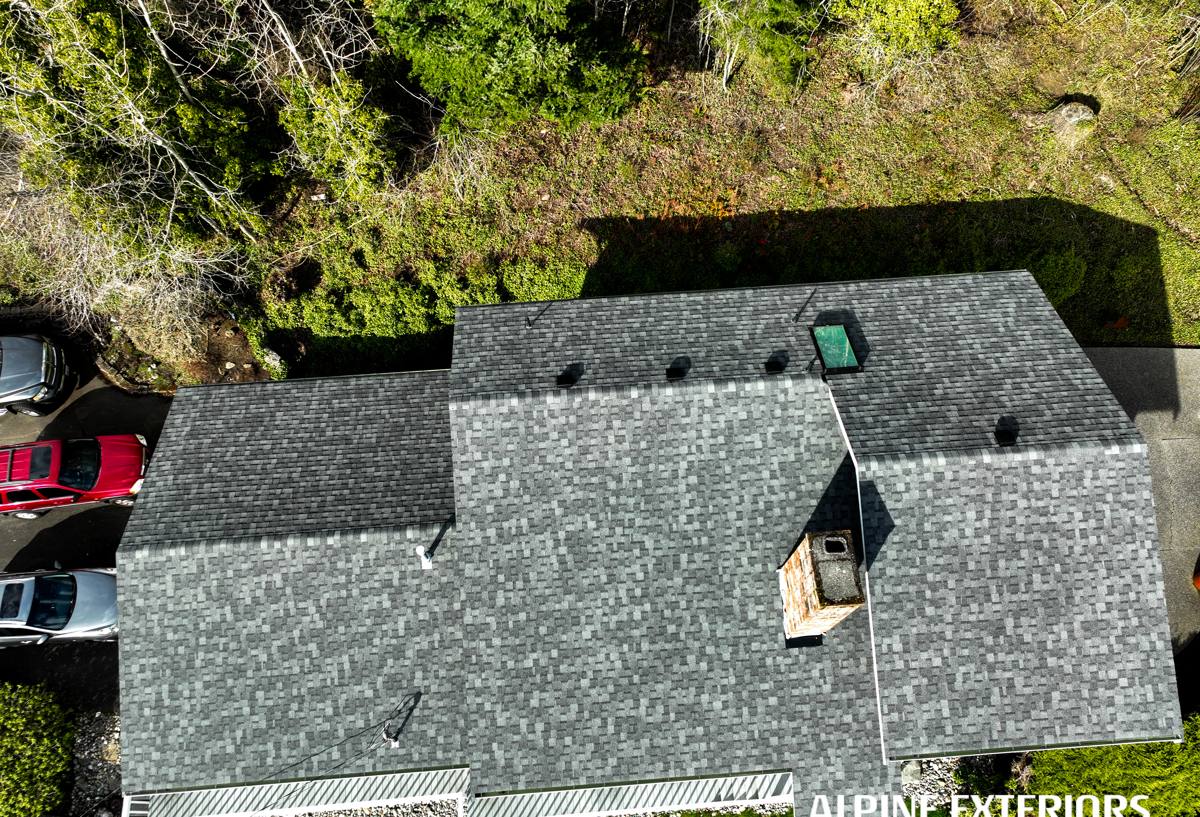
What Actually Counts as Storm Damage Here
Homeowners often picture storm damage as missing shingles after a big windstorm, and that's part of it — but in this valley we see several patterns that are just as common and easier to miss.
Wind Damage
Sustained wind and gusts moving through the valley can lift shingle tabs without tearing them off completely. A shingle that's been lifted and re-seated by wind looks fine from the driveway but has a broken seal underneath, which means the next driving rain gets underneath it instead of running off.
Rain and Moisture Saturation
Long stretches of steady rain don't damage a roof the way a single violent storm does — they find the weak points. Aging flashing around chimneys, skylights, and vent pipes is usually where sustained rain gets in first, and it can take weeks of that slow intrusion before a stain shows up on a ceiling inside the house.
Moss and Debris Load
Moss holds moisture against the roof surface long after the rain stops, and in a shaded valley setting it can build up fast. A heavy moss mat combined with a windstorm can pull granules and even shingle material off with it when it's ripped loose. Fallen branches and needle debris from the same storm often pile up in valleys and behind chimneys, holding water in place until it finds a way through.
Impact Damage
Branches and debris carried by wind can crack shingles, dent flashing, or puncture underlayment. This is the most obvious kind of damage but not always the most common one in this area — slow moisture intrusion causes more long-term problems than falling limbs do.
What a Correct Repair Actually Involves
A storm damage repair that's done right isn't just about replacing what's visibly broken. It starts with figuring out why the damage happened and whether the same conditions are still in play somewhere else on the roof.
- A full roof walk, not just a look from the ground — visible damage is often only part of the problem
- Checking the decking underneath any damaged section for soft spots or rot before new material goes down
- Inspecting and, where needed, replacing flashing around chimneys, vents, skylights, and valleys, not just the shingles
- Matching replacement shingles as closely as possible in color and profile so the repair doesn't stand out
- Confirming proper nailing pattern and shingle overlap, since a rushed repair is often where the next leak starts
- Clearing moss and debris from the surrounding area so the repair isn't immediately undermined by the same conditions that caused the damage
Skipping the decking check is the most common shortcut we see from repairs done elsewhere. If the plywood underneath has been absorbing moisture for weeks, laying new shingles over it just hides the problem until it reappears — usually as a ceiling stain, and usually during the next heavy rain.
Our Process, Start to Finish
- Initial call and photos. If you can safely get a photo of visible damage, that helps us prioritize response, especially right after a storm when we're fielding several calls at once.
- On-site inspection. We walk the roof, check the attic or ceiling from inside where accessible, and document what we find — including anything that isn't storm-related but is worth knowing about.
- Honest scope and estimate. We tell you what actually needs to be fixed now, what can reasonably wait, and what the range of options looks like. No pressure to do more than the roof needs.
- Repair. Matching materials, correct flashing work, and a cleanup of moss or debris in the repaired area so the fix isn't compromised on day one.
- Walkthrough. We show you what was done and what to keep an eye on, particularly if moss or drainage was part of the original problem.
Repair vs. Replace: What Actually Drives the Decision
Not every storm-damaged roof needs a full replacement, and not every roof that "just needs a patch" should stop there. These are the factors that actually matter when deciding which way to go.
| Factor | Leans Toward Repair | Leans Toward Replacement |
|---|---|---|
| Roof age | Under roughly 12-15 years, condition otherwise good | Near or past expected shingle lifespan |
| Decking condition | Solid, dry, no soft spots found | Soft, delaminated, or rotted in multiple areas |
| Extent of damage | Isolated to one section or slope | Spread across multiple slopes or the whole roof |
| Moss/moisture history | Recent, addressed at the source | Long-term, with signs of repeated past damage |
| Shingle match availability | Close match still available | Discontinued or badly faded, making patches obvious |
When the damage is contained and the roof structure underneath is sound, a targeted repair is the honest answer and the right one for your budget. When we find soft decking, repeated past patch jobs, or a roof that's already near the end of its service life, we'll say so directly rather than repairing around a problem that's going to resurface.
Why a Crew That Already Works Deming Matters
Storm damage repair is time-sensitive in a way a lot of other exterior work isn't. A lifted shingle or cracked flashing seal that sits exposed through another round of driving rain turns into a much bigger repair — sometimes a full section of decking — within a matter of weeks. A crew that already works this part of the valley can typically get out to look at the damage faster than one traveling in from further away, which matters most in the days right after a storm when demand spikes.
Local familiarity also shows up in smaller, practical ways: knowing how tree cover and shade patterns in this area accelerate moss growth on north-facing slopes, knowing what typical roof pitches and material ages look like on homes built in this part of Whatcom County, and being able to source matching shingle products without a long delay. None of that replaces a careful inspection, but it does mean less guesswork and fewer surprises once the work starts.
Insurance Claims: What We Can and Can't Do
Many storm damage repairs in this area are covered in part by homeowners insurance, particularly when the cause is a documented wind event. We can provide a written inspection report and photos that describe the damage and likely cause, which homeowners use as part of their claim. We are not adjusters and we don't guarantee coverage or claim outcomes — that's between you and your insurer. What we can promise is an honest, accurate description of what we find, whether or not it helps the claim, because a repair built on an inflated scope tends to cause problems later.
After the Repair: Keeping Moss and Rain From Undoing the Work
A correct repair holds up a lot longer when it's paired with basic seasonal upkeep. This region's rain and shade make moss an ongoing issue, not a one-time cleanup.
- Keep gutters and valleys clear of needles and debris, especially going into the fall rains
- Trim back overhanging branches where practical to reduce shade and debris load on the roof
- Have moss growth addressed before it forms a thick mat, not after
- Watch for granule buildup in gutters, which can signal shingle wear worth checking
- After any significant windstorm, a quick visual check from the ground can catch lifted shingles before the next rain gets under them
None of this requires a contractor visit every time — it's just the kind of routine attention that keeps a repaired roof from becoming a repeat call.
Get an Honest Look at Your Roof
If a recent storm left you with a lifted shingle, a new stain on the ceiling, or just a nagging feeling you should have someone check the roof before the next rain, we're glad to take a look. The estimate is free, there's no pressure to do more work than the roof actually needs, and if a simple repair is the right call, that's what we'll recommend.